On a Gay Soldier

Fred was openly gay. And, at a time when being openly gay wasn’t accepted by society, Fred was also in the US military. For most younger people in today’s world, it’s hard to imagine a time in American history when being yourself was not only frowned upon, but it was also illegal and could result in jail time, loss of the ability to make an income, or the right to own property or even vote. Yet, Fred made no bones about his sexual preferences.

He was an officer in the United States Army, and he simply went about his duties in an extraordinarily efficient manner. Fred had risen through the ranks through sheer will and great attention to military discipline. Born to a poor family, Fred had pulled himself up by his own bootstraps. In the military, he had earned a reputation for being tough but fair. However, he demanded the highest level of discipline from his subordinates, and he demanded the same of himself. That made the troops who served under him love and respect him.

When the army needed a particular unit to be torn down and rebuilt from the ground up, they called on Fred to come into the situation, reestablish discipline, and rebuild the pride of the unit. And, time after time, Fred delivered. Fred wrote the book on military discipline for his time. Literally. He wrote a military training manual that was used by the United States Army for some time.

Perhaps it was this value Fred gave to the country and to the army that allowed his military superiors to look the other way when it came to Fred’s personal life—a personal life that, again, he took no pains to conceal. Even his commanding officer said about Fred that he was honored to be considered Fred‘s friend and comrade. This high praise from his commander was one of the greatest things of Fred‘s life. Fred, like most Americans, almost worshiped this man.

You know Fred’s commander: George Washington.

And now you know that Fred was Baron Friedrich von Steuben, the gay man who trained the Continental Army that defeated the British in the Revolutionary War.

On a Young Man from Georgia

Soso was born in Georgia in the last quarter of the 19th Century. His dad worked in a shoe store, and his mom cleaned houses. At school, the lad was bright and eager but got into trouble a lot, as boys often do. His mother was very religious while his father drank religiously. Soso decided he wanted to enter the ministry, so he found a local benefactor who agreed to finance his education, and he went to a theology school when he was old enough. Again, his sharp intellect was reflected in the fact that he wrote poems and plays while he studied the ministry; he had a good voice and sang in the choir at church. Some of his poems were even good enough to be published, and some found inclusion in a state anthology of poetry. We’re talking about a young man who, despite his working-class background, was going to make something of himself.

But then something changed, and, to this day, no one is sure what happened or why. He suddenly lost interest in his religious studies. He stopped writing his poems and plays. Without any communication with his benefactor, he stopped his religious studies. He started reading political books, and we are talking about radical political ideology here. In April, 1899, Soso left the seminary and never returned.

Because he was so smart, by October of that same year he had obtained work as a meteorologist at a local weather observatory. He began holding secret classes, indoctrinating anyone who would listen to his radical ideas about politics. You have to remember that this was Georgia during a time when that area was traditional and conservative. Soso had to carry out his political education classes surreptitiously for fear of attracting attention and possibly getting arrested. In a time and place that labor unions were considered to be the opposite of everything Georgia stood for, here he was organizing labor strikes in factories in his area.

Sure enough, his activities roused the attention of the local constabulary. Sure enough, he was arrested and thrown into jail for his political activities. That did not stop him, however. Even in jail, he was preaching his gospel of political equality for the working class of Georgia. Miraculously, he managed to escape prison.

He made it to a place where he could start a newspaper and managed to assume a new identity. There, Soso married a nice girl, and the couple soon had a son, which they named Jacob. Maybe you’re wondering what happened to this smart, driven former seminary student turned political activist from Georgia and why you’ve never heard about him. Well, you have. The Georgia in question is not the U.S. state, but, rather, the nation on the Black Sea. You see, Soso joined up with some other people who believed the same things he did, and, together, they led a major revolution that changed history.

Yes, his family called him Soso, short for Joseph.

Joseph Stalin.

On an Inappropriate Relationship

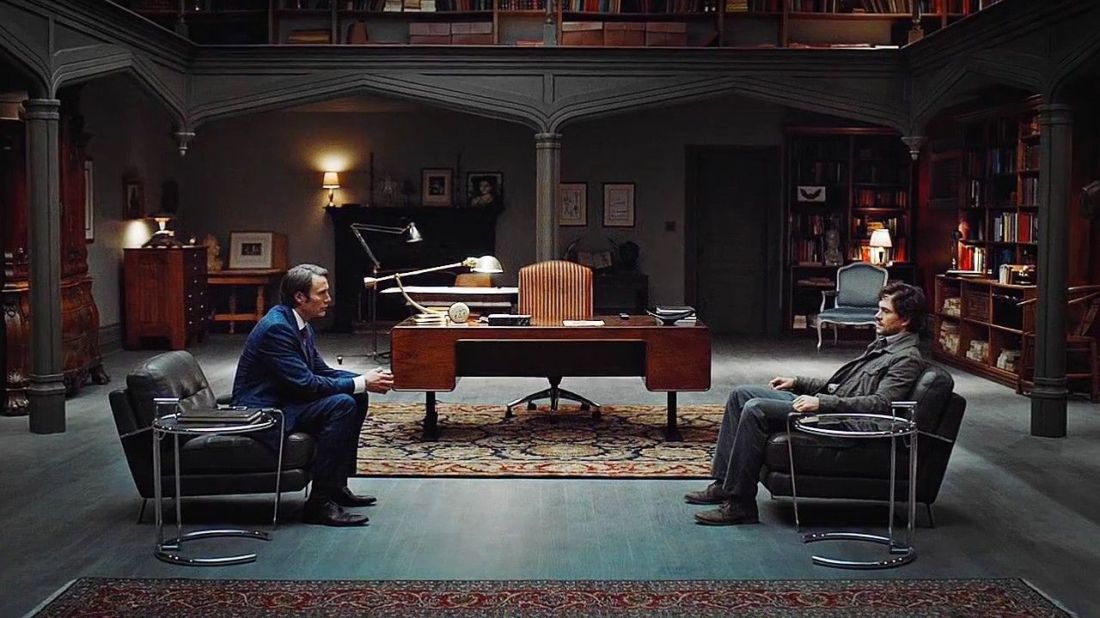
Ralph had done pioneering work as a psychiatrist in California in the years immediately after World War II. He was among the first psychiatrists to address post-traumatic stress disorder and label it as such. Before men like Ralph, PTSD was dismissed as battle fatigue, also known as being shellshocked. But Ralph realized the deeper implications and long-term effects that war could have on people. As his reputation in the psychiatric community grew, Ralph and his wife became well known figures in California because of this groundbreaking work.

Soon, Ralph began taking on other clients; some Hollywood types started visiting his office for sessions. Among the procession of actors and actresses that came through his practice, Ralph found the whole gamut of psychological disorders, and this new clientele fascinated him.

In many ways, Ralph became as enamored with Hollywood as Hollywood did with him. By the late 50s, Ralph was able to be much more selective on which clients he chose. In fact, he narrowed his clientele down to, effectively, one woman.

Now we’ve all seen TV shows and films that depict personal relationships between mental health professionals and their clients and patients. Sadly, this happened with Ralph and his patient. This particular woman somehow entranced Ralph to the point that he became obsessed with her. Whether consciously or not, Ralph began manipulating the woman’s emotions. He began controlling her life to his advantage, telling her whom she could see and whom she could not, basically controlling her entire social calendar. He even often allowed the woman to stay at his house overnight. To help him gain ever more control over the inappropriate relationship, Ralph prescribed a cocktail of medications that kept the woman docile and highly susceptible to his suggestions.

The woman was very needy and very damaged, and she was looking for a father type figure to give her life some direction. Ralph gladly assumed that role and justified it in his own mind that he was helping her. But things begin to change in the warped relationship. The woman, despite the emotional and medicinal manipulation, began to realize that Ralph was doing what he was doing for purely selfish reasons and not in her best interest. So, in 1962, she told Ralph that she wanted to end their professional and personal relationship. You can imagine the panic and devastation that Ralph must have felt when she broke the news to him. We can only guess about that because the woman died under suspicious circumstances soon after she told Ralph about her decision.

In fact, it was Dr. Ralph Greenson who first discovered the body of Marilyn Monroe.

On Disliking New Tech

Ah, the omnipresent telephone! Since its invention in 1876, fewer inventions have become so widely used by more people on the planet. Some people have said that there are 3 telephones for every person on earth these days. The convenience and power of these little devices would astound someone from even 40 years ago. In the late 1800s, as the new telephone technology was starting to become more and more widespread, even popular music helped the spread of the device:

Hello, my baby. Hello, my honey. Hello, my Ragtime Gal. Send me a kiss by wire. Baby, my heart’s on fire! If you refuse me, honey you’ll lose me. Soon, you’ll be all alone. Oh, baby! Telephone, and tell me I’m your own.

And that was 1899.

Businesses first, of course, capitalized on the instant communicative abilities brought about by the phone. Soon, telephone wires crisscrossed most major cities as phones began to quickly replace messengers and errand boys. Some old-fashioned business tycoons, however, refused to embrace the new technology.

One such business tycoon in the late 1800s dug in his heels and refused to jump on the telephone bandwagon. Writing to one of her husband’s business associates after his death, this man’s wife commented on her husband’s reluctance to have a phone in his study, saying, “Of course, he never had one in his study. That was where he went when he wanted to be alone with his thoughts and his work.”

For this important businessman, the telephone, of course, meant intrusion from the outside world. He felt strongly that the phone kept him from having conversations with people he was with. For this and other reasons, the phone irritated the important man. He preferred to have others send and receive phone messages if they were crucial to his work. In fact, he came to almost hate the device.

Yet, the man was not so much of a curmudgeon that he did not have a phone in the house for use by others. He was astute enough to realize that, for someone of his importance and for the sake of his business, the phone kept him in close touch with other businessmen and companies, with doctors and neighbors, and with the telegraph office. It was simply that he, himself, did not care for the invention that was sweeping the globe.

Which is ironic, perhaps.

Because, as his wife pointed out, Alexander Graham Bell did like to say, “Why did I ever invent the Telephone?”

On a Coup Plot

Coups take planning. Successful coups are best planned in secret.

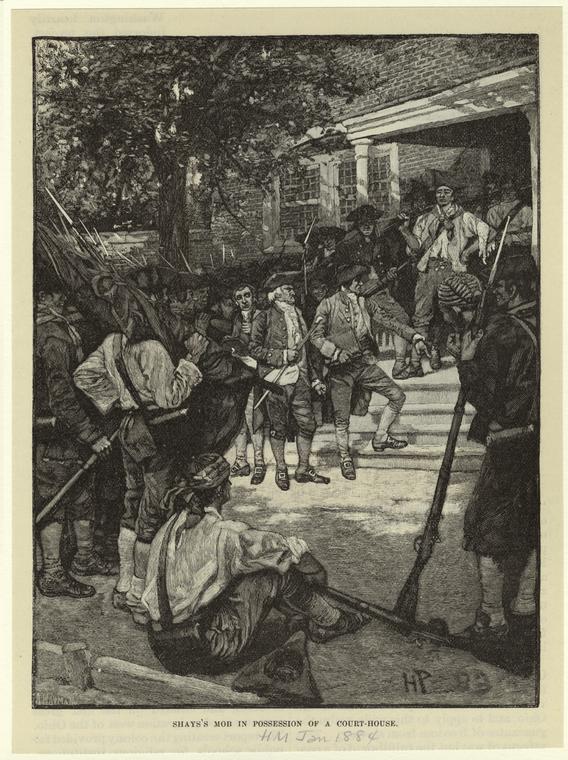
In the early days of the American Republic, insurrections and coups were more common than we may realize today; every month or so, another group rose up against the government and the states had to take action against its own citizens to put down the rebellion. One such insurrection, Shays’ Rebellion, in 1786, lasted several months and almost succeeded in a major disruption of trade and governmental power in the fledgling United States. At that point in American History, the states thought of themselves as mini nations that united first for defense (against Great Britain, for starters) and then for mutual aid and, hopefully, trade. Think of that early system of government to be more like the European Union today—a much looser association of nation-states.

So, yes; it was a time of uncertainty and insecurity, this time that was ripe for rebellion and plots. One such plotter was a man named Jimmy. Jimmy was no dummy, and he recognized that this new nation had a government that was extremely weak in some areas. Like the rebels in Shays’ uprising in Massachusetts, Jimmy thought the people must have more say in such matters as taxes (one of the key issues during the recent American Revolution, in fact) and trade between the states. He hatched a plan to secretly meet with some others who felt the same way to think of ways to overthrow the current government of the US and start a different one.

As quietly as possible, word went out to like-minded souls in other states for the plotters to meet in Maryland in September of 1786. For four days, 12 men from only four of the United States met to discuss what would be the best course of action for them to take to ensure that the current government of the United States would be quickly overthrown and how they could win the people’s support. Even though their numbers were small, these men were united in their desire to fix the “important defects in the system” of the American government.

One of Jimmy’s co-conspirators, a man named Al, suggested that they reach out to people who had been associated with the Continental Army during the recent war. After all, the coup might need a strong military showing if they were to succeed. Al had connections to General George Washington, and he suggested that they include him in on the plot. Others in the group doubted whether Washington would have the stomach for such rebellious talk. They reminded Al of the sentiment of Washington at the end of the war, when he had been urged by some of his officers to assume the role of a de facto King of America. Washington quickly and vehemently squashed such talk, and some at the meeting felt that he would do the same now. Jimmy, also with avenues to the great man, promised to talk to him about the issues at a later opportunity.

The fear of those assembled was that, since people from only a few of the states were at the meeting, whatever plan they hatched would not have widespread support. Nevertheless, again the need to something was recognized by all. Jimmy, realizing that his plan would not be enacted at this point, decided to retreat, to live to fight another day. He asked Al if he would write a letter to send to the other states who had not sent anyone to the meeting to see if they might meet again soonest. The sooner, the better.

At this point, you might be thinking that you have never heard of this plot to change the government of the United States. However, you have certainly heard of it. Today, we call it the Annapolis Convention. And, we might ask ourselves at this juncture, what is the definition of a patriot? Is it not someone who wishes for a better life for all citizens of the nation? That is what these men saw themselves as being: Patriots.

You see, the letter that Al—Alexander Hamilton—wrote at the insistence of his compatriot, Jimmy—James Madison—asking the other states to meet to discuss changing the United States government led to the writing of the United States Constitution the next year in Philadelphia in order to form a more perfect union.

On a Jealous Sister

Dear Diary,

Well, it happened.

What do you do when your ex dates your sister? And not just your ex—your baby’s daddy. Do you get angry? Sad? Resigned? Do you seek revenge? If so, against which party? In a way, I feel that sis betrayed me, even if Hank and I aren’t together anymore.

I know, I know, dear diary. I had my chance. Back when Hank and I dated, he was younger (duh!) and we probably both took the situation for granted. Sure, he had a wife, but still. At the time, yeah; I cared for him. I mean, we had a kid together, for Chrissake.

He won’t stay faithful to her, that’s for sure. I mean, loyalty simply isn’t Hank’s thing, is it? That’s why we broke up, wasn’t it? Still, it stings. With all the women could have (and he never had trouble getting girls), why did he have go after my little sister?

It’s easy to see she’s swooning over an older guy. Anyone can recognize that she’s embarrassing herself. I know she’s had boyfriends before, but she seems to have lost her head over this relationship like a little kid.

Not that she’s innocent. I could tell you stories, dear diary, of what she did when our family went to Europe years ago, stories that would make your head spin. No, she’s far from innocent here.

Add to it that she’s probably gonna anger him with that temper of hers. Yeah, ok, she’s pretty, but that is countered by her open flirting. Yeah, Hank’s not gonna put up with either of those things. The girl absolutely can’t keep a secret.

Well, I wish her luck, dear diary. Even if the relationship is doomed, if Anne wants to date King Henry VIII, I won’t stand in her way.

One-Time
Monthly
Yearly

Make a one-time donation

Make a monthly donation

Make a yearly donation

If you enjoy this content, please consider contributing to continuing this blog.

¤5.00
¤10.00
¤20.00
¤5.00
¤15.00
¤100.00
¤5.00
¤15.00
¤100.00

Or enter a custom amount

¤

Your contribution is appreciated.

Your contribution is appreciated.

Your contribution is appreciated.

DonateDonate monthlyDonate yearly

On a Presidential Scion

Presidents having controversial children is not only a modern phenomenon. The scions of several presidents have been the stuff of shame over years.

We’re all familiar with the story of the president’s son who had the well-publicized issues with too many parties with Hollywood celebs and spending too much on addictive substances. Republicans complained loudly in the press that Democrats refused to hold their own children accountable. The son was accused of being involved in international drug smuggling, and even people in the president’s own party called for law enforcement to look into these accusations. Add to these issues the fact that people called for investigations into this particular man’s business dealings; there have been allegations that he used his influence inappropriately and that certain funds may have been illegally funneled into his firms. In addition, the son was accused of running scams, even scams against elderly people regarding their Social Security. All of this served to embarrass the president, certainly.

Born the son of privilege, sent to exclusive private schools, Ivy League law degree…you know the story. Early jobs were handed to him because of who his dad was in the federal government. All the while, the father insisted that the son earned his way into the positions, but everyone knew the real truth. He admitted that his name was his greatest asset, and he was never shy to use it when it benefitted him. It would seem that someone so blessed with position that his father’s prestige brought would at least attempt to live up to a certain standard. Certainly, his father would have asked that the son made better choices after having been raised the way he was with the benefits he received.

All of this was exacerbated by his closeness to his dad. The fact that the son visited his presidential father in the White House after “business trips” at the least was a bad look. If avoiding even the appearance of impropriety was important, this was not the way to go about things. Media outlets clamored for explanations, but the White House press secretary refused to even entertain questions about the discussions between father and son. Again, not a good look for either man.

The Securities and Exchange Commission got involved in looking at some of the son’s questionable financial dealings. International financial irregularities can often be used to dodge taxes, so they pay special attention to any whiff of something even a little bit unusual. It didn’t help that many of the son’s financial dealings overseas had to do with people who went to prison for illegal financial activities. Even the normally lenient economic investigation unit of the Swiss government looked into some of the deals because of their suspicious nature.

Then there’s the women. Accusations of affairs dogged the son. A police report was made when one of the women stabbed the man as he tried to leave her place one time. These various women birthed at least six children by this son.

And what did his father have to say about this embarrassing son?

After bravely saving the lives of three men under enemy fire in the Pacific Theater, President Franklin D. Roosevelt said that his son, Major James R. Roosevelt, exhibited “gallant conduct and inspiring devotion to duty,” when he awarded James the Navy Cross for extraordinary heroism during World War 2.

On a Bicycle Mechanic

Charlie fixed bicycles in a medium-sized Ohio town. His background was in mechanics, and bikes were practically the most mechanical item any average person could own in the late 1800s. The family who owned the bicycle repair shop treated him well, and Charlie liked the job. And since this was the late 1800s, bicycles were becoming all the rage in the United States. The Huffy bicycle inventor came from the same town Charlie was in. In many ways, Charlie was in on the ground floor of a revolution in personal transportation. Don’t think of the big wheel penny-farthing bicycle. The bikes that Charlie worked on were a lot like the ones we have today. Because of the popularity of this new creation, Charlie found that he had job security.

His ability to not only repair bicycles but also to deal with the business side of the operation made the owners trust him. Because they traveled a lot, the family pretty much turned the entire operation of the business over to Charlie as they went about pursuing other interests. Under his guidance, the shop prospered, and the family was happy with his work.

It’s interesting to note that as the first prototypes of automobiles came along during this period in history, many of the parts that were used on these early vehicles were taken from spare bicycle parts. In fact, an inventor named John Lambert is supposed to have built the first automobile in Ohio in 1890 from bike parts. While Charlie wasn’t interested in working on automobiles and tinkering in that field, the family who owned the bicycle shop was definitely interested in transportation for obvious reasons. They asked Charlie if he felt competent enough to work on a light weight gasoline powered engine. After some tinkering, Charlie created a 12 hp lightweight engine, the first engine in the United States to be made almost entirely out of aluminum.

There must be something in the water of the state of Ohio. Thomas Edison was from there. John Glenn and Neil Armstrong also hailed from there. And we probably should add Charlie Taylor’s name to that illustrious list as well. You see, the family who owned the bicycle shop was headed up by a couple of brothers. They had been largely home-educated. Neither one of them finished an official high school diploma. It was their father, a prominent minister in the area, who educated them at home. He insisted that all of his children speak well and write well. But we’re getting away from the subject of Charlie.

The little 12 hp engine that Charlie fabricated needed to be lightweight for a reason. Regular iron cast engines proved too heavy for the application they needed. They wanted to put Charlie‘s lightweight engine on the frame of a air glider. And now you know that the brothers who owned the bicycle shop were named Orville and Wilbur, and you also now know that the Wright Brothers’ heavier-than-air-craft that flew at Kitty Hawk would have never gotten off the ground without the ingenuity of Charlie Taylor.

On A Teen’s Activism

We applaud our youth when they find a cause and embrace it with all their passion and enthusiasm. Only the most cynical among us would try to dampen the spirit, the tenacity, the drive of a young person who finds a mission, a purpose.

Marsha Albert was one such youth, and she found her passion one evening as she watched news on her family’s TV. This was the 1960s, and youthful activism was one of the most enduring and endearing positives of that tumultuous decade. Marsha, age 15, saw a segment introduced by CBS’s “Uncle Walter,” Walter Cronkite. Cronkite had narrated a segment that December evening in 1963 that looked at a developing situation in the UK and throughout Europe, and Marsha sat and watched the entire program, riveted to everything Cronkite reported. When the news ended, she promptly marched up to her bedroom, grabbed paper and a pen, and she did what many young people of the 1960s did: She took action.

What Marsha did was she wrote a letter to her local radio station. She demanded to know why the station and other US media outlets didn’t address the issue Cronkite had raised that evening. “Why can’t we do that in the United States?” Marsha asked in her letter. “Why can’t we have that here?” she wondered. The station, impressed by her passion, agreed. If Marsha felt this strongly, they reasoned, perhaps other kids her age felt just as passionately about the issue. They resolved to do something about it.

The station was Marsha’s local station, WWDC-AM in Silver Spring, Maryland, a Washington, D.C. suburb. Marsha, being so close to the US capital, couldn’t help but be aware of the issues of the day. After all, it was practically her neighborhood. And the station, being in the DC area, also was aware of its responsibility to its listening public regarding important issues of the day. So, the station took action and called in some favors. The BOAC (now operating as British Air) cabin crew that flew into the capital brought recorded information about the topic into Washington and had it delivered to the station so that WWDC could address the situation directly.

And Marsha was invited to the station to talk about the issue on the air, to introduce the topic to the public and to stimulate the discussion because of her letter and her passion. And Marsha did just that. She introduced it, the station played the recorded information and–the station’s phone lines exploded with ecstatic calls from other young people who couldn’t believe what they had heard. They, like Marsha, had become energized to the point of frenzy about this topic. And, like Marsha, they wondered why this could not be brought to the United States.

You see, Cronkite and CBS had actually recorded the report that stirred Marsha so much the week of the Kennedy assassination, but they had shelved it for a few weeks because the network thought the topic was too trite, too trivial given the gravitas of the days surrounding Kennedy’s death. By mid-December, they felt enough time had passed, and, besides, the nation needed something to divert its grief.

Cronkite’s report was on a fever that was sweeping through the youth of the UK and Europe, and, in a way, Marsha and then the other young people of the DC area were among the first in the United States to also catch this contagion. Marsha was the one who caused it to first be broadcast in America.

You know this fever as Beatlemania.

On A Retiree

Sometimes, the golden years aren’t all that golden.

As we age, along with the loss of memory (and often decay in the body) comes the loss of autonomy. For many retirees, depression can set in especially if they feel that choices are being made for them rather than in consultation with them. Such was the case of one retiree who had no choice where he found himself upon retirement.

Many older people would be happy with retirement on a sunny, warm beachfront property, but not this man. And it especially galled him that he still felt like he had contributions to make to society, that he still could be a productive man even in retirement. But, again, the choice was not his to make, as is often the case with retirees. For him, the retirement felt more like a prison.

The wife was long gone, and man was estranged from his children. So, the state made the choice for him, the choice without consideration of his wishes, to place him in this home.

The home offered programs for him to enjoy, but he found no pleasure in them. There were many social events offered, and, when he did rarely participate, he would be sulky and sullen and withdrawn from the rest. Others could not understand his attitude. His caregivers were attentive, and the facility even offered meals that were cooked to order. None of this could change his mentality.

Understandably, depression dogged him. His doctor noted his moodiness, and he said that they were times when the retiree would be practically non-communicative. Yet, the mind was still active, and the man sought his own distractions. He expressed the desire, as many retirees do, to possibly begin writing books. He had been a veteran and thought about telling the stories of his time in the army. He toyed with learning another language in an effort to keep his mind active. His caregivers reported that he spent a lot of his time playing variations of solitaire.

This last distraction seems to be the most fitting for the retiree. He not only felt alone and abandoned, but he also felt, well, exiled.

That’s because he was.

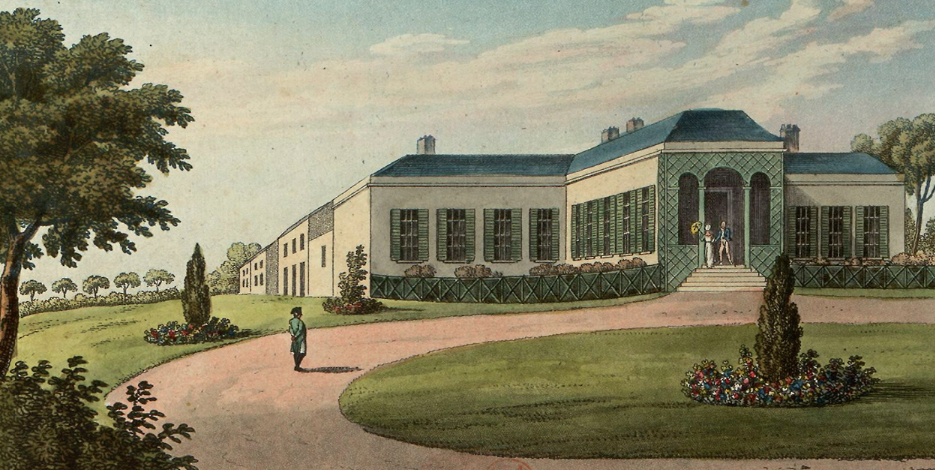
The island of Saint Helena, 1200 miles off the west coast of Africa, would be where Napoleon Bonaparte would spend his last days.