On an Odd Propensity

There have been 14 Presidents of the United States of America since World War 2. Of those 14, six of them share a common characteristic that is also shared by around only 10% of the population of the world. What could that be, and why have so many presidents in recent decades shared this propensity?

Psychologists have argued that one reason for the high incidence among presidents is that having this characteristic causes one to have a wider scope of thinking, making them if not more effective as presidents, at least it could help explain why they are at least attractive as candidates. People who are like this tend to face challenges better and share an “outside the box” thinking ability. They tend to be able to generate ideas given a certain set of parameters better than the rest of us. I say “us” because I don’t fall into this category.

On the other hand, some researchers say it’s all down to chance and that this particular propensity has nothing to do with electability.

I’ll even provide the list for you so you can maybe see or decide what these six men have in common: Harry Truman, Gerald Ford, Ronald Reagan, George H. W. Bush, Bill Clinton, and Barak Obama. If you’re wondering, that three Republicans and three Democrats, so it’s not party affiliation. It’s something else these six men share.

Well, obviously we’re talking about a physical characteristic to a degree. And that’s what researchers find so interesting, because scientists simply don’t know what causes it. Some studies say that this trait is connected to the development of speech and language, but nothing has been conclusive. Statistically, the 10% and the 90% differ in intelligence tests scores by a whopping 1 point. Left to their own devices, they tend to take tests faster than the 90% as well.

Interestingly, it has shown up to a higher degree in people who are really good at math (another reason I’m not in this group). Low birth weights seem to contribute to the likelihood as well as problems during childbirth. Higher cancer and depression rates occur, but they have lower rates of ulcers, arthritis, and even bone brittleness. And, we have to hand it to them; many people who are in symphony orchestras have a higher chance to be this way as do many pro athletes (tennis and baseball players, mostly).

Give up? Some clues were dropped in this essay, so you should’ve guessed it by now. What do six of the last 14 presidents have in common?

They were left handed.

On a Decent Man

John Damon passed away in 2010 in Australia. His family hailed him as a good, decent man, a father who loved music and shared that love with all those in his life whom he loved. According to a son of Damon’s, John was, as far as could be determined, such a good father in part because he himself had been an orphan. Working hard at being a good father seemed to be John’s way of dealing with not having a father as a young person. John’s family knew nothing about John’s origins because John had not discussed much about his past other than he was from Chicago, Illinois, originally.

And so, a few years after John’s death, one of John’s children did what so many these days are doing–he took a DNA test to see if he could connect to anyone from his dad’s family. And he got some hits. One person who reached out to John’s son was a man named Matthew Westover. Westover’s DNA profile on the website said that he was a sibling to John Damon. It seemed that at last all the secrets of John’s past, and the reasons for his being an orphan, were about to come to light. John’s family started making plans to go the US to meet what they thought would be their new family members.

But things aren’t always what they seem, are they? This Matthew Westover fellow ended up not being who he said he was. In fact, he wasn’t related to John Damon at all. Turns out he had simply uploaded someone else’s DNA, someone who was really related to John. He was using the fake profile on the DNA site to find relatives of John, and his ruse worked. The family, understandably confused, put their trip on hold for the moment. What was Westover wanting with a man who had been dead for several years?

Westover tried to explain himself over the phone to the family. He was looking for John Damon because, well, he knew things about John that the family had a right to know. He told them that he knew, for example, that John had been an excellent student in high school. He told them that John had a girlfriend in high school, and that he was in love with her. He told them that John had also spent time in prison.

And then, Westover told them why.

You see, Matthew Westover was actually a United States Marshal. He was investigating John Damon because Damon was an escaped convict who had evaded the law for over 50 years. And his name wasn’t John Damon, actually. It was William L. Arnold from Nebraska. The family was stunned. Nothing Westover told them matched the decent man they knew and loved. Nothing made sense. Was anything they believed about their beloved John Damon the truth?

But then, the story took an even darker turn. Westover told them that, yes, it was true that Arnold/Damon was indeed an orphan. His parents were shot and killed on a night that Arnold/Damon had taken the high school girlfriend, the one he was in love with, to the drive in movie theater in Omaha in the family’s car. Arnold/Damon had been in a heated argument about that, in fact. His mother didn’t want him to go, and Arnold/Damon insisted that he be allowed to go. And so, as defiant teens often do, he chose to go anyway.

But, before he took the car against his parents’ wishes, the decent father, the man who loved music, the kind man the Damon family knew and loved, killed both of his parents.

On Some Happy Campers

Getting back to nature and going camping has appealed to people ever since cities began housing more people that the countryside did. We campers see retreating to the outdoors as getting back in touch with our collective past, a simpler (and perhaps, happier) time. And the invention and proliferation of the automobile made those remote and rural areas much more accessible.

Take the case of a group of four chums in the 1910s. During the week, they were workaholics, dedicated to their various careers and businesses, but, on occasion, they would tear themselves away and go, by the fairly new automobile, to the woods. There, they would camp–after a fashion. Some people today would call what this group of mature men did glamping–the idea of camping but with some of the creature comforts from “civilization” in tow. And I get that. The older I get, the more I want a nice bed, even if it’s under the stars. I want good food and not gorp or MREs. However, this group went a bit farther than that. They loaded their cars with folding tables and even had batteries rigged up for electric lights. Now, remember, these guys were doing this in the 1910s. But they insisted on the creature comforts because, well, they were, as I stated, more mature men.

The four friends labeled themselves The Vagabonds because of their camping excursions. Jack, Hank, Tommy, and Harve enjoyed their trips together. They’d smoke cigars around a large fire and swap tales and even brag about their business exploits or even (and these were secrets) their conquests in love. Sometimes, other business types would join the group, but the four Vagabonds were always the core.

And the group documented their trips. They kept journals about what they did. They took photographs. And one of them even brought an early movie camera and made some 1910s version of home movies about their exploits “roughing it” in the “wilderness” of wherever it was they were on that particular trip.

Now, remember, at that time, there wasn’t the extensive highway system that we have today. There weren’t the typical tourist and traveler comforts like common gas stations or rest stops. So, in that sense, the Vagabonds were indeed roughing it after a sort. But not so much. They were, in fact, rather happy campers.

But then, Jack died. It didn’t seem the same after that. The last trip the group made together was in 1921 before he passed. The remaining three tried to carry on, but they knew the magic period had passed. Besides, word was getting out about what they were doing, and other people were copying their methods and style.

Yet, today, we can still look at the pictures of what famous naturalist John Burroughs, inventor Thomas Edison, industrialist Henry Ford, and rubber magnate Harvey Firestone did on their trips to the wilderness.

On a Generous Donor

Jonathan Jacob Meijer is one of the most giving men on the planet. His donations have changed countless lives and helped hundreds of families. Yet, in 2017, his home nation of The Netherlands decreed that his days of generous donating were over. The government’s actions raised some eyebrows in some quarters but were applauded by others. But Meijer’s ban didn’t stop him. He simply moved his giving internationally, spreading his special type of generosity world-wide.

Let’s back up a moment. Jonathan Jacob Meijer was born about 1981 in The Hague. He grew up loving music, and, as he entered his teen-aged years, he looked the part of a musician. He sported long blonde hair and the striking good looks of a rock star. And he made music his career. Today, he lives in Kenya and still makes music online. You might wonder where he would get the resources for his generosity, but we will come back to that. And why he lives in Kenya brings us back to his donations.

So, the reason Meijer had to move out of The Netherlands was because he was prosecuted by his native country. He was taken to court because of what he kept insisting was his right to do: Donating. In fact, The Netherlands insisted that other nations refuse Meijer’s gifts, and they requested that the nations in which Meijer had donated would destroy the donations by Meijer that they could get their hands on.

You may think this is government run amok, and you might have a point. However, the courts of The Netherlands cited public health as their concern over what Meijer had been doing. What’s more, some of the recipients of the Dutchman’s generosity testified against him, saying that while they were grateful to him to some extent, that the future of their families might be harmed because of his gift. The major concern of these families was that their children might one day commit incest because of what Meijer had given them.

You see, in all, Jonathan Jacob Meijer’s generous donations to sperm banks and private recipients around the globe has brought about the birth of over 600 children.

On an Imaginary Line

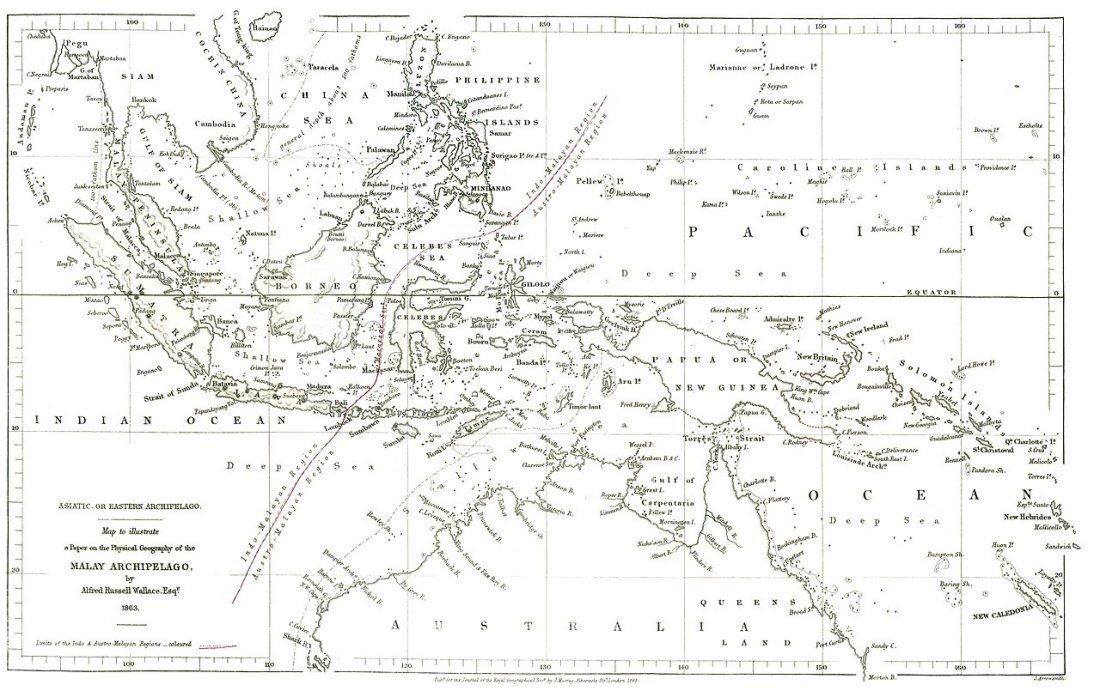
This story isn’t about something with a surprise ending or a big reveal. No, this story is odd enough on its own that it needs no build-up or hype. It takes place even today in the Malay Archipelago, the area of our world where you can find modern nations like Indonesia and New Guinea. It’s both a real but still imaginary line that has baffled scientists and biologists for centuries.

And what makes it significant is that it’s a line that certain animals absolutely do not cross.

Technically, the line, known as the Wallace Line (after the Victorian-era scientist who studied it), separates animals from the Asian continent from those found in the Australian ecosystem. The phenomenon was recognized as early as the 1500s by Spanish members of Magellan’s voyage.

Now, you might think that this isn’t unusual that different animals can be found in different parts of an area, but it really is unique. Some of the islands in that area have tigers and elephants and hippos, but, then, east of the Wallace Line, those animals are replaced by lizards and marsupials in the Australian biosphere.

And the closest those diverse island areas are to each other is less than 20 miles at some points. Even most birds won’t cross the Wallace Line, with the Asian species staying on their side and the Australian species on theirs. Bats are really the only mammal that will cross it, but even those species that do are few and far between. The study of biogeography owes much to the study of exactly why this happens the way it does. Biogeography has divided the earth into 8 different zones rather than continents, but it’s the continents that hold the key to the Wallace Line.

Scientists could easily observe this phenomenon and did so for years, but they had difficulty figuring out exactly why. It wasn’t until geologists proposed the idea of plate tectonics, the movement of large surface plates on the earth, as the source of the Wallace Line. As you probably know, the large land masses (continents) on the earth are moving. That movement as they rub up against each other often causes earthquakes and awakens/creates volcanic activity as the molten innards of the earth bubble upwards as the fissures are created. The different continents created deep crevices in the oceans and seas that led to a separation of species that they still to this day do not cross.

Interestingly, most plants do not recognize the Wallace Line.

But the animals–the animals still won’t.

On a Crown Jewel

The coronation of a new monarch in the United Kingdom put me in mind of one of my favorite movies as a child. The film was called The Jokers, and it was about two bored, upper class English brothers in London who decide to steal the Crown Jewels as a prank. For me, a kid from the southern United States, that such a place as “Swinging London” as depicted in this 1967 film existed at all boggled my mind. Added to my interest was that the film showed many of the grand historical sights (and sites) in and about London.

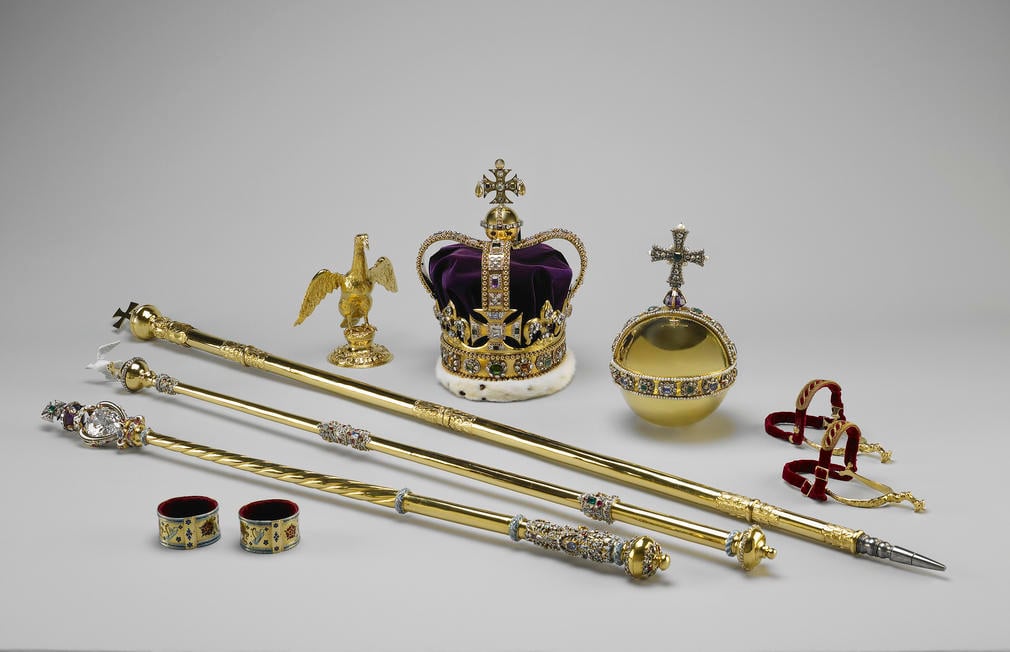
The Crown Jewels are not simply the crown that the monarch wears, or the scepter, or the orb. No, there are many other things that make up this selection of precious things, a group of items called, “a unique collection of sacred and ceremonial objects.” Over 100 items, in fact. 23,000 gemstones adorn the various items. We can’t really put a price or value on these things simply because of their intrinsic and symbolic value to the people of the United Kingdom. They mostly either represent the power and responsibilities of the role of monarch or they are used in the coronations.

One of them, however, stands so distinct and so unique compared to these other bejeweled and “precious things.” In fact, it is the oldest of all the objects so precious and revered by the nation. Records say it was made in the 12th Century for the king. It’s not particularly flashy or overly bejeweled or large like the rest of the objects, and you won’t actually get to see it during the coronation, but it’s used in the ceremony.

Let’s go back a bit. In the 1640s, England stopped being a monarchy. Oliver Cromwell defeated Charles I in a bloody civil war and had him beheaded, and he drove Charles’s son into exile. For roughly a decade, England had no king. The new government, eager to erase the trappings of the monarchy, destroyed or melted down or sold the Crown Jewels. The sale of the jewels attracted a large crowd, even though most of the people in attendance couldn’t afford the items. A man who had been a groom of the wardrobe for the now-deceased Charles I, a man named Mr. Kynnersly, bought this item in question for 16 shillings. In his mind, it would give him something to remember his former employer by.

Fast forward a few years. In 1660, Cromwell and his Commonwealth experiment were gone, and England welcomed back Charles II to restore the monarchy. The problem was that all of those crowns and other trappings of the office were gone. So, they had to be remade. And those are the items that are today stored in the Tower of London when not being used for official functions. And, when Charles II was being crowned, that’s when Mr. Kynnersly stepped forward and presented to the new monarch the only item that survived the Cromwell destruction of the Crown Jewels. So, when you view a coronation, know that all those objects-the crown, the orb, the scepter, the capes, everything-has been recreated since 1660.

Except for one.

It’s the spoon used to anoint the monarch with oil.

On a Lucky Architect

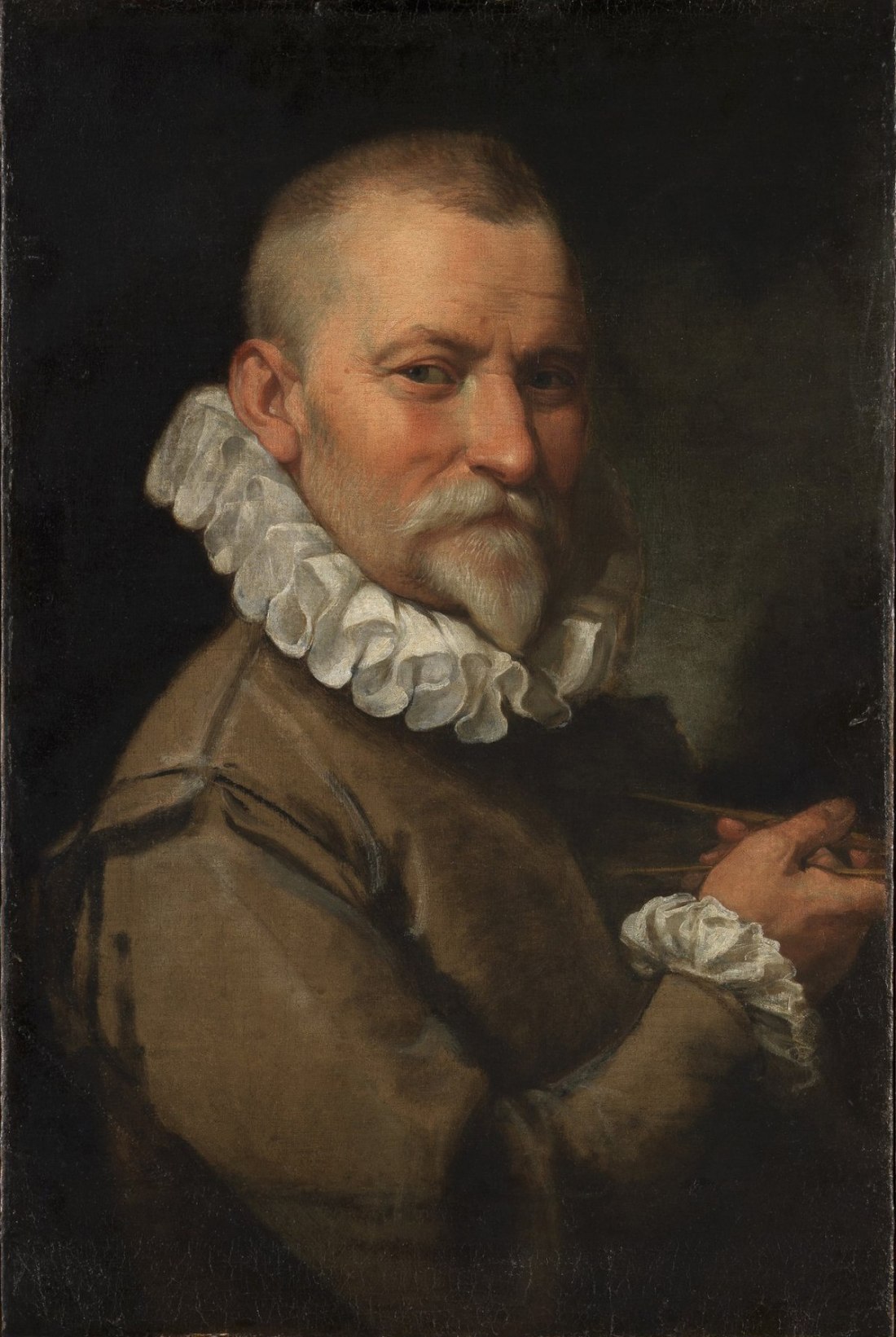
Domenico Fontana probably doesn’t register in your mind as a notable architect, but he was the cat’s meow in the late 16th/early 17th Centuries in Rome and throughout Renaissance Italy. You’ve seen his work without knowing that it was his. Have you ever seen a photo or video of the plaza in front of St. Peter’s in Vatican City? Then you’ve probably noticed the obelisk that is in the center of that square. That was Fontana’s work. When you think about it, to have something you did in the exact center of a square designed by Bernini and in front of a church that was the work of Michelangelo, Bramante, Raphael, and others puts Fontana in their league even if he’s not as well known as they are.

Cardinal Montalto became his patron shortly after he arrived in Rome. After growing up in what is now northern Italy near the Swiss border, Fontana received his training in building and discovered he had a good sense of proportionality and an easy understanding of engineering principles. He arrived in the capital of Christendom with more talent than most, and, after some successful commissions for Cardinal Montalto, his career was set.

As luck would have it, Montalto went on to become Pope Sixtus V, and he appointed his favorite architect as the new official architect of Vatican City. Fontana would add some features to St. Peter’s Basilica and some substantial changes to St. John’s Lateran church (the church the Pope is the priest of, actually). He even designed the ceiling of the Sistine Library. Yes, Domenico Fontana was at the height of his fame and power and wealth.

But, Pope Sixtus died suddenly, and Pope Clement VIII became the head of the Church. For a time, Clement allowed Fontana to continue in his post, but then the architect fell out of favor with the new Pope. He was forced to leave Rome, and he settled in Naples. A local nobleman asked the now-disgraced but former famous architect to be in charge of the design and construction of a series of canals to and around his property on the outskirts of the city. While the commission was several steps below what he had been used to back in Rome, Fontana accepted the appointment and began work. And then, luck struck him again.

You see, it was while overseeing the work on the Neapolitan count’s canals that Fontana’s workmen, digging the channels for the water to flow, that their spades hit several series of walls and buildings. Fontana ordered some of the walls to be excavated, and, as the walls were uncovered, the workers discovered paintings of incredible beauty and clarity, as if they had been painted only recently.

You see, as luck would have it, Fontana had discovered the site of the ancient city of Pompeii.

On Some Animal Experiments

I probably should be a vegetarian for many reasons (health becoming more and more important), but the corporate and wholesale killing of animals for food might be one of society’s great overlooked atrocities. Additionally, cosmetic and chemical companies as well as science and university laboratories often use animals for testing purposes, putting the animals in horrid conditions and subjecting them to terrible deaths. This is one such story, except the animal testing wasn’t done by a corporation; it was performed by a government.

The Japanese Empire of the 1930s began fighting what would become World War 2 as early as 1931 by invading the Chinese province of Manchuria. Japan recognized the effectiveness of chemical and biological warfare from the success of such weapons as poison gas in World War 1. The fact that the world agreed to ban such weapons in the 1920s testified, Japan believed, to exactly how effective they were. So, Japan secretly began testing new and different chemical and biological weapons on animals. The Japanese military unit in charge of this top-secret program was called Unit 731. And it was set up in the recently conquered Chinese territory in Manchuria in a large facility that included not only laboratories and storage areas but also holding units for the testing subjects.

We aren’t sure how many animals were killed in the testing of these weapons by the Japanese, but estimates are in the hundreds of thousands. In an effort to keep their military and scientific staff from becoming too attached to their test subjects, Unit 731 mandated that all testing animals be referred to as “logs.” The reasoning was that these test animals were to be consumed like wood fuel in fires. That way, those involved in the program could distance themselves from the horrors that were involved in the chemical and biological testing done on the subjects.

And the horrors were real. Test subjects were injected with live bioweapons and their deterioration recorded, even sometimes on film, until they died in horrible agony. Some were put in glass rooms where experimental gasses were slowly introduced and had to be observed as they gasped and writhed and slowly, painfully, died. Some were even subjected to pressure chambers until their bodies practically exploded under the pressure exerted upon them. Then, as in all reports, the number of “logs” experimented upon were recorded and details on how they died were documented.

For records keeping, the Japanese Army officially referred to the testing unit by the seemingly innocent name of the Epidemic Prevention and Water Purification Department. But the results of the testing was far from innocent. Using the data extrapolated from their experiments, Unit 731 practiced controlled and limited chemical weapon releases into selected areas of China it didn’t yet control to see how the agents affected population areas outside of the sterile confines of their army laboratories. We don’t know how many people died from those releases, but, again, probably hundreds of thousands of deaths resulted among human populations who never knew what killed them.

After the war, the United States Army was very interested in what Unit 731 had been doing because it wished to have the information gleaned by the years of research for their own bioweapons projects. So, the US hushed up the program. No effort was made to account for or compensate the relatives of the victims of the experimentation performed by the unit.

You might be thinking that it’s impossible to compensate animals who had been experimented upon.

But it’s possible because the hundreds of thousands of testing subject in the program were human animals.

On a Savage Defeat

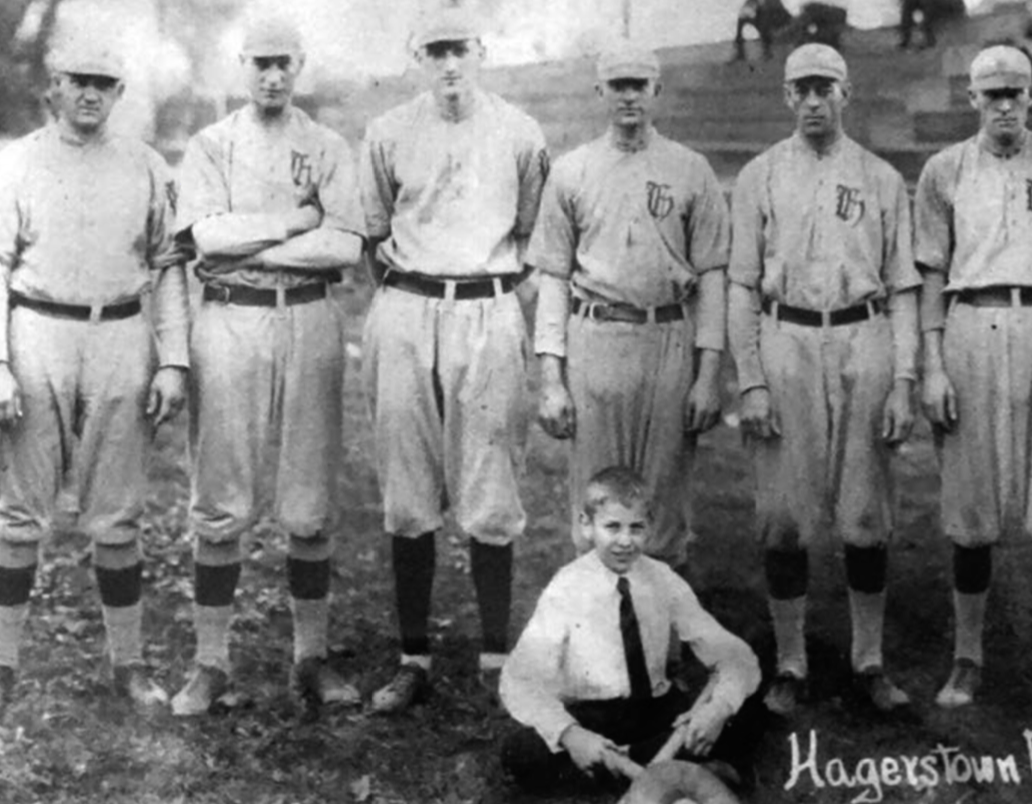
The college baseball team from Tennessee was really, really good. In fact, the team was suspiciously too good. As it rampaged its way through other college and university teams across the southern United States in 1916, the scores they racked up raised eyebrows among the teams they defeated along the way. Something was fishy, here.

It used to be that there was a sharp division between professional athletes and amateur sportsmen. Amateur sports were gentlemanly, they were more about competing and doing your best and learning life lessons rather than winning. That applied to collegiate athletics as well. So, when it became increasingly clear that this small private school from middle Tennessee was most likely using professional baseball players to build a reputation for itself, it rankled people closely associated with amateur athletics.

One of the people who was furious about this situation was legendary football coach John Heisman. Heisman was a passionate stickler for keeping college athletics pure and untainted by what he considered the vulgarity of professional sports. And, on top of that passion, Heisman was also the baseball coach for Georgia Tech University, a team this group of “ringers” from Tennessee had beaten.

The pros not only easily beat Heisman’s college boys, but they actually embarrassed both Heisman and his team by blanking the Yellow Jacket ball players by the score of 22-0. Now, if another institution of higher learning fielded a baseball team with amateur student-athletes and beat Heisman’s team, then the ol’ ball coach would have accepted that. But Heisman also knew that true gentlemen, true sportsmen, shouldn’t take pride in humiliating other amateurs who were playing sports to better themselves and not to win at all costs. And he hated cheaters.

Heisman vowed to get revenge, ten-fold. And he did.

That year before, in 1915, Tech had agreed to play the same Tennessee college in the other sport Heisman coached, football. However, the college had disbanded its football team in the interim months. When it became time to play the football game in the fall of 1916, the college sheepishly wrote Heisman to say that they no longer had a football team. Heisman insisted. He pointed to the contract that said the two schools would play each other in both baseball and football. He said that Tech would be entitled to receive $3000 dollars in 1916 money for the little college to break the contract.

And so, little Cumberland College of Lebanon, Tennessee, put together a team of college kids who’d never played organized football before and traveled to Atlanta, Georgia, to play mighty Georgia Tech in football. This time, there would be no pro players for Cumberland.

Heisman got his revenge for Cumberland using pro baseball players by eviscerating the visiting team.

The final score?

222-0.

On a Child Rearing Method

How does one raise a child? That’s a question that has developed into a wide spectrum of philosophical and psychological study over the centuries. Today, most child psychologists divide parenting styles and methods into four groups: The Authoritarian, the Authoritative, the Permissive, and the Neglectful. These parenting styles are the product of researchers including some from Stanford University and are now universally accepted.

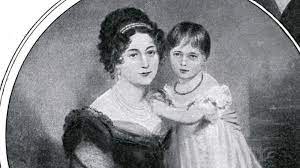
That wasn’t always the case. Take the situation in 1820, when the Duchess of Kent, one Maria Louise, found herself widowed and facing the rearing of an infant daughter alone. The child was improbably named Alexandrina, and the prospect of bringing this child up by herself absolutely terrified the Duchess. You see, the Duchess knew that her substantial inheritance from her recently deceased husband and her standing in the aristocracy in Great Britain meant that this child would have to be taught the responsibilities that came with such wealth and such position.

The widow turned to a trusted family advisor named Sir John Conroy. Conroy had been in the Napoleonic Wars and approached this problem of how to raise Alexandrina from a military perspective. He devised a system of child rearing for the infant that is now called the Kensington System. It centered around making the girl completely dependent on her mother and on Conroy for, well, everything. The thinking was that such responsibility would need the influence of the Duchess and of Sir John (who possibly had the additional motive of being able to wield influence over the substantial inheritance). Thus, the child would grow up to rely only on her mother and her mother’s trusted advisor.

The system revolved around isolating the child from not only other children but also from other relatives. She would not be allowed to be alone without either her mother or the governess. Detailed records of the child’s daily activities would be kept, monitoring her intake (and output), and detailing things like hours of sleep and what toys she played with, etc. Such behavior was designed to make her not wish to turn to anyone else for advice or help. She did have two playmates in her life but only two. One was a half-sister from one of her father’s dalliances and the other was Sir John’s daughter. But even these interactions were extremely limited. The child was rarely allowed even outside the gates of the family’s large residence. And, incredibly, the girl was required to sleep in the same room as her mother (despite their house having many large bedrooms) until she turned 18.

When Alexandrina was of age, her private tutoring began. The schedule was strictly adhered to, starting promptly at 9:30am daily and ending at 5:00pm. The girl was trained in languages, literature, poise, and even religion. And, daily, the Duchess would drill her child on what she learned. If Alexandrina failed to recall properly, there would be punishment. Remembering was expected and therefore not rewarded.

Well, it doesn’t take a child psychologist to realize that the Kensington System was a complete failure. The girl grew up to intensely hate her mother and greatly distrust Sir John. When she turned 18, Alexandrina fell heir to the fortune, and she made two requests. The first was to insist on having at least two hours during the day to herself (which had never happened in her life), and the second was that her bed be moved to her own bedroom.

And, when Alexandrina Victoria became Queen Victoria and married Prince Albert in 1840, she banned her mother from the palace for the remainder of her life.