On a Teen Pitching Phenom

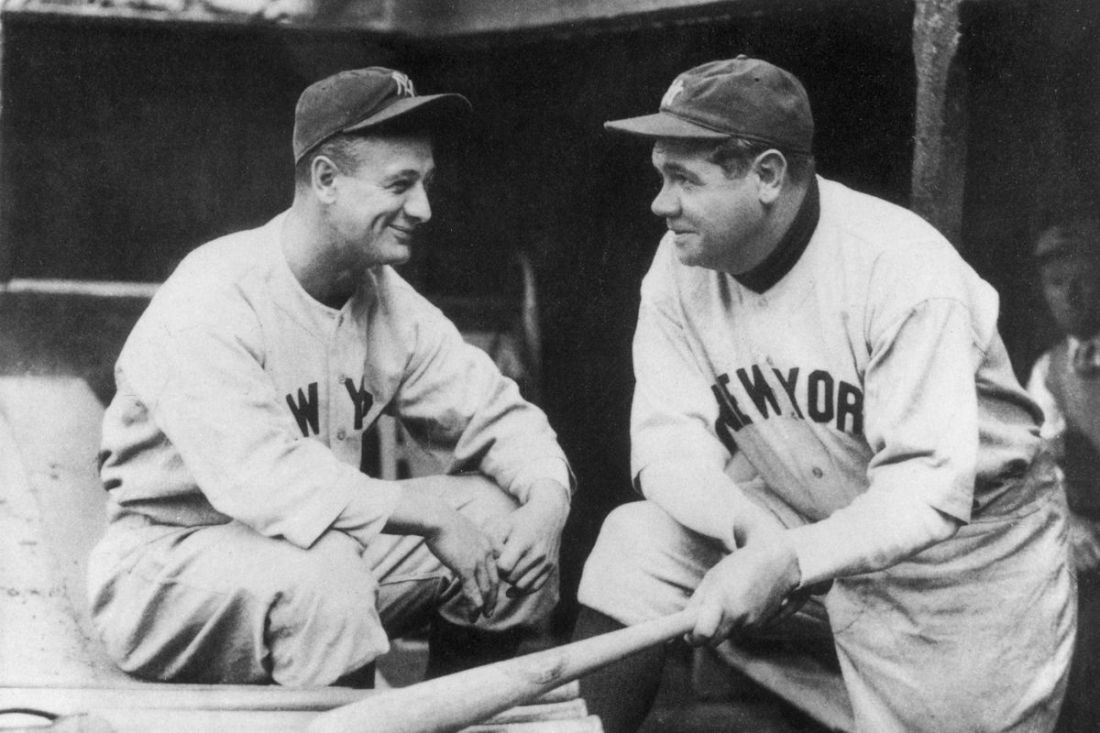
Here’s a bit of baseball trivia that you may not have known. The reason Babe Ruth was given number three for the New York Yankees, and the reason Lou Gehrig was given number four for that team was because that was their order in the lineup. That gives you an idea of what a great hitter Gehrig was that he would bat clean up! 

Back in the late 20s and early 30s, major league baseball teams would often play exhibition games against minor-league teams as sort of a de facto spring training. It also was a way to give fans in cities that did not have major league ball teams a chance to see their favorite major league stars in action.

Three years after their World Series championship of 1928, the New York Yankees faced the minor-league Chattanooga Lookouts in an exhibition game on April 2, 1931. The Lookouts’ starting pitcher, a man named Clyde Barfoot, who had once been a major league player, took the mound to face the mighty Yankees lineup.

Barfoot gave up a double and a single to the first two batters. Lookouts manager, Bert Niehoff, yelled for time to the home plate umpire as he came out of the dugout. When he reached the pitchers mound, he took the ball from Barfoot and said, “Hey, it ain’t gonna get any easier, Clyde. Why don’t you sit this one out.“ Barfoot headed to the dugout, and Niehoff barked, “Mitchell! Warm up!”

Jackie Mitchell was a thin 17-year-old pitcher who was actually born in Chattanooga. The Lookouts had only recently signed the youngster to their roster. It would fall to this kid to face Babe Ruth and Lou Gehrig with two men on base and no outs. Such a daunting task would make the most seasoned professional pitcher weak at the knees, but Jackie showed no fear in taking the mound.

Ruth first. The Bambino watched the teenager’s first pitch come in to the catchers mitt for ball one. You could tell that he was judging the delivery and the speed with his well-seasoned eye. Mitchell’s second pitch surprised The Babe with its speed, and he swung at it and missed for strike one. Quickly, the teen came back with a breaking ball, which had Ruth off balance, and he clumsily swung at it for strike two. Ruth was now furious. Mitchell took the sign from the catcher and floated another offspeed pitch in towards home plate. Ruth held back, thinking the ball was out of the strike zone. “Strike three!“ yelled the ump. 

Even though the game was an exhibition, Babe Ruth began verbally haranguing the umpire and had to be pulled away by teammates. Meanwhile, the hometown crowd cheered lustily for the native pitcher. 

Gehrig next. The Iron Horse had, for his career, one of the highest batting averages in the history of major league baseball. There was no way that the kid would be able to do to him what had been done to Ruth. Yet, Lou Gehrig struck out on three consecutive pitches. He shook his head in wonderment as he slowly made his way back to the bench.

When he sat down, the normally taciturn Gehrig turned to the other Yankees in the dugout and said, “That’s a great pitcher. I don’t care if she’s a girl.“

On a Generous Wealthy Woman

Liz enjoyed her wealth, and she was not stingy. No, sir. Her charitable works, her wide reputation for paying her servants some of the best wages in town (even her daily feeding of the squirrels and birds in her spacious back yard) proved that she was not a cheapskate. This was a generous older woman. In he 60s, she minded her own business and lived a quiet life in the large house in the best neighborhood of her New England community. She gave the place the idyllic name of Maplecroft Mansion.

As a younger woman, Liz had also been quite generous with her time. Stories were told about her teaching Sunday school at the local Congregational Church, her young pupils smiling as they, now adults, told about her eagerness to spin the Biblical stories into reality for them. It was said that she had quite the gift for teaching, and some wondered why she never entered that career professionally. Perhaps it was that her family was wealthy. Oh, well.

Her dad had made his fortune in real estate after beginning his working life as a mortician. Known as a frugal man, Liz’s dad seemed to have not passed on his frugality with his daughter. No, she gave freely and liberally to many charitable causes while not skimping on fine things for herself, either.

One little boy who lived across the street from Liz told the story about how she would always come by his sidewalk lemonade stand and practically buy him out, only to give the lemonade away to the kids in the neighborhood.

Liz indulged in trips to cities like Boston and New York, often going by chauffeured car, to attend the theater and to see museums. She would stay in fine hotels by herself and then return home. Occasionally, if she saw a play or production she liked, Liz would host parties for the cast in a time when “theater folk” often meant the undesirables of high society.

And that part perhaps was not so odd for Liz. For she, too, was largely an undesirable, especially in her hometown. The town she grew up in, and the town she lived in until she died. You see, she was an outcast herself.

Why would such a generous, charitable, kind, and self-less person be so hated by her own people?

Because “Lizzie Borden took an axe…”

On an Ill Inmate

The prisoner was obviously sick when he was brought to the prison infirmary. Guards had reported that he sat in his heated prison cell wrapped in a heavy coat. He would hear orders from them but could not seem to process what he had been told. The prison doctor only had to look at the man and speak a few sentences with him to know what the condition was: Syphilis.

The prisoner was a thug, a professional criminal, a person who had been in trouble since his youth. The doctor, who had seen it all in his work at the prison, still felt some sympathy for the man despite his past. The man’s face was festering, and his mind had already started to turn to mush.

Treatment for syphilis in the days before penicillin could only treat the symptoms but not really the disease and that only if the situation was caught in time. Unfortunately for this inmate, he had gone for years without seeking help for his condition.

In fact, syphilis had remained one of the main causes of death in the United States in the years before World War II. The first symptoms of sores on the mouth or genitalia would then soon turn into a rash that could cover the body. Then, apparently, the disease could seem to go dormant for years only to re-manifest itself and enter the final stage—when it began to not show in lesions not only on the skin but also attack the person’s brain. It often left sufferers severely mentally incapacitated. In addition, the illness struck the heart and the liver and other internal organs.

By this stage, the syphilis patient was doomed to death.

The poor man’s wife appealed to the courts and even directly to the warden to have the man who now only looked somewhat like her husband back in her house where she could look after him in what was left of his life. Out of a sense of sympathy, the request was granted.

In an effort to save the family and even the man himself further embarrassment, his release papers said that his sentence had been reduced because of his “good behavior” and did not list the syphilis. When he died at age 48 of a weakened heart due to the syphilis, the man was hardly recognizable to friends and family and was said to have the mental capacity of a child.

It was not the end one would expect for a man like Al Capone.

On a Stroke Victim

The retired professor lay in his bed, propped up by many pillows at his back. His wife busied herself with bringing his things to drink, tidying his bedclothes, and making sure he had newspapers and the daily mail. The stroke had left him paralyzed on his left side and partially blind. But today, some people were coming for a visit, and she wanted to make sure they saw the proud man at his best.

This stroke wasn’t his first. Back when he worked at the college, he had suffered several mini-strokes that had temporarily impaired his mobility and his vision. Like his father before him, it was said, he suffered from premature hardening of the arteries. Yet, he continued to work and to teach.

The professor had done much traveling in the years after he retired from the classroom. He had been across the nation many times by train. He had even been to Europe. His wife and doctor suspected that the travel had tired him and had contributed to the severity of the stroke.

The professor’s wife had taken direct charge of his recovery after this latest and most severe event. She limited his visitors to herself and the family doctor. The professor’s friends and extended family were forbidden entry. And the wife kept the severity of the professor’s health a secret–even to him.

The illness wore on, and the professor’s situation grew no better. In fact, in some ways, it grew worse.  It seems that the stroke had not only affected his body, but it had also changed his personality in many respects. Known as a man who had complete control over his emotions, since the stroke had occurred, he had been extremely emotional, he made impulsive and out of character exclamations, and his rational decision-making suffered dramatically. Soon, it was hard to see this man as the one who had been so respected when he worked in the classroom.

In fact, he had first made his reputation as a professor of history and political science. His book on politics and political science, The State, had even become the standard university textbook on the subject for several years. He was part of the generation known as the Progressives, and like many of his generation, his teachings promoted child labor laws, taxation of corporations, limiting the hours a worker could work per week, insisting on sanitary and safe factory conditions, and so on. One reviewer called his work the prototype of the modern welfare state. Such was his influence as a professor.

But that was long ago by the time he lay stricken in his bed. Many other important events had happened to him. And people who knew him–colleagues and family among them–were wanting to see if he was recovering or not.

Finally, after almost a year, the professor’s wife gave in. Some of his peers wanted to see the ill man. His wife agreed. So, on a good day, a day in which the professor could speak well and could sit up for a bit, she shaved her invalided husband, put his glasses on his nose, spread some newspapers around on the bed, and invited people over to see the man. Included in the group was one man with whom the professor had been at odds. They disagreed in years past on many of the Progressive principles the professor held dear. The disagreeable man seemed touched by the illness that had been brought to the professor’s life, even if they had been on different sides of many issues.

“I’m praying for you,” the man said, with sincerity.

“Oh? Which way?” answered President Woodrow Wilson.

On a Famous Landmark

In the most populous city in the United States, a mere 25 people live in this location according to the 2010 census. Yet, is one of the most visited landmarks in New York City—over 40 million folks go there in a normal year.  

The ones who designed it called it the “Greensward Plan.” It has a budget of $65 million a year. 

And a massive 5,000,000 ft.³ of earth was moved during its construction. And, speaking of construction, 20,000 laborers worked to build it. Five of them lost their lives during the build. More gun powder was used in its construction that was fired across all three days at the battle of Gettysburg. 

More movies have used it as a set than any other place in New York City. And a new genus—not species but genus—of insect was discovered there.  It is open 24/7/365. 

Can you guess this New York icon? Give up? 

You know it as Central Park.