On Meeting an Enemy

Staff Sergeant Erwin Meier of the German Luftwaffe was a highly decorated pilot during World War 2. Unlike most air forces of today, the Germans allowed non-commissioned officer to be pilots, and Meier was one of the best the Germans had. Flying his Messerschmitt Bf-109 machine, Meier had recorded double digit kills on the difficult Eastern Front of the war by 1942. For his service and skill, the pilot was awarded medals and other air awards. And that’s why, when he was shot down by a Russian pilot, he was somewhat surprised.

The time was September, 1942, and the decisive Battle of Stalingrad had finally begun to turn to the Soviets’ way. However, the end of the struggle was still undecided, and establishing air superiority was still important to both sides. While the Germans had their faster and more maneuverable Messerschmitts, the Russians were able to counter with their own fast and nimble Yaks. However, unlike the German crates, the speed of the Yaks was because they were made of wood and that made them much more vulnerable to enemy fire.

It was a clear day when a squad of four Yaks spotted some German bombers and their fighter escorts headed for the Russian lines around Stalingrad, and the Russians closed in for an attack. Meier saw the Russians at distance, and he peeled away from his group and looped back around to come in on the Russians from behind. Now, the pursuer became the pursued. Meier’s tactic was so bold and smart that he managed to gain an advantageous position on the rear of the Russian squad leader, a man named Major Danilov. As he was squeezing off some machine gun rounds into the now-splintering tail of the Russian’s plane, Meier felt a violent jolt. Somehow, a Russian pilot had managed to come in on his tail, and his Messerschmitt was being pelted with rounds. Several Russian rounds found his engine, and the German ace realized that his plane was doomed. He veered off from his attack on the Russian major and tried to keep his craft steady while he unlatched and then pushed back the glass covering over his head. He checked his horizon and then bailed out of the doomed aircraft, deploying his parachute after he was sure he had cleared the plane.

As he gently fell to earth under the canopy of white silk, Meier cursed himself for being so careless. How could he not have seen the pilot that snuck up on him from behind? That guy must be a good pilot, Meier thought. And, when he reached the safety of the ground, a squad of Russian soldiers were there to quickly take him captive. Meier thought he knew the names of the best Russian pilots he was facing daily in the skies above Stalingrad; he had studied their tactics and their tendencies, and, in his mind as he was being questioned and moved to a POW camp, Meier ran through the list of who he thought might have been the one who shot him down using such a good maneuver.

“Would it be possible to meet the pilot who shot me down?” he asked his questioners through the interpreter. Sure, came the answer back. The Russians were happy to oblige him because they realized that a meeting between their own pilot and the German hero would make for good publicity and would boost morale in the Soviet press, good news for a people hungry for any victory in the war, no matter what the size of it. So, Meier was taken to the makeshift airfield where Major Danilov’s squadron was based. And he was introduced to Lieutenant Litvyak, a 21 year old blond Russian who looked like someone you’d meet in a school yard rather than in a deadly air duel. But Meier thought the Russians were kidding him, trying to embarrass him. Surely, this kid couldn’t’ve been the expert pilot who got the drop on him and shot him down so expertly. Still incredulous, Meier asked Litvyak to describe how the short battle unfolded. The Russian described the encounter to a tee. Meier became convinced that this, this, this child had bested him in combat. The Russians, of course, were gleeful. For his part, Major Danilov acknowledged that Lt. Litvyak had saved his life, that he was probably doomed if Meier had been able to finish him off. What made it worse in Meier’s mind was that the young Russian pilot had only been on the front for less than a week and already been credited with three “kills” including Meier. The brave and skilled Lt. Litvyak would soon be promoted to command a squadron of Russian planes and be credited with dozens of sorties and several more kills before being shot down and killed in August of the next year.

But that was long after the Soviet propaganda machine made a big deal out of the fact that the German ace Erwin Meier had been bested in combat by a girl.
On a Trip to Hawai’i

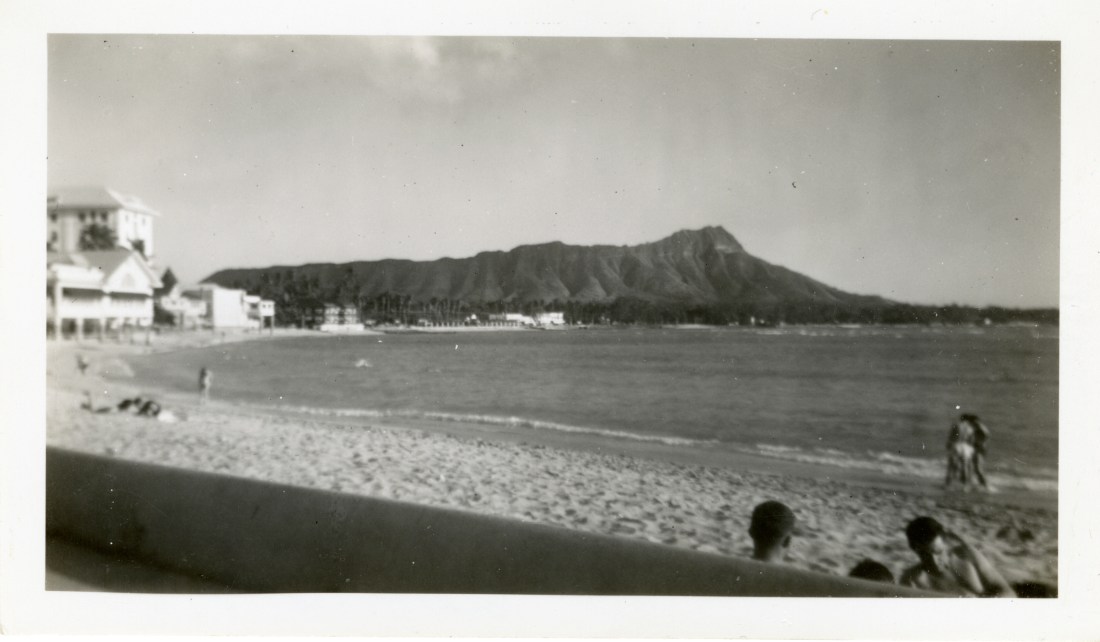
Hawai’i is one of the most beautiful places in the United States, and people from all over the world go there to enjoy the beauty of the beaches, forests, and the hospitality of the people. Asian tourists visit the islands routinely and have for decades. One such tourist from Japan was named Takeo.

Takeo’s desire to go to Hawai’i was so strong that he stayed several months. He arrived in Hawai’i in March of 1941, and he rented an apartment overlooking the harbor in Honolulu. Using that place as a base, Takeo wandered all over the island of Oahu, learning about its beaches and hills, and he took copious notes so he could remember all that he saw. Like many tourists, he enjoyed taking tours of the island by air. The view from above, he said, gave him a wonderful perspective on all that lay below.

Takeo enjoyed swimming in the harbor. He snorkeled there often, and he sometimes took the ferries and boats that chugged around the island. He mingled with the populace, shopped in the markets, and listed to their stories about life there. Over the course of nine months, Takeo learned all he could about the place. You could easily say that he was obsessed.

Today, almost 1/5th of the population of the state is of Japanese descent. When Takeo was there, the place housed about 160,000 people from Japan. That helped Takeo blend in better and made him feel much less conspicuous, much less of a “foreigner” in what was still at that time an American territory. When the United States entered World War II, the overwhelming majority of those Japanese people residing in Hawai’i chose loyalty to the United States over their native land. Fear of “the other” and racism led the United States government to implement a policy of internment for many Japanese-Americans on the mainland.

Takeo, however, had other ideas. You see, the reason he was so interested in Hawai’i was not that he was a casual but deeply attached tourist. No, rather, he worked for the Japanese government as a gatherer of intelligence. He was the chief Japanese intelligence agent in the American territory.

In fact, Takeo Yoshikawa’s copious notes and research that he radioed back to his home country over the nine months he lived in Honolulu helped Japan carry out the surprise attack on Pearl Harbor on December 7, 1941.

On a War-Time Ban

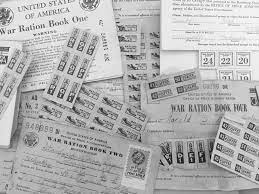
Our modern generation has “suffered” the inconvenience of supply-chain issues due to the Covid pandemic. We have only tasted the edge of what it is like to live in an extended time of rationing and shortages. During World War II (and also World War I, to some extent), rationing in the United States was mandated for several years. Several items during the war saw shortages, but it was only those commodities that were directly needed by the war effort that required rationing and the accompanying ration stamps.

Among the rationed items in the United States were gas, rubber (for tires), sugar, meat, and coffee. While most people hated rationing, most people also accepted it because, after all, it was the least they could do to support our fighting men and women in the “crusade” against Nazism and fascism. In fact, the rationing and shortages served to unify the nation in an odd way.

The federal government had been granted absolute authority to decide what items were to be rationed and what products could be manufactured and which ones were to be prohibited for the war’s duration. One such banned product caused an unusually loud outcry among the population when it was enacted in 1943. It was a product that had been ordered banned by the Secretary of Agriculture, a man named Claude Wickard.

Now, Wickard knew his stuff. He was from Indiana, farm country, and he had a bachelor’s degree in agriculture from Purdue University. The state had decreed Wickard as a Master Farmer in the 1920s for his agricultural innovations and improvements for small farmers. He had served as an Undersecretary of Agriculture in the Hoover Administration and then was appointed Secretary of Agriculture in 1940. He would hold that post all during World War II. He is remembered for promoting the growing of Victory Gardens as a way for Americans to extend their food supplies during the years of shortages and rationing.

However, it was the incredibly unpopular ban in 1943 that Wickard is best remembered for. In an article, Time magazine described the terrible deprivation the ban created. It said that American housewives felt the ban, “was almost as bad as gas rationing and a whale of a lot more trouble.” The article went on to point out that, for American women, they had to “saw…grimly on. This war was getting pretty awful.”

Sounds terrible. What product would you think could cause such consternation among American women? In a letter to the editor of the the New York Times, an irate American pointed out how important this item was to the morale and “saneness” of the average American household. She lamented the days gone by when this product made her life worth living. New York Mayor Fiorello LaGuardia (yes, that LaGuardia) even got involved in the controversy, offering alternatives to the ban and saying that he would do all he could to intervene with Secretary Wickard to end the ban as soon as possible.

Wickard, for his part, pretended to ignore the uproar his ban had caused. He seemed to not notice the outcry. He pointed out the savings his ban would make and said that it was all necessary for the war effort. But the cries of housewives across America proved too incessant and the political pressure put on elected officials forced Wickard to retreat. He soon announced not that the ban was lifted because of the protests but, rather, that the supposed savings the ban was to provide did not in fact come to pass. Thus, he said, the ban was lifted.

Jubilation ensued. We don’t know if or what pressure Claud Wickard might have felt from Mrs. Wickard, but we know how happy she was, too, when her husband ended the ban.

And what was this product that every American housewife demanded to have during World War II?

Sliced bread.