On Some Cordial Telegrams

Historians are lucky to have access to letters and telegrams that were sent between people on both sides of the conflict we know as World War I. This year marks the 115th anniversary of the end of that horrendous conflict. Let’s look at some of the language used by two men who exchanged telegrams at the start of the war, one on the Russian side and one on the German side. Please know as you read these messages that the men are first cousins, and they know each other well and remember the other one with great affection. Also, know that the telegrams were sent in English because their family had its origins in the United Kingdom.

Austria-Hungary had declared war on Serbia on July 28, 1914, and the world stood by and watched as the great powers like England, France, German, and Russia decided whether or not to join the conflict and to honor treaties made with the involved parties. The decades leading up to the war had seen these countries (and others) become involved in massive arms production. War seemed inevitable. And that’s the context of these affectionate messages between the cousins.

The first telegram, sent by the German cousin on July 29th, pointed out that they, the two of them, had no quarrel between them. He spoke of “the hearty and tender friendship which binds us both from long ago with firm ties.” To these cousins, it seems, the idea of war appeared remote and almost unthinkable. There had been family gatherings over the years where the entire group had come together in happier times such as weddings, and sadder occasions like funerals–the typical times when families celebrate the future and remember the past. So, the pair of correspondents had a long past together despite living in different countries. They even bore a familial resemblance to the other.

The Russian cousin replied and expressed his “thanks for your telegram conciliatory and friendly.” The telegram exchange continued, the cousins in the rival nations almost incredulous that the war machines of each country would contemplate war against the other. The German’s next message included a reference to one of their common ancestors: “My friendship for you, transmitted to me by my grandfather on his deathbed, has always been sacred to me.”

Yet, as we know, the machines of war marched towards what would become an absolute slaughter. Both Germany and Russia would see major revolutions result from the war, with the removal of both the Kaiser in Germany and the Czar in Russia. And the cousins seemed to sense that any impending war would bring about such disasters upon their respective nations. The Russian said, “It may all end peacefully,” but he expressed doubts at the same time, saying while “peace [is] dear to our hearts…mobilization (of Russia’s vast army) seems inevitable.” The German expressed the same sentiments. He stated that only “immediate and clear and unmistakable” actions from both governments were needed, but he expressed doubts that those actions would be forthcoming.

And the cousins were right. Germany declared war on Russia on August 1, 1914. The resulting war cost over 20,000,000 lives lost and about the same number wounded. The Austrian, German, Russian, and Ottoman empires were broken up. And today, we remember those who fought in this Great War on all sides, a war that, as the cousins expressed, didn’t need to happen if only the leaders of both sides had been better at talking to one another. If only they had the feelings of love and affection that these two cousins felt.

The problem was, these telegrams between the cousins–Kaiser Wilhelm of Germany and Czar Nicholas II of Russia–still didn’t prevent war from happening.
On a British Spy

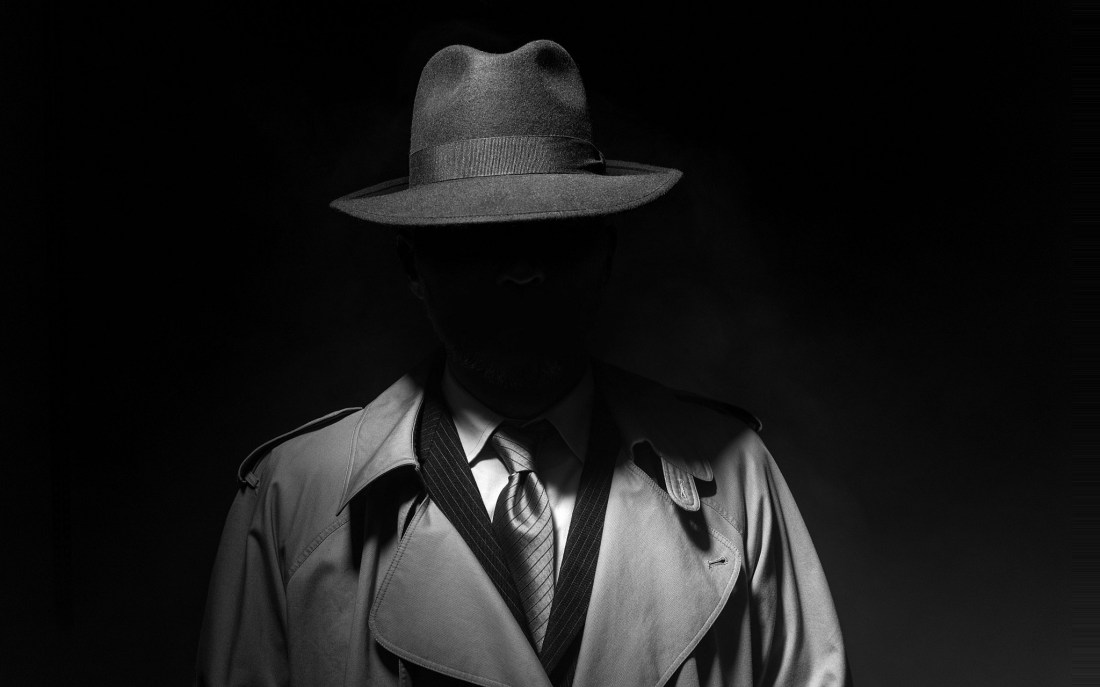
I love a good British spy story. Tinker, Tailor, Soldier, Spy is one of my favorite films for this reason. There’s something about the spycraft of it all, the casual business-like calm, the, well, Britishness of spying that makes those types of stories interesting to me. Take the story of one such spy recruited by Britain during World War I.

Many people don’t know that the British Government spy agency, commonly known as MI-5 (short for Military Intelligence, Section 5) got its start before World War 1, in 1909. Britain could read the tea leaves, so to speak, and knew that war with the aggressive regime of Kaiser Wilhelm II in Germany was going to happen sometime in the near future. Therefore, the British planned ahead. MI-5 was set up to identify and monitor possible German spy activity in Britain in the buildup to the war. The head of the agency, a General Vernon Kell (known only in the agency as “K,” of course), also knew that, when war came, it would be vital to have British agents in the nations that could help Britain win the war. So, he planned to plant British spies in nations like Romania (whose king was a relative of Britain’s George V, as were most European monarchs), Denmark, and Italy.

Italy was especially important to Britain because of their large navy in the Mediterranean Sea and the fact that they bordered Austria-Hungary on their eastern side, a nation that most assuredly would side with Germany during the war. And General Kell sought out Italians who weren’t in the miliary to be his spies; he felt that people with “normal” jobs would draw less attention in their intelligence gathering than would people who would be obvious candidates for spying. On the other hand, the occupation of these people should give them access to people, places, and events that would prove to be valuable sources of information if and when the need arose. Teachers made good spies. Transportation administrators did as well. Art dealers, book publishers, and reporters were also on the list.

Thus, one of the spies MI-5 supported during World War I in Italy was a journalist. In his capacity as a British agent, this guy could not only have access to important people but he would also be able to help sway public opinion in favor of the Allied cause. Of the several dozen spies in Italy during the war, this one was a particularly good investment. Records show the man was paid well by the British every week to provide information and also help mold the opinions of the Italian people into supporting the Allies. In fact, payments made to this journalist at the time equaled about $8,000 per week in today’s money.

As Italy’s government began fighting for the Allies, the work this spy performed made a difference in keeping Italian morale up and providing actionable information for his minders. As the war ended in November, 1918, the need for such spies also ended. Kell saw MI-5’s budget cut drastically after the war, going from hundreds of staff members to only a handful. However, the onrush of World War II brought the agency it back to life as the original Axis of Evil (Germany, Japan, and Italy) threatened the world.

Of course, Italy’s threat to Britain in the 1930s might not have been so great had it not been for the rise of the Black Shirts of the Fascist Party in the 1920s. And you know the man who led that political movement, right?

The same journalist the British paid so well to be a spy during the previous war: Benito Mussolini.

On an Imposter

Tom sat in the British trench with his friends and fellow soldiers, and he read a newspaper. It was 1917, on the Western Front, and the Great War raged across Europe and other places around the globe, making it the first truly world war. Tom had joined the British Expeditionary Force in the early days of the war. He was a Canadian, Tom was, and he was proud to serve King and Country.

An article in the paper caught his eye. It seems that a fellow Canadian, a celebrity, long-distance runner named Longboat, had enlisted in the war effort as well. Now, this was the period when track and field was a much more publicly popular sport than it is today. Crowds paid top dollar to watch races of all distances in much the way people today pay to witness boxing matches live. Anyway, this Longboat fellow had enlisted, the story said.

But Tom knew something wasn’t right about this story. First of all, the story said that this Longboat guy had enlisted not in Canada, but he had gone to the United States and had enlisted into the American armed forces (who were only then joining the war on the side of the Allies). Tom didn’t know that Canadians enlisting in the US Army was possible. Also, Tom knew first-hand what this Longboat fellow looked like, and the man who was depicted in the publicity photo in the newspaper was definitely not him.

You see, Tom himself had been known to run a race or two back in the time before the war. In fact, he was a “runner” for the British Army, dispatching messages from the front lines to the rear. It was job that required speed, certainly, but also incredible bravery because the runners were often exposed to gun and shellfire as they ran the messages back and forth.

So, when Tom saw the photo of this imposter Longboat guy, he was a little miffed. I mean, it was obvious that he was trying to get some cheap publicity by pretending to be the famous runner. Maybe, also, he thought he could get a cushy assignment in the military because of his fame. Who knows for sure why people assume others’ identities?

Tom told his friends in the trenches that he would try to get word through channels about this imposter. Being a runner who went back to Headquarters regularly, he had some connections there who might could get word to the Americans about this guy. Tom’s buddies in the trenches were skeptical. Why would the Americans believe the word of some guy in the British Army over the word of a man who said he was a world famous runner?

Tom smiled.

“Well, after all, I’m the real Tom Longboat.”

On an Import to China

We hear talk often of the trade deficit with Asian markets as cheaply made products from that continent, specifically from the nation of China, crowd out the more expensively produced western goods in stores on this side of the globe. Western products get re-imagined and re-engineered over there because, in part, of cheaper labor, and then consumers in the west choose the cheaper product. And who can blame them? But here’s a story about an import to China that won’t and can’t be undercut and sold back to the west.

It involves a Canadian man named J. Howard Crocker. Let’s call him Howard. He worked in the early 1900s for an international organization that assigned him to the (at that time British-held) Chinese city of Shanghai. The organization shipped him off to China in 1911 with a farewell banquet and its best wishes for success in his new venture. So, even though he knew little about China and had worries that he would fit in over there, Howard agreed to go.

When he arrived, Howard found the organization’s organization in shambles. Offices in several Chinese cities didn’t coordinate with each other. There was overlapping territory, lack of coverage in other places where should be some, and almost zero cooperation or even communication going on between the offices. So, after being given the go-ahead from the home office, Howard set about re-organizing things. His efforts paid off pretty quickly. Within a short time, things in the China branch were humming along. Howard managed to bring people together. He borrowed a phrase from a fellow Canadian and touted the slogan, “The Joy of Effort” to represent doing your best in a job and enjoying the results.

But then, in 1912, China experienced a revolution. The emperor (and the power behind him) was toppled and replaced with a president. Rather than meeting opposition from the new regime, Howard found that China’s new leaders welcomed his group and promoted it. That led Howard to begin a wide ranging campaign of building offices and facilities throughout China in an effort to spread the goals of his organization. And rather than meeting opposition to what he was doing, the Chinese people embraced it eagerly.

By 1915, Howard realized that ultimate success in China depended not on bringing Canadian or other foreigners to China but rather to train native Chinese people to work for his group. The locals in turn would train other locals, and so on and so on. Soon, this thing was found in every city and hamlet in the nation, and it is still there today. In fact, China excels at it.

Now, this was fairly radical for Howard’s time, given that the western mentality of colonialism remained strong in most western mindsets. But Howard found success in training locals to take over the jobs that had been held by westerners. Now, to be fair, Howard was sort of forced into this because World War I took many of his western workers away from China, but the result was that the local people his group trained spread what he and his group had brought with them throughout the country much better than Howard ever thought his group could.

Eventually, because the Canadian war effort needed his organizational skills, Howard was recalled to Canada, but what he and his organization left behind in China is now today one of that nation’s greatest sources of pride. When J. Howard Crocker died in 1959, he had no idea that the thing he had introduced into China would make it one of the world’s leaders in that area.

What was it that Howard brought to China and in which it is now one of the world leaders in? Well, the organization Howard worked for was the International Organization of the YMCA, and the thing he gave to China, the thing that they’re one of the world’s best in is volleyball.

On a Horse Race

June 4, 1913, was the day of the famous Derby Race held in Epsom, Surrey. The 1 1/2 mile race is the premier thoroughbred horserace in the United Kingdom. That day, the Derby was won by a 100-1 long shot named Aboyeur, although he was not the first horse to cross the finish line. Another horse crossed first, but, unusually, that horse was disqualified because the horse and rider had committed several fouls along the race course. That’s why Aboyeur ended up in the winner’s circle that day. However, we don’t remember the 1913 Derby because a long shot won that day.

Jockey Herbert Jones is one reason we remember that particular race so well. That day, Jones was astride a steed named Anmer, and Anmer was owned by none other than King George V. Now, Jones was one of the best-known riders of his day. Jockeys were celebrities like pro athletes are today, even gracing the fronts of collectors cards (like a horseracing version of baseball cards). Jones won Britain’s version of the Triple Crown, and he had been astride other colts owned by royalty before. Some said he was one of the favorite jockeys of Edward VII, a king known for his love of the ponies and racing and betting.

But this was not Jones’s day. Anmer broke late and never had a chance to move up to challenge the leading pack that day. In fact, Anmer didn’t finish the race at all. You see, an obstruction was on the race course, and Anmer struck the obstruction, falling, and throwing Jones off his back. He summersaulted and landed on top of Jones. The jockey was knocked unconscious and later was determined to have had a concussion. He also had to have an arm in a sling. King George was most disappointed. He noted in his diary for that day, “Herbert Jones and Anmer had been sent flying” by the obstruction and that it was “a most disappointing day” all around. Luckily, Anmer wasn’t badly injured, and Jones even managed to ride the horse in races again not to much later after he recovered from his injuries.

But, what exactly was this obstruction?

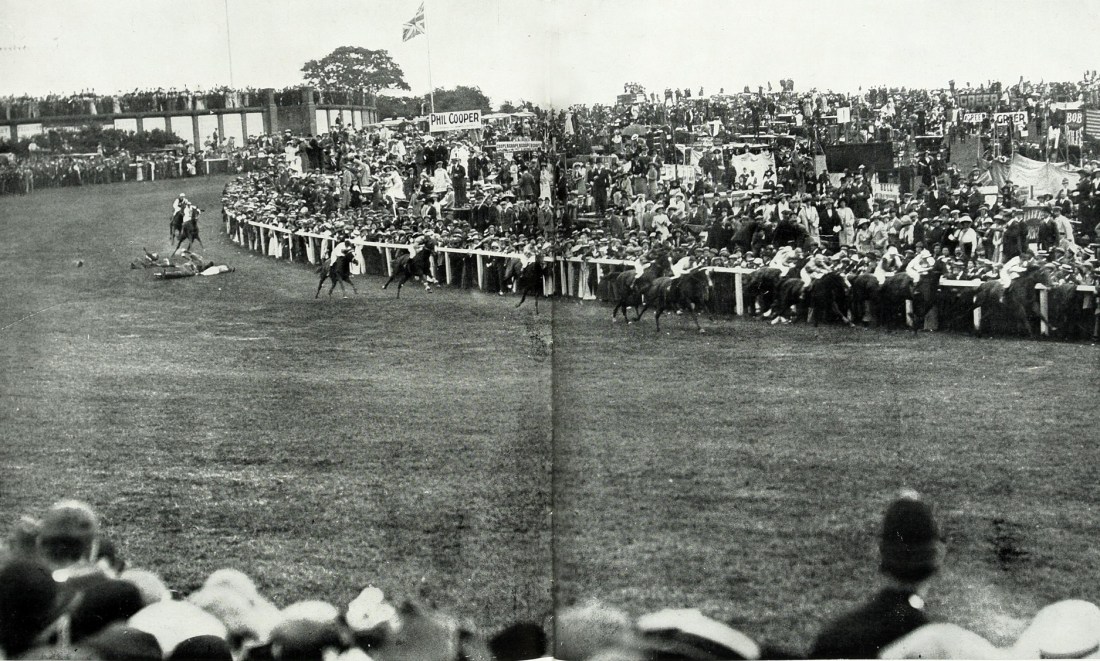
Well, it happened at turn four as the race was about to enter the home stretch. Something ran out onto the racecourse in the direct path of Jones and the king’s horse. Newsreels of the day captured the moment it happened, and you can see it on the internet today. The obstruction–the object that ran out in front of a mounted horse running about 35 miles per hour–was a woman.

It seems Emily Davidson, a 39 year old suffragette from London, crossed under the barricade and moved alongside Anmer and Jones as they sped towards her. The newsreel footage seems to show that she was trying to attach some sort of suffragette pennant to the horse’s tackle or bridle as it flew past. The horse struck her—and killed her almost instantly.

Davidson’s dramatic death is said to have led to the public outcry that would give women in the UK the vote only 5 years later.

On a Family Wedding

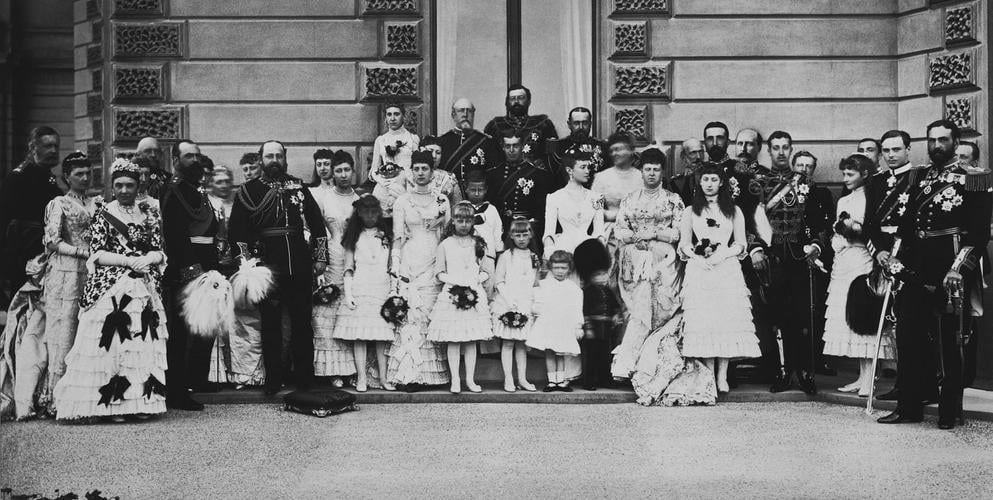
Weddings are usually joyful occasions for families. Large families especially mark weddings and funerals as major events in family lore. Those major life events are times of reconnecting with cousins and distant relations that you don’t normally get to see. That was definitely the case of a large family wedding that took place in 1913 in Berlin.

The bride, Vicky, was marrying a guy she’s gotten acquainted with the year before at, of all places, a family funeral. He was even a distant cousin, and his name was Ernie. Vicky’s dad, from the wealthy class, wanted everyone to come to the nuptials of his only daughter (and favorite child), so he sent word to all the family to make their way to Berlin in May 1913 for the wedding of the decade. He also wanted to use the event to bring the family closer. It’s difficult to keep so many people in touch, especially when there are as spread out as Vicky’s family was. So, the extended family began making their way to the city to witness what surely would be a grand time.

Since this family was from the land-owning class, many of the men in this large group were attached to the military, so the wedding party was resplendent with fancy dress uniforms and gleaming medals and swords. The women wore their best expensive gowns to not only the ceremony but also to the various balls and dinners held to celebrate the happy couple’s wedding. Tens of thousands of German marks were spent on the catering, the bands, the alcohol, the gifts, the decorations, and the cake (the height of which reached almost one story, according to one report).

And, so, it proved to be exactly what Vicky and Vicky’s dad wanted. It was indeed an affair that brought this large, wealthy family together in celebration. Yes, it proved to be an amazing time that was reported in all the papers, an event that people were destined to talk about for the rest of the decade.

Except they didn’t talk about it.

The wedding was forgotten in a little over a year, lost in the disaster that was to follow over the next five years.

You see, Vicky, the bride, was named after her great-grandmother, a woman named Queen Victoria of Britain. Her dad was Kaiser Wilhelm of Germany, and the cousins that came to the wedding–the crown heads of Europe, including King George of Britain and Czar Nicholas II of Russia, and all those other men who wore their uniforms to the event–they went back to their homes and their armies and navies.

And, within 16 months, they would start World War I against each other, in August of 1914 to be exact.

And Vicky’s wedding would be the last time all those royal cousins saw each other alive.

On a Name Change

What’s in a name?

My dad’s dad came from Greece to the United States in 1907. His Greek name was Papapistolos, a name so long it would need two mailboxes so all the letters could be seen by the postman. The family lore says that, since my grandfather wanted to work in the steel factories around Pittsburgh, PA, he chose the last name Millson as his “American” name. After all, he wished to be a “son of the mill.” I like that story, even if it’s probably apocryphal.

Families choose to change their names for many reasons. Sometimes, the act represents a new start as in the case of my grandfather. Sometimes, a name can be a tribute to the past or to a particular person or tradition. I’m thinking of some celebrities lately whose families chose more “American” sounding names and have Jewish heritage and who are now choosing to return to a name that reflects that heritage more. Sometimes, names are changed for political reasons.

During World War I, anti-German sentiment in the United States was so high (despite German being the second-largest ethnic group in the US) that many Americans with German-sounding names changed them in order to not have their loyalties to the US questioned at all.

George was one of those on the allied side who felt that his German-sounding last name might cause some to wonder where his loyalties really were. Mary, his wife, while not born in Germany, also had a German last name because both of her parents came from there. The couple discussed the issue at length. Their family was large, and whatever choice they made would have far-reaching impact on generations to come. Yet, anti-German feeling was so strong that there had been news reports of street violence against people who were discovered with names like Schultz or Mueller or Baum. Such stories frightened both George and Mary.

The couple decided to take the step and make the change. They weren’t sure how to go about it. They knew it would require much paperwork and legwork to accomplish, but they were willing to put in the effort. The next thing was for George and Mary to decide what their new family name would be. One man who worked with George suggested that they take the name of a famous nearby building. It sounded distinctly English, and no one could possibly mistake it for anything but. George ran the idea Mary, and she whole-heartedly agreed.

So, on July 17, 1917, King George V and Queen Mary abandoned the last name Saxe-Coberg-Gotha and chose instead the last name Windsor.

On an Air Raid

Everyone knows about the German bombing of London during the war. We see something similar on the news in 2022 with the Russian air attacks on the Ukrainian capital, Kyiv. However destructive and terrorizing the Kyiv attacks are–and they are–the bombings of London were a shock for a world not used to attacks on the civilian population during the war.

You see, it was the German mentality that war was not only waged by the military, but that it was also fought and supported materially by the civilian population. The chances of German success on the battlefield, the theory went, would be greatly increased if the population that supplied the opposing army would be itself harmed and its ability to supply that army stopped.

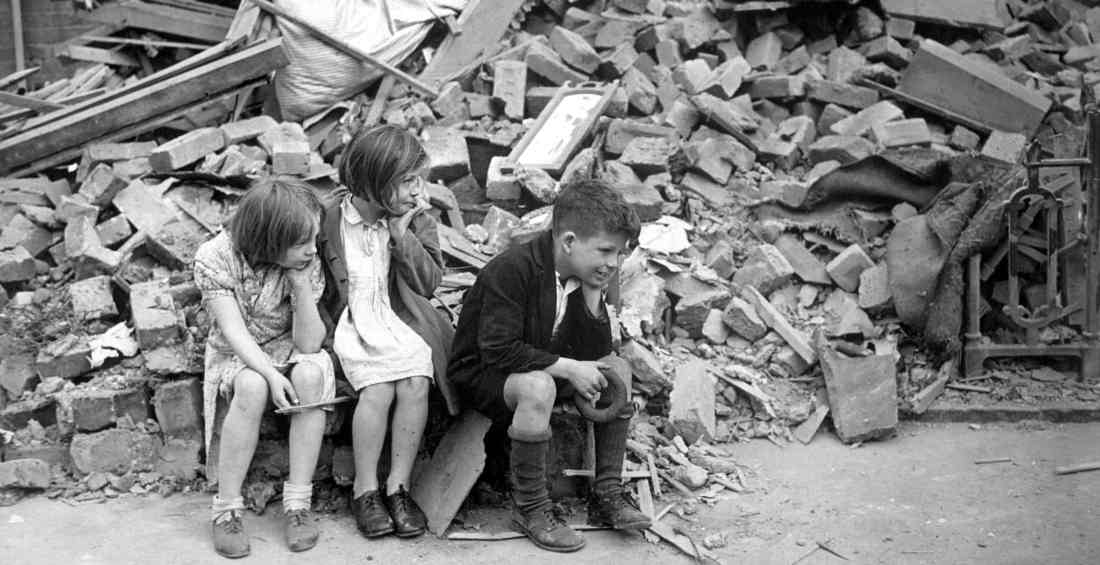
Thus, on September 8th, in the war’s second year, the British capital city was first attacked by the air. Massive damage resulted. Twenty-two civilians were killed, and six of them were children. The Germans were promptly labeled “baby killers” by the British public. Besides the blackout orders and bomb shelters that were put in place, anti-aircraft batteries were moved from other places to London to provide improved protection against future attacks by the German air force. Searchlights crisscrossed the night skies above the dome of St. Paul’s Cathedral and Buckingham Palace.

The Royal Flying Corps (RFC) also fought bravely to combat the attackers. As the bombings of London increased, the pilots of the RFC took to the air to defend the population. Lt. William Robinson became an instant minor celebrity in Britain for being the first RFC pilot to shoot down a German aircraft during the raids. It seems he was the first to discover the tactic of flying much higher than the German raiders and then attacking them from above. The Germans, much more interested in the placement and release of their deadly cargoes as well as the deadly anti-aircraft fire from below, didn’t expect attacks from above. The tactic changed the course of the air war above London.

By the war’s end, almost 3,000 Londoners had either been killed or seriously wounded by the bombings. What the Germans didn’t kill was the fighting spirit of the British people. In fact, the bombings may have galvanized English public opinion to fight the war to a successful conclusion at any cost. Some of the citizenry felt a sense of pride that they, too, had been under fire during the war. But London would suffer much worse two decades later. In fact, almost ten times worse.

Yes, the German bombings of London in World War I–first by zeppelin, then by large bombers–as terrible as they were, paled in comparison to the London Blitz that would take the lives of 20,000 Londoners in World War II.

On an Interrogation

Margaretha said she wasn’t sure why the authorities were questioning her. The Dutch woman found herself being interrogated by the French military police. They wanted to know her movements in the previous weeks.

To say that war time is stressful is to state the obvious. Governments during war often take away liberties in the name of national security because of the fear they feel about enemies being behind every door. That seems to have been the case here. The French authorities were looking for a scapegoat.

Margaretha felt she was being unjustly accused of…well, she wasn’t sure exactly what the French were accusing her of. Her interrogators kept asking about her past. Her family had money when she was growing up, so that allowed her some perks that most people in the late 19th and early 20th Century didn’t have–she could travel, she rubbed elbows with other wealthy people, and she knew people from many countries. It was this last thing that the French police wanted to know. Who were her friends in Germany? Britain? Belgium? To Margaretha, it was all confusing. What did who she knew have to do with anything?

She had spent some years in the Dutch East Indies (another thing that the French police wanted to know about, by the way), and it was there her husband, a rich and spoiled Scottish man, began to beat her and cheat on her with others. It was there that she had two children, a boy and a girl. There, too, her son got sick and died. Returning to The Netherlands, the couple broke up, and Margaretha won custody of her daughter. Her husband didn’t give her any money, so she turned to performance art–dancing and modeling–for a living. She had learned a bit about exotic dancing while in the Indies, and she took on a persona of someone from Asia for her act.

Famous people came to see her perform her dances. By the late 1910s, she had became famous and wealthy from her work. Wealthy men vied for her attention (and lavished her with even more money). By this time, however, Margaretha was in her late 30s. Her youth and her performance days were over, and she had become something else to make money–a courtesan. She parlayed her notoriety as a performer on stage into a performer in the bedchamber, and she had “clients” in almost every nation in Europe. Important people in Germany, France, and Britain had shared her bed by this time. The inquisitors were very curious about this last point.

We know how these things go; the friend of my enemy is my enemy. Here was a woman who knew too much, and there were secrets that she might have had that simply could not be allowed to see the light of day. She was questioned for hours and then accused of being a traitor to the Allies. She is supposed to have said, “A harlot? Absolutely. A traitor? Never!” She was put on trial more, it seemed, for being a woman of questionable morals than for knowing any secrets that might hurt or embarrass the Allied Powers. At dawn, on October 15, 1917, twelve French soldiers shot her for being a spy for the Germans. It is unclear to this day what her crime actually was. She maintained both her innocence and her flirtatious nature the entire time.

In fact, right before the order to shoot was given, Mata Hari blew a kiss to the firing squad.