On a Bad First Impression

First impressions are hard to get over for good or ill. Sometimes, when you meet a person, something about that person bothers you or makes you feel uncomfortable; that person somehow sets off alarm bells in your psyche. That’s what happened in September, 1918, at a dinner in London, England. World War 1 was winding down; the Allies, led by the United States, Britain, and France, were pushing Germany back on the Western Front after over four years of stalemate in the trenches. By November 11, 1918, the war would be over.

A young American government administrator in the Department of the Navy had come across the Atlantic to assist in the final preparations for the end of the war. He had taken a tour of the areas in England where staging bases were located. Then, donning a steel helmet, he was given a tour of the areas behind the constantly moving front lines near Verdun, in France. There, he saw the huge piles of ammunition, bombs, materiel, and food supplies–and also the piles and piles of coffins and dead bodies produced by the war. While he never came under fire, he got enough of an idea of the logistical nightmare that not only prosecuting the war was but also how difficult ending it would be.

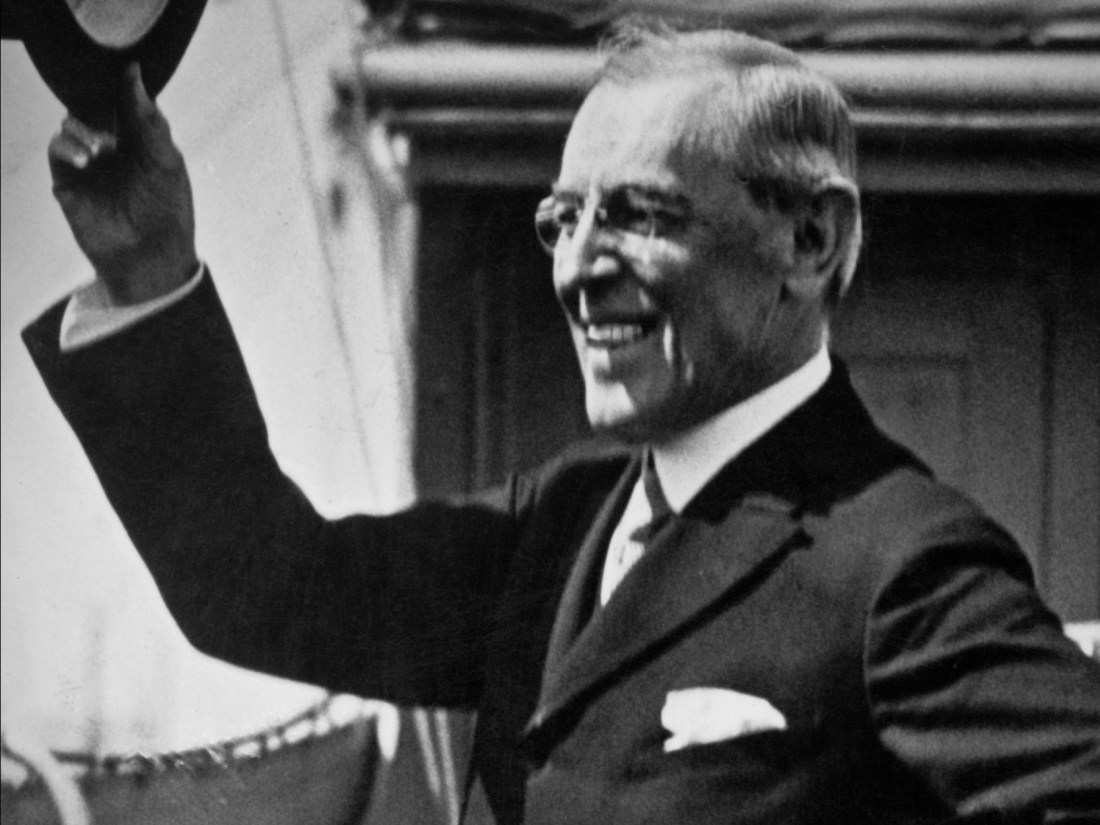
He had been sent there on orders of the White House. President Woodrow Wilson needed someone to be his eyes and ears in Europe, someone he trusted. And the young administrator had put together quite the dossier of what it would take for the demobilization of the war effort and the re-establishment of peacetime order and daily life (later on, a man named Herbert Hoover would be in charge of one part of this post-war plan by organizing food relief for Europe after years of having almost no farm harvests because of the war).

Upon his return to London after his tour of the front, this American official had been staying at one of the city’s swankiest hotels, the Ritz. Among the meetings that had been scheduled for him there were appointments with the head of the British Navy and even had some time with King George V, a meeting at which he expressed President Wilson’s admiration for the king. One of the last meetings on the administrator’s agenda before returning to the United States was to meet with one of Britain’s chief war administrators, another navy appointee like himself. The meeting was to be conducted over a supper at the famous Grey’s Inn in London.

The dinner didn’t go well. To begin with the Englishman was late. When he finally arrived for the meeting and supper, it appeared that he had been drinking. The American was underwhelmed. In a diary entry, he later wrote that the Englishman was, in his words, “a stinker…[who] was lording over all of us.” The Englishman seemed to give the impression that the Americans, and this American in particular, were somehow beneath him. And that chagrined the American no end.

So, it’s important what first impressions can do to relationships. Funny, that. In this case the two men later became close friends. The American man later told the Englishman, “You know, I didn’t like you at all when we first met.” That surprised the Englishman because his first impression of the American wasn’t negative.

In fact, years later, Winston Churchill told Franklin Roosevelt that he didn’t remember the meeting at all.
On a New Captain

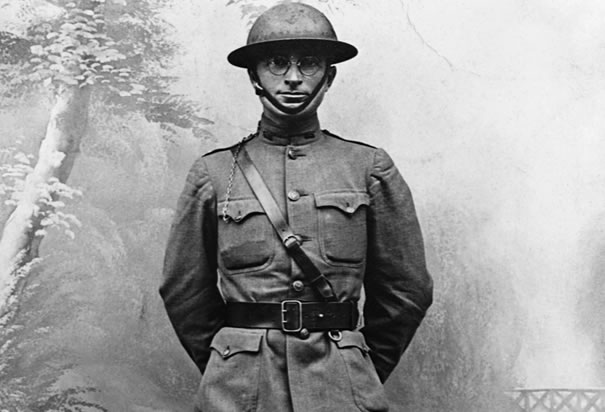
It was in June 1918, in France, during World War I, when the men of Battery D of the 129th Artillery Regiment received word that they had been called to muster for an important announcement. They were introduced to a new leader. This new commander of the artillery battery was a newly promoted captain and a volunteer. The group of men who made up the battery were unimpressed with the new guy from the start. “He looked more like a college professor than he did a captain of artillery,“ one noncommissioned officer remarked later. And that was an accurate description. The man, age 34, wore wire rimmed glasses. He stood awkwardly, obviously wasn’t terribly athletic, and when he addressed the troops that first time that they were mustered under his command, not a few of them noticed that his knees shook while he spoke. After he addressed the group and dismissed them, several of the artillery men responded with a Bronx cheer.

Later that day, several men decided to test the will of this neophyte captain. They staged a fake riot in one of the barracks to see what they could get away with, to see how he would respond. And his response was nothing that they predicted. The next morning, without a word, a notice was posted on that barracks bulletin board. It listed the demotion of the noncommissioned officers and a list of chores to be completed as discipline for the entire group.

Addressing the other noncommissioned officers from the other barracks, the captain reminded them that he wasn’t there to get along with anyone. And if they were unable to maintain discipline in the ranks, he would find another assignment for them. The older and wiser non-coms in the group looked at each other and nodded. This guy was going to be OK, they decided. Discipline was restored because of the new-found respect that they had for the new guy.

On the other hand, the new captain also quickly developed a reputation for rewarding those soldiers who excelled. His men grew to like him as well as respect him. He was cool in his decision making and treated everyone fairly. Still, the unit had yet to be tested under fire. And it was here that the captain himself worried about his ability to withstand what the enemy had to offer when the shells were coming in on him. He wrote a letter to his fiancé, saying that he hoped that his legs would help him stand firm, even when they were wanting to take him away from the danger. And that first test of battle came a month after he was made captain. After selling a German position, the Germans returned fire to the Americans. Several of the group abandoned their artillery pieces and began making for the rear. The captain began yelling at them– – something he had not done before. Apparently, he called them every day in the book, challenging their manhood, and even referring to their mothers in inappropriate ways. His anger worked. The men came creeping back to their stations at the guns, and they returned fire on the Germans. The captain was later commended for his coolness under fire in for rallying his men under duress.

When the war ended, the men of the battery took up a collection. They had a silver cup made, which they presented to the captain as they were discharged from service. On one side, the cup said, “Presented by the Members of Battery D in appreciation of his justice, ability and leadership.”

And on the other side, the cup said, “Presented to Captain Harry S. Truman.“

On a Selfless Resignation

In 1916, the United States held a presidential election. In Europe at that time, World War 1 had been raging for two years. Millions of people had been killed and millions more had their lives and homes completely destroyed. The US had not entered the conflict because, in part, up until that time, the American tradition was to not get involved in European conflicts and affairs.

The Americans thought of themselves as being above being tainted by the “old world” and their issues. However, the war was having a major negative impact on the US economy. Trade was restricted. Investment money was not being used. And, in the minds of many Americans, the threat of what they believed was an aggressive Imperial Germany to the democracies of Britain and France seemed to possibly threaten the US as well.

And so the election that year revolved around the idea of whether or not the US should get involved in a war that had clearly become a meatgrinder, a veritable slaughterhouse, for the troops involved on both sides. The incumbent, President Woodrow Wilson, the Democrat, campaigned on the issue that, “He kept us out of the war.” His opponent, US Supreme Court Justice Charles Evans Hughes, the Republican, was for the entry into the war on the side of the Allied Powers (Britain, France, Italy, and Russia), but he, too, urged caution.

Wilson’s victory in 1912 had been something of a fluke. He was only the second Democrat elected since the Civil War (Grover Cleveland was the other), and it took the splitting of the Republican Party to make him president (Teddy Roosevelt ran against his former VP, William Howard Taft, as a third party candidate in 1912). So, it seemed a foregone conclusion that Wilson would probably lose to whomever the GOP candidate would be. And, so, realizing that the Republicans would probably win the election, Wilson hatched a plan that seems like something out of a movie rather than real life.

Now, I am not now nor have I ever been a Woodrow Wilson fan. He had a messiah complex as big as Texas, and he was an incurable racist. His stubbornness may have even led to the rise of Hitler 13 years after he left office and then, of course, World War 2. But in regards to the election of 1916, Wilson’s plan to make sure America and American interests would be safe in case of a Republican victory , Woodrow Wilson did an incredibly valiant and self-less thing: He planned to resign the presidency.

You see, at that time and until 1937, the incoming president wasn’t sworn in until the March following the election the previous November unlike today when the new president is sworn in only two months later. That original plan called for four months of lame duck-ness that, in times of great national crisis like the war in Europe or later, the Great Depression, can be an extremely long and costly time. So, here was Wilson’s plan. It was actually suggested to him by one of his close advisors. When Hughes won, Wilson would immediately ask for the resignation of both the vice-president and the Secretary of State. He would appoint Hughes to head the State Department, and then he himself would resign. Hughes would be then raised to the presidency as the next in line of succession immediately, thus bypassing the crucial four month waiting period.

But that didn’t have to happen. Wilson surged in the polls in the last few weeks of the campaign. Hughes, thinking that California was his for the taking, really didn’t campaign there much. But it was California that gave the extremely narrow victory to Wilson.

In fact, so confident was Hughes in his electoral victory that he went to bed on election night thinking that he was the next President of the United States. The next morning, when the phone rang in his house, one of his children answered. A reporter asked to speak to Hughes. The child is supposed to have said, “The president is sleeping.” The reporter’s reply was, “Well, wake him and tell him he lost.”

On a Familiar Face

The late 1800s and early 1900s were the heyday of the popular magazine. Collier’s, Leslie’s, and the Saturday Evening Post were some of the more circulated magazines that featured popular opinion and news articles of the day. And, since putting photographs in print was still a novelty, the magazines hired graphic artists who generated images that captured the public’s attention (and dollar). In many cases, the artists became somewhat public celebrities themselves, earning good money and large followings. For example, Norman Rockwell and Charles Dana Gibson became rather well known for their art and artistic voices.

One of the most famous artists of the period was one James Montgomery Flagg. You know him best most likely as the man who created the famous “I Want You!” poster featuring the character Uncle Sam. We all know that character and how he is dressed in patriotic colors and a top hat, a thin man with a goatee and a grim face, a bony, almost accusatory finger pointing at the person looking at the poster.

Flagg created the character to accompany a story in one of the magazines about American preparedness (or lack thereof) during World War I. You see, the US didn’t take part in the first three years of that war; we didn’t join the fight on the side of the Allied Powers until the spring of 1917. When we did decide to enter the war, a rapid mobilization of personnel and materiel needed to be accomplished. Flagg’s commission for the magazine was to create an image that would speak to the nation’s need for everyone’s help in “making the world safe for democracy,” as President Woodrow Wilson put it.

So, Flagg wanted to embody the nation with the Uncle Sam image. The problem was–whom could he use as a model? He asked one of his elderly neighbors, a broad-shouldered gentleman with a long, bony finger, to act as the body’s model. That part was fine for Flagg. But the man’s face was all, well, wrong for the art. Flagg tried to show the man what he wanted, but it was no use. The man’s face was too round and not, well, righteously angry enough for the drawing Flagg had in mind.

Then he had a brainstorm.

And the resulting artwork became one of the most iconic posters in American History. The US Government War Department procured the rights to the picture to reproduce it as propaganda, to use it to do things like sell war bonds at home and encourage people to join the armed forces. There was something about that bony finger pointing at the viewer that demanded action, but it was the face, the grim determination that most Americans felt in joining the fight that really made Flagg’s poster speak to Americans then and now.

Because of the success of his artwork, Flagg was, for a time, the highest paid illustrator in the United States.

And whom did Flagg find to be the model for the determined Uncle Sam, the one that our enemies didn’t want to mess with?

Why, the model he chose was himself.

On the Kaiser’s Generosity

Ulya and his friends wanted to travel from Switzerland to Russia, desperately. World War 1 was raging, and they deeply desired to go home and work to make their nation better, to solve the issues of the war, and fight–and die, if necessary–for their fellow Russians. And, so, the group of friends boarded a train in Zurich in April of 1917 and headed east.

Now, Ulya is short for Ulyanov, the man’s last name, and it’s what his pals called him. Some friends called him Nicky, but that was a nickname that had nothing to do with his real name and more to do with his larger-than-life personality that came across as a leader like Machiavelli wrote about or like an emperor, a czar–like Russia’s Nicholas II was. Born to an upper middle class family in a large city a few hundred miles east of Moscow, Ulya gave the impression that he felt he was somewhat better than others. His classmates in school agreed with this assessment, as had received the normal private education for a boy from a well-to-do family.

Before the war started, however, Ulya had been studying and writing in London and Munich and other places around Europe. He was, in fact, in Eastern Europe when the war broke out, and circumstances prohibited him from making his way back to Russia to offer his help in the war. He ended up finding a safe haven in neutral Switzerland; it was a place from which he could study and work in relative comfort and also plan to make his way back to Russia.

That was the trick, right? How could he cross the territories of Russia’s enemies, Germany and Austria Hungary, and reach Mother Russia? Even trying to reach water to attempt to reach his homeland by sea would require Ulya to attempt to traverse enemy-controlled land. So, for the first almost three years of the war, Ulya was unable to find a way to Russia.

Then, a miracle happened.

In what seemed like an incredible act of generosity and largesse, the Kaiser of Germany, Wilhelm II, a man who was a cousin of Czar Nicholas, offered to provide a train that would take all Russians who wished to go home back to Russia. That meant that Ulya and several of his fellow Russian citizens and friends could safely cross the enemy territory and return to Russia. A naturally suspicious man, Ulya and some of his buddies talked about the offer. Was this a trap? Could they trust the Kaiser to keep his word?

The desire to reach home finally proved stronger than any possible fear of being captured or imprisoned. And the Kaiser proved to be true to his word. The train was sent to Zurich, and Ulya and his fellow Russians boarded; they couldn’t believe their good fortune and the Kaiser’s miraculous provision. The route proved to be long and arduous, having to travel north into Scandinavia and come into Russia by the north, but it was worth it, Ulya believed. And, before you think that the Kaiser did this out the kindness of his heart, well, think again.

You see, the Kaiser had an ulterior motive. Within a few weeks, Ulya–Vladimir Ulyanov, known to the world as Lenin–and his fellow communists helped to overthrow the Czar and take Russia out of World War 1.

On an Air Force Enlistee

In August, 1922, Mr. John H. Ross went to London and applied to become an enlistee in the British Royal Air Force. That was an odd time to join the military in one sense. The Great War (World War 1) had been over for 4 years. Most military services were cutting back both in terms of costs and personnel. Since the war ended, most world governments believed that another such conflict was not only unlikely but also could not be conceived of. You see, neither Hitler nor Mussolini had quite made their way into the international consciousness, and, besides, the League of Nations would stop any such conflict, surely.

Yet, here was this somewhat middle-aged gentleman approaching the RAF and offering his services. He had papers proving who he was, and the recruiting officer looked over them carefully. He knew that several pilots from the war had returned home after the war, grew bored, and had been itching to return to service. Sometimes these men would use false identities to re-enlist, pretending to be completely new recruits. The officer was named W.E. Johns, and he later became a fairly famous author of crime novels. At this time, however, his job was to ferret out who was a legitimate recruit and who wasn’t. In this case, the man insisted he had no flying experience whatsoever. He admitted to having served in the war, but he said his job was as a lower-level supply staff person.

Officer Johns got the feeling from this John Ross that here was a man who, while sincere, was hiding something. Maybe it was the fact that Johns had experience in knowing the little “tells” recruits had when they lied about their past. Maybe it was something in the way this man carried himself, his presence, that made Johns feel that all wasn’t on the up-and-up. Johns thanked the man for his willingness to be a part of the service, but he told Ross that he believed his paperwork was fake and declined to take him into the service that day. “Ross isn’t your real name, is it?” Johns asked. Ross shook his head “no” and thanked the officer. As he left, Johns figured that was the last he would see of the man.

Surprisingly, a little while later, Mr. John Ross reappeared, this time with an RAF messenger in tow. Ross said nothing, but the messenger handed Officer Johns a written note. It was from his superior officer. The note ordered Officer Johns to admit John H. Ross into the Royal Air Force based on the documents provided. Johns couldn’t understand it. His superiors had never overruled his decisions regarding recruits. What made this man–a man who admitted to using a fake name and fake documents–so special that he had to be allowed to join the RAF?

Johns followed the order and processed the enlistee’s paperwork. He informed Ross that he was now admitted to the air service. Ross smiled and thanked Officer Johns. As Ross turned to go, John’s curiosity got the best of him. “Who the hell are you, really?” he asked.

The man turned back towards Johns’ desk. “I’m nobody. Just want to serve my country,” he answered with a smile.

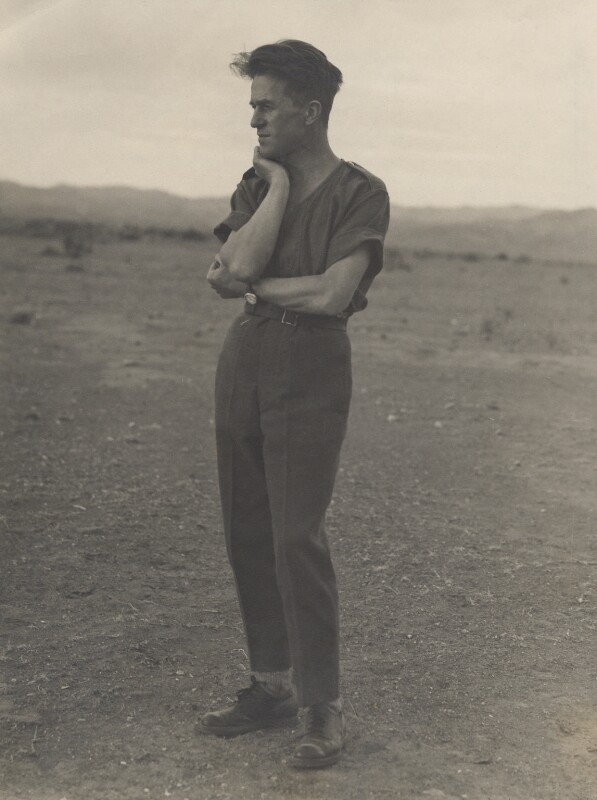
It wasn’t until February of the next year that Officer Johns realized that he had processed the enlistment of T.E. Lawrence, known to the world as Lawrence of Arabia.

On Veterans Day

Six hours can make a world of difference. Ask Henry Gunther about how important six hours can be.

Henry was an American soldier during World War 1, a part of the American Expeditionary Force, led by General John “Black Jack” Pershing. Henry, along with the other hundreds of thousands of Yanks, entered the conflict in 1918. Their arrival in France provided the boost the Allied side in the war needed. Henry and his fellow Americans ended up making the difference in the war and brought it to a successful conclusion for the Allies over 100 years ago, on November 11, 1918.

Henry was from Baltimore, and, interestingly, was from German ancestry. Maryland is still largely a Catholic state, and Henry was a good Catholic. He was a member of the Knights of Columbus in Baltimore, and he worked as a bank clerk and teller. The last day of the war found him, at age 23, in somewhat of a pickle. You see, Henry had been promoted to supply sergeant for his regiment, the 313th, known as Baltimore’s Own. His clerking experience helped him organize the unit’s supply, and he was good at it. He was responsible for making sure that the regiment had proper clothing. The US Army in France certainly had no supply shortage of equipment, and Henry was the go-to guy for his regiment.

The conditions in which the war was fought are difficult for us to imagine. The front lines were so horrendous with the constant bombardments, the lack of sanitation, mud that came up to your knees, the unburied bodies that were feasted on by rats the size of house cats…you begin to get the idea. For a good Catholic boy from Baltimore, even the conditions behind the lines were horrifying. The war had devastated north-eastern France, leaving huge scars on the land that are still visible today. Henry wrote a good friend back home in Baltimore; he told him about the miserable conditions in the war and gave the friend some sage advice: Avoid the draft at all costs.

Well, you can imagine what happened. A censor got a hold of Henry’s letter, and it certainly seemed like his advice as telling the friend to break the law. It was a poor choice at best and possibly treason at worst. As a result of the letter, Henry was busted back down to private. And, if he thought conditions were bad behind the lines, well, welcome to the front lines, Henry Gunther.

French Marshal Foch, the supreme commander of the Allies, and the representatives of the German Army had actually signed the Armistice effectively ending all hostilities at 5:00am on November 11. Messages were sent to all warring factions notifying them of the war’s end. Foch wanted a symbolic time, a poetic end, that the entire continent could point to as a fitting end to the war. He asked that the message say that all firing would cease at 11am, thus giving the war’s end a memorable 11:00am on the 11th day of the 11th month. We call it Veteran’s Day in the United States now. Originally, it was known as Armistice Day.

Henry had brooded over the demotion. He wasn’t a traitor. He loved his city and his nation. He was a proud soldier. That morning, knowing that the war was going to end before noon, Henry Gunther knew the time to show his true patriotism was running out. Perhaps he felt that he must redeem himself with his fellow soldiers and, more importantly, with himself. So, with mere minutes left before 11am, Henry fixed his bayonet and charged a German machine gun emplacement at a roadblock near Meuse, France. The Germans, to their credit, yelled at him to go back. They knew the war was almost over. But Henry would not be deterred, by God. It wasn’t 11am yet. For him, the war was still on.

Sadly, 3,000 men died in those six “poetic” hours between the signing of the Armistice and the silencing of the guns. A short burst from a reluctant German machine gunner made sure Henry Gunther was the last solider to die in World War I.

Happy Veterans Day.

On an Australian Veteran


Cedric Popkin enlisted in the Australian Imperial Force (AIF) in March, 1916. Like many young men and women in the British Empire, he felt a call to defend her against what most considered to be German aggression. By April, 1918, Cedric had achieved the rank of sergeant in a gunnery regiment and found himself stationed in the Somme area of France. That area saw intense fighting over the course of several years. Even today, French farmers still unearth live shells, including poison gas shells, from the French soil where they were left over a century ago. 
 
Sadly, in June, 1918, Cedric received a shell fragment in his right leg and had to have it amputated. When he finally reached his Australian homeland in early 1919, Cedric decided to pick up the career he had before the war–that of a carpenter. He also came home to his wife, Ellie, and his two boys, Roland and Michael. When asked about his time in the Great War, Cedric would usually talk about it, but he rarely brought up the subject himself. 
 
Most real heroes are like that, aren’t they? Most of them don’t brag about their exploits no matter how big or small. Men and women who were actually in combat usually keep their thoughts to themselves. Cedric was like that. And he surely had plenty he could say about his time in France. 
 
In particular, Cedric could have bragged about one day in April, 1918, when he was manning the company’s Vickers machine gun in the front lines. The whole area buzzed with activity–snipers, shelling, and, as always, the annoying buzz of aircraft, both allied and German, as they danced around each other in the sky above.
 
Occasionally, the pilots of those planes would swoop low over the trench lines and strafe into the soldiers who never expected an attack from above. The German flyers were especially good at this, and knowing that, even in the protection of the trench, that death could come at you sideways made even strong, brave men be on edge.
 
Cedric and his fellows saw a low flying one-on-one dogfight that came back and forth in the land immediately in front of them. The German pilot seemed to have the advantage, and the poor allied pilot swooped back and forth in a desperate attempt to lose the enemy on his tail. Cedric and his company started shooting at the German plane, trying to help their allied comrade. The Vickers gun poured its lead into the enemy. I’ll let Cedric tell you what happened:
 
“(I) waited for our own plane to pass me, as the planes were close together, and there was a risk of hitting both. As soon as this risk was over, I opened fire a second time and observed at once that my fire took effect. The machine swerved attempted to bank and make for the ground and immediately crashed. The distance from the spot where the Plane crashed and my gun was about 600 yards. I handed my gun over to the No. 1 gunner and proceeded to where the plane fell.”
 
What Cedric found when he reached the German plane was a man who was mortally wounded. He and his buddies watched the man die. His last words, according to others present, was “Kaput.” The German pilot was found to have a wound that entered his right side just under his armpit, and the bullet had exited his chest. 
 
The Australians treated the dead pilot, as they did all their enemies, with great respect and buried him the next day. Even though others claimed credit for the kill, the bullet was definitely the type used by Cedric’s Vickers gun. Yet, even as an old man, Cedric never bragged about the incident.
 
You’d think he might. After all, it’s not every day you might have been the man who shot down Manfred von Richthofen, the Red Baron.

On a Young Patriot

Gabe loved his country. In fact, today, Gabe could be called a super patriot. Born in the Austro-Hungarian Empire in the late 1800s, he grew up wanting to make his country better. So, against the wishes of his farmer father, Gabe went to university.

There he learned more about his people and their past, and this only fueled his love for his land. When he heard that the heir to the Austro-Hungarian throne, Crown Prince Franz Ferdinand, was coming to visit his part of that world, Gabe excitedly vowed to see the Crown Prince when he came.

What the world didn’t know was that over a half-dozen assassins lined the streets of Sarajevo that day, each one dedicated his life to killing the heir to the throne. In some similar ways, each assassin on that route had the same passion that Gabe had for his country.

As the motorcade carrying the heir and his wife traveled through the city, one of those assassins first attempted to kill the couple by throwing a bomb at their motorcar. The bomb had a delayed fuse, and it bounced under one of the following cars and exploded, injuring the occupants, but the Crown Prince was unharmed. Amazingly, the parade continued.

Gabe stood nowhere near that part of the parade route, but he heard in the crowd about the assassination attempt and felt like many others did—that parade would surely be called off. So, he decided to go into a nearby restaurant and eat some lunch, nursing his hurt feelings that he didn’t get to see the royal couple.

You know what happened next. Franz Ferdinand gave a speech and then decided to visit those who had been injured in the assassination attempt earlier. He and his wife got back into their motorcar in the parade continued somewhat. The Crown Prince’s head of security decided to change the parade route, but he didn’t tell Ferdinand’s driver.

The chauffeur of the Crown Prince’s car then turned down the wrong street. From behind him, people in the following cars yelled for him to turn the motorcar back around and follow the new parade route.

At that moment, Gabe stepped out of the cafe and realized that, to his astonishment, the motorcar had turned down the exact street where he had been eating lunch. The young patriot had chosen that moment to walk out of the cafe, and he found himself looking directly into the open back seat of a vehicle in which sat the future emperor of the largest nation in Europe.

Yes, Gabe was a patriot. He loved his country. Except, in Gabe‘s mind, his country was not some empire. His country, at least in his mind, was not made up of Germanic Austrians or ethnic Hungarians, but, rather, of the collection of Slavic people in the southern and eastern part of the empire.

You see, Gabe wanted Austria Hungary to grant the southern Slavic people their independence. He wanted it so badly that Gabe volunteered to be one of those assassins on the route.

Thats why, when sheer chance caused him to come face-to-face with the royal couple, Gabe—Gavrilo Princip—fired his pistol into the bodies of the Austro-Hungarian prince and princess, killing them both, and lighting the fuse that brought about World War 1.