On a Bad First Impression

First impressions are hard to get over for good or ill. Sometimes, when you meet a person, something about that person bothers you or makes you feel uncomfortable; that person somehow sets off alarm bells in your psyche. That’s what happened in September, 1918, at a dinner in London, England. World War 1 was winding down; the Allies, led by the United States, Britain, and France, were pushing Germany back on the Western Front after over four years of stalemate in the trenches. By November 11, 1918, the war would be over.

A young American government administrator in the Department of the Navy had come across the Atlantic to assist in the final preparations for the end of the war. He had taken a tour of the areas in England where staging bases were located. Then, donning a steel helmet, he was given a tour of the areas behind the constantly moving front lines near Verdun, in France. There, he saw the huge piles of ammunition, bombs, materiel, and food supplies–and also the piles and piles of coffins and dead bodies produced by the war. While he never came under fire, he got enough of an idea of the logistical nightmare that not only prosecuting the war was but also how difficult ending it would be.

He had been sent there on orders of the White House. President Woodrow Wilson needed someone to be his eyes and ears in Europe, someone he trusted. And the young administrator had put together quite the dossier of what it would take for the demobilization of the war effort and the re-establishment of peacetime order and daily life (later on, a man named Herbert Hoover would be in charge of one part of this post-war plan by organizing food relief for Europe after years of having almost no farm harvests because of the war).

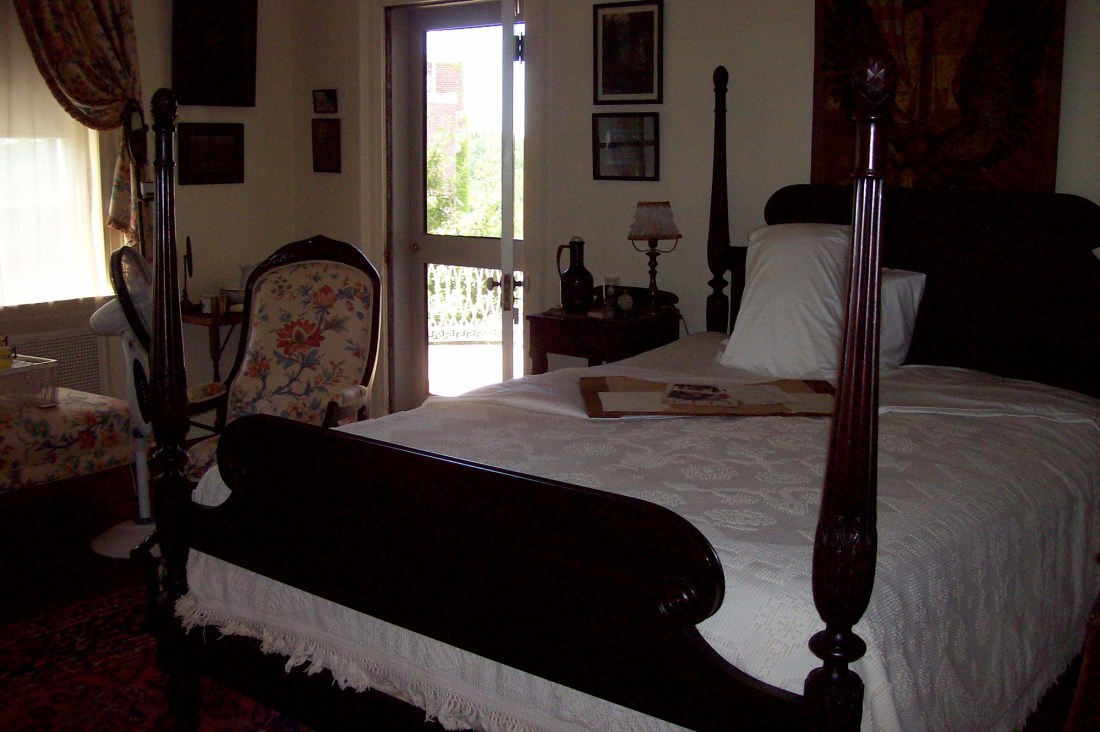
Upon his return to London after his tour of the front, this American official had been staying at one of the city’s swankiest hotels, the Ritz. Among the meetings that had been scheduled for him there were appointments with the head of the British Navy and even had some time with King George V, a meeting at which he expressed President Wilson’s admiration for the king. One of the last meetings on the administrator’s agenda before returning to the United States was to meet with one of Britain’s chief war administrators, another navy appointee like himself. The meeting was to be conducted over a supper at the famous Grey’s Inn in London.

The dinner didn’t go well. To begin with the Englishman was late. When he finally arrived for the meeting and supper, it appeared that he had been drinking. The American was underwhelmed. In a diary entry, he later wrote that the Englishman was, in his words, “a stinker…[who] was lording over all of us.” The Englishman seemed to give the impression that the Americans, and this American in particular, were somehow beneath him. And that chagrined the American no end.

So, it’s important what first impressions can do to relationships. Funny, that. In this case the two men later became close friends. The American man later told the Englishman, “You know, I didn’t like you at all when we first met.” That surprised the Englishman because his first impression of the American wasn’t negative.

In fact, years later, Winston Churchill told Franklin Roosevelt that he didn’t remember the meeting at all.
On a Phone Call

We’ve spoken before about how some historians argue that the modern world largely began in the period between 1820 and 1850. The use of steam engines to power factories, the creation of the railroad, and the invention of the telegraph occurred during those thirty years. It can be argued that almost all modern conveniences are merely modifications or improvements over these technologies. For example, the telephone is simply a better and more convenient telegraph, cars are trains for individuals that don’t run on tracks, and so on. Few inventions had an impact on society as the telephone, however.

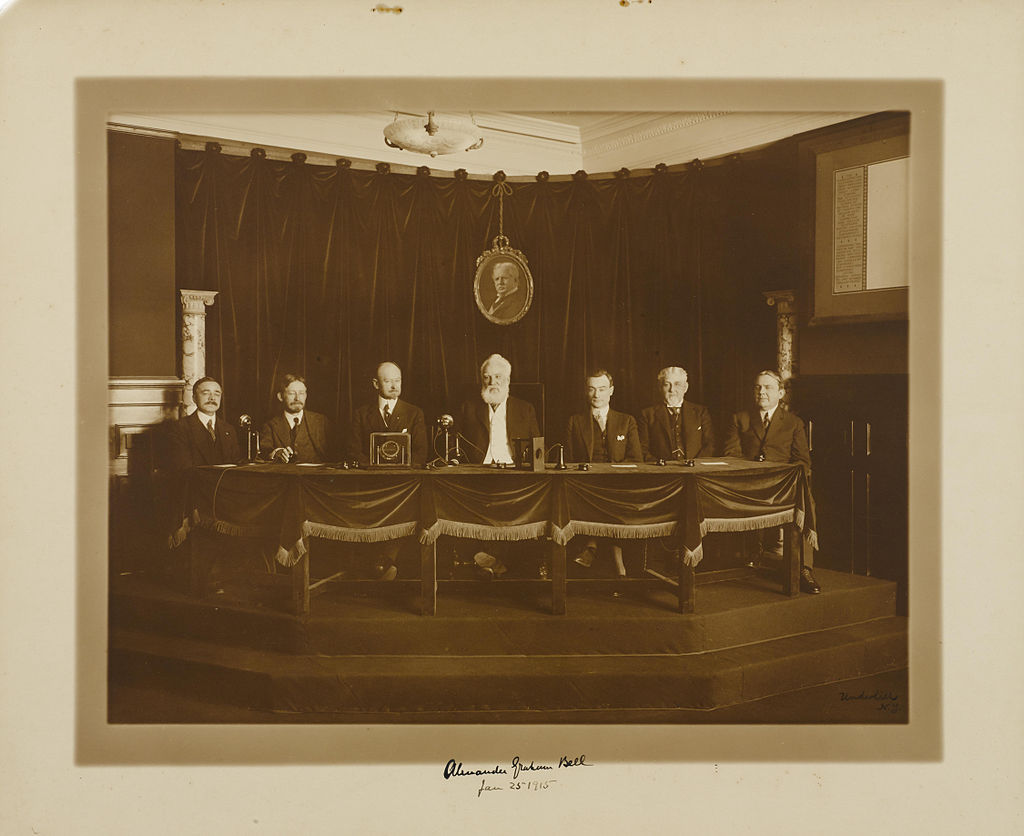
We are all familiar with the story of how Scottish inventor, Alexander Graham Bell, and his assistant, Thomas Watson, were working on their telephone device one day when the first phone message was transmitted. The story goes that one day in 1875, Bell had spilled something toxic and needed Watson’s help, so he said something like, “Mr. Watson, come here–I need you,” and Watson heard the message through the machine as he was in the next room. Soon, the nation’s cities were crisscrossed with telephone wires tying people together instantly.

But there was no transcontinental phone system in place. The railroad had connected east to west in 1869. Paved highways from one ocean to the other were finished by 1913. It would be another two years later when phone wires were finally hung across the United States so that a phone call could be placed in New York and received in San Francisco. And to mark that historic milestone, a celebration and many commemorative events were planned. Now, phone lines had been connected from New York City to Chicago by 1892; that network had been expanded to Denver by 1911. And the final section across the Rocky Mountains to California was finished by late 1914. The president of American Telephone and Telegraph (AT&T) at the time, Theodore Vail, had tested the system that year, and it worked, but that first call was kept secret so that the event could be properly celebrated and marked. That’s why the first “official” call was scheduled for January of 1915.

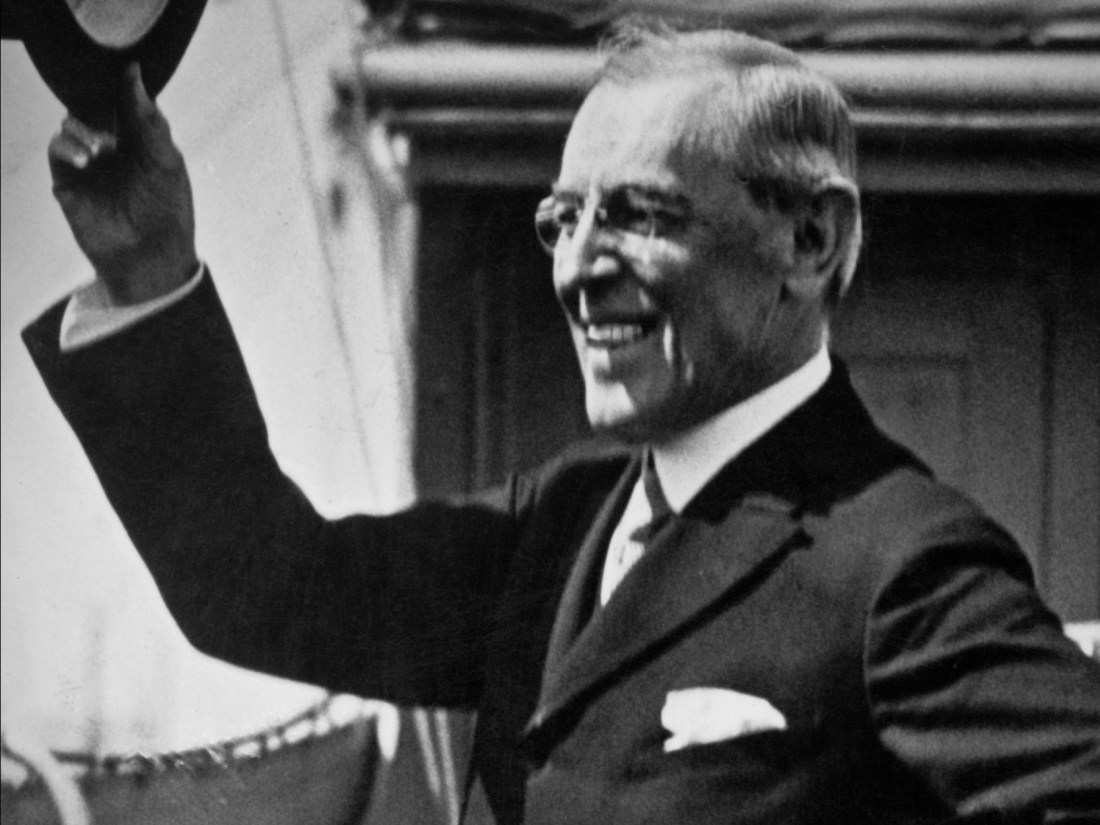
Several dignitaries were to be involved in the call. Vail would be listening in from his winter home in Georgia. The mayors of both New York and San Francisco were also listening in on the line. And President Woodrow Wilson himself later spoke live from the White House to an audience assembled in San Francisco. In his remarks, Wilson noted that it boggled the imagination that a voice from thousands of miles away could be heard almost instantly by the people there. He mentioned the thousands of workers over the years since the invention of the device, the mostly anonymous men and women who manned the operator stations, erected the telephone poles, buried or strung the wires, and did the maintenance on the lines that made all of that possible. That part rubbed Vail the wrong way a little, because he wanted the celebration to recognize the power of AT&T and not the “little people” who were involved.

But the first call that day in January was placed from New York. Telephones had come a long way since Bell had first spoken to Watson 40 years earlier. To honor that event, the first official intercontinental telephone call repeated the words that Bell had said, too: “Mr. Watson, come here. I need you.” And, to make the call even more memorable, those words were spoken by the inventor himself, Alexander Graham Bell, on that January day in 1915.

And, on the other end of the line in San Francisco, when he clearly heard the same message that Bell had said to him 40 years earlier, Thomas Watson smiled.

On a Selfless Resignation

In 1916, the United States held a presidential election. In Europe at that time, World War 1 had been raging for two years. Millions of people had been killed and millions more had their lives and homes completely destroyed. The US had not entered the conflict because, in part, up until that time, the American tradition was to not get involved in European conflicts and affairs.

The Americans thought of themselves as being above being tainted by the “old world” and their issues. However, the war was having a major negative impact on the US economy. Trade was restricted. Investment money was not being used. And, in the minds of many Americans, the threat of what they believed was an aggressive Imperial Germany to the democracies of Britain and France seemed to possibly threaten the US as well.

And so the election that year revolved around the idea of whether or not the US should get involved in a war that had clearly become a meatgrinder, a veritable slaughterhouse, for the troops involved on both sides. The incumbent, President Woodrow Wilson, the Democrat, campaigned on the issue that, “He kept us out of the war.” His opponent, US Supreme Court Justice Charles Evans Hughes, the Republican, was for the entry into the war on the side of the Allied Powers (Britain, France, Italy, and Russia), but he, too, urged caution.

Wilson’s victory in 1912 had been something of a fluke. He was only the second Democrat elected since the Civil War (Grover Cleveland was the other), and it took the splitting of the Republican Party to make him president (Teddy Roosevelt ran against his former VP, William Howard Taft, as a third party candidate in 1912). So, it seemed a foregone conclusion that Wilson would probably lose to whomever the GOP candidate would be. And, so, realizing that the Republicans would probably win the election, Wilson hatched a plan that seems like something out of a movie rather than real life.

Now, I am not now nor have I ever been a Woodrow Wilson fan. He had a messiah complex as big as Texas, and he was an incurable racist. His stubbornness may have even led to the rise of Hitler 13 years after he left office and then, of course, World War 2. But in regards to the election of 1916, Wilson’s plan to make sure America and American interests would be safe in case of a Republican victory , Woodrow Wilson did an incredibly valiant and self-less thing: He planned to resign the presidency.

You see, at that time and until 1937, the incoming president wasn’t sworn in until the March following the election the previous November unlike today when the new president is sworn in only two months later. That original plan called for four months of lame duck-ness that, in times of great national crisis like the war in Europe or later, the Great Depression, can be an extremely long and costly time. So, here was Wilson’s plan. It was actually suggested to him by one of his close advisors. When Hughes won, Wilson would immediately ask for the resignation of both the vice-president and the Secretary of State. He would appoint Hughes to head the State Department, and then he himself would resign. Hughes would be then raised to the presidency as the next in line of succession immediately, thus bypassing the crucial four month waiting period.

But that didn’t have to happen. Wilson surged in the polls in the last few weeks of the campaign. Hughes, thinking that California was his for the taking, really didn’t campaign there much. But it was California that gave the extremely narrow victory to Wilson.

In fact, so confident was Hughes in his electoral victory that he went to bed on election night thinking that he was the next President of the United States. The next morning, when the phone rang in his house, one of his children answered. A reporter asked to speak to Hughes. The child is supposed to have said, “The president is sleeping.” The reporter’s reply was, “Well, wake him and tell him he lost.”

On an Imprisoned Presidential Candidate

What if I told you about a man who ran for the office of President of the United States from his jail cell?

And what if I told you that this man said he was wrongly imprisoned despite the fact that he supposedly “broke laws” that were “unjust” in the first place?

What if I said that this man had been sentenced to ten years in prison for urging a crowd to anarchy and for whipping them into a frenzy to launch an attack against the US Government?

What if I told you that this man’s speeches were filled with rhetoric where he told crowds that the rich and powerful were out to get them, that the rich were attacking them by attacking him?

And what if I said the man used the charges against him to raise funds that financed his campaign and that most of his raised money came from the poorest people in America?

And what if this man promised that, if he were elected president, that he would instantly pardon himself?

And what if he promised the poorest people of America that, if they supported him, that no longer would they be making products for the wealthy elite, and no longer would they be fighting the wars of the wealthy elite, and no longer would American dollars be spent on the international pet projects of the wealthy elite?

Well, what if I said this man ran for president in ’20…and lost?

Would you like to guess who this man might be?

Make that 1920.

His name was Eugene V. Debs, and, while serving a 10-year sentence for sedition, he won 1,000,000 votes for president while running as the candidate of the Socialist Party of America.

On a Stroke Victim

The retired professor lay in his bed, propped up by many pillows at his back. His wife busied herself with bringing his things to drink, tidying his bedclothes, and making sure he had newspapers and the daily mail. The stroke had left him paralyzed on his left side and partially blind. But today, some people were coming for a visit, and she wanted to make sure they saw the proud man at his best.

This stroke wasn’t his first. Back when he worked at the college, he had suffered several mini-strokes that had temporarily impaired his mobility and his vision. Like his father before him, it was said, he suffered from premature hardening of the arteries. Yet, he continued to work and to teach.

The professor had done much traveling in the years after he retired from the classroom. He had been across the nation many times by train. He had even been to Europe. His wife and doctor suspected that the travel had tired him and had contributed to the severity of the stroke.

The professor’s wife had taken direct charge of his recovery after this latest and most severe event. She limited his visitors to herself and the family doctor. The professor’s friends and extended family were forbidden entry. And the wife kept the severity of the professor’s health a secret–even to him.

The illness wore on, and the professor’s situation grew no better. In fact, in some ways, it grew worse.  It seems that the stroke had not only affected his body, but it had also changed his personality in many respects. Known as a man who had complete control over his emotions, since the stroke had occurred, he had been extremely emotional, he made impulsive and out of character exclamations, and his rational decision-making suffered dramatically. Soon, it was hard to see this man as the one who had been so respected when he worked in the classroom.

In fact, he had first made his reputation as a professor of history and political science. His book on politics and political science, The State, had even become the standard university textbook on the subject for several years. He was part of the generation known as the Progressives, and like many of his generation, his teachings promoted child labor laws, taxation of corporations, limiting the hours a worker could work per week, insisting on sanitary and safe factory conditions, and so on. One reviewer called his work the prototype of the modern welfare state. Such was his influence as a professor.

But that was long ago by the time he lay stricken in his bed. Many other important events had happened to him. And people who knew him–colleagues and family among them–were wanting to see if he was recovering or not.

Finally, after almost a year, the professor’s wife gave in. Some of his peers wanted to see the ill man. His wife agreed. So, on a good day, a day in which the professor could speak well and could sit up for a bit, she shaved her invalided husband, put his glasses on his nose, spread some newspapers around on the bed, and invited people over to see the man. Included in the group was one man with whom the professor had been at odds. They disagreed in years past on many of the Progressive principles the professor held dear. The disagreeable man seemed touched by the illness that had been brought to the professor’s life, even if they had been on different sides of many issues.

“I’m praying for you,” the man said, with sincerity.

“Oh? Which way?” answered President Woodrow Wilson.

On A Trip to Mexico

The bullet bedecked gentleman in the photo above is Pancho Villa. During the decade from 1910 to 1920, Mr. Villa participated in the Mexican Revolution. Needing supplies, money, and weapons to fight in this effort, the resourceful Mr. Villa and his band of merry men turned to a handy and plentiful source of these items: The United States.

However, their methods for procuring these items caused no little consternation among the Americans. You see, Mr. Villa and his comrades simply crossed the US/Mexico border and helped themselves to the supplies. By 1916, their repeated  little forays into US territory from the Mexican state of Chihuahua not only resulted in stolen, lost, and destroyed property, but these raids also caused the deaths of dozens of Americans.

If such incidents occurred today, one can imagine the uproar among the Americans in the press, the public, and among the politicians. One hundred years ago, the reaction was much the same. Calls for punitive military action against the Mexican revolutionaries rose from every corner of the land. President Woodrow Wilson, who had a hand in the early days of the revolution by lending support to the anti-government forces, now decried the activities of Villa and his cronies. He ordered General John Pershing to the border with a large contingent of US troops, including air support (one of the first times airplanes were used in American military history), and he gave Pershing a specific directive: Bring Villa to justice.

Pershing failed to do so. However, he and the American troops fought a few skirmishes with Villa’s crew, and their efforts caused Villa to eventually seek elsewhere for supplies for his part of the revolution. Personally, Pershing declared the expedition a success even if his Commander in Chief didn’t.

One of Pershing’s aides, a young second lieutenant, obtained particular notoriety for an incident involving one of the Villa’s right hand men. It seems that this brash second lieutenant deployed three open Dodge motorcars full of 15 American soldiers and scouts and rode these mechanized “horses“ into a ranch compound in Mexico, guns a-blazing. When the smoke literally cleared, three of Pancho Villa’s men were dead, and no American was as much as scratched.

The lieutenant ordered that the three bodies would be strapped to the bumper and hood of his car and taken back to Pershing‘s headquarters for identification. He then reportedly carved three notches in his expensive pistol handles to mark the three men his part of the operation killed. Pershing, suitably impressed, nicknamed the young man, “Bandito.”

A year later, United States would declare war on Germany and officially enter World War I on the side of the Allies. The Pershing Expedition had served as a small dress rehearsal for the war that America now found itself in. Wilson tapped Pershing to be the leader of the American expeditionary force in France despite the fact the General didn’t capture Villa. “Black Jack” Pershing won international fame and admiration for his part in the Great War.

Wilson, who had  campaigned for reelection  in 1916 on a slogan that reminded voters that he had kept America out of the European entanglement, labeled himself as the savior of western civilization against the evil of war in general and German aggression specifically. His  plan for the peace after the war, called the 14 Points, became the basis for the League of Nations, a weak and ineffective forerunner to the United Nations.  A stroke in 1919 limited Wilson’s effectiveness in rallying America to ratify the Versailles Treaty ending the war; America eventually signed a separate peace treaty with Germany much later and never entered the League.

And that impetuous Second Looey?

He liked the idea of having mechanized infantry strike rapidly at an enemy as he had shown in Mexico. He liked it so much that he entered the tank corps. While he made a decent impression during his service in World War I, we probably remember him best for his accomplishments in the war after the War to End All Wars.

Pershing knew him as Bandito.

You know him as George S. Patton.