On a Polite Man

March 4, 1889, was a cold and rainy day in Washington, D.C. The newly elected Benjamin Harrison was due to be sworn in that day as the 23rd President of the United States. Harrison, a Republican, had been elected in an incredibly close and sometimes bitter election, defeating the Democratic incumbent, Grover Cleveland. In fact, Harrison had lost the popular vote the previous November, and he won the electoral college vote because he had narrowly won the state of New York despite Cleveland’s workings with the Tammany Hall political machine there.

No matter. Harrison was the man of the moment, and he felt the hand of destiny upon him. He was the grandson of a previous resident of the White House, one William Henry Harrison, known as “Old Tippecanoe” for his victories in wars against first nations more than half a century before. And he had been a senator from his adopted state of Indiana and served that state well in the US Senate. Also, Harrison had seen a great deal of action in the American Civil War, working with General William T. Sherman to split the Confederacy in half in the war’s last full year. So, all of that background led him to the inaugural day, and the rainstorm that beset the capital that day.

Interestingly, Harrison’s grandfather has the distinction of serving as president for only one month. It was during his ancestor’s inauguration during a winter storm that Old Tippecanoe had spoken for over an hour, and, as a result, he caught pneumonia that eventually led to his death and the rise of his Vice-President John Tyler to the office. Benjamin Harrison was well aware of his grandfather’s legacy, and his planned remarks were purposefully short. He wanted to touch on several key issues, however, in his speech. After such a contentious election, he felt that the occasion called for extending an olive branch to the Democrats and to the southern states that still stung from the defeat in the war that was still fresh in many minds down there.

In many ways, the election was a choice between personalities, as many elections are. Cleveland had raised some eyebrows during his term by marrying a young girl barely out of college for whom he had been appointed a guardian after her father had died. Harrison, on the other hand, was seen as a steady, solid, traditional candidate in sharp contrast to that type of “unseemly” behavior. Much muck had been thrown during the campaign over Cleveland’s unusual marital choice, and that had also caused some harsh feelings between the two campaigns.

But Harrison wanted to rise above all that electioneering. After the oath of office, and as he stood to read his prepared speech in the pouring rain, it quickly became obvious that there was no way Harrison could read what was quickly becoming a smeary sheaf of papers in his hand. It was then that a man emerged from the crowd on the platform behind Harrison, a man who quickly stepped up and held his umbrella over the head of the new president and kept it there while he finished his inauguration address.

When Harrison finished, he looked up to see who the kind man was who had allowed himself to get soaked so that the new Chief Executive could read his remarks on that historic occasion.

Harrison smiled and nodded when he realized that the polite man who had held the umbrella was none other than Grover Cleveland.
On a Political Grudge

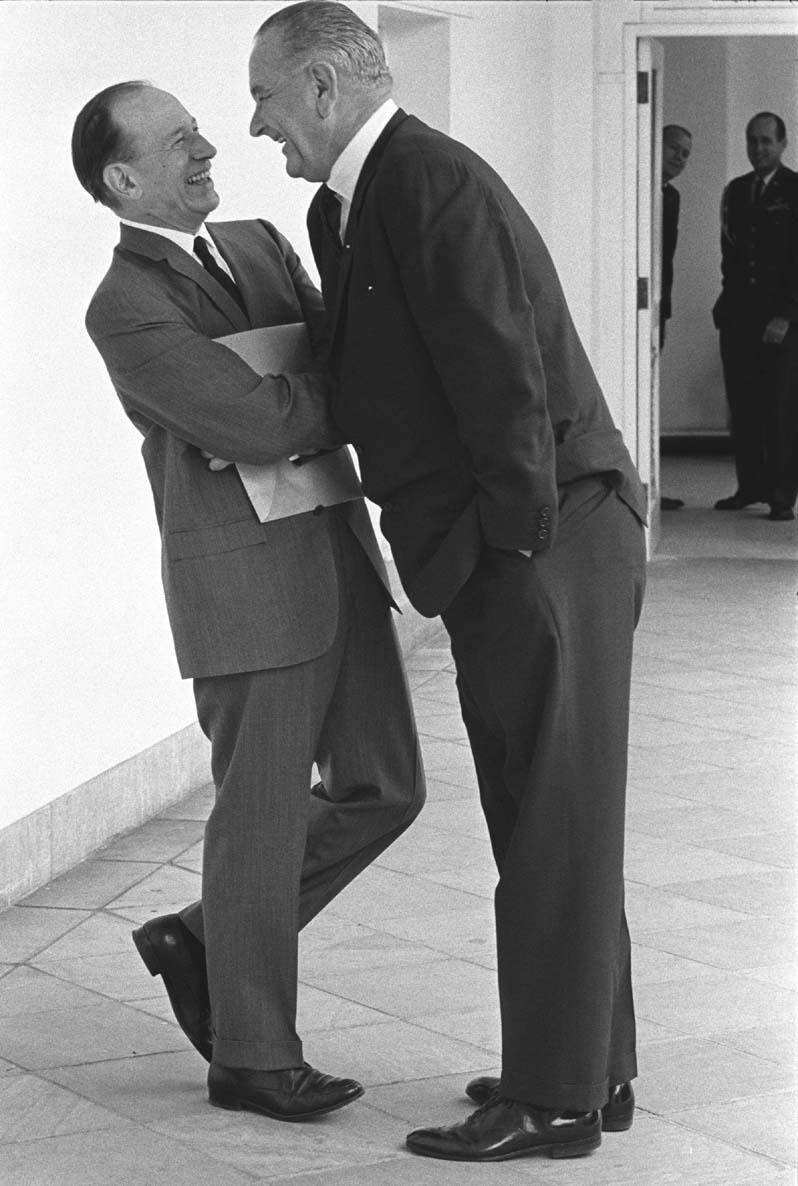
Lyndon B. Johnson was the consummate politician. As a congressman, senator, and, eventually, president, LBJ would lie, cheat, steal, bully, and threaten to get his way when it came to passing legislation. And it was not only that he could force people to do things for his agenda, but part of his power lay in his charm and charisma. Johnson towered over most people, being well over 6’4″ (1.9m) and was the consummate storyteller and mimic; he would often imitate colleagues, friends, and enemies, skewering them with dead-on impressions. And, as part of that larger-than-life persona, Johnson would often overstate his role in affairs to make himself seem more important to events that he actually was.

Take the instance of a story Johnson would often tell of how close of an advisor he had been to President Franklin D. Roosevelt in the years leading up to World War 2. Now, while Johnson was a young congressman from Texas and he did have opportunity to meet with FDR in the White House from time to time, in no way did Roosevelt consider the tall, thin Texan to be a trusted confidant. But that’s not the way LBJ would tell it in later years.

It was in January 1953, in the dining room of the US Senate in the Capitol Building when Johnson, at the time the second-most powerful man in the senate, came into the room. As was his custom, he would make his way around the room, shaking hands and trading bon mots with the other senators and their staffs. When he came to the table of the powerful senator from Wisconsin, Senator Joseph McCarthy, the senator and the staff at the table rose to shake Johnson’s hand out of respect. That is, except for one lower-level staffer from McCarthy’s office. This young man stayed seated and glowered at the powerful Johnson.

As Johnson made his way around the table, he reached the seat of the young man with the scowl on his face. Johnson knew that the staffer was purposefully being rude. You see, LBJ made it his job to know everything about, well, everybody. He knew why the young man refused to stand and shake his hand. So, in a show of power and to put the young staffer in his place, Johnson hovered over the seated man and stuck out his hand. Onlookers later said that the staffer swallowed hard, looked around the table at the other, standing staffers, and slowly stood up and offered a limp hand that Johnson took and shook vigorously. His point made, Johnson then made his way to the next table. The young staffer slank back into his chair and finished his lunch.

Later, an aide to Johnson asked him about the incident. Johnson let out a loud guffaw. He then reminded the aide of the following story, and it was a story that he LBJ had told often before. He said that McCarthy’s staffer was the son of a government appointee back during Roosevelt’s second term. During one of their meetings in the White House, Johnson said that FDR had complained about this staffer’s father. And Johnson bragged that he had advised Roosevelt to fire the man because he was a Nazi sympathizer and was antisemitic. To hear LBJ tell the story almost two decades later, it was Johnson’s advice that convinced President Roosevelt to ask for the appointee’s resignation. The young staffer’s rudeness and dislike of Johnson therefore stemmed from LBJ’s part in getting his father fired.

Of course, Johnson grossly overstated the importance of his advice to Roosevelt. The fact was that President Roosevelt had already made up his mind about removing the appointee from his post long before Johnson said anything–if in fact he had said anything at all to the president. So, while it probably wasn’t Johnson’s hand in getting his father removed from the post as much as it was that he had heard about the story Johnson told about the incident, the story about making himself out to be more important and influential than he was. You see, the young man, that scowling McCarthy staffer, he was the opposite of Lyndon Johnson. He was almost an anti-politician. He was more of a crusader, a fighter for justice and truth. To him, men like Lyndon Johnson were part of what was wrong with Washington. And the young staffer was working to bring honesty and accountability to congress. And to know that LBJ was telling untrue stories about his dad and laughing about his dad’s removal from his government appointment, well, it was all too much.

By the way, the post that the staffer’s father had held was the ambassadorship to the United Kingdom in the days before World War 2. He knew that his father wasn’t fired from the job and he also knew that Lyndon Johnson had nothing to do with his father’s resignation from the post.

And that’s why, in January 1953, young Bobby Kennedy refused to stand and shake Lyndon Johnson’s hand.

On the Gift of a Car

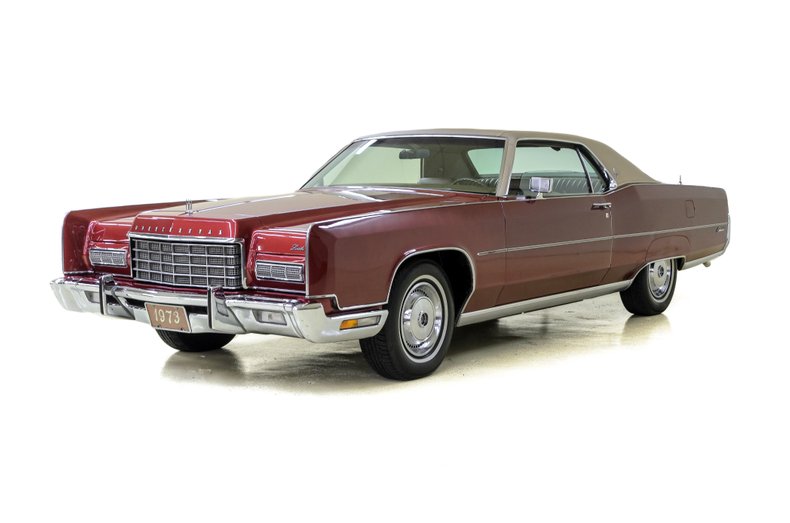
The brand new Lincoln Continental sat in the circular driveway of the large house. The year was 1973 and the man who lived in the house was entertaining an important and well to do visitor. The visitor remarked to his host how beautiful the car parked in the drive was. He had always admired the Lincoln’s styling.

What the visitor didn’t know was that the new Lincoln was a gift to him from the man who lived there. When the visitor found out that the Lincoln was for him, he clapped his hands in glee like a school kid at Christmas.

Now, as I said, the visitor was a man of means also. In fact, he had a large collection of automobiles of his own, a collection made up of models both foreign and domestic. But he didn’t have a Lincoln. “This will complete my collection,” he said, still giddy over the gift. A

And, being a man of means, he had someone drive him everywhere as a lot of wealthy people do. That did not mean that he did not like to drive himself. In fact, he was quite fond of driving, and he would often drive one of the cars in his collection from his large house to his office every day. The problem was that he usually ignored the laws regarding traffic, safety, and speed limits. In other words, This was a wealthy man who was an incredibly unsafe driver.

When he said that, he wished to take the Lincoln for a spin around the neighborhood, the host was aghast. Such a thing would be impossible, his host said. To allow him to take the large and powerful automobile out for a drive would be, to say the least, unwise. Yet, he persisted. He would be safe, he promised. He would obey the traffic laws, he promised. He wouldn’t go far, he promised.

Yet, the man who lived in the large house was not to be daunted. As politely, but as firmly as possible, he told the visitor that the only condition he had on giving the Lincoln to the visitor was that the man would not be allowed to drive it. Ever. The visitor bit his lip in thought and disappointment. You could tell he was seriously considering the proposal. Finally, he nodded his head in agreement. “Fine,“ he assented, “I will never drive the car. I give you my word. Thank you for the kind gift, my friend.“ With this assurance, the host smilingly handed the keys to the new Lincoln Continental to the visitor. The two men shook hands.

And, as far as we know, Soviet premier, Leonid Brezhnev, kept his word, and never personally drove the Lincoln Continental given to him by Richard Nixon.

On a Shy Business Person

Claudia Taylor was born in Karnack, Texas, in 1912. Her father, the son of a sharecropper, had come into success as a storekeeper and eventual landowner. He was so successful that, by the time Claudia was born, the family lived in a large brick house on the outskirts of town. And the father realized that his daughter was a sharp one from an early age. The situation with her was, however, that she was painfully shy.

Oh, even someone calling out to her on the street of her hometown made Claudia blush and run into a store to avoid having to speak. She felt awkward and ugly (even though she was neither, in reality). And, her father, in his wisdom, decided that his daughter should get an education because of her intellect and, well, because it would give Claudia confidence. So, since there was no high school in town, Mr. Taylor sent Claudia to a nearby town 15 miles away for her high school education. Now, that was rare in the 1920s that rural women in Texas would get an education, but, again, Claudia herself was rare.

But the shyness stayed with her. She realized that high school was no challenge intellectually early on, and soon had the best grades in the school. When she realized that graduating at the top of her class would mean that she would have to make a speech as the valedictorian, Claudia purposefully did poorly her last semester so that her grades would sink and therefore force anther student to have to speak.

Then, it was time for college. At first, she went out of state, but she grew homesick and returned to Texas. Back home, she found a private girls college where she received her A.A. degree, then she transferred to the University of Texas in Austin. And that’s where Claudia began to bloom. She earned two degrees there, one in education and one in journalism. You see, Claudia wanted to be a reporter. She was great with words on paper even if not speaking, and she felt free to express herself on the page. And her confidence grew.

But it was also in Austin that she met a man who would become her husband. He was the opposite of her–brash, loud, and never met a stranger. And he swept Claudia off her feet. She later said that he was the flame and she was the moth. And then, as he first began work, went off to war in World War 2, and then returned to continue his career, Claudia continue to blossom. She inherited money from her father, and, despite her husband’s misgivings, she began to make shrewd investments with the funds she received. Calling back to her journalism degree, Claudia began buying radio stations during World War 2, a time when people were needing money. She knew that the war would end, and that radio stations would return. After the war, Claudia was also on the cutting edge of journalism by purchasing some of the first TV stations in Texas.

This shy woman’s investments proved so successful and ahead of their time that she parlayed the initial $41,000 she received from her father into over $1,500,000. She became a millionaire with no financial help from her husband. Oh, and, by the way, Claudia had taken $10,000 of that initial inheritance money and financed her husband as he began his career…as a politician.

You see, Claudia Taylor was known by another name for most of her life.

And like most people, her husband, Lyndon Baines Johnson, called her Lady Bird.

On a May-December Romance

Frank’s Uncle Steve loved the teen dearly. The uncle wasn’t really an uncle, actually, but a close family friend and Frank’s dad’s law partner. The pair had known each other since Frank was born, in fact. And, despite the fact that Frank’s “uncle” was 28 years older, the pair fell in love even while Frank was a teenager.

Frank’s dad died in a vehicle accident when Frank was only 11. And when Oscar, Frank’s father, died, this Uncle Steve had become Frank’s guardian and protector since the two men were close due to being law partners,and since there was no other relative who could provide for the young person financially. Oscar had been stupid with his money; he gambled and gave away much of his wealth. That’s why Steve had to step in and take charge of raising the youngster.

Steven often brought the teen into his house, but there is no evidence that anything physical or sexual happened between the two at that point. Steve had been a confirmed bachelor his whole life, and it seems that his love for Frank was really the first time he’d shown any interest in, well, anyone at all from the perspective of love. Would it surprise you to learn that Frank’s mother approved of the relationship between Frank and this much older man? The mother did, actually. Steve even asked permission from Frank’s mom before he asked for Frank’s hand in marriage. Frank’s mom approved wholeheartedly.

Frank really liked photography and political science. At college (a college that Steve picked out and, of course, paid for), Frank excelled and became incredibly popular. Good-looking, smart, and with a maturity that belied the fact Frank was a teenager, several suitors tried to woo Frank during college. One almost succeeded, but Frank turned the boy down. After all, Frank knew that Uncle Steve was waiting. After graduation, Uncle Steve insisted that Frank take a trip to Europe to help “round out” the education received at college. It’s interesting that throughout all the college years, the trip to Europe, the various boys who tried to take Frank’s attention away, nothing changed Frank’s mind about being in love with Uncle Steve.

Finally, when Frank finished school and became 21 (and Uncle Steve was 49), the two lovebirds wed in a simple ceremony before only 31 witnesses.

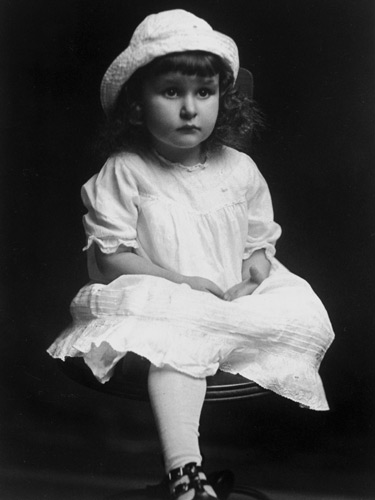
It was the only time a sitting President of the United States, one Stephen Grover Cleveland, married in the White House. And his young bride, (who was christened Frank Clara Folsom), known publicly as Frances Folsom, would go on to have several children with Cleveland, including one named Ruth–whom you probably know as Baby Ruth because a candy company named one of their candy bars after her.

On a Wild Swimmer

Skinny dippin’ (yes, I purposely dropped the “g” because Alabama) used to be much more acceptable than it is now. People in other parts of the world outside the US refer to it as “wild swimming” or some such. This is about one older fellow who liked to swim in the buff. He took up the practice as a way to practice better health and to try to stay in shape as he aged. It worked to a degree–he lived into his 80s, so he did something right.

Anyway, this fellow, whom we will call John, would take one and all with him on his swims. When his sons came home from college, they’d go. When he had visitors at his house, he’d take them. When business associates asked to meet with John, he’d suggest they take the business down to the river where they’d leave their clothes in a pile and strike out into the water the way God made ’em.

One warm day in June, 1825, John and one of his sons and an employee of his went down to the river for a dip. John decided they should take a small boat, almost a canoe, across the river and then have the employee bring the little boat back. And so, they set out to cross the stream.

But halfway across, John realized the canoe leaked. And a wind blew up that caused ripples on the water of the river. The erstwhile skinny dippers jumped out of the sinking boat. The problem was that their clothes were so heavy as they filled with water, that John soon found himself in danger of drowning. Nowhere near shore, the older man realized the error of wearing his clothing as he struggled to make it out of the river alive.

Now, somehow, John made it back to shore. The old man lay on the bank and gasped for air. His son ordered the employee to run for help and get a carriage to take John home, to get some blankets and a fresh set of clothes so the old man wouldn’t catch cold. Luckily, no one was seriously injured, although John lost a waistcoat and one of his shoes; his employee lost his pocketwatch and some other items.

You’d think that the close call would make John reconsider his hobby of skinny dipping, but it didn’t damper his enthusiasm one bit. Sure enough, it wasn’t too long before President John Quincy Adams was back wild swimming in the Potomac River in Washington, D.C.

On Some After Work Drinks

Sam and Harry had been through a rough but satisfying day at work. The organization they both worked for had been busy for the past few years in the Allied war effort. It was April, 1945, and the war had only a few short weeks left. Sam and Harry both knew this for sure, and the fact the United States was going to win the war gave them both great satisfaction. Besides both being southerners, the two men were the heads over their respective departments at work, and, as such, they had much in common both at work and in their home lives.

As the pair was getting ready to leave work that day, Sam invited Harry to his office so they could have a drink. The two were old friends, and they knew each other well after years of working together. And, as old friends do, Sam and Harry could get a lot of work done with talks over a few highballs, sometimes even more work than they could do when they were actually performing their jobs. Sam, as he usually did, loosened his tie and propped his feet on his desk. Harry never loosened his tie; it was a mark of the man that, while he was not wealthy, he dressed well and took pride in his immaculate work wear.

The two co-workers talked for awhile about Harry’s family. Sam had no children, and his homelife was lonely since he was divorced. That’s another reason he appreciated Harry’s willingness to stay and share a drink with him. There wasn’t much for Sam to go home to. Harry’s daughter had recently turned 21 and was wanting to pursue a musical career. Harry was in the middle of his second glass of Sam’s whiskey and his usual diatribe against his daughter’s career choice when Sam’s phone rang.

The two men looked at each other. Answering the work phone after hours couldn’t lead to anything good. It had to be someone who needed something, something the two men would not want to address. “Let it ring, Sam,” Harry advised. “They’ll stop in second.” Sam nodded and knocked back another swig of the bourbon. The phone stopped ringing. “See?” Harry said, and motioned towards Sam with his empty glass for Sam to fill it again.

But the phone rang again. And, again, the pair swapped looks. Sam sighed and leaned forward, taking his legs off the desk. He picked up the phone. “Yeah?” he answered. As he listened, Sam set down his glass. Harry could hear the voice on the other end of the line, but he couldn’t make out what the person was saying. “Yeah,” Sam repeated. “Right now. Got it.” He hung up the phone and turned to Harry.

“The boss wants us,” Sam said. “That was his secretary.”

“I thought he was out of town?” Harry said.

“Well, apparently he’s back, ’cause they just called from the house. We’ve got to go there right now. Side entrance,” Sam explained. Harry grimaced, and now it was his turn to set down his glass. Sam picked up the phone again and called for car. The pair made their way down to the street where a dark car waited by the curb. They entered it and rode the short distance to the boss’s house in silence. When they arrived at the large place, the security guard waved them in.

Harry got out of the car first and made his way to the side door of the large mansion. There was a woman waiting there for him. He greeted her warmly and, out of respect for the boss’s wife, removed his hat.

Eleanor Roosevelt took Harry Truman’s hand and, without emotion, said, “Harry, the President’s dead.”

On a Good Barber

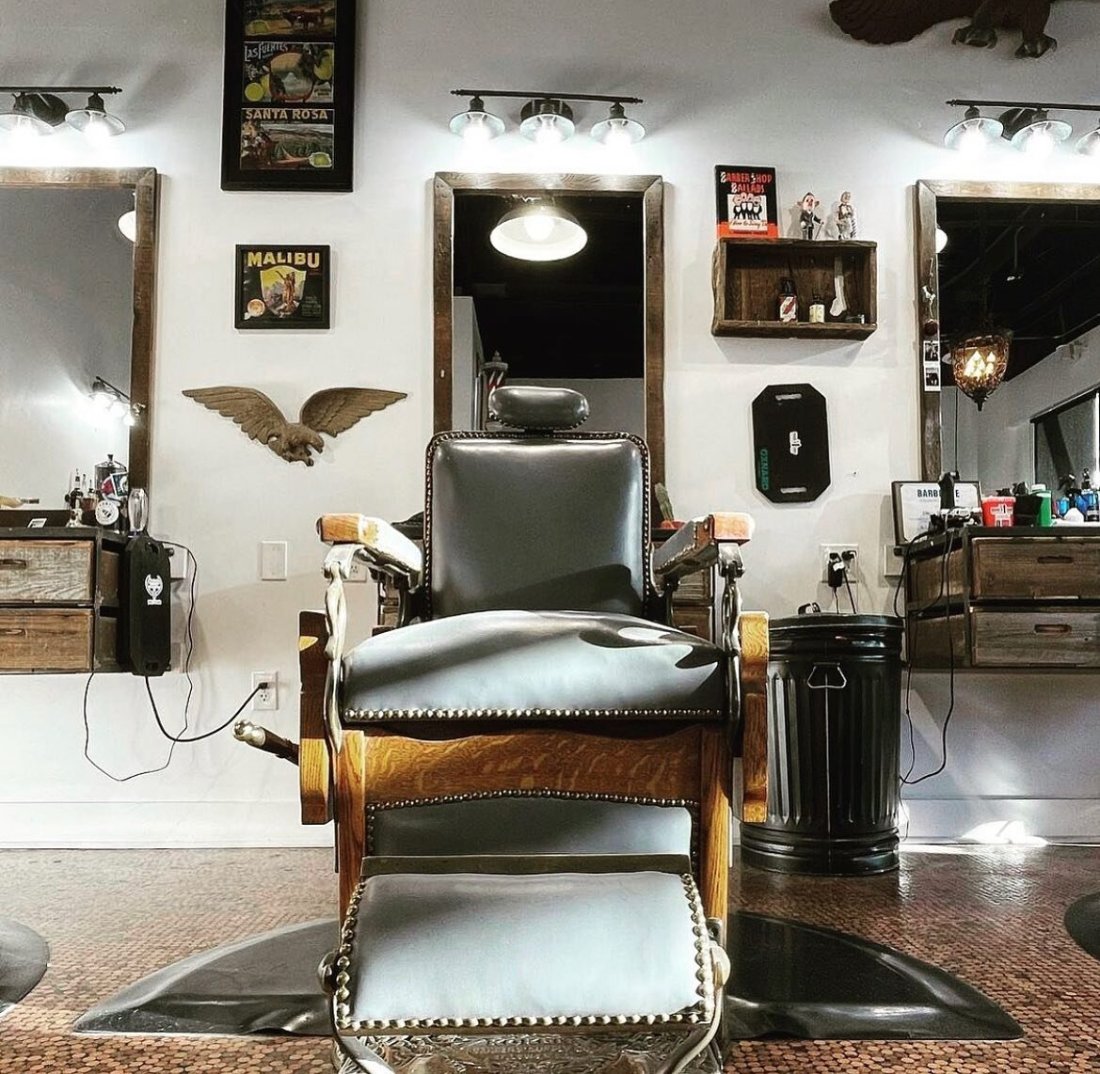
Milton Pitts was a really good barber. In a haircutting career spanning six decades, Milton cut the hair of the famous and the completely unknown. Most of this time, he worked in a one-chair shop, yet he managed to not only make a living at the profession but also to become somewhat well known in the process.

One of the main reasons for Milton’s popularity and success was his conversational abilities. In the way a doctor has “bedside manner,” Milton had a way about him when a client was in his chair. And it wasn’t that he was a yes-man; if the tie you were wearing was unflattering, he’d tell you so. If you complained about your looks, Milton would tell you to do something about it. He also had a broad knowledge of many subjects. He could speak at length about sports (not that unusual), politics (a little more rare), and even economics (very rare indeed) with authority.

One regular client of his, a fellow named Jerry, kept coming in to the shop and insisting that Milton help him with his combover. “You’re bald,” he told Jerry. “You’re not kidding anyone, and you’re looking a little ridiculous.” He asked Jerry to trust him, and he cut off the combover and brought the sides straight back. “There,” he said, showing Jerry the results. “That’s an honest look.” And Milton was right.

Before he died in his 80s, Milton was interviewed by a newspaper, and he looked back on an amazing career in a profession many people overlook or take for granted. He commented that you could tell a lot about a person by the way they wore their hair. And he recalled his last interaction with a powerful man who came in one day immediately before a major life event. The great man was dour because the task before him was distasteful. Milton tried to reassure him, and he told the man that no matter what happened, he would make sure that the man looked his best. The haircut continued in usual silence, both men aware of the importance of the next few hours in the powerful man’s life.

Milton finished, showed the results in the hand mirror, removed the barber’s cape with his usual flourish, and brushed a few, stray, dark curly strands from the man’s shoulders. He silently helped him into his suit coat, and then shook his hand. The man thanked him.

“You’ve always been a straight shooter with me,” Richard Nixon told Milton, and Nixon went upstairs and out of the White House barber shop and resigned the presidency.

On a Complete Rehab

Lorenzo Winslow is a name you probably don’t know. Lorenzo was a high-priced architect on the East Coast in the middle of the last century. During World War I, Lorenzo was in the Army Corps of Engineers in France, and, after the war, he studied architecture in Paris. Coming home after his education, Lorenzo worked for a prestigious architectural firm in North Carolina. Eventually, he moved a bit north and began specializing on designing houses and, for a time, he was employed by the US Government where he worked on a partial rehab of the Statue of Liberty. However, Lorenzo’s passion was private residences. He received a call one day about a commission for a house that would prove to be one of his most challenging.

It was a rehab job, he was told. The house was one of those old, early American Eastern Seaboard piles that had been allowed to fall into decline over the decades. Lorenzo made the trek to the house to see it for himself. The resident met him and took him on a tour. Impressive place, he thought, old but with potential. It worried him that the floor slanted and the old chandeliers shook when one walked on the floors above them.

After a more detailed inspection with his engineer, Lorenzo informed the client that, yes, the house could be salvaged, but it had to be immediately gutted, leaving only the shell from which to reconstruct the house. The client questioned that level of reconstruction; the price Lorenzo quoted for the repairs rivalled what it would cost to raze the structure and rebuild from the ground up.

Lorenzo argued against that. He said that the 150-year-old house had good bones and some historical significance and should be saved, if possible. The client rubbed his chin in thought and agreed. Lorenzo further told the man that he had to vacate immediately, that parts of the structure was unsound and was in danger of collapse. The man’s wife balked at this despite the fact that a piano on the second floor almost fell through to the floor below. The wife loved the old place since the family (a daughter also lived there) had moved in a couple of years before, taking possession from another family who’d lived there for over a decade. Finally, and reluctantly, the wife agreed to move out while the rehab took place.

Soon, Lorenzo’s contractor had all interior walls removed. The house barely resembled what it was before, and the client began to question whether such drastic measures were needed. Lorenzo insisted that they were. He took the man on a tour of the work, and he pointed out that, sometime in the past, the structure had even suffered a fire; burn marks on some support timbers and scorches on the masonry proved his point. The client showed up several times during the almost three-year rehab and walked through the changing interior of the house. He was always amazed at the scale of Lorenzo’s vision for the work.

As these things often do, the project ran over time and over budget. Both of these contingencies angered the client. He didn’t exactly blame Lorenzo, but, being a man who usually pinched pennies, he felt that somehow he had not gotten his money’s worth out of the reconstruction.

“I could have done all of this for half the money and half the time,” a frustrated Harry Truman said on his first night back in the renovated White House.