On the End of the Line

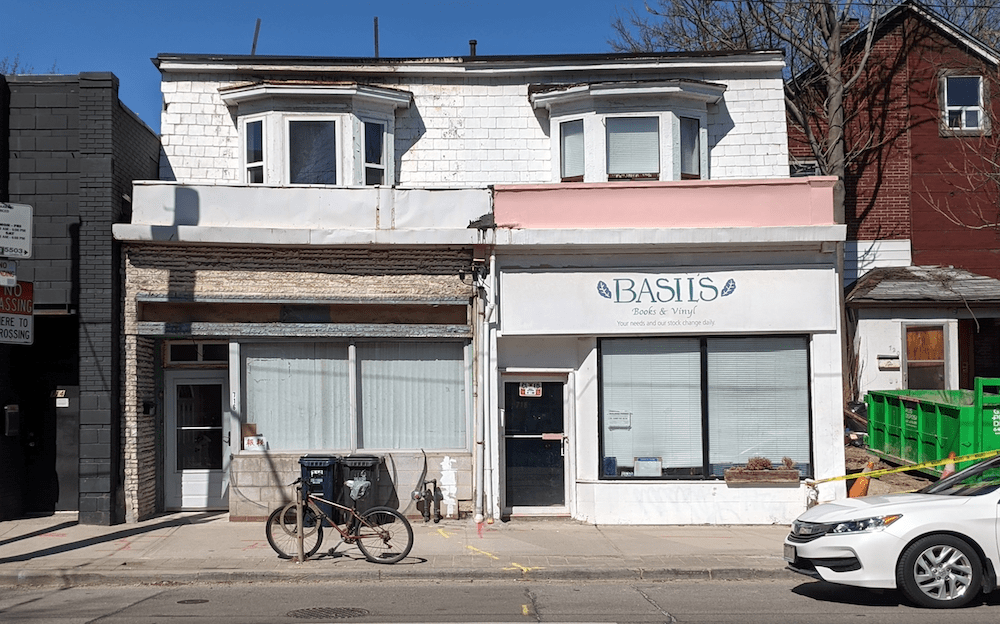
The little apartment above the barber shop is still there. Little has changed since 1960 at 716 East Gerrard Street on the edge of Toronto, Canada. In 1960, that’s where the Martemianoff Family lived. Constantine and his wife, Sinaida, had left eastern Europe decades ago and settled in the tight-knit immigrant community, finding the little upstairs apartment both affordable and convenient.

That summer, as the 1960 presidential election dominated the news, the elderly couple found themselves faced with a dilemma. A close friend of theirs, another immigrant, an old widow, needed their help. She’d buried her husband a few years before and had then suffered from a stroke earlier in 1960. After a stint in the hospital, it was determined that she could not take care of herself.

Now, Christian charity only goes so far in my book. The Martemianoffs had a similar give and take; they discussed at length what their obligations were before God and what they could do to help the widow, if anything. It was Constantine who suggested that they allow the now-bedridden old woman to move in for a time. Perhaps, he told his spouse, they could nurse her back to health enough that she could return to her own home and care for herself. Sheepishly, Sinaida agreed.

And so, the widow was released from the hospital and moved into the spare bedroom in the little apartment above the barber shop on Gerrard Street. And soon, any misgivings that either of the hosts may have held about helping the widow were dispersed. She needed care, certainly, but her attitude was bright and cheerful. She told Sinaida, “I always laugh; if I ever start crying, I may never stop!”

She was ever so grateful to the couple for their help and patience with her. There is, I’ve learned, good pride and bad pride. Bad pride is thinking that your crap doesn’t stink; good pride is holding your dignity when you’re in a dire situation. And that good pride, that’s what this widow woman had, the couple saw. Of course, they knew her fairly well already, but you never know what someone is truly like until you have to live with them and care for them day after day.

Sadly, despite her good attitude and the good care of the couple, the widow never recovered. She died a few weeks after coming into the Martemianoff’s home. And, perhaps, it’s fitting that Constantine’s house is where she died at age 79. After all, it had been his job several decades before to take care of the widow and her family when he and she were both young.

You see, Constantine had been a bodyguard for the Russian Imperial Family, and the widow who died in his spare bedroom above the barber shop was Grand Duchess Olga Alexandrovna, the last survivor of the line of the Romanov Dynasty.
On a Systematic Starvation

History since 1945 has winked at the fact that Joseph Stalin was responsible for more deaths in his own nation than any other dictator before or since. We have largely overlooked Stalin’s killings and mass incarcerations, the building of the gulags and the forced large-scale relocations, because Stalin was the ally of the United States during World War 2. The US has a difficult time (as many nations do) of admitting that we made a deal with a devil (Stalin) in order to defeat another devil (Hitler).

Holod means “hunger,” and “mor” means extermination. Thus, the word Holodmor comes to us from a period when Stalin purposely starved an entire area of the Soviet Union in order to replace an ethnic and cultural population there with Russians. This part of the USSR had been occupied by the same group of people for centuries. Like most of that part of the world, the system of land ownership and food production had followed a centuries-old system of large land owners and vassals or serfs who worked the land. While it was an inherently abusive system, it had managed to provide enough food for the people to have enough to eat for generations.

Stalin imposed a new system of land ownership where the land was collectivized and soviet supervisors replaced the land owners. The produce of the land, rather than going to the land owner and the peasants who worked the land, went instead to the state. It’s easy to see that this system would, obviously, cause hunger for people who had adequate but not an overabundance of food. The people of this fertile area of the USSR did not sit for this outrage. They rose against the machine, taking arms against Stalin and his soviet administrators.

As you can imagine, Stalin did not take kindly to any disagreement with his policies, much less one that involved an armed insurrection. He crushed the rebellion with the force of the soviet army. And then he got revenge. Apparently, one rule of the dictator game is that you want to make sure not one tries to do something like that again by making an object lesson out of the people you’re punishing. Part of Stalin’s anger also seems to have been that this particular region of the USSR had fought against the soviet revolution and with the Czar’s army (the so-called White Army against the soviet Red Army) a few years before. Stalin’s memory was long, and he never forgot what he considered to be disloyalty from this region. He would make them pay.

To punish the people there, Stalin ordered that the state-controlled food distribution system purposely stop sending food to this area. Further, he closed the borders, effectively insuring that the people there could not leave the area to search for food in other regions. The final blow came in the winter of 1932-1933. Stalin sent the soviet secret police door-to-door in cities and villages to confiscate what food had been stored or hoarded there. He even mandated that pets be taken in case the starving people turned to eating their cats and dogs. It’s not difficult to see what the results of these policies would be.

Holodomor.

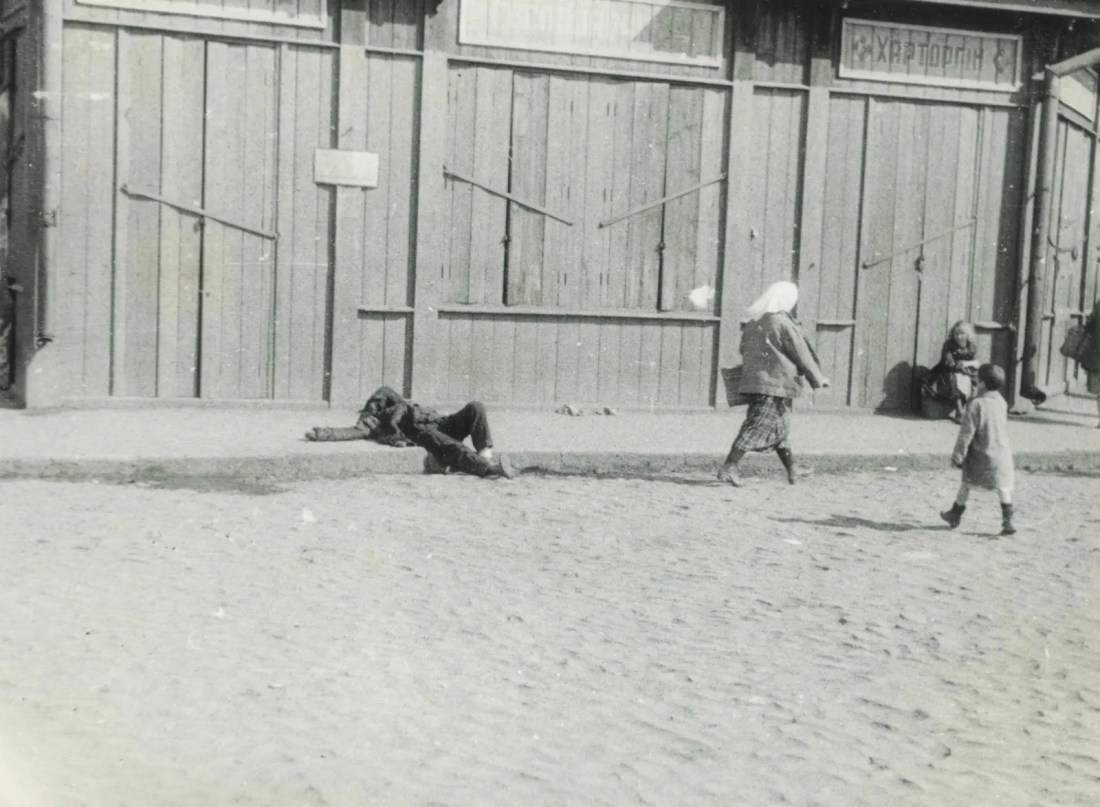
Almost 4 million people in this area died from starvation within a couple of years. It became usual to find bodies in the streets of the cities. Mass graves became commonplace. Meanwhile, Stalin began quietly removing the ethnic and cultural leaders of the people and sending them to gulags in the far east. He replaced all government administrators with Russians. Finally, he ordered all government records that might have recorded the Holodomor, such as census records that would show the mass deaths, to be suppressed or changed. In other words, he erased all physical evidence of the horror these people endured.

Except Stalin could not erase the memory of the Holodomor in the minds of the people. The people–they never forgot. And they still do not forget what the Russians did to them. It motivates them to this day, in fact.

You know them as the brave people of Ukraine.