On an Imprisoned Presidential Candidate

What if I told you about a man who ran for the office of President of the United States from his jail cell?

And what if I told you that this man said he was wrongly imprisoned despite the fact that he supposedly “broke laws” that were “unjust” in the first place?

What if I said that this man had been sentenced to ten years in prison for urging a crowd to anarchy and for whipping them into a frenzy to launch an attack against the US Government?

What if I told you that this man’s speeches were filled with rhetoric where he told crowds that the rich and powerful were out to get them, that the rich were attacking them by attacking him?

And what if I said the man used the charges against him to raise funds that financed his campaign and that most of his raised money came from the poorest people in America?

And what if this man promised that, if he were elected president, that he would instantly pardon himself?

And what if he promised the poorest people of America that, if they supported him, that no longer would they be making products for the wealthy elite, and no longer would they be fighting the wars of the wealthy elite, and no longer would American dollars be spent on the international pet projects of the wealthy elite?

Well, what if I said this man ran for president in ’20…and lost?

Would you like to guess who this man might be?

Make that 1920.

His name was Eugene V. Debs, and, while serving a 10-year sentence for sedition, he won 1,000,000 votes for president while running as the candidate of the Socialist Party of America.
On a Hidden Affair

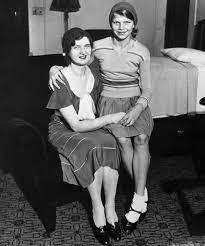
Nan knew the wealthy man was married. She didn’t care. He was extremely handsome, she thought. He made her feel pretty. He spoiled her. He even told her he loved her although they had to sneak around to meet. There was even one time that the man hid Nan in a storage closet in his office because his wife came in the room and almost caught them.

The wealthy man’s wife, well, she was the brains behind his wealth. It was her father who had been a successful businessman, and the father provided funds so the son-in-law could finance a newspaper he purchased. The father-in-law seemed to have been a good judge of character; he once threatened to shoot his daughter’s husband. He thought that he could keep better tabs on him if he put the man in his debt. He was wrong. The son-in-law had several affairs while married to the newspaper magnate’s daughter.

In fact, the man was cheating on his wife when he began meeting clandestinely with Nan. Nan first laid eyes on the man who would become her lover when she was only 15. Her father was the one who approached the man and told him of his daughter’s infatuation with him. Nan graduated from high school in 1914, and she moved to New York City to become a secretary solely in order to be closer to the man she loved.

Now, Nan wasn’t so naïve that she thought the wealthy man was with her exclusively. In fact, Nan knew his proclivities and that his appetite for intimacy meant he would have other lovers throughout their relationship. Again, Nan didn’t care. She was entranced by his charisma. And, he was indeed charismatic. People loved him. He wasn’t the smartest man in the room, but his personality definitely dominated it.

Then, in 1919, Nan became pregnant by the man. She had a daughter she named Elizabeth. The wealthy man promised that, no matter what happened to them, he would care for the child and provide for the two of them. Satisfied with this promise, Nan continued the affair.

However, the wealthy man died suddenly in 1923. Of course, the man’s wife refused to honor the promises of fiscal providence her adulterous husband had made to Nan. She even refused to acknowledge that Elizabeth was her husband’s child. As many people do, especially people of money and/or prestige, they set about burnishing the image of the person who died. And that’s what happened here. The wife-now-widow worked for the remainder of her life to keep her deceased husband’s reputation as untarnished as she could; for example, she destroyed love letters between her dead husband the the litany of women he had affairs with over the years.

Nan lived a good, long life. When she died at age 95 in 1991, she was surrounded by her family, Elizabeth’s children and grandchildren, and with a head full of fond memories of what she considered to be a fairly happy life. It wasn’t until 2015, almost 100 years after Elizabeth’s birth that DNA confirmed that Nan’s daughter was, indeed, the wealthy man’s daughter.

But, by then, President Warren G. Harding wasn’t remembered by many people anyway.