On a Conscientious Inspector

Ebeneezer and Sam Wilson were some of the first settlers of what became Troy, New York, in the early days of the United States. Back then, Western New York was the frontier, and the Wilson brothers, sensing a burgeoning market for building materials, used the local clay from the Hudson River to begin making and firing bricks. Up to this point, most bricks that came into New York were imported. But the Wilson brothers made a small fortune with their brick making business. Sam was quite a local celebrity of a sorts.

At the age of 14, Sam had enlisted in the Continental Army. He spent most of the Revolutionary War in the quartermaster department. There, he made a good reputation for fairness and the ability to manage his contractors with efficiency and expediency. After the success of the brickmaking business, Sam convinced Ebeneezer to begin a grocery business. They built a wharf along the Hudson which, by this time, linked both New York City and the Great Lakes and the rapidly expanding western frontier.

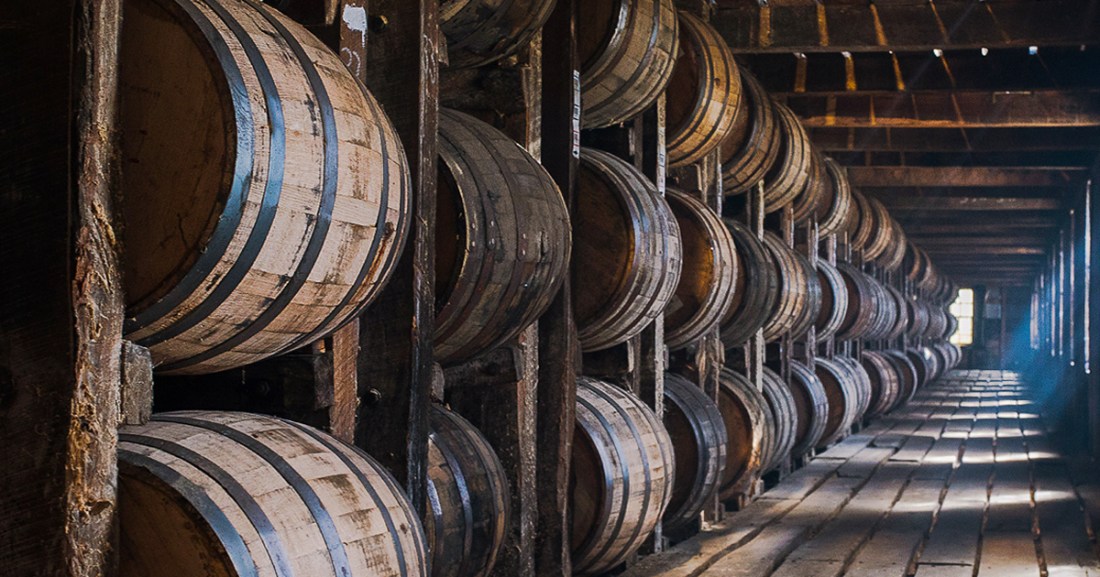
By the time the War of 1812 rolled around, the Wilsons boasted one of the largest grocery outfits in the western part of the state. A New York grocer named Elbert Anderson, Jr., had secured a large contract to supply American forces in the war with preserved and barreled meats, and Anderson sub-contracted with the Wilsons to help him fulfill the contract. The Wilsons’ part of the deal promised cash on delivery of 5,000 barrels of preserved pork and beef. Employing 200 men in Troy, the company proudly provided quality meat for the US Army as they fought to keep the invading British Army at bay. The Wilsons insisted that the army receive only the best product available. “We are representing the government, here,” Sam reminded his employees. “That is a sacred trust.” Because of his experience and also because of the success of the fulfillment of the contract, Sam Wilson was appointed as a meat inspector for the army.

Wilson was responsible for stamping each barrel of meat that passed his inspection as being fit for the U.S. Army’s consumption. So, each barrel that he approved received a brand of “U.S.” on it. Word of his appointment to inspector spread throughout New York among the army volunteers as they received the approved meat. Because of his reputation for only allowing the best meat to be given to them, the appreciative soldiers began associating his brand of approval with the man himself. They also associated the man Wilson with the government he represented, almost an embodiment of the institution of government.

The soldiers saw his stamp and knew that the meat came from the one entity who was watching out for them—their good ol’ Uncle Sam.

On a Good Wife

History is filled with stories of women who “kept the home fires burning” while the men went off to war in the early days of our republic. However, we seldom hear the actual names of the women who managed the affairs back home while the men served in government positions. Abigail Adams comes to mind certainly. Another such home manager who ran the household while the husband worked in Washington was Julia, the wife of Richard Mentor Johnson. Johnson was a member of the House of Representatives, later he was a Senator from Kentucky, and he made his reputation as a hero of the War of 1812.

Julia and Richard grew up together. In fact, they lived on the same farm owned by Richard’s father, in Scott County, Kentucky. We aren’t sure when the pair got together, but we know that they were a couple by 1811. At that time, Kentucky was the frontier, and the Johnsons worked hard to carve out a large homestead that would eventually become a large plantation—and many African slaves were procured who worked that farm. When Richard’s father passed away, he inherited both the place and the people who lived and worked there.

Richard and Julia had their first child in 1812. Adaline C. Johnson brought great joy to her parents when she arrived in the world, and soon she was followed a few years later by Imogene C. Johnson. Richard insured that both daughters were educated at the best local academy in Scott County. Richard’s duty and success in the War of 1812 made him a national celebrity for reportedly having killed the native leader, Tecumseh. Even before the war, Johnson found himself holding elective office first in Kentucky and then in Washington, D.C.

While Richard was off serving his nation, Julia was left to run the place. And run it she did. And not simply the household only—Julia also ran all of Johnson’s businesses while he was away, and that included managing the slaves he owned. Most men of the day would have hired a male caretaker or manager, but Richard trusted Julia explicitly. Such was the trust he had in her. She even ran the tavern the couple owned on their land and the flour mill that was powered by a local stream. In all the time Johnson was gone from home, Julia never as much as lost a dime to mismanagement or poor choices. She proved to be an able, efficient manager, and that made Richard so proud of her.

What is more, Julia also found time to manage the academy where their daughters went to school. The couple opened education there to native tribes, and the school had over 200 students at one time, many of them from the Creek, Chickasaw, and other tribes of the area. In 1833, a Cholera outbreak attacked the school, and Julia worked tirelessly to treat the sick children and their families. Sadly, she herself caught the illness, and she died that year.

Richard M. Johnson never stopped grieving over the loss of his Julia. In 1836, when he was elected Vice-President of the United States, one of his great sorrows was that Julia was not around to see it.

There were others who were not so sad to see that Julia had passed. In fact, most of the Jacksonian Democrats in Johnson’s party were publicly thrilled that Julia was dead. And it wasn’t that she was a bad woman or inept or socially awkward or corrupt in any way.

You see, the reason so many in Johnson’s party disliked Julia Chenn, Richard Johnson’s common law wife, was because she was Johnson’s slave.

On Attacking Orleans

The town of Orleans was named, of course, for the French family of royalty.  The Valois-Orléans family provided several kings for France. But this post is about attacks on the town during two different world wars.

The first “world war” was, arguably, the Napoleonic wars of the early 1800s. Orleans was attacked by the British from the sea during this war, causing its inhabitants to develop a strong dislike for all things English. These British attacks destroyed property, livelihoods, and caused enough damage that it took several years for the area around Orleans to recover economically.  In fact, in a war some 25 years earlier, the British had even captured the town—twice. So, hostility towards the British spanned several generations in and around Orleans. 

Ironically, in one of the next world wars, the Great War, also known as World War I, these residents of Orleans found that the British were their allies in facing the Germans on the Western front of France. The Germans , like the English attackers before them, attacked Orleans by sea. The intent of the attack, apparently, was to destroy some supplies that have been stored in the town.

However, the shelling by the German guns didn’t do the damage the British had done almost 130 years before.  The attack occurred on July 21, 1918. A German submarine shot its deck guns at the town and also destroyed a tow boat and some barges. Luckily, no fatalities were incurred.

Now, it’s possible that some of you may have spotted something curious in the paragraphs above that describe the attacks on Orleans. “Wait,” you might be saying. “Orleans France isn’t a coastal town. How could the British and then the Germans attack Orleans by sea?”

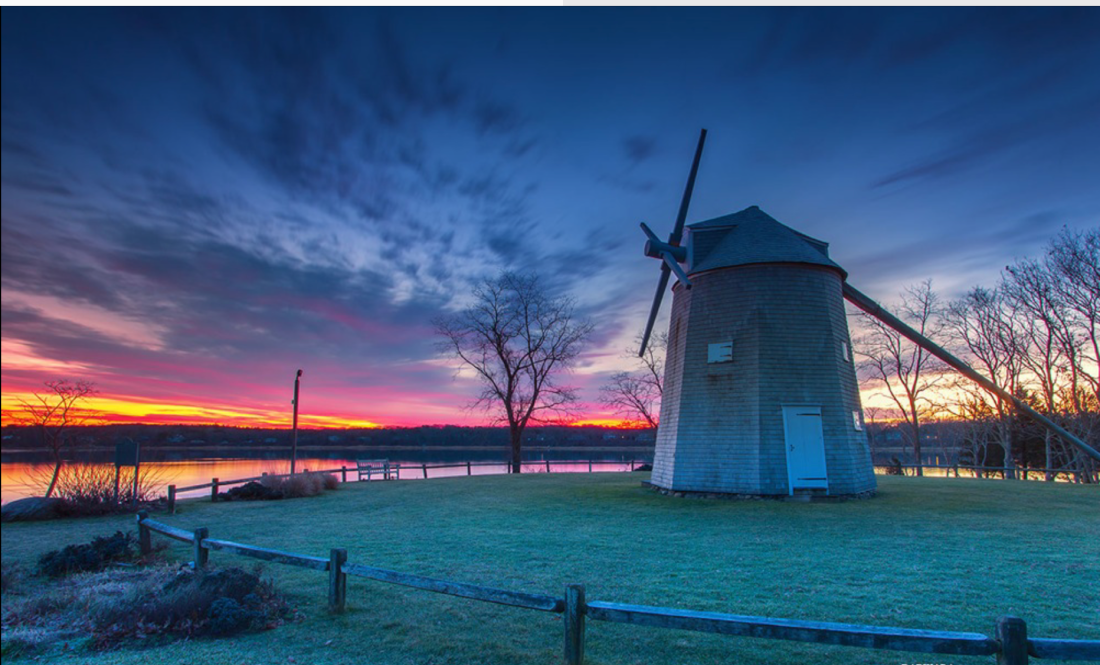
The answer is, of course, this post is not about the city of Orleans in France. And it’s not about New Orleans in Louisiana, either. No, it is about the Orleans (population +/- 6000) that is located on Cape Cod in Massachusetts.

Yes, the British captured the town twice during the American Revolution and caused damage during the War of 1812.  These attacks are why the citizens chose the name Orleans; they wanted no English-sounding name associated with their town.

However, it was the attack by the German U-boat in 1918 that really put Orleans on the map. You see, it is this attack that is remembered in history as the only time Germany attacked the land of the United States during WW1. 

True, it’s likely that the U-boat captain was only trying to damage the barges and tow boats in the harbor, causing some of his shells to miss their mark and land in and around the town. But, at no other time during World War I did Germany attack the soil of the United States—except at Orleans.