On an Old Hippie

The fact that the word “hippie” is in the title of this story instantly marks me as being old. No one uses that word anymore, and anyone who knows it was from the period 50+ years ago when it was part of the cultural and social landscape. The word came from the idea of someone who was “hip” or “hep,” as in someone who was “in the know” and “wise” as opposed to someone who had no idea about what was cool or popular or “in.” In the 1960s and ’70s, a hippie was someone who was on the side of the anti-war, pro-drug legalization, anti-establishment youth movement. The opposite of a hippie would be a “square,” someone who supported the traditional values and power structure in the western world. You could tell which side someone was on based on how they dressed, what hairstyle they wore, and the language they used as well as how they voted and what issues they supported. And, while the overwhelming majority of hippies were young, this story is about one such hippie who was older.

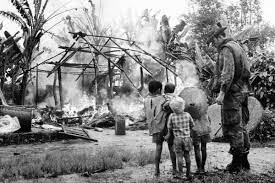
In many ways, this old hippie was against type for many reasons besides his age. He was from the American south, from a traditional background, and had, as a younger man, indeed supported the establishment. But, as he aged, his politics changed. There’s an old saying that someone is more liberal in politics as a youth and more conservative as they age. So, this older man went against this trope. He had seen the effects of the American policy of the Vietnam War, for example, and he became horrified by how morally wrong it was. He became an anti-war supporter. Also, he began to wear his hair longer, much longer than what traditional society would say was acceptable for a man in his 60s. Remember, during that time, men who supported the establishment would not consider having long hair. Yet, this man wore his almost shoulder length. He would decry traditionalist men as “short hairs” because they cut their hair so short like the establishment was used to.

And the music he liked went against type as well. His favorite group was Simon and Garfunkel, and the song by this duo that was his favorite was Bridge over Troubled Water. He would listen to that record over and over for hours at a time. At that time Simon and Garfunkel’s reputation was more anti-establishment and anti-war, and this man embraced those sentiments as well. Finally, his dress also mirrored that of the younger, hippie group. He wore pants that slightly flared at the bottoms, a style known at the time as “bell bottoms.” Instead of wearing a tie and dress shirt as he did when he was in his working years, he wore a loose-fitting shirt and kept it unbuttoned low on his chest. At times, he would run around his property dressed only in shorts with no shoes or shirt, his long hair flowing behind him.

That property was a farm he’d purchased a few years before. In his retirement, he worked to make it more self-sufficient, less dependent on things like chemicals and pesticides. That emphasis on environmentalism was also a mark of the hippie, and this old man saw the wisdom of embracing those concepts in an effort to get closer to the land. Ideas like this meant more to him as he grew older, because his health wasn’t good. He had a bad heart, you see, and he knew that he didn’t have much time to live. The men in his family died young, he said, and he had wasted so much time going for money and position and power instead of working to seek happiness in himself rather in the things he owned or the position he held. That, too, was a mark of a hippie–the rejection of what the establishment considered to be the important things in life. Friends from his old life would stop by to say hello, and they often left complaining about that old hippie who wasn’t the man they knew years before. “I wanted to talk business,” one old acquaintance said after leaving the farm, “and all he was interested in was how many eggs his hens were laying.”

He died of a massive heart attack at age 64, at his farm. He said that he wanted to live to see the Vietnam War end. And that’s what happened. He received a call a few days before his death telling him that the war was over. On the other end of the call, the voice of Richard Nixon said, “We’ve negotiated a peace with North Vietnam. The war’s over. I wanted you to know.”

Lyndon Johnson, the old hippie, could rest, now.
On a Simpleton

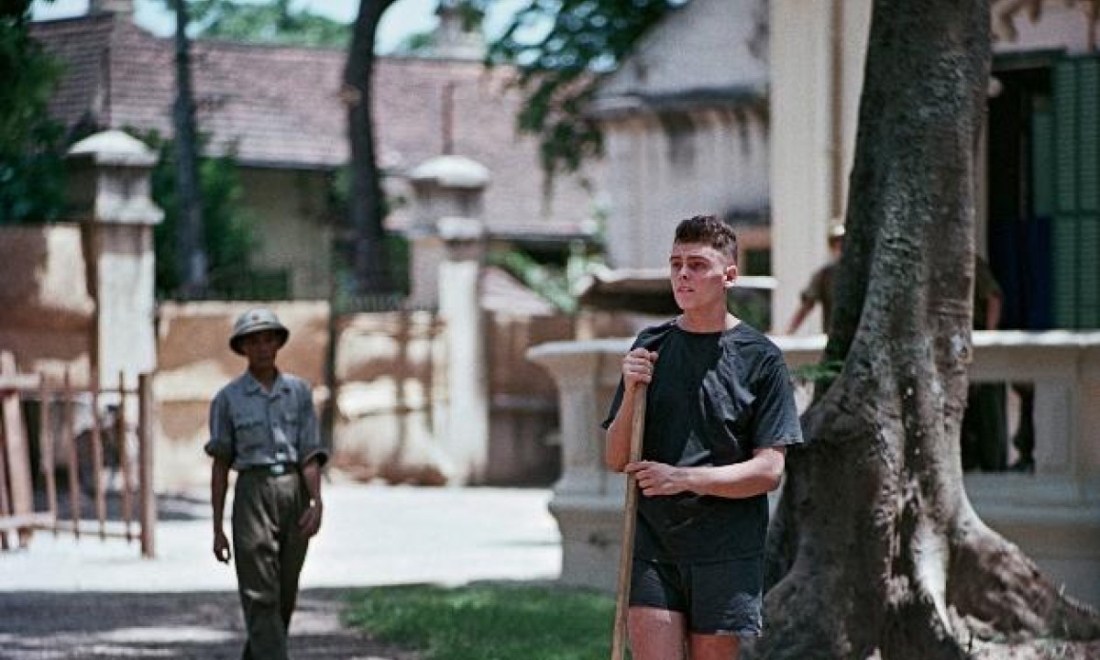
Doug Hegdahl was a sailor aboard the USS Canberra off the coast of Vietnam in 1967 when the concussion from the ships large guns knocked the young sailor overboard. His fellow sailors didn’t notice that the 22 year old was missing until later. Meanwhile, Hegdahl managed to swim and float for a bit until some Vietnamese fishermen picked him up out of the sea.

Unfortunately for him, these fishermen were not sympathetic to the South Vietnamese, and they turned him over to some North Vietnamese soldiers. Thus, the sailor from a small town in South Dakota found himself in the notorious Hanoi Hilton, the POW camp. At his initial interrogation, his captors soon found that the young man, who looked much younger than he was, came across as something of a simpleton. He had a blank stare about him, and he was always humming a simple tune under his breath. Even when the North Vietnamese soldiers beat him up, he didn’t change his look or habits. Finally, they simply left the simpleton alone, figuring that he was useless to them for information or as a propaganda tool. Apparently, he couldn’t even read or write. They called him “The Incredibly Stupid One.”

As a result, and, rather unusually, Seaman Doug Hegdahl became somewhat of the camp “mascot” for both the captors and the fellow prisoners alike. For the Vietnamese, he was a cypher. For the other American prisoners, he was like a little brother they wanted to both protect and care for. One prison guard asked another American was the tune was that Hegdahl was that he was always humming. “Oh, that?” the POW answered, “it’s a children’s song called ‘Old MacDonald.'” He was seen as such a simpleton, such an idiot by the guards that he was allowed to wander the compound freely. They knew he wouldn’t try to escape or do anything, and, besides, he wasn’t hurting anybody. He would visit everyone around the camp and make everyone laugh, Americans and Vietnamese alike.

Now, during the war, the US and the communists often traded prisoners. Usually for the US, they wanted the officers to be swapped for North Vietnamese captives. After Hegdahl had been held for two years, he and two American officers were exchanged for prisoners held by the US. It was decided that such an innocent, such a simpleton, should not have to stay in the POW camp. It was even commented on that it was a surprise that someone so simple would have been accepted by the US Navy in the first place.

When he finally reached the US after his release, Doug Hegdahl promptly reported to his superiors. And, after they had debriefed him, he was reassigned. They immediately fly him to Europe to become one of the US representatives at the Paris Peace Talks so that he could talk to the negotiators there and confront the North Vietnamese delegation. You see, this sailor, all the time he was humming the tune to Old MacDonald, he was using the song as a way of memorizing names, places, and information. He walked out of the Hanoi Hilton having an encyclopedic recall of every one of the almost 300 US POWs who were in that facility–names, condition, messages to loved ones, etc.–and details of how each prisoner was treated.

No, Doug Hegdahl was no simpleton–far from it.

Instead, he was the consummate actor.

On a Humanitarian Effort

When the Vietnam War ended, what had been the nation of South Vietnam was in a panic. That nation, propped up by the United States, was overrun by troops from communist North Vietnam, and those who had collaborated with the US over the years were targeted for retribution by the victorious north and the Viet Cong resistors actively fighting in the south. Those of us old enough can remember the chaotic scenes of helicopters on the roof of the US embassy as a long line snaked up staircases to where the fortunate few were airlifted out of harm’s way at the last minute. Many didn’t make it.

Among those South Vietnamese who were evacuated during those tense days in 1975 were about 2,500 children. The orphanages in Saigon, the South Vietnamese capital city (now Ho Chi Minh City) were bursting at the seams with children who were the products of the liaisons between American servicemen and Vietnamese women. In addition, some families in the south had given their children to these orphanages, often run by American non-profits, knowing that the children would receive better care and have potentially a better future than they themselves could provide. The US government and President Gerald R. Ford decided to evacuate as many of these Vietnamese “orphans” as possible as the South Vietnam government collapsed.

Now, the program had obvious flaws and issues that had and continue to have echoes of colonialism along with some racist overtones. And some at the time bashed the program as nothing more than a publicity stunt for the folks back home at a time when almost no good news was coming out of a war that had cost over 50,000 US lives and billions of dollars–not to mention the first war that the US had not emerged from victorious (let’s call Korea a “tie” at best). So, the weary public’s response was lukewarm at best.

Interestingly, several celebrities at the time got involved in this story. A couple who took the lead in helping to evacuate these children were actor Yul Brynner and his wife, Jacqueline. As California was the first place where these children were brought to in the US, the Hollywood elite began to get involved because, well, they knew a good PR stunt when they saw one. But the Brynners and others were generally well-intentioned (the couple eventually adopted one of the children) even if their publicists made as much hay out of their involvement as possible. And, besides, these Hollywood types were well-connected to people who could move the children around the country to find families to adopt them. And that’s when, to me, the story gets more interesting. Because rich people own jets, you see.

So, a few phone calls were made. And a fleet of private jets was assembled. One of them came from a rather odd place and a rather unusual wealthy person. It was a long, black aircraft with a corporate logo in the shape of an animal on it. Onboard and to care for the children as they were transported back east to meet their new adoptive families were several absolutely beautiful young women. And the jet, filled with 41 soon-to-be-adopted children and their lovely caregivers, winged its way across the continent to drop off the kids in places like New York, Connecticut, Pennsylvania, and Ohio.

Now, modern criticism of what the government called Operation Babylift is still ongoing as these children, today of course grown people with children and grandchildren of their own, try to connect with relatives back in Vietnam and grapple with the trauma of what happened to them almost 50 years ago. They find themselves asking the motives of those who completely changed their lives by taking them and placing them in a strange, new environment. That’s one of the risks taken when cultures collide, especially when one of the cultures is wealthier and more powerful than the other.

But regardless of the psychological and ethical considerations of Operation Babylift, it’s still odd and interesting to realize that publisher Hugh Hefner used his jet, dubbed the Big Bunny, to ferry children across the US with the help of several Playboy bunnies onboard.

On a Missing Photojournalist

Photographers who choose to go into war zones and risk their lives to capture the horror and realism of war have always fascinated me. These women and men who willing go into battle do so knowing that they will be facing death through their camera lenses without any desire or ability to fight or defend themselves. I am mystified by that level of bravery. The list of famous journalists killed in wars is long and distinguished. People like Gerda Taro (killed during a battle in the Spanish Civil War) and Robert Capa (survived the D-Day invasion only to step on a land mine in Vietnam) carry a certain aura about them, a panache that is both frightening and attractive at the same time.

This is a story of one of the lesser known photojournalists from the Vietnam War period. His name was Sean. Sean was a handsome young man from California who went to Vietnam to document the conflict there. It was not Sean’s first war, however. He had extensive experience shooting the action in some of the Arab-Israeli conflicts of the 1960s, for example, and had seen heavy action and faced danger there that proved his mettle.

However, photojournalism wasn’t Sean’s first career. No, his striking good looks had caught the eye of Hollywood talent scouts, and he had accumulated several largely forgotten screen credits in the late 1950s and early 1960s. He can be seen in an uncredited scene in the famous beach movie, Where the Boys Are. But acting bored Sean, and he longed for a job where he could make a difference, have an impact. So, he chose photojournalism, and that led him to the biggest war story of the day, the Vietnam War. There, he quickly gained a reputation for being a risk taker if that risk meant getting a picture that no one else could capture. In fact, Sean was injured in his leg during one of his risky ventures.

In 1970, Time magazine hired Sean based on his previous war experience and his dramatic photographs to shoot photos for their publication. As stated above, he and another photographer, a young man named Dana, weren’t interested in the behind the lines pictures. They wanted to get the photos from the front lines, even behind the enemy lines, and the pictures that “safe” war photojournalists were too busy at the hotel bars to take. Towards that end, both Sean and Dana even parachuted into neighboring Cambodia with American troops to show what was happening in a part of the war where America wasn’t even supposed to be fighting.

The two young men decided in Cambodia to get on a couple of motorcycles and strike out into the countryside. No other photographers had tried to show the impact of the war on the civilians of Cambodia, and the two impulsive young men felt driven to get that story told. That drive led them to strike out on the machines one day in April of 1970 towards a checkpoint on the highway that they knew was manned by the Cambodian Khmer Rouge forces.

It would be the last anyone would ever see of the pair. No trace has ever been found of either young man.

In one of his last letters home, Sean wrote this to his mother: “I just want to say ‘thanks’ for home, the car, and just the fact that you are the best mother that I could ever want; and although you never hear me say it, I love you very much! I actually tried to be with you a lot, but everything just didn’t seem to go together.”

Interestingly, Sean didn’t speak of his father. Actually, his father had died a few years earlier. And Sean’s acting career was, in part, because of his father–a father who was also an actor and whose good looks Sean so strongly resembled. Perhaps Sean chose to be a photojournalist as a rejection of his father and that acting lifestyle. He never felt comfortable in a career where he was trading not on his own name and talent but rather on those of his father.

And while you probably didn’t know about Sean, you probably have heard about his dad.

Errol Flynn.

On a Club Speaker

Back in Westmoreland Tennessee, I was in the Rotary Club. As an officer of that charitable group, it fell to me at times to come up with the after lunch program. Over dessert in our meeting space (the backroom of the local meat and three), we had a series of speakers and presenters who wanted to tell the Rotarians what was on their minds or what their business or project was doing at the moment. We tried to discourage politicians, but we always welcomed veterans and representatives of veterans’ groups.

A Kiwanis club in Columbus, Georgia, back in 2009, arranged for a veteran of the Vietnam War to come and share his experiences there. Now, we had Vietnam vets come speak to us fairly often. Sometimes, they talked about what that moment in their lives meant to them, why the United States fought that war (and others), and they would often offer their opinions on modern American society from the perspective of someone who fought when their nation asked them to do so.

That’s what the Columbus Kiwanis Club was wanting from their speaker. He had been given the time to share his war-time experience and offer his opinion on the war itself. Now, many of that Kiwanis membership were of an age that they remembered the war; some of them, like the speaker, fought in it. So, what this man would say would certainly resonate with that group more than most audiences. Also, and significantly, Fort Benning, a large military installation, is located on the edge of Columbus and houses over 100,000 military personnel and their families. It was also an important training base for soldiers who served in Vietnam. So, this speech by a Vietnam vet to the club carried a special significance.

The speaker’s name was Bill, and he had been an officer during Vietnam. Bill was 66 when he made his presentation to the group in Columbus, but, when he was in Vietnam, he was a youthful 22 year old 2nd lieutenant. His dad had been a navy veteran during World War 2, and Bill had entered the military and scored high enough on the officer candidate tests that he was admitted to the officer’s program. In fact, in beginning in March, 1967, Bill had been stationed at Fort Benning for his junior officer training. Bill spoke about his time on the base; he detailed what it taught him about leadership and discipline and how to handle himself in the field.

The speech began with the usual platitudes, thanking the Kiwanis members for having him and for being there. Bill acknowledged the Fort Benning contingent, and he also thanked the other vets in the group for their service in whatever capacity they served.

It was then that Bill’s after dinner talk swerved into the unusual.

He began speaking of the impact the Vietnam War had not on the Americans who fought in it but, rather on the land and people of Vietnam itself, both from the north and the south. He lamented that there were times when the actions of the Americans who were there crossed lines from military conduct into human rights abuses. Some in the audience were shocked. The room became quiet as people put down their coffee cups and placed their dessert forks on their plates and leaned into what Bill was saying.

Now, it is an absolute certainty that atrocities occurred in Vietnam on all sides. But what Bill was talking about was more than this. He referenced the mentality that some American servicemen had that they had to, in effect, destroy the nation in order to save it from communism. Vietnam, Bill explained, was different from other conflicts to a degree. Unlike, say, Europe in World War 2, where you could readily identify your enemy by the uniforms they wore, Vietnam was a different kind of conflict. The “enemy” could be a woman, a child, a old person. To some Americans, anyone and everyone was suspect. All were considered hostile. That created a fear, a paranoia, in many of the Americans who served over there, a creeping dread because they didn’t know which Vietnamese, if any, could be trusted.

And then Bill began speaking about the infamous My Lai massacre, a situation where American troops killed hundreds of innocent Vietnamese civilians simply because, well, simply because. Again, the audience was stunned. My Lai was a blight on the heroic record of the American military, an embarrassment that many in the service felt would be better off forgotten than rehashed and retold.

Some would say the topic was certainly not fair game for a Kiwanis speech, especially in Columbus.

But, you see, My Lai was repeated, has been repeated, in not only Vietnam but also in other wars and other towns in other continents by American troops since then. And situations like My Lai are being repeated today in Ukraine and other battlefields around the world.

In that hushed meeting room of the Columbus Georgia Kiwanis Club, Bill spoke about war crimes to an audience that included Vietnam veterans and active duty servicemen. And they listened. They heard Bill apologize for American actions in the war. And then Bill did something completely unexpected; he apologized for his own actions in the war.

You see, Bill had a lot to apologize for.

After all, as the commanding officer that day in March, 1968, 2nd Lieutenant William Calley was the one who gave the order for the massacre at My Lai.

On a Complex Occupation

Imagine stumbling upon a large complex of buildings, so vast and so beautiful, that words to describe it would fail you. Imagine architecture so complex and intricate that it surpassed anything you’d ever seen in your lifetime. Well, such a place exists in this world today. It’s visited by thousands each year, and all of the visitors come away from the encounter stunned and awed.

One of the first men from Europe to bear witness to such a place wrote of it saying, “The pen cannot describe what it is like; there is nothing like it in the world.” Another early European visitor said that something so vast and exquisite could only come from the hand of someone like Alexander the Great, or, he argued, perhaps the Romans could have conjured such grandeur but no one else.

Wrong on both counts.

Some Europeans saw it as something like an ethereal palace compound that was built for some special, holy king. Others insisted that the place was a palace constructed especially for one of the gods himself. In the early 1860s, a French explorer and naturalist said it was grander than anything designed by Europe’s greatest architects, decorated by painters and artists greater than Michelangelo, and that the entire place made all of the buildings in the rest of the world appear to be “barbaric.”

It was, and is, none of these things.

What we know for certain is that this complex was constructed using about 7,000,000 sandstone blocks. the largest of which weighs almost two tons. More stone was used in this place for construction than in all of the pyramids combined, while the area of the complex is larger than the area of modern-day Paris, France. What’s more, almost every square inch of this monstrous place features intricate carvings. It rises in parts to over 200 feet above its base, and, incredibly, records indicate that this amazing complex took place over 28 years to complete. We also know that it was constructed using rudimentary tools in the early 1100s A.D.

Yet, no one lived there. There’s not a trace of houses or household artifacts or anything used in daily living. And that is by design. The Europeans were largely clueless as to the complex complex’s purpose, the meanings of its decorations, and the intent of its planners. They didn’t realize that it was built first as a Hindu and then eventually turned into a Buddhist temple complex.

But Angkor Wat so captivated the French imagination that, under the pretext of saving the temple complex and its artistic treasures, the French government launched a military campaign that led to the occupation of Cambodia and Vietnam and the eventual establishment of French Indo-China.

On Vietnam War Protests

The veterans of the Vietnam Conflict (that name itself is the subject of controversy) are now old men, but the terrible toll that war took on their generation still affects them today. Vietnam was the first war in modern times in which the average age of the soldiers fighting in the war was teenage–only 19 years old. Most of us are aware of the protests against the war that rocked the nation during the 60s and 70s.

As troop deployment to Vietnam increased over the 1960s, people began to question the motives of the government as to what the purpose of the conflict actually was. As we know, the government first sent military advisors to assist the South Vietnam government in the defense of their nation against what was seen as communist aggression by North Vietnam. That advisory role soon turned to outright deployment of active duty troops to the southeast Asian nation.

Wall-to-wall television coverage of the war brought the fighting into the living rooms of middle class society all across the nation; they could see for themselves the violence and the horrible depiction of the war, they could see for themselves how the fighting affected not only their own sons (and daughters, too) but also the lives of the people of both North and South Vietnam. Soon, soldiers began returning home in body bags and coffins, and families started to wonder if the fighting was worth it in the end.

Protests began to appear, first in some major cities (especially as the national military draft began taking young men out of their lives and into the armed forces), and they spread to even smaller towns and rural areas. Oh, certainly, there were voices that called for a continuation of the fight against communism, but, soon, these voices were drowned out by the protestors. And those who marched against the war came from all backgrounds, too. Older people, children, even mothers with sons in the war took to the streets to voice their opposition to the government policy of war. There were even veterans of the war itself who joined those protesting against the war.

It was a time of protests. Women, minorities, and other oppressed groups were also advocating for change in public policies. The war, however, the war provoked the most outrage and the most venom against the government. Those marches proved to be the biggest protest in the nation’s history. And they led directly to the end of the nation’s involvement in the conflict.

Yet, despite these protests, from 1962 to 1972 Australia sent over 60,000 troops to Vietnam. Almost 600 Aussies never returned alive.

On a War Hero

We throw around the word “hero” fairly casually these days (I did exactly that in yesterday’s post, in fact). Colonel Jim Thompson absolutely deserves the word “hero” as a descriptor. Colonel Jim died 21 years ago after dedicating his life to the service of his nation in the United States Army.

Born in New Jersey in the 1930s, Jim was too young for World War II but wanted to be in the army. When Jim was finally old enough, he joined up in the 1950s; he went to Officer Candidate School and found that he loved the military. He decided that the Green Berets would be the unit for him. After a stint as an Green Beret instructor, Jim also did a tour of duty in South Korea.

As the US involvement in the Vietnam conflict began to expand in the mid-1960s, Jim was one of the first officers to go over to southeast Asia. The Americans needed the expertise of Green Berets like him, so Jim was assigned a 6-month tour of duty in that theater. However, Jim ended up being in Vietnam a total of almost nine years. Yes, you read that correctly. Jim was in theater almost nine years.

Later, in interviews, Jim related that he really hadn’t heard of Vietnam before his tour began. Yet, his time there became the defining experience of his life. During his 9 years, Jim suffered wounds to his face, he broke his back in a plane crash, and he was burned at least once. Also, during his time abroad, much changed in the US military and in the nation as a whole. The United States that Jim left in 1964 was not the same place he returned to in 1973.

Because of his meritorious service during the conflict, Jim was awarded a slew of medals. Among these citations were the Bronze Star, the Silver Star, the Legion of Merit, and the Distinguished Service Medal. When he finally returned home from duty, Jim also received his promotions to Lt. Colonel and then full “bird” Colonel because of his time in Vietnam.

But being in-country for almost a decade had taken its toll on Jim. Like so many other men of his generation (and most generations that go through war), Jim could not make the transition back to life outside of wartime. He suffered from what we now know was Post-Traumatic Stress Disorder. He began having terrible night terrors. He drank heavily. His personal relationships suffered. He became more and more detached from family and friends.

The price Jim paid to serve his nation was a high one.

You will often hear veterans and other say, “All gave some, and some gave all” referring to those soldiers who lost their lives in the war as well as those who suffered from it one way or another. Well, in many ways, Jim was as much a casualty of the Vietnam War as a person who died there.

I’d like to say everything turned out ok with Jim, but that simply isn’t true. A stroke left him paralyzed on one side in his later years and forced his retirement from the military. He died alone in his home in Florida at the age of 69.

What you don’t know about Jim’s time in Vietnam is that the 6-month deployment that turned into 9 years wasn’t Jim’s choice. In fact, it was absolute hell for him.

That’s because for those 9 years he was in Vietnam, Jim Thompson was one of the longest-serving Prisoners of War that the United States has ever had.

On a Visit to Lincoln

Like most Americans, the older man saw on TV the violence, the killings by the national guard, that occurred that in April 1970 at Kent State University in Ohio. Four students had been shot. The man couldn’t sleep that evening. What was happening to his beloved United States? He was a veteran of World War II, and he was deeply disturbed by the images that had flashed across his screen that day.

After a night of pacing and thinking, the man, who lived in the Washington, D.C. area, decided to take a walk in the pre-dawn hours. Like many of his generation, he looked to Abraham Lincoln as the embodiment of American values and strength in times of trouble. So, he made the trek to the Lincoln Memorial to try to get some peace and some understanding of what the nation was going through.

Along the way to the memorial, the man encountered swaths of young protesters who had come to express their anger at their government. These young people had come to protest not only the killings at Kent State but also to speak about against the Nixon Administration’s policies about the Vietnam War, Civil Rights, and what they felt were Nixon’s movements against free speech and personal freedoms. The man felt odd, out of place, among the long-haired young men and the girls who wore peace signs around their necks and on their clothes. The young people noticed him, too, but in the early morning, they said nothing to him.

When he reached the Lincoln Memorial, the man realized that he was definitely the oldest person on the scene. The protesters had been sleeping in and around the monument, seeking, perhaps, as the older man was, some comfort in the spiritual presence of the great president memorialized there. Some of the young people sleepily woke up as the man made his way up the memorial steps. “What are you doing here?” one of the youngsters asked.

“I came for the same reason you did,” he answered. “I also want to see the war ended. I want the killing to stop.”

Other kids woke up as they heard the conversation, and they gathered around the older man. “Where do you go to school?” he asked one of the young men. “Syracuse,” the student answered. “Good football team,” the man answered, looking for some connection, some link between him and these young people who seemed so different, so strange to his version of America. Another kid told him he went to Stanford. “Ah, California,” the man responded. “Do you surf?” “Yeah,” the boy answered.

“I understand that you hate the war,” he said, changing the subject. “I do, too. But don’t let your hatred of the president and the war make you hate the country,” he advised. “The country is good. I know you probably think I’m a son-of-a-bitch, but I do understand how you feel,” he admitted.

The young people looked at the man skeptically. They later said that he seemed to be trying to connect with them, but that was impossible.

So, as the sun began to rise over Washington on that early May morning, Richard Nixon left the Lincoln Memorial and headed back to the White House.

On the Father of His Country

We all are familiar with the story. Every school child should be able to recite it. The patriots, led by one daring and experienced man, win a great victory over the colonial power and create an independent nation from a loose confederation of former colonies.

We even have a title for the type of man who leads such a successful military rebellion against the colonial master: The Father of His Country. Such a man as this should be lauded, shouldn’t he? Shouldn’t he have mandated federal holidays, celebrated for generations for his amazing contribution to the founding of the nation?

Fighting against the much better trained and much better equipped colonial power, this man used his cunning and small-group tactical experience to fight a guerilla war against the slower, larger colonial forces. It was the smaller victories, he always said, that would slowly chip away at the edifice of the entrenched European power until final victory was achieved. The result? Independence. Freedom. Peace. Prosperity. All the things new nations wish for themselves.

And, after the great victory over the European power was achieved, all that was left was for the will of the people to have this man elected as the first President of the new nation. He was the logical choice, obviously, because not only of his military victories but also because of his charisma, his way of commanding a room when he entered it. No one else in the new nation, it was said, could bring the disparate parts of the country together like he could, either. No one else had his stature, his beloved reputation. Yet, despite the acclaim, he characteristically insisted that he not ever become an emperor or a president for life. That was not his style. The people, he insisted, the nation–those were his priorities.

Yet, the new nation had its enemies. The old power base from the European colonial country still lingered in some pockets of the new nation. Internally, over 1/3 of the population did not like the idea of a new country led by this former military leader. Talks of civil war and rebellion filled the land. Yet, he held his loyal countrymen together by and large. They loved him, especially those who had served with him in the great Revolutionary War.

On top of this, he was a learned man. He had received the finest education possible as a young man, and he spoke several languages. He was also a poet, and he wrote extensively about basic human rights. “There is nothing more precious,” he once said, “than independence and liberty.” At his large but simple home, he enjoyed gardening and taking care of such animals as the fish in his pond, which he fed regularly. When, after a long career of public service, he passed away of heart failure at age 79, he was mourned by hundreds of thousands of his countrymen as, again, the Father of His Country.

Busts, statues, plaques, and monuments have been erected to him in the many years since his death. Streets and universities, schools, and even religious sites bear his name today. Even a city in the new nation was christened in his name:

Ho Chi Minh City.