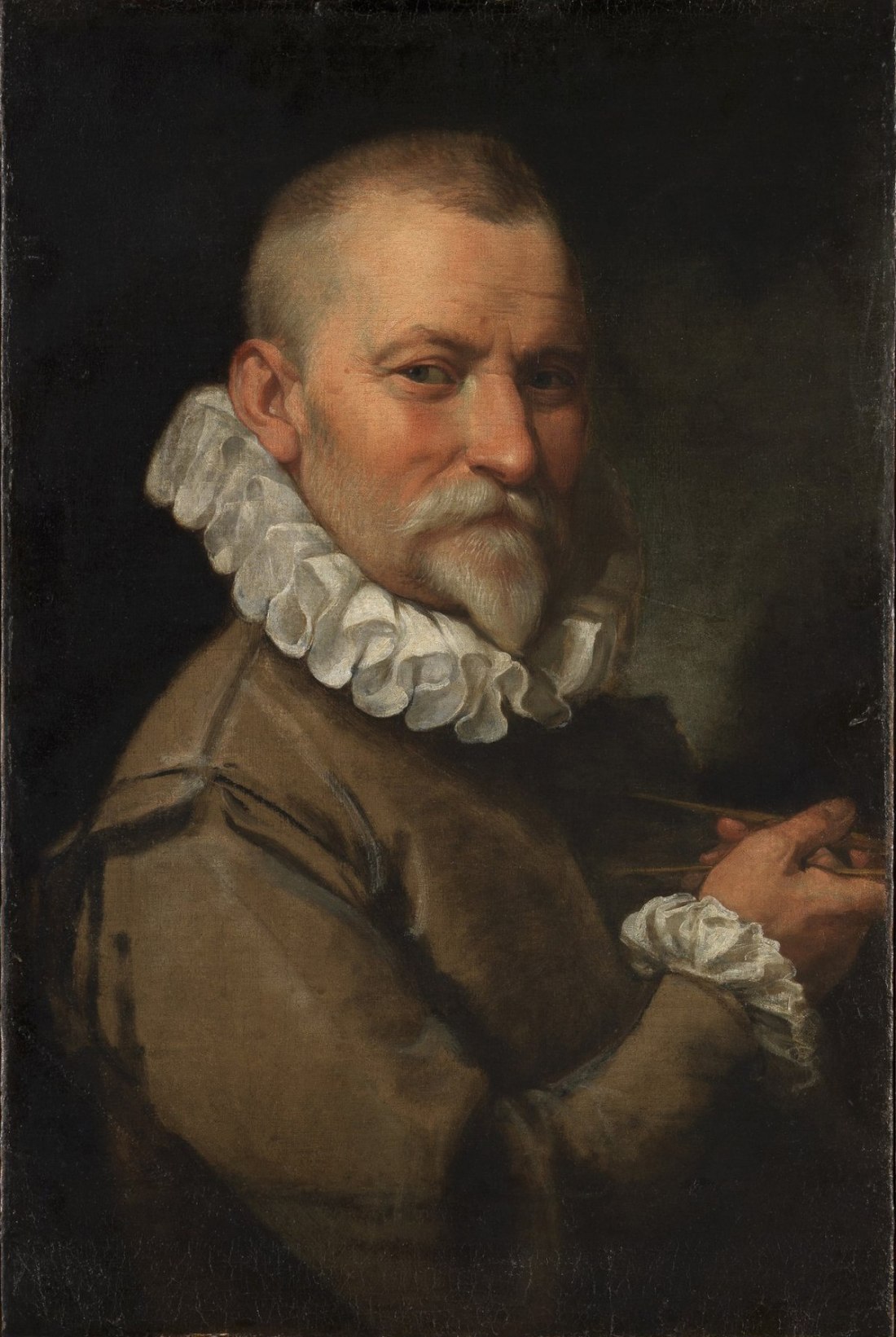
On a Painting Contract

There are usually two camps when it comes to paying for contract work. Some people argue that it’s always better to pay the contractor up front, but others contend that the work should be completed before payment is tendered. Then, there’s a growing third group, and this bunch sets benchmarks for work completed with payment to be given as the benchmarks are met and the work approved. I like this one the best, because it seems like a win-win with neither side in a position to take advantage of the other.

This last benchmark-type contract was the arrangement Julio made to have some painting done. He hired a man named Mike for the job. Mike and his crew came highly recommended. As Mike completed different tasks for Julio, the work was to be inspected and payment made before Mike would begin the next bit of painting. But there’s something that you should know about both Julio and Mike–each man had a terrible temper. Julio was known to berate people who worked for him. He was obscene and showed off his vast vocabulary of curse words daily, sometimes rattling off a litany of vulgarities simply to see how others would react. For a man with quite a lot of money, he had a lower-class sense of humor and coarseness about him. In addition, he was unfaithful in his sexual relationships, fathering children by several different women. Now, on the surface, this has nothing to do with paying a contractor what you owe him, but it gives you an idea of the kind of man Julio was before we get to his business agreement with Mike.

And Mike, for his part, was no prize, either. His temper was shown not to underlings or workers like Julio’s was, but, rather, for people he worked for who stiffed him on payment. He was known to threaten violence against anyone who didn’t pay him the money he knew was owed him for his work. Some rumors were out that that Mike had killed a man at one time for non-payment. No, for his own workers, Mike was generous to a fault, often paying them out of his own pocked when the people he worked for didn’t meet their promised obligations. Add to this the fact that Mike wanted the job done right. He was often late on his work because he was known for starting over. Call it OCD or whatever you wish, but the man was a perfectionist. Julio wanted the job done right, but he wanted the job done. He didn’t want to wait for Mike’s perfectionist streak to repaint and repaint and repaint.

And, so, when Mike and Julio agreed to a large benchmark painting job, you knew fireworks were bound to happen somewhere along the way.

The first benchmark was met, and Mike was paid. The second one, was met and Mike was paid. The third one was…late. Mike was repainting, and Julio yelled at him that this was a breach of the contract, that the benchmark having not been met meant that the deal was off. But Julio was pleased with what Mike and his crew had done. So, he promised to pay Mike, but still he withheld payment. So, Mike and his bunch took their buckets and brushes and ladders and left the job unfinished. Julio, realizing that he wasn’t going to find a better man than Mike to do this job, finally acquiesced and convinced the man to return to the work. And there were other hiccups along the way.

In all, it took Mike from May to September to finish the $600,000 paint job–September five years later.

But you have to admit, the painting of the Sistine Chapel by Michelangelo for Pope Julius II was worth the time and trouble.
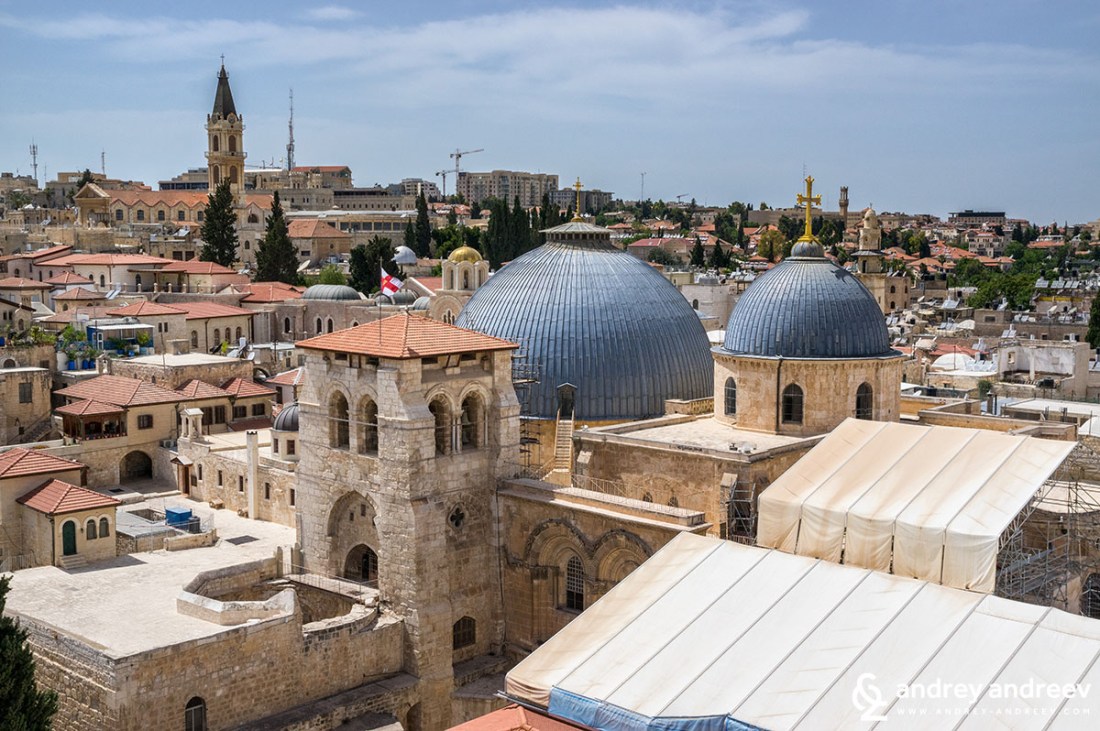
On a Pilgrimage

Paul’s dream his whole life was to visit Jerusalem. He grew up a good Catholic boy in Italy, born in the countryside about 130 years ago to upper middle class parents who had some landholdings. One of his brothers became an attorney, another became a politician. Paul wasn’t sure what he wanted to be as he grew up, so he received a general education from the local school. He finally found a home in a publishing wing of the Catholic Church. He also taught in Catholic schools and eventually became a secretary to a Cardinal.

But he was devoted to the Church and to God. The Holy Land, especially the city of Jerusalem, always called to him. For most of his life, work and his responsibilities kept getting in his way of making the pilgrimage to the place. Finally, at age 67, Paul decided that it was now or never. He boarded a jet in Rome and flew to Amman, Jordan. Now, in 1964, when Paul made his pilgrimage, that was the normal tourist route into Israel because Jordan controlled those areas where Paul wished to visit. In other words, the borders of all those countries have changed dramatically since then. At any rate, Paul made his way with a large group of other pilgrims across the Jordan River and entered Jerusalem for the first time, fulfilling his life-long dream.

And it was magical for him. He knew enough history to realize that what he was seeing wasn’t the way it was almost 2000 years earlier, but that didn’t matter to him. It was his connection with the earth in that spot, the spiritual connection he felt with the place rather than the buildings or stones or streets. He knew in his heart that he was seeing the same space if not the same city that his beloved Jesus had once seen, seeing the sky from the same spot on the globe as Jesus had done, and breathing the air where Jesus had once breathed.

And that was more than enough for him.

To show his thanks to the land and the people for allowing him to realize his greatest desire, Paul brought gifts that he left at the different shrines. He lit candles in the churches. He prayed in the chapels. And, even though he was older, he barely slept while he was there because of his excitement. He didn’t want to waste time sleeping, he told friends later.

And, while he had accumulated wealth during his life and work, Paul chose to wear simple clothing during the pilgrimage. He wanted to honor the simple man he admired so much. And, because he believed that Jesus spoke about peace and love, he made sure to leave olive branches at every stop he and his other pilgrims made.

You may wonder why Paul’s pilgrimage merits your attention here and now. Surely, Christian, Muslim, Buddhist, Hindu, and billions of other religious people make pilgrimages all the time. And you’d be right. Except Paul’s pilgrimage was the first of its kind.

You see, Paul’s pilgrimage in 1964–Pope Paul VI–marked the first time a Catholic Pope had ever visited Jerusalem.

On a Legendary Pope

The history of the Catholic Church for the past 1700 years is filled with stories of legendary/mystical/mythical people. This is one such legend.

Possibly.

I say “possibly” because there was a time in the history of the Church when not only were records scant and/or lost, but also a time when so much turmoil and change was happening in many different places that it is almost impossible to tell for certain who was who and what was what. And that brings us to the story of a pope, Pope John Angelicus. Pope John is supposed to have been the pontiff for only two years, from 855 to 857.

What makes his papacy questionable and likely the stuff of legend is that he wasn’t mentioned in many lists of popes of the Church for at least 350 years after he was supposed to have been made pope. The first time anyone included this Pope John on the list of church leaders is when a Frenchman, one Jean deMailley, commented on the short reign over the church by John. Within 100 years, other Church chroniclers included John Angelicus in their lists based largely on deMailley’s list.

The story goes that John came from the city of Mainz, and, as a teen, joined a monastery to follow a lover who also joined. Well, right away, we can see how some people then (and now, sadly) would object to such a narrative. John’s story was then considered to be true and history until the 1600s. At the same time, the Protestant Reformation was causing many across Europe to question the Catholic Church and its (often sketch) history. That’s when the Church began looking closely at anything that could be pointed to by Protestants as being false or fabricated by the Church, whether it be in the realm of theology or even the history of the popes.

And that brings us back to John Angelicus. The Church formally renounced the existence of John’s rule, thereby taking away one small but still significant bullet point that the Protestant movement could have used. The official Catholic line became that the list of popes moved from Pope Leo IV’s death in 855 to Benedict III receiving the keys to the papal kingdom that same summer of 855. That effectively closed out any possibility of another pontiff in between.

Of course, it could be that the Church also wanted to cover up who John Angelicus really was. That might have been the reason deMailley included his detailed description of John’s reign in the first place. You see, the reason that the story said John followed a lover into the monastery was that he was not “John” at all.

No, it seems that the legend is that John Angelicus was actually a woman, Joan Angelicus, who hid her gender and rose through the Church hierarchy to become the pope.

On a Lucky Architect

Domenico Fontana probably doesn’t register in your mind as a notable architect, but he was the cat’s meow in the late 16th/early 17th Centuries in Rome and throughout Renaissance Italy. You’ve seen his work without knowing that it was his. Have you ever seen a photo or video of the plaza in front of St. Peter’s in Vatican City? Then you’ve probably noticed the obelisk that is in the center of that square. That was Fontana’s work. When you think about it, to have something you did in the exact center of a square designed by Bernini and in front of a church that was the work of Michelangelo, Bramante, Raphael, and others puts Fontana in their league even if he’s not as well known as they are.

Cardinal Montalto became his patron shortly after he arrived in Rome. After growing up in what is now northern Italy near the Swiss border, Fontana received his training in building and discovered he had a good sense of proportionality and an easy understanding of engineering principles. He arrived in the capital of Christendom with more talent than most, and, after some successful commissions for Cardinal Montalto, his career was set.

As luck would have it, Montalto went on to become Pope Sixtus V, and he appointed his favorite architect as the new official architect of Vatican City. Fontana would add some features to St. Peter’s Basilica and some substantial changes to St. John’s Lateran church (the church the Pope is the priest of, actually). He even designed the ceiling of the Sistine Library. Yes, Domenico Fontana was at the height of his fame and power and wealth.

But, Pope Sixtus died suddenly, and Pope Clement VIII became the head of the Church. For a time, Clement allowed Fontana to continue in his post, but then the architect fell out of favor with the new Pope. He was forced to leave Rome, and he settled in Naples. A local nobleman asked the now-disgraced but former famous architect to be in charge of the design and construction of a series of canals to and around his property on the outskirts of the city. While the commission was several steps below what he had been used to back in Rome, Fontana accepted the appointment and began work. And then, luck struck him again.

You see, it was while overseeing the work on the Neapolitan count’s canals that Fontana’s workmen, digging the channels for the water to flow, that their spades hit several series of walls and buildings. Fontana ordered some of the walls to be excavated, and, as the walls were uncovered, the workers discovered paintings of incredible beauty and clarity, as if they had been painted only recently.

You see, as luck would have it, Fontana had discovered the site of the ancient city of Pompeii.

On the Priest of St. John’s

Ah, Rome! The Eternal City. I’ve been there twice but only went to the Vatican and the Vatican Museum one of those times. It’s an amazing city for art, architecture, and history. You can’t spit for a ruin, or a church, or a ruined church. And to walk out of the Rome subway system and see the majesty of the Colosseum rise before you…it’s magic. But I want to talk about a church building and the priest of that church that does not lie within the borders of the Vatican City.

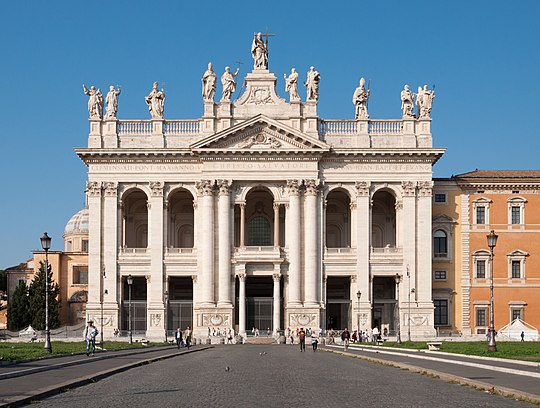
While we all know about St. Peter’s, the church I want to introduce most of you to is called St. John Lateran. It’s named for two of the Johns from the Bible–John the Baptist and John the “beloved” Apostle of Jesus. It’s located almost 3 miles of the Vatican, and, having been consecrated in the 300s, it boasts of being the oldest public Christian church still in existence in Rome and the oldest in Western Christianity (those Eastern Orthodoxers have older ones).

The priest of St. John’s at the moment has been the head of that church for the past 10 years, and he is quite an amazing fellow as those fellows go. He’s an older guy (83) who was born Mario Bergoglio. He became a Jesuit in the late 1950s and taught in seminary before becoming an ordained priest in the late 1960s. What makes him special, at least in my mind, is that for a guy who comes from such a traditional Catholic background, he’s pretty progressive when it comes to seeing his work as being one of service to others.

Let’s not debate the abuses of religion in general and Catholicism specifically in this format. Allow me to tell you what I really admire about this simple priest of St. John’s church. Here’s an example of what I mean. During August, most of Europe goes on holiday–everybody. That includes people who work in the Catholic church. That sounds reasonable until you consider that a lot of beggars come to Rome in the summers to make money off the tourists who flock there. Those people who are mostly homeless rely on the largesse of the Catholic Church for food often and even for a place to shower or to stay the night in a shelter. What Father Bergoglio did was tell his staff that they had to take their August vacations in shifts so as to not shut down the mechanisms that helped the homeless population of Rome. In other words, he argued that the Church couldn’t simply walk away and leave people without resources for a whole month. In my mind, that’s pretty noble of him. In fact, Bergoglio himself still takes some shifts in the soup kitchens during the month, even at his age. It’s the rare priest or minister who practices what he preaches.

Here’s another example. As the priest of St. John’s, Bergoglio has as one of his perks a luxurious apartment where he could live–if he so chose. However, he does not live there. Instead, he chooses to live in the much smaller and much simpler guest house. His argument is that all he needs is a bed.

These and other stances have gotten him into trouble with the hierarchy of the Catholic Church. He is against capital punishment. He is for a more tolerant stance regarding same-sex relationships. He has spoken out against the excesses of capitalism and has advocated for laws addressing climate change. You can see that these stances might ruffle some feathers in the Vatican, and, indeed, they have. The Catholic Church has maintained its power for hundreds of years by being traditional and unchanging, and here is one of its most high-profile priests speaking like a modern radical practically.

You might think the Pope would step in and address some of these actions and positions taken by Bergoglio. Would it surprise you to learn that the Pope actually hasn’t spoken out against what the priest of St. John’s Lateran says and does?

You shouldn’t be surprised. Pope Francis isn’t the priest of St. Peter’s Basilica, after all.

And Francis is the name Cardinal Jorge Mario Bergoglio chose when he was made Pope and became the priest of St. John’s ten years ago.