On An Humble Janitor

We ignore janitors and service workers for the most part. When we need something fixed or cleaned up for us, sure, we will take immediate notice of them. Otherwise, many people feel that the best janitors and cleaners are the ones that do the job and are not ever noticed. That was the case of Bill Crawford. Bill was employed at the United States Air Force Academy in Boulder, Colorado, in the 1970s as a janitor. And he went about his tasks of cleaning up after the cadets and the instructors without fanfare and without notice.

But the job was a pleasure for Bill. He was a native of Colorado, born and raised in Pueblo itself, in fact. Bill took on the job of janitor in his retirement for a specific reason: He believed in the work that the US military was doing to make the world a safer, better place, and he felt that if he could, even in his small way, help educate a new generation of officers for the nation, then that would be the least he could do to show his appreciation for their service. You see, Bill was a patriot.

And the cadets at the academy and the staff seemed to sense Bill’s pride that he took in his humble role. Oh, Bill never boasted about helping out; it was the opposite, in fact. He went about his job quietly, almost unseen. Yet, there was a certain way he carried himself as he mopped or swept or cleaned the facilities that caused others to notice him. He was always dressed neatly–shirt tucked in, trousers pressed and creased, and hair neatly cut and combed. The students and staff, rather than calling him simply “Janitor” or by his first name, often called him “Mr. Crawford,” adding the title “mister” because, well, the honorific seemed to fit Bill.

There was something else about Bill that stood out to at least a few of the cadets there. Those pressed clothes. The neatness about him. The quiet confidence he showed. A few of the young men (women first entered the academy about that time, in 1976) talked among themselves and decided that Bill had to be former military. He had to be. Now, back then, there wasn’t the internet where you could easily look up someone or do some quick digging on a person’s background. No, one of the students took it upon himself to go to the academy library to see what he could find about Bill. And what he found astounded him.

Taking the book out of the library, the inquisitive young man named James Moschgat (academy class of 1977) found Bill cleaning out a restroom and showed him the information. “Is this you?” James asked the janitor. Bill raised his chin and looked at the ceiling a moment as if contemplating whether or not to admit what up until that moment he alone knew. “That was a long time ago,” Bill said, “and only one day out of my life.” Bill lowered his head to look at the young man.

“But it’s you, right?” James persisted. Bill nodded in acknowledgement that it was. “Holy crap,” James said under his breath. “Holy crap.”

“Yes,” Bill said. “Holy crap, indeed.”

Bill Crawford died in 2000 and was buried at the Air Force Academy, the place where he loved the last job he had and did it well. Interestingly, Bill Crawford was not in the Air Force He was a private in the US Army in World War 2. And he is the only person who served as an enlisted man in the US Army to be buried there.

And that’s because William Crawford, the humble janitor, won the Medal of Honor–the highest award for bravery in the United States–in Italy during World War 2.

On a Risky Mission

The captain told his crew that the flight mission over the French city of Calais would be the most dangerous the men’s B-24 445th bomber squadron had yet faced. The target was the German V-2 rocket production facility, the the place where a radical new high-speed and highly destructive weapon that the Nazi scientists created was produced.

“Fellas,” the captain said, “You are not ordered to go on this mission. To be frank with you, well, we’re not expected to come back. It’s that dangerous. What I’m asking for is volunteers.” The crew of the bomber looked at each other. Then the captain’s co-pilot spoke up. “We’ll all go if you go, sir,” the man said. The captain grinned. He nodded. “We take off at dawn,” he said; he saluted and walked away.

The captain was born in Pennsylvania in 1908. His great-grandfather had fought in the Revolutionary War, and his grandfather had been in the American Civil War. His own dad was a veteran of both the Spanish-American War and World War 1. So, it stood to reason that he would continue the family tradition and serve his country. He’d received a degree in architecture from Princeton University, but, because of the Great Depression, he couldn’t find much work in that field. He managed to get other jobs first in New York City and then in California. It was out west that he learned to fly a plane and received his pilot’s license. He said later that he was inspired, as many were, by people like Eddie Rickenbacker and Charles Lindberg and Amelia Earhart. When World War 2 rolled around, his university degree and his experience as a private pilot gave him a head start in the Army Air Corps (what would become the US Air Force).

The captain knew his men. He had once entered the barracks of the enlisted men and found that they had stolen a beer keg from the officer’s club. Rather than throw the book at them, the captain calmly asked if he could have a glass. The men laughed and gave him a foamy mug of the stuff. As he shared the drink with the men, he casually said, “Say, fellas, the officer’s club is missing a beer keg. You men know anything about that?” The men, eyes wide, looked at each other. Rather than wait for an answer, the captain continued. “Well, I’m sure that whoever took the keg, that it won’t happen again. Thanks for the beer.” He stood up and left. And nothing like that happened again, just as the captain said. And his men loved him.

At the same time, the captain was a taskmaster. He put his crew through their paces, creating emergency scenarios for them as they trained and flew, insuring that the men knew their jobs in any situation. He also asked the men to cross-train to insure that vital jobs could be done in case one crew member was injured or incapacitated. So, he was a man who was tough but fair. The type of man you’d follow anywhere. The type of man you’d volunteer to go on what would essentially be a suicide bombing mission over the French city of Calais.

Over 2,000 aircraft were involved in the important bombing mission, the largest operation up to that time for the 8th Air Force in the war. And the captain’s plane was chosen to lead the raid. Rather than bombing from over 25,000 feet, this mission was to be low-level bombing, under 2,500 feet above the target. That’s what made it so risky and dangerous to the crew. Over 1/3 of the bombers that took off from England on that Christmas Eve, 1943, didn’t come back. But this captain and his crew made it. Their B-24 was shot up pretty badly from German anti-aircraft fire and the bullets from German fighters, but the crew managed to get the plane back home to England in one piece. For his leadership and his bravery in the successful raid, the captain was promoted to major. His skills at preparing his men for battle were also recognized, and he was ordered to become an instructor of other pilots on how to organize their crews and prepare their men for the remaining battles of the war.

After years of service to his country, the captain retired from the US Air Force Reserve with the rank of general in 1968. His son, continuing the family tradition, fought in Vietnam and, sadly, was killed there. The captain died in 1997 and was buried with full military honors, much mourned by friends and family and the public at large, too.

That’s because you know this heroic pilot as the actor, Jimmy Stewart.

On a Tough Sergeant

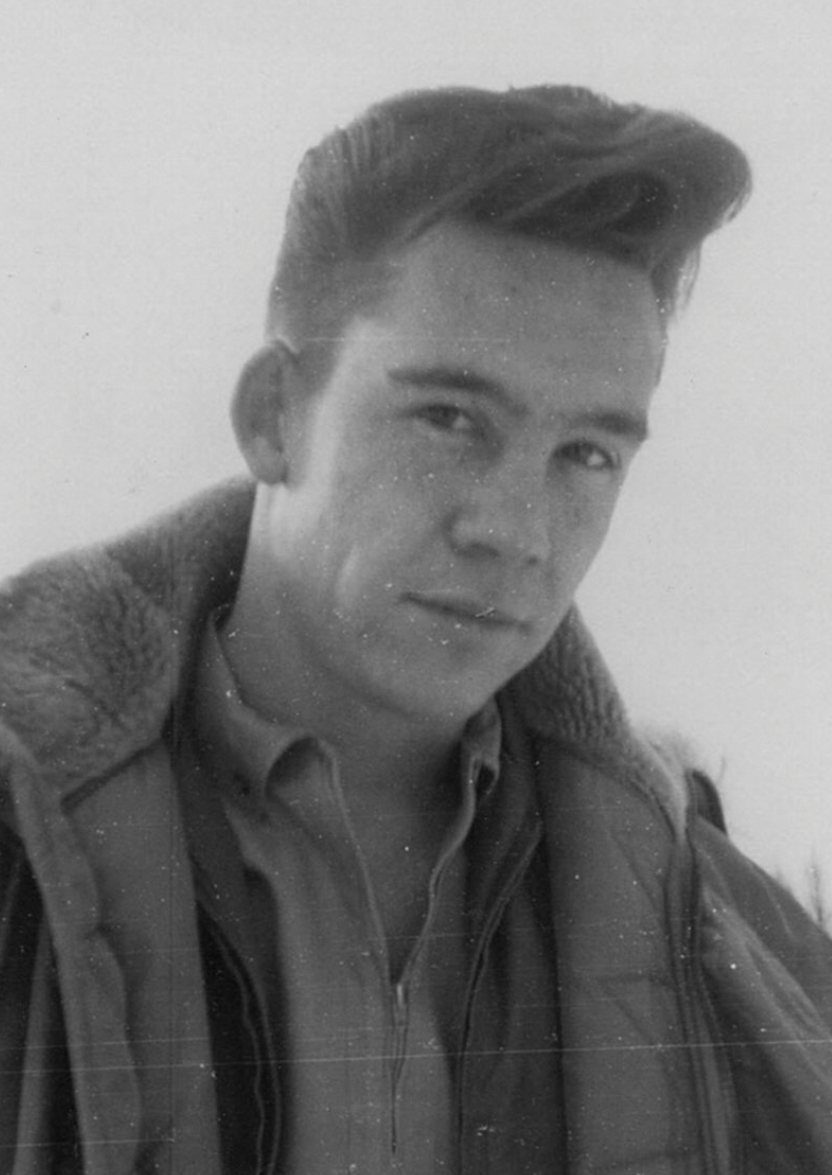
Look at the photo. Man, Bob was tough. School bored him, so he dropped out in the ninth grade. As an 18 year old, in 1961, he joined the Air Force, and he quickly became a master sergeant. It was the perfect job for a guy that tough. He loved the authority, the power, the respect as well as the responsibility that his position gave him.

Stationed in Alaska, Bob also came to really love the sweeping vistas, the soaring mountain ranges, the closeness of nature that the Great Land displays in spades. You might think that the tough and mean master sergeant would not care about nature, but Bob grew to love it in Alaska.

Bob was that the guy in the military, in his own words, “Who makes you scrub the latrine, the guy who makes you make your bed, the guy who screams at you for being late to work.” He was so good at yelling, apparently, that, over his 20 year career, having to be the tough guy began to take its toll on Bob. He started to look for some way to unwind, someway to escape the responsibility and the pressure that came from the mean side of himself.

At a local USO in Alaska, classes were offered that provided the opportunity for Bob to pick up a hobby. So, almost on a whim, he took the classes. He found out that he was good at them. He found that he enjoyed the release that his new hobby and burgeoning talent provided him. He enjoyed it so much, that he decided it was time to retire and pursue his hobby full-time.

He also promised himself that he would never raise his voice again. The years of the mean, tough Bob were over. That yelling, tough guy was to be replaced by an almost Zen-like Bob who is today known all over the world and almost revered as an icon of calm.

Bob’s hobby? You know that, too. You see, Bob became a painter.

You know him as Bob Ross.