On An Humble Janitor

We ignore janitors and service workers for the most part. When we need something fixed or cleaned up for us, sure, we will take immediate notice of them. Otherwise, many people feel that the best janitors and cleaners are the ones that do the job and are not ever noticed. That was the case of Bill Crawford. Bill was employed at the United States Air Force Academy in Boulder, Colorado, in the 1970s as a janitor. And he went about his tasks of cleaning up after the cadets and the instructors without fanfare and without notice.

But the job was a pleasure for Bill. He was a native of Colorado, born and raised in Pueblo itself, in fact. Bill took on the job of janitor in his retirement for a specific reason: He believed in the work that the US military was doing to make the world a safer, better place, and he felt that if he could, even in his small way, help educate a new generation of officers for the nation, then that would be the least he could do to show his appreciation for their service. You see, Bill was a patriot.

And the cadets at the academy and the staff seemed to sense Bill’s pride that he took in his humble role. Oh, Bill never boasted about helping out; it was the opposite, in fact. He went about his job quietly, almost unseen. Yet, there was a certain way he carried himself as he mopped or swept or cleaned the facilities that caused others to notice him. He was always dressed neatly–shirt tucked in, trousers pressed and creased, and hair neatly cut and combed. The students and staff, rather than calling him simply “Janitor” or by his first name, often called him “Mr. Crawford,” adding the title “mister” because, well, the honorific seemed to fit Bill.

There was something else about Bill that stood out to at least a few of the cadets there. Those pressed clothes. The neatness about him. The quiet confidence he showed. A few of the young men (women first entered the academy about that time, in 1976) talked among themselves and decided that Bill had to be former military. He had to be. Now, back then, there wasn’t the internet where you could easily look up someone or do some quick digging on a person’s background. No, one of the students took it upon himself to go to the academy library to see what he could find about Bill. And what he found astounded him.

Taking the book out of the library, the inquisitive young man named James Moschgat (academy class of 1977) found Bill cleaning out a restroom and showed him the information. “Is this you?” James asked the janitor. Bill raised his chin and looked at the ceiling a moment as if contemplating whether or not to admit what up until that moment he alone knew. “That was a long time ago,” Bill said, “and only one day out of my life.” Bill lowered his head to look at the young man.

“But it’s you, right?” James persisted. Bill nodded in acknowledgement that it was. “Holy crap,” James said under his breath. “Holy crap.”

“Yes,” Bill said. “Holy crap, indeed.”

Bill Crawford died in 2000 and was buried at the Air Force Academy, the place where he loved the last job he had and did it well. Interestingly, Bill Crawford was not in the Air Force He was a private in the US Army in World War 2. And he is the only person who served as an enlisted man in the US Army to be buried there.

And that’s because William Crawford, the humble janitor, won the Medal of Honor–the highest award for bravery in the United States–in Italy during World War 2.

On A Polish-American Hero

Only eight people have been granted honorary citizenship in the United States. Churchill, Mother Teresa, and The Marquis de Lafayette are among them. And then there’s another Revolutionary War hero, a man named Casimir Pulaski. You may have heard of him because of several towns and counties in the US bear his name. Like Lafayette, Pulaski joined the battle against what he felt was the oppression of the British government against the freedom-loving Americans. He did this in part because he had waged a similar but unsuccessful fight as a cavalry officer in his native Poland some time before and had been exiled by the powers that were in the country at the time. That’s when he came across Ben Franklin and Lafayette in Paris who convinced him to continue his fight for freedom and against tyranny by journeying to the newly-formed United States and joining the fight there.

And, so, he and several of his fellow Polish cavalry officers did. Pulaski had come from the nobility in Poland (he bore the title, “Count Pulaski”) and, thus, had some money of his own. He used some of his fortune to finance the first true cavalry unit in the United States Army, becoming known as the Father of the American Cavalry to this day. And he fought in the war effort from north to south along the eastern seaboard; he went as far north as New York and as far south as Georgia. When he stepped off the boat in Massachusetts, touching American soil for the first time, it is reported that he said, “I came here to defend freedom, to serve it, to live or die for it.” And, with this spirit and his skills as a cavalry officer and ability to train troops in the saddle, Pulaski became a national hero to those Americans who supported the war against Great Britain. He is even credited with saving the life of General George Washington in battle.

It was in the south, near Savannah, Georgia, that Pulaski was knocked unconscious and mortally wounded by cannon fire during a charge. He was taken aboard a ship in Savannah harbor and died from his wounds two days later having never regained consciousness. The nation mourned. This brave man’s story was their story in many ways. Many Americans at the time were still immigrants from Europe; they had left the oppression of European tyrants to come to the freedom of the American lands, and, even though he was of the nobility, they saw Pulaski as one of them. He died a hero.

Well, for various reasons, what happened to Pulaski’s body after his death got clouded and confused. Some said he was buried at sea after a funeral in Savannah. Others said that he was buried on some high ground on a plantation not too far outside of Savannah. For decades, no one knew for sure. Then, in 1853, a body was found on the grounds of the plantation and tentatively identified as Pulaski’s. That body was re-interred in a memorial to the cavalryman in Savannah. But, then, in 1996, the bones were dug up and underwent a forensic study to determine if they were, in fact, the bones of the Polish hero.

The analysis took eight years.

In the end, the bones were consistent with someone who was Pulaski’s age and military background. There was an injury to the skull consistent with an injury he’d sustained as a younger man fighting in Poland. One cheekbone had a defect, and that matches with Pulaski having had a bone tumor there. And, after comparison to the DNA of a known living great-grand niece, the study said that there was strong probability that the bones were, in fact, those of Count Casimir Pulaski. But, the years-long analysis also showed something no one suspected, either when Pulaski lived or since.

That the Polish hero might have been a woman.

On an Imported Worker

The small Arizona town of Quartzsite is home to a remarkable grave. The stone says the body buried beneath it is someone called “Hi Jolly,” but that’s a remnant of the racist nature of the United States 150+ years ago. We’ll look at his name in a moment, but how this man came to live and eventually die in the American Southwest is as odd as it is interesting.

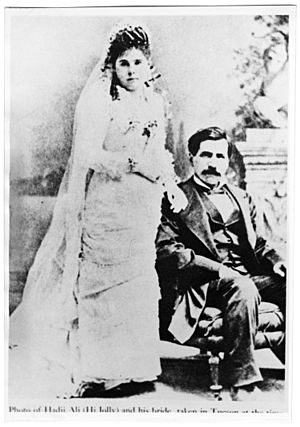
The man’s name was actually Hadji Ali, but it’s easy to see that someone in the United States back in the mid-1800s might hear that name as “Hi Jolly.” So, to make his life somewhat easier, he want by the name that the locals in Arizona called him. From what we can glean he was born in what is now Turkey to Greek Orthodox shepherd parents in the 1820s. His Greek name was Philip Tedro. But, at an early age, Ali converted to Islam and changed his name. Because he had made a pilgrimage to Mecca early in this religious journey, he chose the name Hadji. He also served in the French Army as a young man, fighting part of the French colonial wars in Algeria. His background with animals saw him assigned to care for the pack animals used in by the French in their supply lines.

It was in this capacity that Ali was hired by, of all outfits, the United States military. How that happened has to be explained. You see, in the presidential administration of Franklin Pierce, the Secretary of War (what the Secretary of Defense was known as at that time) was none other than Mississippi’s own Jefferson Davis. This is the same Davis would would go on to become the President of the Confederate States of America during the American Civil War. Since there were no real foreign threats to the US during this time, the major focus of American defense policy was the pacification (meaning removal and/or eradication) of the native residents of the vast stretches of the western US. Davis looked for ways of creating better supply chains for the string of forts the army had set up to protect Americans from what they felt were native threats to settlement. That’s why Davis sent American agents to the Middle East to find and hire the best animal wranglers and handlers money could buy–people who had experience in handling animals in harsh, desert conditions. Ali was one of several hires made by Davis’s agents, and he came to the US in 1856 and arrived in Texas before making their way to the Southwest.

Ali was appointed to be the leader of these animal handlers. Everyone who worked with him commented on his professionalism and experience. As a vital member of the army’s quartermaster corps, he began enacting the plan Davis created to supply the forts and, at first, all seemed well. But 1857 saw the start of a different presidential administration and a new Secretary of War who didn’t have the priorities that Davis did. Besides, the tensions surrounding the beginnings of the American Civil War began to divert government funds from the western theater to the creation of warehouses and armories back east that began stocking supplies and weaponry. Soon, Ali found himself out of a job and unable to return to his native lands.

So, he decided to stay. He married a Greek girl in Arizona and did more supply work for the army in the wars against native groups in the late 1800s. He did some prospecting as well. He and his wife raised two children. Finally, he died in 1902, having never returned home. In fact, Ali became an American citizen and came to love the beauty and freedom of the deserts of Arizona.

You might be wondering why Jefferson Davis would have to send away to the middle east to find people to manage pack animals in the American Southwest. Well, that was needed because no one in the United States had any experience working with the specific pack animal Davis was using in the deserts in an interesting although failed experiment.

Ali, you see, had a good deal of experience working with camels.

On a New Captain

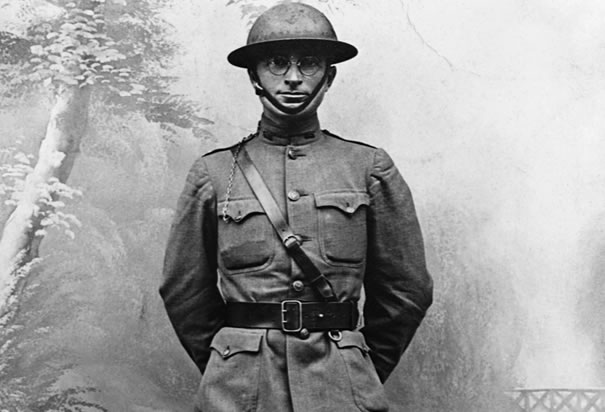
It was in June 1918, in France, during World War I, when the men of Battery D of the 129th Artillery Regiment received word that they had been called to muster for an important announcement. They were introduced to a new leader. This new commander of the artillery battery was a newly promoted captain and a volunteer. The group of men who made up the battery were unimpressed with the new guy from the start. “He looked more like a college professor than he did a captain of artillery,“ one noncommissioned officer remarked later. And that was an accurate description. The man, age 34, wore wire rimmed glasses. He stood awkwardly, obviously wasn’t terribly athletic, and when he addressed the troops that first time that they were mustered under his command, not a few of them noticed that his knees shook while he spoke. After he addressed the group and dismissed them, several of the artillery men responded with a Bronx cheer.

Later that day, several men decided to test the will of this neophyte captain. They staged a fake riot in one of the barracks to see what they could get away with, to see how he would respond. And his response was nothing that they predicted. The next morning, without a word, a notice was posted on that barracks bulletin board. It listed the demotion of the noncommissioned officers and a list of chores to be completed as discipline for the entire group.

Addressing the other noncommissioned officers from the other barracks, the captain reminded them that he wasn’t there to get along with anyone. And if they were unable to maintain discipline in the ranks, he would find another assignment for them. The older and wiser non-coms in the group looked at each other and nodded. This guy was going to be OK, they decided. Discipline was restored because of the new-found respect that they had for the new guy.

On the other hand, the new captain also quickly developed a reputation for rewarding those soldiers who excelled. His men grew to like him as well as respect him. He was cool in his decision making and treated everyone fairly. Still, the unit had yet to be tested under fire. And it was here that the captain himself worried about his ability to withstand what the enemy had to offer when the shells were coming in on him. He wrote a letter to his fiancé, saying that he hoped that his legs would help him stand firm, even when they were wanting to take him away from the danger. And that first test of battle came a month after he was made captain. After selling a German position, the Germans returned fire to the Americans. Several of the group abandoned their artillery pieces and began making for the rear. The captain began yelling at them– – something he had not done before. Apparently, he called them every day in the book, challenging their manhood, and even referring to their mothers in inappropriate ways. His anger worked. The men came creeping back to their stations at the guns, and they returned fire on the Germans. The captain was later commended for his coolness under fire in for rallying his men under duress.

When the war ended, the men of the battery took up a collection. They had a silver cup made, which they presented to the captain as they were discharged from service. On one side, the cup said, “Presented by the Members of Battery D in appreciation of his justice, ability and leadership.”

And on the other side, the cup said, “Presented to Captain Harry S. Truman.“