On a Law Code

The history of the compilation of legal statutes is as old as the concept of ownership. In other words, the written law began with owning land and other property. Think of all the issues associated with owning land: Deciding who is the proper owner, where the boundaries of the land is, who owns things like mineral rights, how one accesses the property (what land you have to cross), etc. All of that requires regulation and thus, a written law code. And law codes mean adjudication. And that gave rise to things like courts, judges, and even lawyers. And it all began with ownership.

Today, the law continues to define what exactly constitutes property and the associated rights of it. The idea of something that is property also includes intellectual (that is, not physical) property and rights. We also think of land being lateral, but it can also be vertical as well. People have the rights to the space above their property as well–for example, I can’t build a bridge over your house if I own the property on either side of you. This concept is still being defined legally as time goes on.

Some people have been thinking about this concept of what is above you for almost a century. A Czech lawyer was one of the first to attempt to codify what legal rights people should have over the space above them. His name was Vladimir Mandl. He published his thoughts on it way back in 1932. Das Weltraum-Recht: Ein Problem der Raumfahrt was his treatise on the subject, published in German, and it was obviously way ahead of its time. As the 20th Century progressed, others added to Mandl’s propositions. Cases began to be heard in various courts around the world that added to and clarified the proposition. Now, international law is understandably dicey because of the various laws in the nations involved. But the idea is that international legal consensus be built so that rights can be applied equally across the globe. Think of the world-wide standards for things like war (the Geneva Convention, for example) and other issues that have global implications and applications.

The United Nations also took up the issue. The laws become more defined. Agreements were signed. Conventions were held. Universal agreement was reached. Courts have been hearing cases involving one major point of contention: The definition of what it is above you. How far do your rights go? Can I claim the air over my land to the point that I can tell drones or even airplanes that they can’t fly over me? Also, remember that, since we are on a globe, the are above us grows in a cone shape the higher up we go. Do we as individuals or nations own that? And thus, the law is evolving and changing as it always does. But we go back to the original concepts of Vladimir Mendl. He set the standard for how we view what’s above us and how it should be regulated, and he did it long before we began traveling so far “up” that we were actually “out.”

By the way, the translation of his publication in English is Space Law: A Problem of Space Travel.
On an Aggressive Neighbor

What would you say about a neighbor who made violent incursions into your property several times over the past few years? Well, you’d probably take that neighbor to court or, if you felt really threatened, you might consider moving. But what if that neighbor was not a person or a family but, rather, another country? Well, that’s the current situation going on right now in a certain part of the world.

Let’s go back a bit. The offended country is small and basically helpless, it has no real army, and hasn’t been a threat to anyone or any place in centuries. Its people are known for being thrifty, hardworking, and industrious. The offending country, on the other hand, is over 25,000 times larger than its tiny neighbor. It has sent its well-trained troops to other countries over the centuries because they’re known for their loyalty and bravery. One of their major exports is personal weapons produced for their army, in fact.

And, so, at least four times over the past fifty-some odd years, the bigger country has invaded the smaller one–and not one resolution condemning these aggressions has been lodged or passed by the United Nations. Here is a quick rundown of all the times the small nation has been attacked over the years:

1968-The first time was a mortar strike taking out some buildings and infrastructure. No injuries but loss of property and income.

1976-A scouting party of 75 entered the neighboring country on what they later said was an “accident” but no compensation was offered.

1985-Surface to air missiles were launched into the small country (why shoot missiles? They had no air force in the first place) started forest fires that destroyed a good deal of valuable woodlands and hurt the economy. Again, and luckily, no injuries.

1992-In this instance, actual regular army troops crossed the border and occupied a small village. No apology made or compensation offered

2007-Another incursion of troops, this time on a larger scale. This time, the government of the smaller nation demanded that the larger country be held accountable. No one did anything, but the troops were withdrawn and a formal apology was issued. But the apology came with the statement that “no helicopters were used in the incident,” as if that made it better, somehow.

Again, you’ve not heard about this aggression and no action has been taken to punish the aggressor. Maybe part of that is the fact that the larger nation has a reputation as being the anti-aggressor. In fact, it is known internationally as a bastion of peace, tranquility, and neutrality.

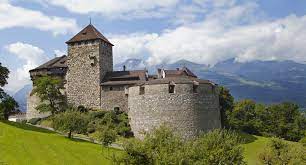
That’s why it’s hard to understand why tiny Liechtenstein keeps getting picked on by its knife-wielding next-door neighbor, Switzerland.

On an Official Phone Call

In 1947, the United Nations considered an important and historic vote. They were deciding how to partition Palestine, choosing what land would be used to create the new nation of Israel–or even if such a new nation should be created. The reasons for the UN taking up such long-lasting and significant decisions can be debated, but, for the sake of brevity, its important to realize that powerful people sat on both sides of the issues. The fate of nations, economies, wars, and decades of violence (both past, present, and future) was at stake.

And both sides knew that the vote was going to be close. Many people wished that the Palestinians should be allowed the land to form their own nation. Others felt that the Jewish people both in situ and trying to reestablish their lives after the Holocaust in Europe should be granted the land to form their own nation. Tensions were high, especially when you consider that this was also at the height of the Cold War between the United States and the USSR. So, every vote would count in the UN General Assembly.

The President of Haiti at that time was a man named Dumarsais Estimé. The Hatian leader was sitting in his office one day before the UN vote when his secretary called him on his intercom. She informed Mr. Estimé that the President of the United States, one Harry S. Truman, was on the line. The president picked up the line and heard the mid-western crisp voice of the American President say, “Good afternoon, Mr. President, this is Harry Truman calling from Washington. How are you, sir?”

Now, President Estimé had never spoken to Truman in the two years the Missourian had been in the White House. To get a call at this time was surprising. The US did send financial help to the poor but strategically placed nation. Perhaps this is why Truman was calling, the president thought. “I’m fine, Mr. President,” he answered. “What can I do for you?”

Truman came right to the point. He told the Haitian leader that he wanted Haiti’s vote in the upcoming UN session to be for the creation of Israel. “Now, this is important to me, Mr. President,” Truman told him, “and I know you want to remain a friend of the United States. Don’t you?”

Dumarsais Estimé was stunned. Was this a veiled threat from the American leader? Was Truman dangling American aid to Haiti as bargaining chip to force Haiti’s vote in the General Assembly? In his office in Port-Au-Prince, Estimé stayed silent a moment. Truman waited, then said, “Mr. President? Are you there?”

“Yes, sir,” Estimé said.

“What do you think, Mr. President? Can you see your way to vote for Israel?”

“Yes, sir,” Estimé repeated.

“I appreciate it, Mr. President. I look forward to speaking to you soon. Thank you,” Truman said. And then the line buzzed as the connection was broken.

And the Haitian delegate at the UN indeed voted for the creation of Israel. As, as I said, the vote was close. The resolution passed by a three vote margin. Truman’s strong-armed tactics worked, apparently.

Except there was a problem.

Years later, in the Truman Library Archives, the following notation was found in one of the former president’s daily journals:

“Someone pretending to be me called the President of Haiti and made threats about the Zionist vote,” Truman wrote. “I have asked that we get to the bottom of this.”

To this day, we still don’t know who that person was.