On A Scam Artist

You’ve either seen or are aware of the Steven Spielberg film, Catch Me If You Can. The film is a story of a con man named Frank Abagnale, a teenaged runaway who is portrayed by Leonardo DiCaprio. In the film, the Abagnale character begins by forging checks and eventually poses as a substitute teacher, airline pilot, attorney, and doctor. In the end, Abagnale gives up the life of scamming and becomes a wealthy consultant to banks, law enforcement, and others who are interested in learning how to avoid falling victim to con artists like him. However, the reality of Frank Abagnale’s life is, in an odd way, much different than the one the film presents.

For over 50 years, Abagnale has told variations of these stories that you see in the film to audiences on TV game shows, talk shows, and before college students and other groups, often receiving large sums of money to tell them. He has written books that detail his past as a scammer and con man. In fact, he has made a rather lucrative career trading on his sordid record as a young man. And that may be Abagnale’s greatest scam of all.

What the film gets right about his past is that he was born in the Bronx in 1948, and his parents did get a divorce when he was 15. He lived with his father and step-mother before using his father’s credit card to run up a bill of over $3,500. That theft led his father to send him away to a boarding school. That’s the point that the facts about Abagnale’s past become murky. He has claimed at various times that it was a prestigious prep school but has also said it was a Catholic-operated reform school. A three-month stint in the US Navy was followed by several arrests for petty theft, car theft, stealing and forging checks, and for impersonating various police and federal officers. All of this activity saw him spend the next several years in and out of jails and prisons.

By the time he was 20, the young con artist impersonated an airline pilot and moved to Baton Rouge, Louisiana. He moved in with the family of an airline flight attendant he had met while pretending to be a pilot. For several months, he scammed that family and stole from their bank and credit card accounts. When he was found out, he was convicted of theft and forgery. But, before he could be sentenced, Abagnale escaped custody and flew to France in an effort to get away from all his trouble. More scams were conducted there and in Sweden. Again, he was caught and served a few months in prison. Finally, he was extradited back to the US.

Now about age 22, Abagnale served some more time for other cons he had done. Then, once he was out of jail, he bounced from job to job and con to con and jail to prison and back out again. Finally, in 1975, he had an idea. That’s when he approached a bank with a proposition. He would teach the bank’s employees how to spot bad checks in exchange for a consulting fee. He promised that if the bank found his work unsatisfactory, that they didn’t need to pay them. That was the start of Frank Abagnale’s security consulting firm. The other caveat of that first “straight” job was that the bank would tell other banks about his service. Soon, the banks were lining up to have him teach their employees all of his check faking tricks.

Of course, when he presented that first bank his credentials, the bank didn’t bother to check that he had made up most of his misdeeds and overstated his experience as a fraudster. This is about the time he began speaking to groups about his so-called (and self-labeled) exploits as a master forger. Truth told, he never forged more than a few thousand dollars’ worth of checks. But the stories fascinated audiences, even if they were, well, forgeries. All that exposure brought by the speaking engagements led to the book, which led to the TV appearances, which led to the film, which led to a sizeable income for the man.

Thus, most of what you saw on the movie screen was hokum. In fact, it’s fair to say that the best scam Frank Abagnale pulled was to convince everyone that he was a better crook than he really was.
On a Promotional Flight

We probably can’t relate to how much of a media star Howard Hughes was in his time. Maybe–maybe–the closest we could get is if we merged Bezos and Musk and Zuckerberg together, we might begin to understand Hughes’s hold over the public imagination of the 1930s and ’40s. He was, among other things, a financier, a real estate baron, a film mogul (director and producer), a manufacturer and innovator in many fields. One of his major areas of productivity was in the advancement of aviation. Besides being the brains behind Trans-World Airlines (TWA), Hughes set/broke many records for aerial speed in aircraft he himself designed. You have also probably heard about the largest plane ever (dubbed the Spruce Goose) that he built and flew.

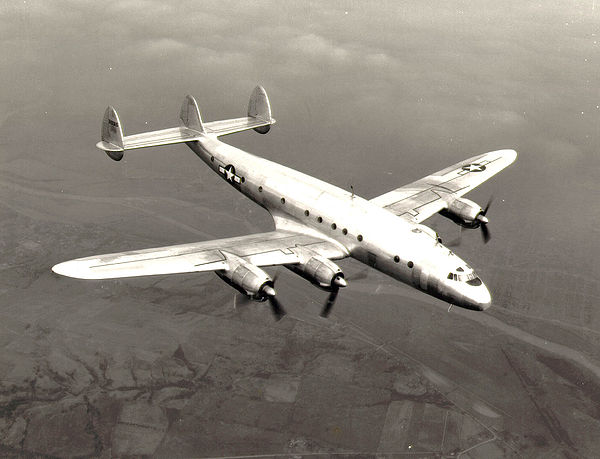
During World War 2, Hughes worked closely with the US Government in developing new aircraft for the war effort. One of his stellar accomplishments (pun intended) was the creation of the Constellation, a sleek long-distance passenger airplane that was commissioned by Hughes just as the war was breaking out in Europe. He saw the future, Hughes did, and he knew that after the war was over, people would want to travel long distances cheaply and comfortably. That’s where the Constellation came in. It was the first aircraft to feature a pressurized cabin that would allow it to fly safely and comfortably at high altitudes unlike any other aircraft before it.

Hughes took delivery of the aircraft in 1944 and flew it from California to Washington DC as a publicity stunt. He thought it would drum up business for his airline and new star of the fleet (again, pun intended), the Constellation. Skipping across America (and back), Hughes planned stops along the way to land and take local dignitaries up for quick flight so that they would be able to experience the thrill of luxury air travel. And so, he and the president of TWA went to DC and flew some government officials around before heading back west. One of his stops on the return was in Dayton, Ohio. Upon landing, there seemed to be a bit of confusion because almost no one was there to take the promotional flight. One in particular was an old man in a rumpled suit who didn’t even seem too excited to be included.

But Hughes was a showman. He gave the small group the usual sales speech and then took off with the gaggle of notables (plus the older man) and showed them what the future of air travel would look like. Throughout the more or less 50 minute flight above Dayton, Hughes let the passengers take turns sliding into the co-pilot’s seat to get a bird’s eye view of things from up front. When it was the older man’s turn, Hughes said to him, “Would you like to fly her?” The old man sort of shrugged and placed both of his hands on the yoke. “It really flies itself, doesn’t it?” the older man remarked to Hughes. Hughes smiled and nodded. And the man had some questions for Hughes. “What’s the wingspan?” he wanted to know. Hughes told him: 123 Feet.

“Do you do much flying?” Hughes asked the man as he got up to allow the next passenger to sit. “No, sir,” the old man said, shaking his head, and then he began to exit the cockpit. Then, he paused as if in thought. He turned back towards Hughes.

“123 feet, you say? That’s about as far as we flew the first time,” Orville Wright grinned.

On An Aviation Incident

Interior designer. Advertiser. Sporting goods salesman. Insurance salesman. Produce salesman. College chemistry teacher/coach.

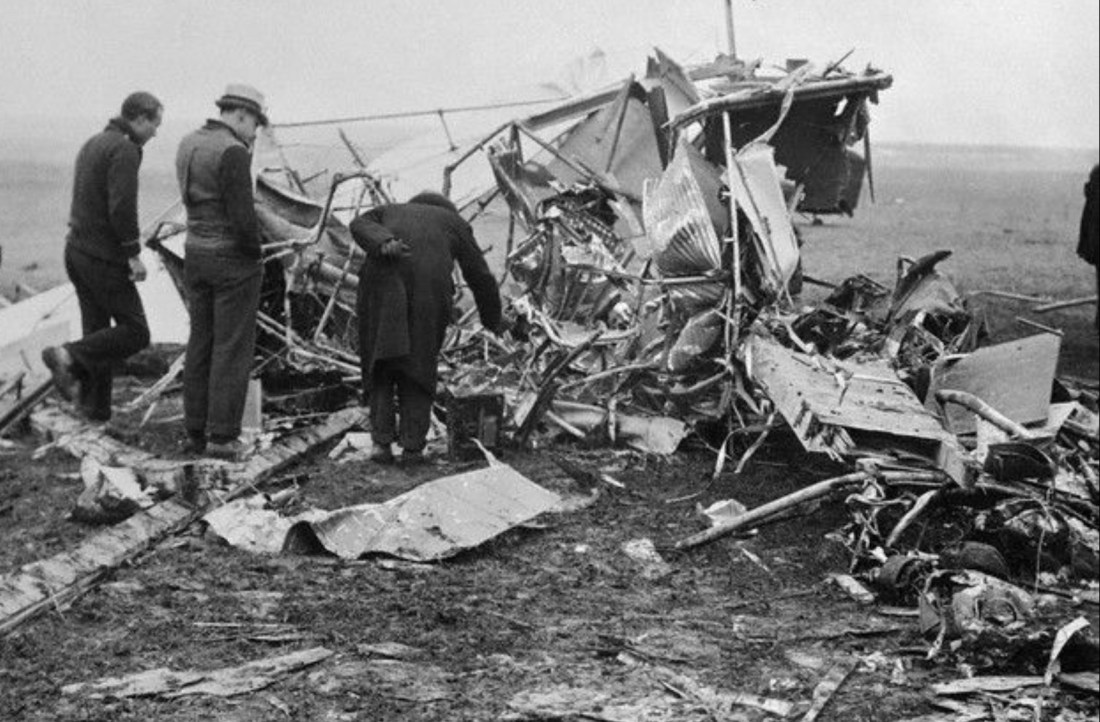
Those six passengers, plus a pilot and a co-pilot, died in a plane crash near the small town of Bazaar, Kansas, in March, 1931.

Eight other seats on the TWA flight that day sat empty. The passengers and cargo weren’t overweight or unusual. The weather may have played a factor, to be sure, but that’s not what ultimately caused the crash of TWA flight 3.

The final report on the crash determined that one of the wooden wings of the Fokker Tri-motor plane had seen moisture build up in it over time. This caused the glue holding the wing together to separate, causing catastrophic failure.

The investigations that followed the crash caused widespread changes in the aviation industry. Wooden aircraft became quickly obsolete, with metal aircraft replacing them. The first of the DC series of aircraft made its debut within 3 years due to this demand. This call for metal commercial aircraft forced companies like Fokker and Ford, stalwarts of the early successes of passenger air travel after World War 1, to leave the commercial aviation business within a few years.

The crash even changed aircraft crash investigations themselves, here-to-fore having often been closed because of a corporate culture of secrecy. Aviation crash incidents now began a new era of openness and thorough, impartial, rigorous professionalism. The federal government received the power to hold hearings and call witnesses and conduct all necessary inquiry.

Of course, other crashes involving wooden aircraft occurred during that period. In fact, 12 other crashes occurred in the US in that year alone. What caused such interest in this half empty flight that crashed in the middle of the US on that March day? What was it about this one that brought about such sweeping changes to the airline industry?

Look at that passenger list again. Carefully consider each occupation: Interior designer. Advertiser. Sporting goods salesman. Insurance salesman. Produce salesman. College chemistry teacher/ coach.

You probably get now. It’s that last passenger. We don’t think of him as a chemistry teacher, however. Even though he died at the young age of 43, this football coach, in the prime of his career, remains one of the best known people in the United States.

You see, TWA flight 3 that crashed that March day carried none other than Knute Rockne