On A Pub Stay

Most of my regular readers know that, almost two and a half years ago, I left the United States to travel in Europe and the UK. That wish to travel was made possible, in large part, to my good friend, Danielle, who helped me get a part time remote job that I can do anywhere there’s WiFi or a decent cell phone signal. Also, I found the TrustedHousesitters website, a place that connected me with people who needed someone to stay with their animals whilst the family were away on vacation or whatever. Thus, I’ve lived out of a couple of backpacks for this entire time. And, in the course of my travels and experiences in meeting people and their pets and seeing a good deal of the UK and France, some special memories have been made. This story is an example of that.

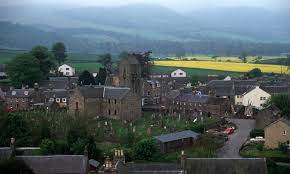
I was headed to the Scottish hinterlands, a village outside of Perth called Dunning. Supposedly, some saint killed a dragon there once upon a time. Anyhoo, I planned to come in an afternoon early and get a chance to meet the owners and the pets before the family left on their annual vacation. The owners were happy to invite me to supper that evening so that we could all get acquainted. Two lovely old pointers awaited me, by the way, but this story isn’t about them. I made plans to stay in a local pub on that Wednesday evening and booked a room there.

Arriving by train into Perth, I took a taxi the 12 or so miles out to Dunning. The brogue on the taxi driver was so strong that I barely understood him as he chatted away. I must have nodded at the right places in his monologue because he was grinning the entire way, He dropped me and my bags off in front of the pub and made his way back to Perth. I went up to the door of pub and saw a sign in the corner of the window that said CLOSED. But next to the sign was a little hand lettered note that read, “If we’re closed, go around the corner to the tee room (Note: tee as in golf, not the drink) and ask there.” So, I did so. The manager of the tee room made a call and said something unintelligible to me and put the phone down. “Go back and wait out front,” he advised, “and someone will be along shortly.”

Sure enough, about ten minutes later, an older lady wearing an apron in front of her jeans came jogging up the street. As she approached, she said, loudly, “You’re not supposed to be here until tomorrow!” She came up on me, and I said, almost in defense, “But it’s Wednesday.” She laughed. “Is it? I have my days mixed. No matter. Welcome!” She held out a large ring of keys and rapidly gave me the instructions. “Front door. Bathroom down the hall is this one. Your bedroom is upstairs, second on the right. If you go out, lock the door behind you. The bar will open sometime around 7pm. Enjoy your stay!” With that she jogged back to what ever task she’d left. I turned towards the pub and surveyed it with pride as if I were the publican and not only an overnight guest.

The room was small but fine, ditto the bed. The bath was one of those old ones with the claw-footed tub and rope-pull commode, green tiled and tired but classic. Dinner was to be at 8, but I left early, before the bar opened, to walk around the village a bit before meeting the family and pets. The dinner was wonderful, and we got all the details of the dogs’ routine settled. It was shortly before 11pm when I made my way back to the pub. The yellow glow from the windows greeted me as I went up the path. And then, I heard the music.

Coming into the low-beamed ceilinged room, the fire took the chill off the evening, even though it was May. Behind the bar was a woman I later learned was the daughter of the woman who’d entrusted me with the keys earlier. She nodded greeting to me as she dried a pint glass with a bar towel. A young-ish couple chatted with their heads together at one table. In a corner booth, a man sat with a small dog of indeterminate breed on his lap. He had a half-finished pint of some ale in front of him. He was petting the dog and had tears streaming down his face. At another, larger table, sat four musicians. One of them, a woman, played the squeezebox. A man had several flute-type recorders in front of him, and he would change instruments as the foursome played different tunes. The other two musicians, one older and obviously the dad of the younger, were strumming small guitars. And the singing–the singing was wonderful, as you’d expect in a rural Scottish pub.

Well, there was no way I was going to retire to my bed with this scene before me. I went to the bar and ordered a pint of Scottish cider (Forgive me, I’m merely an amateur drinker). I took my pint and sat at the table nearest the quartet. They ran through several wonderful old Scottish tunes seamlessly, a group who’d obviously played together often and knew who was to do what and when. And the harmonies, ah! Having grown up in a church tradition of acapella music, and having learned to listen for harmonies in Simon and Garfunkel, the Beatles, and Elton John, I though I knew a thing or two about singing. But this wasn’t Pepsi; this was the Real Thing.

After a few songs, the older guitar player turned to me and asked me what brought me to Dunning and to the pub. I told him the basic outlines of what was going on. “Oh, aye?” he said with a grin, and with no prompting, he added “D’ya sing at all?”

Well, I CAN sing, I said. We then began trying to find a song that we would all know. Squeezebox woman said that, having been a vicar, I must know Amazing Grace. Sure. I know it. And the group began to play. At the appropriate cue, I began to sing. All the verses. Several choruses. And repeated the first verse. Maybe it was the cider. Maybe it was the magic of the cold night in a Scottish pub surrounded by a scene that you can’t get anywhere else. For whatever reason, it worked. When I finished, the seven people in the room clapped, even Dave (they told me his name later) in the corner dried his tears a moment and showed his appreciation.

That’s when the barkeep brought over a shot of whiskey and a small pitcher of water. “We pay the talent with drinks of our finest,” she said. Now, I’ve spoken to large audiences, led singing in chapel at college as well, received some accolades from various groups across my various careers. But I don’t think I’ve been prouder of any acknowledgement as I was with that.

Along about midnight, the barkeep told us that she was going to start closing down. The couple headed for the door. The man with the dog finished his pint in one large gulp, stood up with the beloved dog in his arms like a baby, and headed out as well. “Dave lost his wife a few months ago,” the younger guitarist explained. “He comes here to cheer himself up.” The group stayed for a few more songs, played for each other of course, but it seemed that they were playing for me. Finally, they left, and I locked the door to my pub behind them and headed up to a good night’s rest.

And when people from both the US and Europe ask me why I’m doing what I’m doing, I tell them this story, and they begin to understand.

And now you know the rest of the story…
On A Scatological Park

We’ve looked at several odd museums over the course of this blog. There was the one that featured the pair of pants made from human skin in Iceland. Remember the book library/museum in Norway that will eventually house only 100 books? Then there was the place that showcased the red ruby slippers from Dorothy in the Wizard of Oz. This time, it’s a museum in Suwon, South Korea dedicated to, well, poo.

Technically, it was a house that once belonged to the former mayor of the city, a man named Shin Jae-Deok. And, after his death in 2009, the city decided to make his house into a shrine to the man and to his most famous and significant contribution to the city–the improvement of the city’s toilets. Shin had made it his life’s work to make the removal of human waste a better experience for all the citizens of his city. And he succeeded. Thus, it seemed prudent and fitting to turn his home into a celebration of that life’s work.

So, you’ll find exhibitions on both historic examples of commodes as well as the most modern and sophisticated models. In fact, the whole litany of toilets can be found there. You can find out the effects of toilets on culture throughout the centuries (whose life isn’t complete without this knowledge?). The inaugural meeting of the World Toilet Association met there a few years ago. In fact, they were the major sponsor of the building of the museum. The impetus for beginning the museum was also the declaration by the United Nations of the International Year of Hygiene.

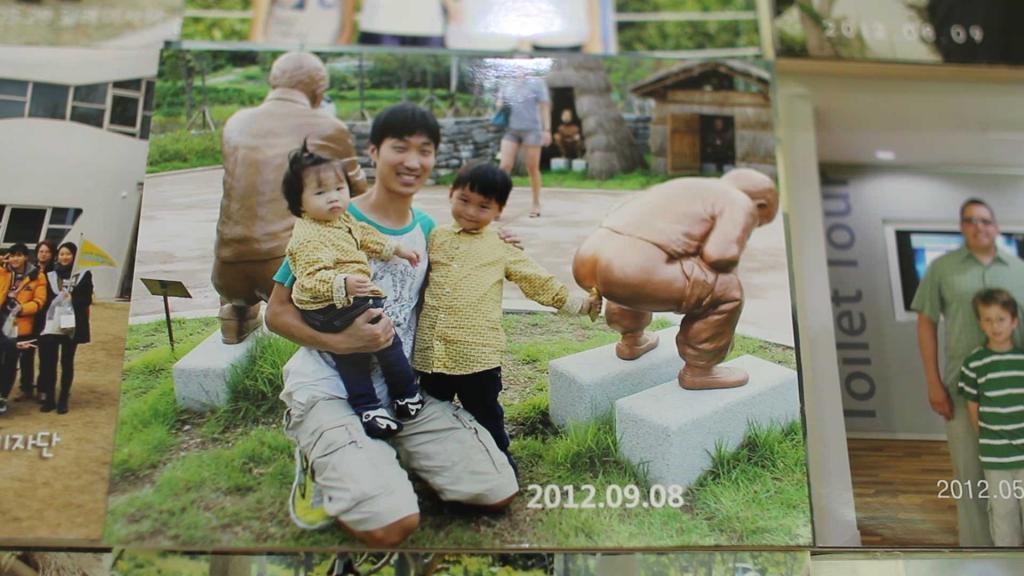
Now, I know you’re looking at the calendar and thinking that it’s way, way too early for April Fool’s Day. But this museum is no joke. In fact, besides the exhibits inside, the land surrounding the house has been rebuilt with more, well, interactive exhibits. Sculptures adorn the grounds, and they depict various human figures in the act of elimination, both liquids and solids.

I don’t want you to get this South Korean museum confused with the toilet museum that’s located in Delhi, India. That particular museum is more dedicated to the sanitation issues in India specifically rather than the world-wide problem of how to make a better crapper. And don’t forget that there’s a similar permanent exhibition in Kyiv, Ukraine, but, because of the situation with Russia right now, that museum is closed. That Ukraine one does have the world’s largest collection of chamber pots, but, again, the South Korean museum is better because of its wide-ranging nature of the cultural aspects of pooing.

By the way, the name of the museum is, in Korean, Haewoojae. Translated, that means “House of Relieving Anxiety.” Apropos, don’t you think?

So, if you find yourself in Suwon sometime, do yourself a favor.

Go.

On An Accidental Travel Agent

Odds are you took a vacation sometime in the past year. And, for many of you who did, you may have done an all-inclusive trip that featured the flights, transfers, hotel and food/drink all rolled into one price and package, hence, the package holiday. Others of you might have taken a cruise, which, in a way, is a floating package holiday. The advantages of this type of trip are obvious; there’s little guesswork involved, everything is done for you, there are few or no hidden costs, etc. And they can be fun and relaxing. And they can be even more fun if its a group of you and your friends who go on the trip together. Usually for something like that, a group uses a travel agency or a large firm that handles group travel.

Take the trip Tom arranged for a group in England. The group had a common purpose in mind since they were all people of the Christian faith. They wanted to attend a convention of sorts that catered to people like them. The thing was, Tom wasn’t a travel agent. He was somewhat affiliated with the group, and, sometimes, that’s the way these things get organized. Someone in the group takes charge and makes all the needed travel arrangements. And that job fell to Tom. The other thing that was unique about the trip was that this group of friends turned out to be almost 500 souls. Yet, Tom managed to shepherd all those people on a day trip to a local town via train, and the group was grateful that he organized everything so well. But that was only the start.

The group then asked if Tom would take the lead organizing another trip. Compared to this new task, the day trip was small potatoes. In this case, this new trip was to be of some distance and over several days. Keeping track of who was going, how they would get there, where they would stay and how they would be fed, and even to the logistics of how and when they paid (and who paid and who hadn’t yet) takes the organizational abilities of something resembling the D-Day landings in complexity often. But Tom proved up to the task. He put it all together for them.

And the people who went on the trip were thrilled. Tom even had the foresight to create vouchers for the group to use in the hotels in which they stayed as payment for the food they ordered. He had pre-arranged this with the establishments before the trip, you see, and this idea meant that the travelers didn’t have to carry cash with them on the trip. Upon their return, the group thanked Tom profusely. They asked if he would organize other, longer, and more complex trips for them. Tom hadn’t considered a career as a travel agent before, but, after figuring in a percentage of the cost for each person on the trip as a payment for his services, Tom ended up making pretty good money. So, almost by accident Tom became a travel agent. He and his son registered their new business, setting up shop in London. Soon, he was escorting and selling tours around the world.

You might think that the world is filled with travel agencies and that between them and the internet, Tom would find that the competition for clients would be fierce. But, you’d be wrong. You see, this was 1865, and there were no travel agents.

Thomas Cook was the first one.

On Some Sleep-Deprived Workers

We’ve looked in the past on the concept of “second sleep,” that is, the idea that, in the period before electric lights, people usually slept in two shifts; one shift would be from roughly 7-8 pm until midnight or 1 am, while the second shift would be from 2 or 3 ’till 6 or 7 am. This post is about the opposite issue–a group of workers who get almost no sleep and, in fact, suffer greatly from the effects of sleep deprivation.

It’s the nature of their work that keeps these people–they are all men, by the way–awake. They work in the evenings usually, and they travel. That cycle of not sleeping during the day then working then going to the next place of business severely disrupts these workers circadian rhythms. They can’t sleep during the day because daytime is often when they prep for the work they do in the evenings.

All that’s left for them to do is to try to catch some sleep while they’re on the way to the next meeting. And, if you’ve ever tried to sleep while sitting up…well, you know it’s nigh unto impossible. And what is the result of months of sleep deprivation? Scientists have a good bit of data on this subject, actually.

It seems that when a human doesn’t sleep well or much for extended periods, the human body begins to break down in almost every area. Heart disease can develop because there’s almost never a resting heartbeat. Diabetes becomes an issue as people begin to eat/consume bad calories in order to try to stay awake for their jobs. The risk of stroke and heart attack dramatically increase. And then there’s the depression.

And it’s this depression that has made sleep deprivation among this relatively small group of workers such a public health issue. The depression that has come about due to their lack of sleep has manifested itself in increasingly bizarre and self-abusive behaviors: Drug and alcohol addictions, extreme risk-taking, violence, and radically poor life-choices.

In an effort to combat all of these symptoms of sleep deprivation, the organization these men work for has hired “sleep doctors” to not only monitor the effects of the deprivation on the workers but to also help them carve out time during their workdays to create sleep events. These sleep specialists have been working to get these men the help they need to fight their on-going battles with depression and the other physical and emotional toll the job takes on them. Now, you might think that the workers should quit or that the jobs they have should be eliminated out of concern for the workers.

However, simply terminating the type of job that is causing these workers to not be able to sleep is unthinkable and practically un-American. After all, the National Basketball Association generates too much money to let their players sleep.