On Making Amends

The older man had to go to the store for some simple supplies. So, as he usually did, he decided to take his bicycle. As he made his way to the local store, an older woman stepped from the curb into the street and in front of his bike. He couldn’t stop in time. The man crashed into the woman, and they and the bike collapsed in a heap. The woman was injured, and an ambulance was called. The man was distraught to the point of tears. He would never intentionally hurt a fly–almost literally.

Now, you should know that this man’s name was Puyi. He lived in China, and this accident with the older woman and his bicycle occurred in the early 1960s. That was a time when Chairman Mao was working to restructure Chinese society into the “ideal” communist utopian nation. And Puyi was one of those people in the older generation with whom Mao’s ideology didn’t quite take hold. He, like many of his age bracket, had undergone re-education to first “unlearn” the old ways of thinking and be taught Mao’s new, communist way. But Puyi was a special case. He was a kind man, and, in many ways, a simple man. Sadly, he didn’t understand much of the changes that Mao and the communist party had brought to China.

Puyi was almost as forgetful as he was kind. He would sometimes leave the water running after he washed his hands, for example. He would enter the house and forget to shut the door behind him. His wife, Li, whom he had married when he was 56, despaired of him sometimes. She threatened to leave him because she grew tired of going behind him and fixing what he forgot to do. “It was like living with a child often,” she would later say. Yet, what kept her in the marriage was Puyi’s incredible kindness and humility. But, that humility also was a double-edged sword. Puyi would allow everyone else to board public transportation before him in a true show of his humility. Yet, that act often resulted in Puyi missing the bus or train entirely as he waited for others to board.

But back to the woman and the bicycle accident. Puyi made it his mission to visit the woman in the hospital every day. He would bring her flowers and sit, often for hours at a time, talking to her and seeing to her every need. He was, it was reported, more attentive than her own family, even. But that was who Puyi was. He wanted to make amends. Even when the woman recovered and released from the hospital, Puyi would still go to her home to check on her. That was the level of concern he felt, the depths of the responsibility for his actions he had.

From the early ’60s until he died in 1967, Puyi worked as an editor for a communist party publishing house. He and Li lived modestly and as happily as they could. His body was cremated as was typical in China at the time. And he was mourned as a man who spent his later life trying to make amends for his mistakes–as demonstrated by his care for the woman he injured with his bike. Anyone who knew him when he was younger would have been amazed that Puyi was like that at all.

You see, Puyi had been born into wealth before China became communist. In fact, at the age of 2, he had been declared Xuantong, the last Emperor of China.
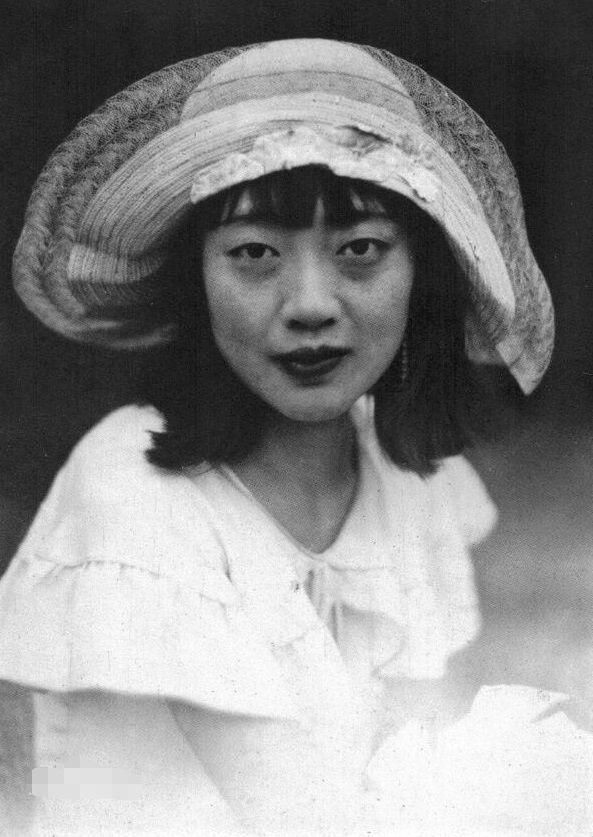
On a Tutor

Isabel Ingram’s life is the stuff of novels and adventure tales. Her American family were Congregationalist missionaries in China over a hundred years ago, and she was, in fact, born in Beijing in 1902. Her parents sent her back to the United States to attend college at Wellesley College in Massachusetts. Upon graduation, she promptly returned to the land of her birth. Her college education qualified her to be a teacher and tutor, and she soon found employment as such upon her return to Beijing.

The custom of that culture in that day was that Ingram could only tutor other women. Her first student was a Chinese woman her age who was marrying a well-to-do Chinese young man who spoke English. The desire of the Chinese woman’s family (and the prospective husband) was that Ingram could help her with her English as a complement to her future husband in his career in government service. You see, she was of a lower class than he was, and Ingram had been engaged to help her, in effect, “catch up” with her husband’s privileged, private education as much as she could.

The American and Chinese women soon formed a fast friendship. Having by nature a shy personality, the Chinese woman embraced the opportunity to have a female friend with whom she could talk about topics that would be considered out of bounds with her soon-to-be husband. Ingram also felt a kinship with the woman, and the pair got on famously. Ingram soon found her pupil was quite intelligent; the Chinese woman took to her English lessons easily and gladly (she especially enjoyed the lessons the two shared on American culture and society). And, not having many friends in China, when it came time for the wedding, Ingram found herself invited to the ceremony. She considered it a great honor as she was the only woman there who wasn’t Chinese.

In her diary, Ingram recorded the beautiful, full-length yellow wedding gown made from expensive satin that was worn by her pupil turned friend. And the tutoring continued after the marriage began. The two women secretly engaged in a competition unknown to the Chinese woman’s husband; they worked on the wife’s vocabulary, planting new words in English that the husband might not know so that he could be impressed with his new bride’s burgeoning English prowess.

In addition, the pair of women from such divergent backgrounds became even closer as friends. They swapped clothing–Ingram being about the same size as the Chinese woman–and they even together chose an English name that the woman could use: Elizabeth. On occasion, the two chums would dress alike and try as closely as possible to speak like the other one.

But, sadly, as happens in many lives, events conspire to drive good friends apart. The pair of friends would lose touch over the years, and, once Ingram stopped being the woman’s tutor, the two never saw each other again. As you know, the Japanese invaded China in the 1930s, and the war brought disaster after disaster to China, ending with the capture of the country by the Chinese Communists under Mao Zedong. The woman, as best as can be known, was put in a communist prison camp where it seems she died about 1946.

By the mid-1930’s, Isabel Ingram had married an American serviceman and returned to live in the United States, in Maryland. Before she passed away in 1988, she decided to write a book about growing up in China, of her experiences in that nation in the 1920s, and about her wonderful friendship with the pupil she tutored.

Oh, by the way, the name of the Chinese woman Ingram tutored and befriended, in English, is Wanrong. She’s known today as the Empress of China, the wife of the last Emperor of China, Puyi.