
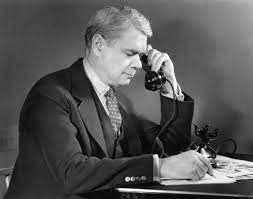
The Chicago Tribune was historically a conservative paper in a fairly moderate to liberal town. Run by the McCormick family, the paper reflected the conservative American values of that family. And practically none of the paper’s reporters was the best embodiment of those values than the firm’s Washington bureau chief, a man named Arthur Henning. Over the course of almost half a century, Arthur Sears Henning reported back to Chicago all the news that the conservative slant of that esteemed newspaper could print.
Henning began reporting from Washington for the Tribune back in 1907, during the William Howard Taft administration. Back then, and up until Teddy Roosevelt a couple of years earlier, most presidents of the United States never held press conferences where reporters could ask questions. No, any time the Chief Executive wished to convey a message to the press, he would call certain reporters to the White House for a meeting. Henning was one of the few that Taft favored, and he was a frequent guest for White House sit-downs with the president. That gave the Tribune many scoops over the years. And it also gave Henning unique insight into the workings of the White House. He got to know the next several presidents well as reporting on what he saw and learned from them.
Woodrow Wilson, he said, was not patient with unintelligent people. Calvin Coolidge, a man notoriously taciturn, would “talk your ear off,” if given a chance. Taft, a large, jovial man, was remembered by Henning as laughing and making his large belly shake like Santa when he told jokes. But Henning had little use for Franklin Roosevelt. The McCormicks were completely against FDR and his New Deal plan for dealing with the Great Depression. And Arthur Henning wasn’t writing anti-Roosevelt news stories simply to please his boss; according to a colleague, Henning was a True Believer. He actually agreed that the policies of the Democrats was tantamount to socialism. Henning would be more at home today on some right-wing media show. Which was interesting, because he had the reputation of being a fun-loving, kindly man who was often generous with his friends.
But that’s not why we remember Arthur Henning. You know about him because of only one story he wrote and for no other. In fact, we can narrow it down even more to three words he penned that you have most likely heard or at least seen. You see, when Roosevelt died near the end of World War 2, the nation worried that the new president, Harry Truman, might not be able to lead the nation like FDR had for over 12 years of first the Depression and then the prosecution of the war. But Truman brought the war to a successful conclusion in the months after assuming the office mostly by following Roosevelt’s blueprint. The peace that followed, however, proved daunting. Inflation, the re-absorption of the millions of service men and women into both the economy and society, the housing crisis, and the rise of communism after the war tested Mr. Truman’s mettle. As 1948 rolled around, it seemed that Truman might suffer an ignominious defeat in the election that year. After all, in the UK, Winston Churchill himself had been ousted after the war ended because people wanted a fresh start.
Henning reported throughout the summer of 1948 about the state of the election. He wrote stories for the Tribune detailing how unpopular Truman was to a wide swath of Americans. So it was no surprise that when election night rolled around, Arthur Henning turned in a story that everyone, including this experienced Washington bureau chief, expected.
The story’s headline?
Dewey Defeats Truman.

 The Rest of the Story