On a Wise Business Decision

Mike Smith was an Artists and Repertoire (A&R) man for Decca Records in London in the early 1960s. Decca was looking to add a recording artist to its cavalcade of popular music stars, the likes of which already included acts like Billy Fury and actress Haley Mills. Mike had the orders from his superiors to audition some acts and choose one, the one he thought would, obviously, bring Decca more fans and money.

So, Mike put out some feelers around the various connections he had in the UK. After sorting through some real stinkers and some pretty good acts, Mike decided he’d call in two of those acts who had applied and then make his decision on their live auditions in Decca’s London studios in West Hampstead. One of the groups was a local quintet and the other a quartet from the northwest of England.

Mike was a native of the London suburbs. He’d dabbled in music as a young man, learning a bit of trombone, but he found steady work as a recording engineer for the BBC’s foreign service. Many of his co-workers left that job to work for the up-and-coming company, Decca, and in the late 1950s, Mike joined them there. He soon found himself engineering for the likes of Montavani and Vera Lynn and other stars of the Decca firmament. He parlayed that role into his A&R gig under his mentor Dick Rowe, the head of the department.

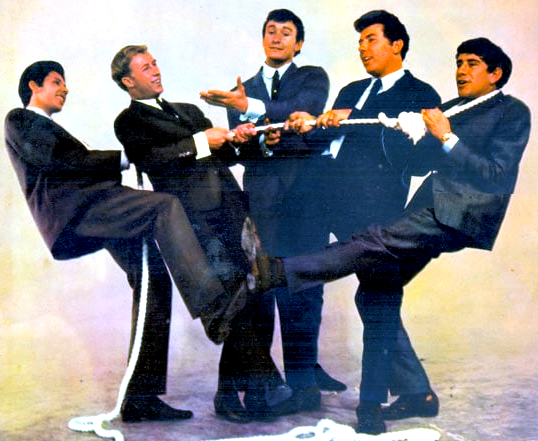
In fact, it was Rowe who told Mike that he could only sign one act of the two who were auditioning that day. The first group, the northernerns, came into the studio after their long trip south to the capital city, and Mike could tell that they were unpolished. But, when they started to play, Mike could hear the talent behind that rough exterior. He was impressed. Then, the second group came in, the local London group, and they played for him. Here, Mike thought, was a really professional group. They looked as well as sounded the part. That group was called Brian Poole and the Tremeloes. Thinking of Rowe’s edict, he offered the contract to the London group. It made sense, he would say later, because not only were they the better group on the day, but also they wouldn’t have to travel so far (at Decca’s expense) to record as the notherners would have had to do.

All in all, it was a wise business decision.

Brian Poole and the Tremeloes would go on, under Mike’s guidance, to record several top-ten hits for Decca. Later on in the 1960s, Poole would leave the group, and, as the Tremeloes, they would find fame with mostly cover versions of hits singles. Mike would follow the Tremeloes to CBS records when his request for a raise was rejected by Decca upper management, and he produced several hit records over a long and distingushed career.

However, what Mike Smith is probably most famous for is not hiring that other band, the rough quartet from the north of England.

You know them as The Beatles.
On a Guest Star

You probably know by now that I’m a huge Beatles fan. My top ten list of all-time greatest rock band is: 1-10. The Beatles. See? You might could make the argument that producer George Martin was, in many ways, the 5th Beatle, the man who helped them dub and overdub and edit and compose and arrange their talent into hit after hit. And it probably won’t surprise you to learn that the Beatles occasionally had guest stars appear on several albums and songs. Billy Preston, for example, plays the electric piano on the recording of “Get Back.” Eric Clapton handles the guitar solo on George Harrison’s famous composition, “While My Guitar Gently Weeps.”

What you may not know and will probably be surprised to learn is that the guest star appearing the most on Beatles songs and albums was not a well-known name at all; no, this guest was an Abbey Road Studios mainstay known to all simply as Mrs. Mills.

Yes, Mrs. Mills had been employed by various recording artists around the Beatles’ favorite studio for several years when Martin first suggested that the Fab Four choose her to make guest appearances on several of their most iconic songs. As a result, you’ll hear Mrs. Mills on “Penny Lane,” the song Paul McCartney penned about growing up on his childhood street in Liverpool. Mrs. Mills also pops up in “Lady Madonna,” another McCartney song. And, from the iconic Sergeant Pepper’s Lonely Hearts Club Band album, Mrs. Mills makes an appearance on “With a Little Help From My Friends,” sung by drummer Ringo Starr. “She’s a Woman,” “Rocky Racoon,” and “I Want to Tell You” also feature Mrs. Mills.

All of this information begs the question: Why haven’t we heard more about Mrs. Mills?

Well, Eddie Vedder, the former lead singer for Pearl Jam, had heard the largely unknown story about Mrs. Mills’ contributions to the Beatles song canon, and he wanted to let others know about this important but overlooked piece of rock history. So, Vedder wrote a song entitled, appropriately, “Mrs. Mills” and invited former Beatles drummer Starr to provide the drums for the song. Ringo was happy to oblige. In the publicity surrounding the song’s release, Vedder also reminded the press that other artists had, over the years, also employed Mrs. Mills in their work without giving proper credit, including such virtuosos as Elton John and Stevie Wonder.

Would it surprise you to know that, even though Mrs. Mills was on all those Beatles songs, that in none of them was Mrs. Mills on key? And that Mrs. Mills was purposely tuned that way?

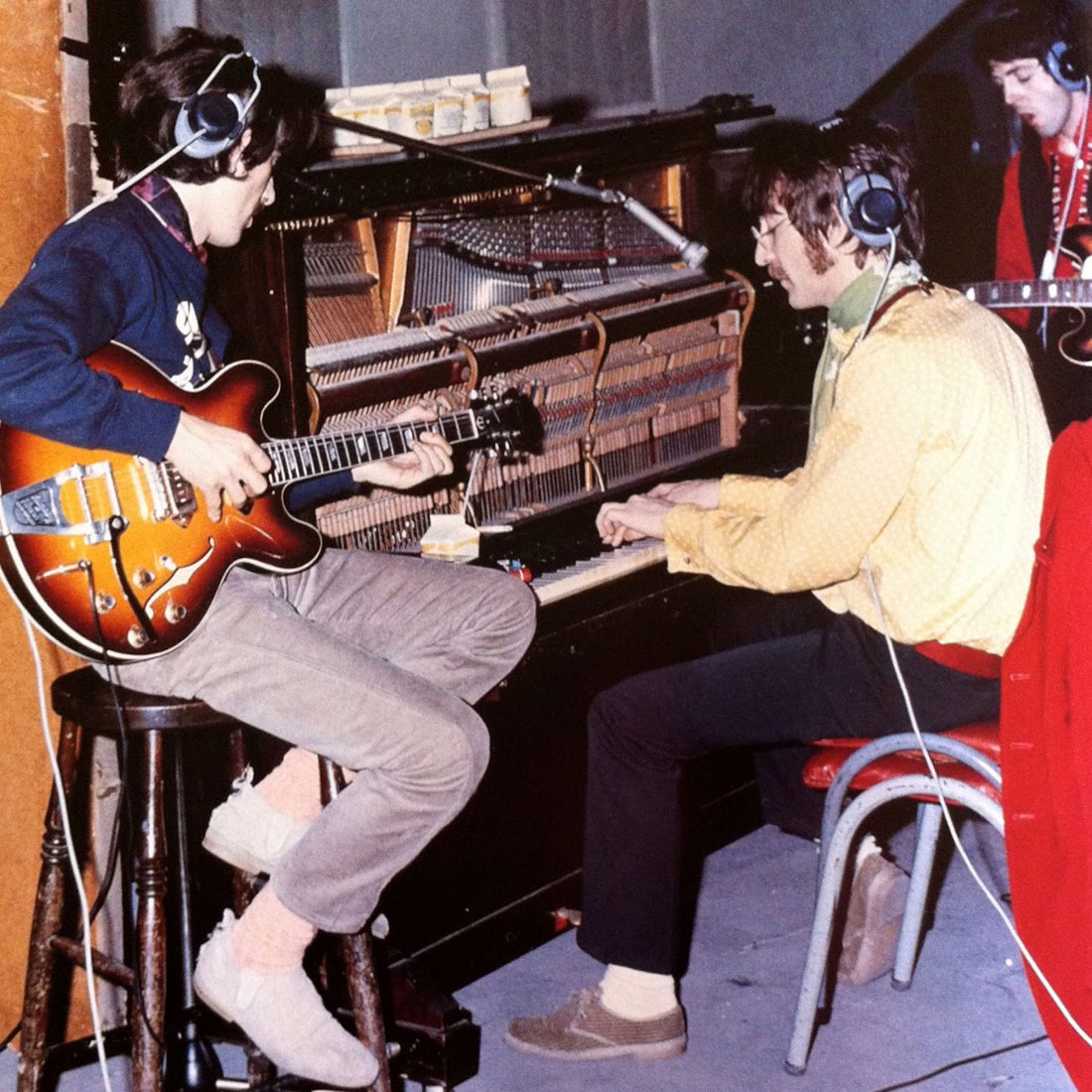
You see, Mrs. Mills was the name of the Abbey Road Studios upright Steinway piano.

On Old Friends

Mac called his pal, John, one afternoon.

“Whadder ya up to?”

John laughed. “Just baking some bread. You?”

“Same!” Mac answered.

The pair had known each other almost their entire lives. They grew up only streets apart in the late 1940s and early 1950s. For a few short years, the two had even been business partners.

Now, in their 40s, the two middle aged men had taken up baking at the same time. They each felt it was both a creative and, at the same time, relaxing thing to do. Interestingly, the two took on the hobby independently of each other–there was no discussion about agreeing to do so. But that’s the level of kinship the two men had felt over the years. They were the type of chums that could finish each other sentences and thoughts. A rare thing, at least in this day and age.

And here they were, on the phone, two middle aged men, comparing bread baking techniques as if they were housewives. This particular conversation was about how long each of them allowed their doughs to rest and rise and where they did so. John said he liked to leave his in a warm cupboard. Mac countered that he left his out, covered with a warm cloth, to rise overnight. And, so, the conversation ran like that–light, breezy, and with the ease to two friends who had, according to one of them, “lived in each other’s back pocket” for most of their lives.

Oh, as all relationships do, this one had its moments of disagreements and even fights. Never physical ones, but verbal fights that sometimes lasted months where the two wouldn’t speak. But the things that they had in common were stronger than those that tried to tear them apart. “It was always nice to get back to the relationship we’d had as kids,” of one them said.

John said he had to go–“The missus is calling,” he said, and Mac bid his friend farewell. “Call me later and tell me how the bread turned out,” he said. John promised he would.

It was the last time the friends would talk.

A few days later, Mark David Chapman shot John Lennon, and Paul McCartney would lose his closest friend.

On a Drummer

Randy Scanland grew up in England after having been born in India during the early days of World War II. His mom was studying to be a doctor, and his dad was in the military. Like so many young men of that time, Randy’s dad died in the war, leaving his widow and infant son to fend for themselves in a foreign land. But, as also often happens, Randy’s mom met another man, also a British military man, and married him. The new family welcomed another son, Rory, born in 1944. They moved back to England in 1945 as the war was coming to a close.

Randy’s mom, used to the larger houses they’d lived in in India, felt confined by the much smaller houses in England, the row houses most people lived in there. So, the enterprising young woman hocked all her jewelry and put her money on a 30-1 long shot horse—and won. With the winnings, the family bought a larger Victorian house. In fact, the house was so large, Randy’s mom was able to open a music club in the big place’s basement.

That suited Randy just fine. He loved music, eventually showing a propensity for the drums. So, his mom bought him a nice drum kit, and Randy started his own band, the Black Jacks. This was the time period when popular music was taking off in England and, soon, the British Invasion would conqueror the globe with bands from Liverpool, Manchester, and London.

By 1960, Randy and the Black Jacks had developed quite the reputation in locally. Part of the reputation was due to Randy’s dark good looks. Almost no musical group had the drummer as the group’s leader, but the Black Jacks did. Randy was not a spectacular drummer, but he was steady, and, besides, the venue was owned by his family after all.

That’s when another group, one with about as much local appeal as Randy’s, approached him. They needed a drummer for a tour over in Europe. Would he be interested? Randy thought about it. The Black Jacks had started to bore him. Europe sounded fun. Other groups were doing that, and Randy wanted to see what all the fun and fuss was about. Randy, unlike the others in this new group, had managed to finish his school exams and had the opportunity to continue his education in university, but he agreed to go on tour with the group knowing that, if it didn’t work out, he could always come home and go to school.

The tour went badly. They had to play more and longer than they had been promsised, and they had to do this for less money than promised as well. In addition, the living conditions on the tour were abysmal. The group lived in squalor. Randy began to second guess his decision to go along. One member of the group, protesting their poor rooms, lit a prophylactic on fire, and two members of the group were arrested for attempted arson. The tour was cancelled, and they all were deported back to England.

But something had happened. Playing in Europe had hardened the musicians. They had a rawer, edgier sound to them now. Randy, rather than merely providing a smooth rhythm drumming style, had become a driving, forceful drummer. The entire group sounded, well, harder. And it fit them. Playing back in England, people started to notice. In fact, the group received a recording contract. Randy thought that maybe, just maybe, he’d made the right choice to join this group.

But something was wrong. In the studio, the producers talked among themselves. Randy’s drumming, they said, was good—technically. It wasn’t how he was playing on the songs, it was what he was playing. They advised the group’s manager, a young record store owner, to replace Randy. And so, after getting approval from the other guys in the group, he did.

You probably realize by now that Randy was adopted by his mother’s second husband. That second husband, Rory Best, called the boy by his middle name–Pete.

Pete Best.