On a Real Estate Auction

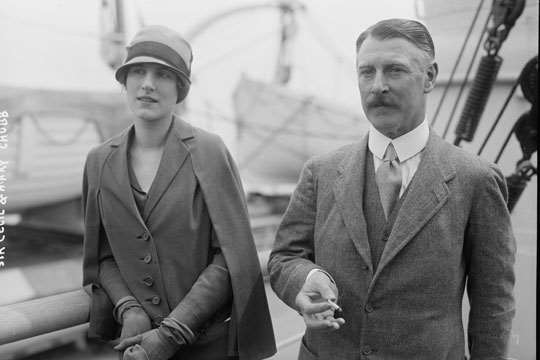
Cecil Chubb was looking and the newspaper in rural England in 1915 and saw a notice about a real estate auction for some nearby land. The land was actually several pieces of farm and pasture land that Sir Gordon Antrobus was selling because, well, he had no use for it and had inherited it from his brother. You see, the brother had died in the first year of World War 1, and Sir Gordon didn’t want to deal with it. Chubb was intrigued because of one of the parcels had some building stone on it. Besides, he liked the area and wanted the land to stay in local hands rather than be bought by some outsider or worse, some foreigner.

Chubb grew up only about four miles from the property Antrobus was selling. While his dad and granddad were harness makers in the village, Chubb had managed to get a university degree from Cambridge and had become a rather successful and wealthy lawyer (a barrister in the UK). He then married well, finding a wife in one Mary Alice Finch. In addition, Chubb owned several successful racehorses, and he actually made some money off them as well.

But the land, Chubb wanted it more to preserve it rather than use it for farm or pasture land and make a profit. Attending the auction was almost a whim for him; his wife had wanted him to buy some chairs that were part of one of the auction lots. Luckily for Chubb, there weren’t many bidders present, and some parcels went for the proverbial song. The land that had the stone structures on it, comprising mostly open land, was coming up next, and Chubb waited to see who would bid. Surprisingly, only one other bidder seemed interested in the land. The other man had adjoining land, and the hammer was about to come down on the sale. At the last moment, Chubb raised a finger and the auctioneer nodded in acknowledgement. No other bidders raised a hand. The hammer fell, and the land was Chubb’s for the bargain basement price of £6,600.

Oh, and he didn’t buy the chairs for Mary.

What he did buy was about 30 acres of land that he held onto for only about three years. He then decided to bequeath the land to the people of the United Kingdom with one proviso. The locals would be able to visit the land for free in perpetuity.

And that’s how the government of the United Kingdom came to own Stonehenge.

On Finding a Knife

Osoyro, Norway, lies on the western edge of the Scandinavian nation, on the water, and is one of hundreds of little, picturesque villages that dot the inlets and bays of the coast. It boasts a population of around 1,500 hardy and healthy and happy souls.

Elise is an 8 year old student at the local elementary school. She’s really a typical kid; she loves horses and flowers and her friends. She’s a decent student, and she loves her pets. But something happened to Elise this year in school that doesn’t happen too often these days.

We have all heard the stories about school violence, especially in the United States. Outbreaks of attacks have been increasing in occurrence across the globe, sadly. In nations where guns are as readily available as they are in the US, even knife attacks have seen a rise in many schools. In an effort to combat this rise in violence, some schools have been encouraging kids to report incidences where they witness a classmate with a potential weapon. This preventative measure has met with a mixed reaction. Kids are not eager to be seen as tattle-tales, squealers, or rats. They want to be liked. On the other hand, if one attack is thwarted because some brave child reported a potential threat, then the program is worth it in my eyes.

Anyway, Elise and her friends were on the playground one day (yes, kids go outside for play even in winter in Scandinavian countries). While running and playing with her chums, Elise spotted something reflecting in the low hanging sunshine of the winter’s day. At first she thought it was a piece of glass. She reached down for it…and realized that it had a sharp edge. This, even to her 8 year old eyes, was obviously a weapon.

Elise showed it to her friends. They crowded around her as she held the blade in her hand. It was only slightly larger than her palm, the edge of the weapon still sharp. She looked around at the faces of the circle around her. All of them were looking at her hand. “We should tell teacher,” she said. The circle of friends all agreed. And so, the little group of girls made their way to Ms. Drange, the class teacher.

Ms. Drange was taken aback at first. How could such a thing find its way to the school’s playground? She quizzed Elise gently, knowing the girl enough to know that she herself didn’t bring the item from home or elsewhere. Elise then led Ms. Drange outside to the pile of stones where she first spied the sharp object shining in the winter sun. Ms. Drange assured Elise that she’d done the right thing to turn it in and to make her teacher aware of the situation. She carefully took the sharp object from Elise and wrapped it in a cloth.

The next day, Ms. Drange contacted the authorities. She told them about Elise and how the object came to be discovered. Soon, a team of experts swarmed the village schoolyard. The area was roped off as the specialists began looking for clues as to the origins of the blade. For the children, the day was wonderful because they could see the investigation for themselves. Elise was both a little confused and happy. She was proud to have done the right thing, but she didn’t fully understand what her discovery meant. The local press asked Elise what she felt when she found it. She shyly said, “It was nice.”

Come to find out, Elise did indeed discover a knife that day, but wasn’t a knife that someone was going to use to harm someone these days. The knife’s material didn’t even come from Norway at all; the nearest place it could have been created was Denmark, several hundred miles away. That’s not to say that it wasn’t used some time in the past, however.

In fact, when Elise’s particular and extremely rare flint knife was made, it has been determined that it had most likely been used in a sacrificial ritual.

Some 3,700 years ago.