On a Year Without Summer

This isn’t a story of some sort of calendar glitch or adjustment that caused the world to not have a summer, no. Rather, this is a story of when summer simply didn’t happen, at least not in the usual sense. You see, sometimes, the earth creates circumstances that has such a dramatic effect on the world’s climate that warmer summer weather–weather absolutely necessary to the growing season for both crops and livestock–never comes. The result is fairly obvious. Food shortages, starvation, and even social unrest results.

And the major way the earth creates this type of climate and food crisis is usually a major volcanic eruption. This type of eruption blows ash into the stratosphere. The high speed winds in that level of the atmosphere blows the ash around the world. That causes less sunlight to filter through to the earth, making temperatures lower over the course of several weeks or months. When frosts or snows occur in the summer, crops die. If such events occur over a fairly short time frame, food production can plummet.

Food prices rise. Supply chains are disrupted. Jobs and businesses are lost. Sickness spring up around the world. Wildlife is destroyed, including the pollination of crops being eliminated. And, if the ash is sufficiently heavy, even water sources can be spoiled. In our modern world, even with all our abilities to combat many disaster situations, there would be no ability to deal with such a situation.

Now, you may wonder if and when such events have occurred in our history. They have. More often than we may realize. The most recent of these happened in 1991, when Mount Pinatubo in the Philippines erupted. Weather patterns and agriculture in the United States were affected, but these effects weren’t as drastic as those that struck the northern hemisphere in 1816. That Year without a Summer happened after a series of eruptions occurred in various parts of the globe. Paintings done in the following years after those events show yellowed skies and brilliant sunsets from the ash that lingered in the atmosphere. Similar situations have been recorded in 1883, 1783 (resulting in 25,000 fatalities in Britain alone), 1628, 1601 (known as the coldest summer ever witnessed in the northern hemisphere), 1452, and so on.

And, what’s important to remember is that it will happen again.
On a Systematic Starvation

History since 1945 has winked at the fact that Joseph Stalin was responsible for more deaths in his own nation than any other dictator before or since. We have largely overlooked Stalin’s killings and mass incarcerations, the building of the gulags and the forced large-scale relocations, because Stalin was the ally of the United States during World War 2. The US has a difficult time (as many nations do) of admitting that we made a deal with a devil (Stalin) in order to defeat another devil (Hitler).

Holod means “hunger,” and “mor” means extermination. Thus, the word Holodmor comes to us from a period when Stalin purposely starved an entire area of the Soviet Union in order to replace an ethnic and cultural population there with Russians. This part of the USSR had been occupied by the same group of people for centuries. Like most of that part of the world, the system of land ownership and food production had followed a centuries-old system of large land owners and vassals or serfs who worked the land. While it was an inherently abusive system, it had managed to provide enough food for the people to have enough to eat for generations.

Stalin imposed a new system of land ownership where the land was collectivized and soviet supervisors replaced the land owners. The produce of the land, rather than going to the land owner and the peasants who worked the land, went instead to the state. It’s easy to see that this system would, obviously, cause hunger for people who had adequate but not an overabundance of food. The people of this fertile area of the USSR did not sit for this outrage. They rose against the machine, taking arms against Stalin and his soviet administrators.

As you can imagine, Stalin did not take kindly to any disagreement with his policies, much less one that involved an armed insurrection. He crushed the rebellion with the force of the soviet army. And then he got revenge. Apparently, one rule of the dictator game is that you want to make sure not one tries to do something like that again by making an object lesson out of the people you’re punishing. Part of Stalin’s anger also seems to have been that this particular region of the USSR had fought against the soviet revolution and with the Czar’s army (the so-called White Army against the soviet Red Army) a few years before. Stalin’s memory was long, and he never forgot what he considered to be disloyalty from this region. He would make them pay.

To punish the people there, Stalin ordered that the state-controlled food distribution system purposely stop sending food to this area. Further, he closed the borders, effectively insuring that the people there could not leave the area to search for food in other regions. The final blow came in the winter of 1932-1933. Stalin sent the soviet secret police door-to-door in cities and villages to confiscate what food had been stored or hoarded there. He even mandated that pets be taken in case the starving people turned to eating their cats and dogs. It’s not difficult to see what the results of these policies would be.

Holodomor.

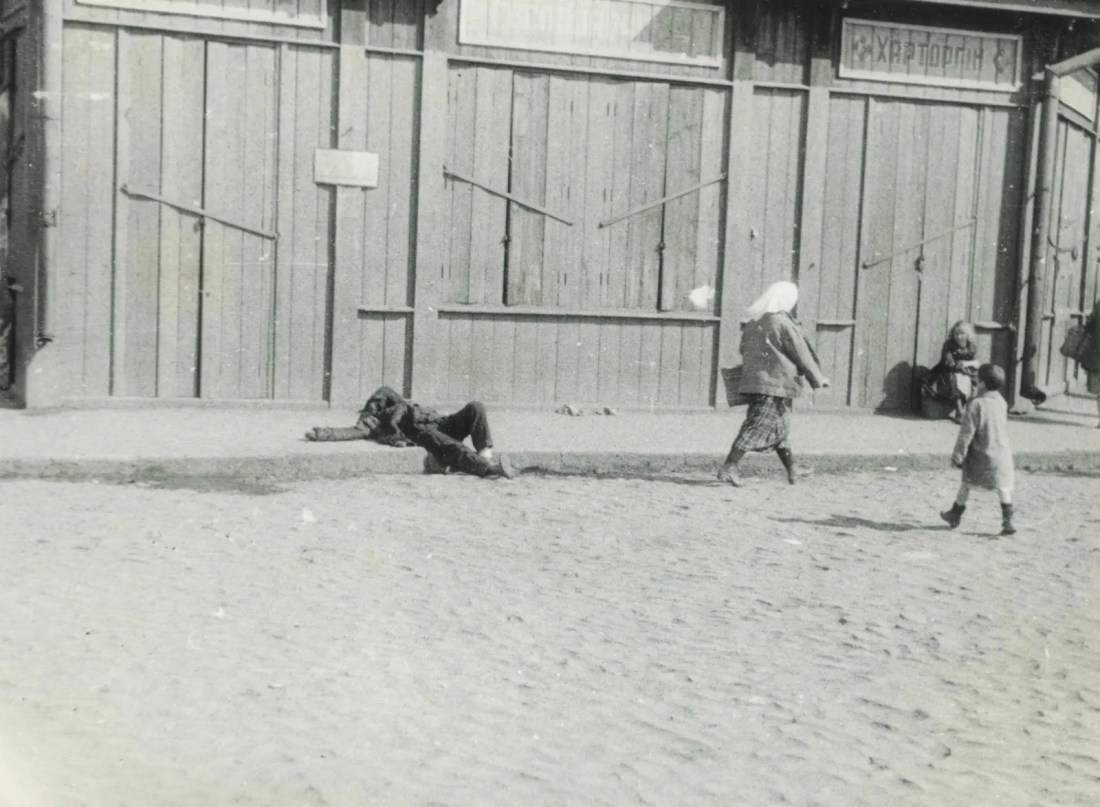
Almost 4 million people in this area died from starvation within a couple of years. It became usual to find bodies in the streets of the cities. Mass graves became commonplace. Meanwhile, Stalin began quietly removing the ethnic and cultural leaders of the people and sending them to gulags in the far east. He replaced all government administrators with Russians. Finally, he ordered all government records that might have recorded the Holodomor, such as census records that would show the mass deaths, to be suppressed or changed. In other words, he erased all physical evidence of the horror these people endured.

Except Stalin could not erase the memory of the Holodomor in the minds of the people. The people–they never forgot. And they still do not forget what the Russians did to them. It motivates them to this day, in fact.

You know them as the brave people of Ukraine.