On Some Throne Games

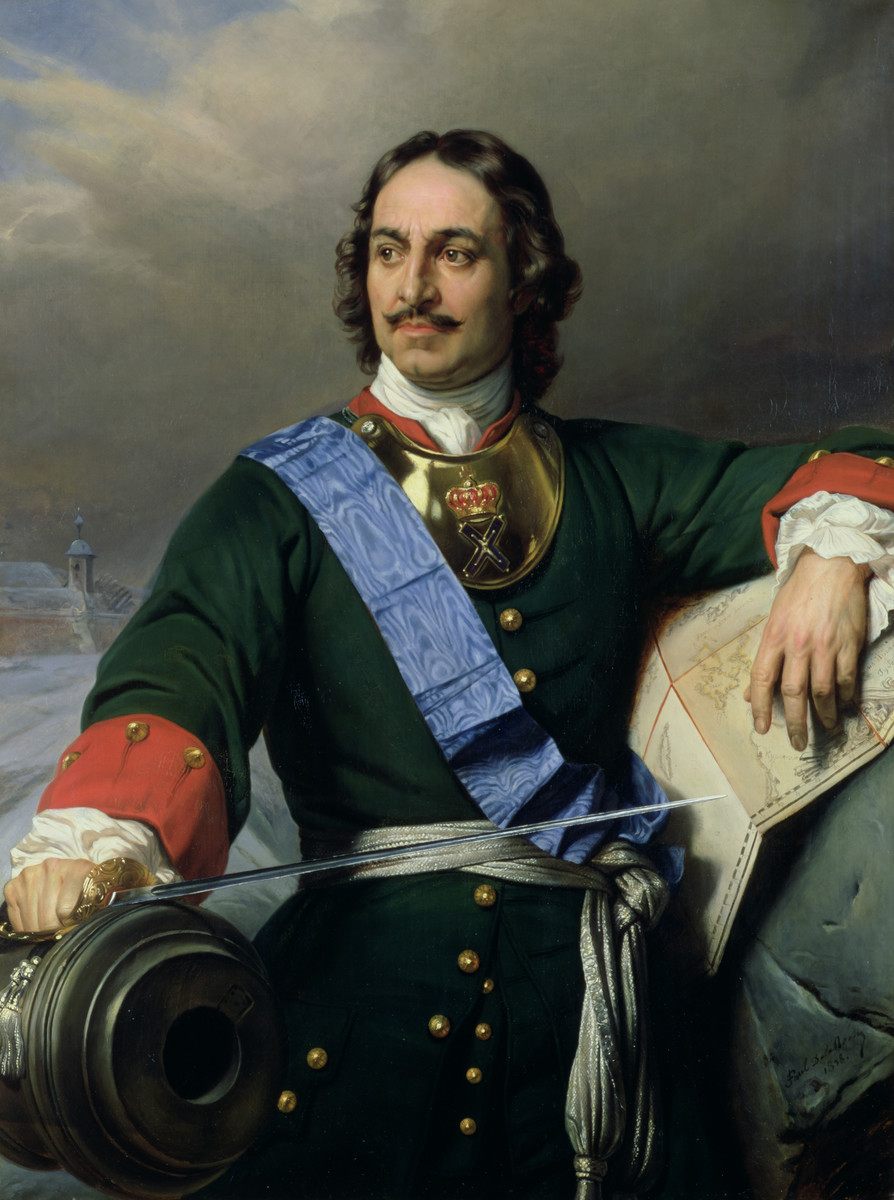
The phenomenon that was TV’s Game of Thrones has nothing on the games that Russian Czar Peter I, known as Peter the Great, played throughout his reign. Through a series of wars, he expanded Russia’s land and power. He ruled with the proverbial iron hand for over 40 years in the late 1600s/early 1700s, and he struck fear in the hearts of his enemies…and his friends. Peter was ruthless, but he could also be incredibly modern and forward-thinking in his decisions.

An example of this is the building of St. Petersburg. Peter built the city as an example of the modern, western-style metropolis that had all the latest and most up-to-date technology. He introduced the first newspaper to Russia. He brought universities and culture to the nation. But it was his personal life that has many historians comparing him to the fictional characters in the Game of Thrones stories.

You see, Peter had a wife…and several mistresses. Peter’s liaisons produced over a dozen children, three of which lived to adulthood (and at least one of which the czar himself had poisoned for suspected treason). One of Peter’s favorite consorts was a woman named Anna Mons. And Peter’s second wife, Catherine, had Anna’s brother, Willem Mons, as a “private secretary” in her chambers. There were rumors that Catherine and Willem were having an affair. Are you keeping all this straight? If you’re Peter, you find out that your wife is having an affair with your mistress’s brother. Well, you can imagine how that news was received by Czar Peter. What games were Catherine and Mons playing? And it didn’t help that Willem Mons was described by contemporaries as one of the most handsome men in Russia.

Well, Peter brought Willem up on charges of embezzlement. Mons was imprisoned and eventually beheaded by the state on the steps of a government building in St. Petersburg. What happened next is not exactly clear, but the story is that the relationship between Peter and Catherine grew incredibly icy after the beheading. The pair were rarely seen in public together, and, when they were seen together, they rarely spoke. It seems that the beheading of Willem Mons scared Catherine into silence and, perhaps, she was also mourning the man she really loved.

But the really sick, twisted part of this story is that Catherine and Peter had a tangible reminder of Catherine’s supposed infidelity. While it is beyond doubt that she trusted Willem and took him into her confidence, we are only supposing that the two were lovers. But, if they were not, Peter certainly thought they were. And Peter didn’t play games.

And that’s why Peter ordered that on the nightstand by Catherine’s bed for the rest of his life, there would be placed a jar, filled with brine, and inside the brine rested the severed head of Willem Mons.

On a Noble Inventor

Immanuel still holds several patents for his inventions despite the fact that he died about 150 years ago. The Swede took his rather large family and moved to St. Petersburg Russia in the late 1830s and found success there working on ideas that still comprise parts of various modern industries. For example, Immanuel created the first rotary lathe that made possible the creation of modern plywood.

In addition to his inventions, Immanuel also created companies that made explosives and various bombs and mines that caught the keen interest of then Czar Nicholas I of Russia. The Czar, engaged in a war with Britain in the Crimea, made Immanuel a wealthy man for a time. But Nicholas died in 1855, and the incoming Czar, Alexander II, ended the Crimean War and severely cut the nation’s military spending. Immanuel’s company went from boom to bust in a very short time. By 1862, the company was in receivership, and the family returned to Sweden after over two decades abroad.

It wasn’t the first time Immanuel had faced economic ruin. That circumstance faced them before when they had gone to Russia in the first place. Now, coming back to Sweden, it felt to Immanuel and his wife that they were right back where they had been, as if the past twenty plus years had been in vain. Add to their increasing despair the fact that one of Immanuel’s eight children, his son, Emil, had died in an explosion at the family factory. It seems that the company had been experimenting with nitroglycerin. Someone grew careless in handling the dangerous material, and Emil lost his life.

When Immanuel died a decade later, the rest of his family rightly mourned him. Here was a man who tried his best to do what he needed to do to take care of and provide for his wife and children. That’s the noble way he wished to be remembered–not as someone who made (and lost) a fortune in the arms business. That mentality of being keenly aware of what your legacy would be–how people would remember you after you’re gone–would be passed down to his children and his children’s children.

It certainly made a large impact on one of Immanuel’s son, a man named Alfred. Alfred would go on to create over 350 patents for inventions, including the creation of dynamite out of nitroglycerin, thus safely handling the very substance that took the life of his brother. And, like his father, Alfred did not want to be know for his inventions regarding warfare and destruction. He wanted his legacy to be a legacy of the celebration of the achievements of mankind, including the making of peace.

That’s why Alfred Nobel used his fortune to create the Nobel Prize.

On a Trip to the Store

The two pretty girls in nurses uniforms casually strolled the aisles of the busy high street department store. A clerk was folding sweaters on one counter, and he didn’t notice them at first. After all, so many people came and went there, especially in the middle of the day. But soon, the pair began to attract the salesperson’s notice.

The two were acting like girls who were much younger than their faces showed. Clearly, the clerk would say later, it was obvious that they were related. That much was obvious. It was also obvious that the two were also beautiful. But he saw that the girls were picking up items–clothing, household items, tchotchkes–and laughing at them hysterically, putting them back in the wrong places, and they were whispering things to each other as they made their way around the store.

He approached the pair. “May I assist you?” the clerk offered. The girls blushed and giggled and whispered to each other. They ignored the clerk’s offer. He had the opportunity to examine them closer as they whispered back and forth. Their nurses uniforms were neat and tidy and clean–too much so, it seemed to the clerk, for them to have come from work to the store. Perhaps they were on their way to work and were only killing some time before their shifts. It was wartime, after all, and he had some empathy with young people who had to grow up in such an unsettled period of Russian history.

Finally, one of the girls, the taller one, shook her head and, in a perfect upper class accent, asked the clerk, “Sir, how does one acquire these items?”

“What do you mean?” the clerk asked incredulously. “Why, you pay for them, of course!” he said. This caused the girls to giggle again. “Thank you, sir,” the taller girl said. After another whispered exchange, the girls turned from the man and ran out of the store hand in hand.

The clerk shook his head and sighed as he returned to his sweaters. He didn’t understand this younger generation.

After they returned to the palace, the Grand Duchesses Tatiana and Olga, the eldest daughters of Czar Nicholas II, asked their lady-in-waiting, “How do you use money for things?”