On a Fresh Start

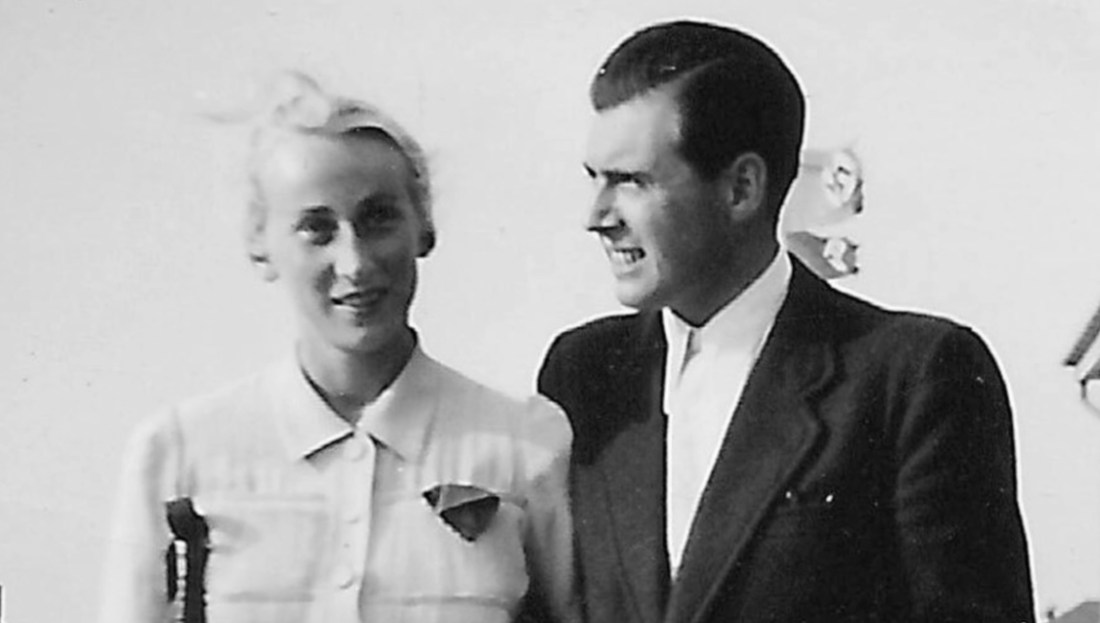
On February 7, 1979, an older man’s body was fished out of the sea near the Brazilian coastal town of Bertioga. On first look, it appeared that he had been swimming and suffered a heart attack or a stroke. An investigation along the beach found the man’s clothes and belongings. The identification card found in his things said that his name was Wolfgang Gerhard, a German national. The story of how Gerhard had come from Germany and ended up dead off the coast of Brazil is interesting and tangled.

It seems that, after service in the German Army in World War 2, the man worked a bit in agriculture in the Bavarian Alps. It was there that he decided that life in a rebuilding, post-war Germany didn’t suit him at all. He had been a True Believer, thinking that the Nazi ideal was the best future for the Fatherland. To live in a democratic Germany was simply too much to bear. He wanted a fresh start. So, like thousands of other Germans, he made his way to South America.

He sailed first to Argentina in 1949, leaving behind a wife and son. And he found work as a carpenter and lodging in a boarding house in Buenos Aries owned by another German ex-pat. Eventually, he was able to move to a better neighborhood and through some other Germans who had made their escape from Europe, he got employment as a salesman. This salary allowed him to purchase his own apartment and to travel to other South American countries. His German wife granted him a divorce, and he married a woman named Martha in 1958. During these years, he made a couple of trips back to Germany where he was able to visit with his son, Rolf, for a short time.

In 1959, the couple moved to Paraguay, and they obtained citizenship there. The man invested in several farming enterprises that made some money here and there, and he seems to have been working also with pro-German groups who were helping to hide senior-level Nazis, war criminals who had fled after the war ended and came to South America. Martha eventually left him, moving to Italy to live her life there. Rolf, the man’s son, visited him in some later years and found a man who still was an “unrepentant Nazi” sympathizer.

By 1972, his health began to decline sharply even though he was only 61. He suffered a stroke in 1976. And that brings us back to the start, where he suffered another stroke that killed him while he was swimming in the Atlantic off Bertioga that February morning. The coroner said that he didn’t seem to suffer, that the stroke killed him so quickly that there wasn’t even any water in his lungs. And, in a way, that’s too bad that he didn’t suffer. I say that it’s sad he didn’t suffer because, you see, during the war, this man who went by the name Wolfgang Gerhard had made plenty of people suffer in the most cruel and casual ways imaginable during the Holocaust.

That’s because his real name was Dr. Josef Mengele.

On The Liberator

Ok, there’s no catch here and no surprise ending–this post is about Simon Bolivar, the South American liberator and “founding father” of much of that continent. To dismiss or pigeon-hole him as South America’s version of George Washington doesn’t do the man justice. He is largely responsible for the freeing of most of Spain’s colonies in that continent from Madrid’s control. And that almost-constant war against Spanish colonialism framed most of the man’s 47 years on earth. He won victory after victory against the Spanish, and paved the way for the eventual independence of many modern nations.

How many people can say that they were the president of not only one, not only two, but three different nations? Yes, at one time, Bolivar was the chief executive of Columbia, Peru, and Bolivia.

At the same time.

Bolivar was a disciple of the humanist Enlightenment philosophers who believed in the essential rights of men. While his ideas met strong resistance in most quarters, it seems that he was for the removal of the system of slavery in all of South America. His detractors said that this position wasn’t without a selfish reason; Bolivar needed soldiers to fight the Spanish, and he was happy to take newly liberated slaves into his ranks. To be fair, for his time, Bolivar was remarkably progressive in his treatment of other races, a trait that was lacking in the leadership of many other democratic republics of that time (looking at you, America).

He also recognized the United States’ version of federalism as the optimal model for a united Latin American nation one day, but he was also practical enough to realize that Spanish colonial influence and the political and social organization system that combined large landowners and the power of the Catholic Church made such unification almost impossible. Before he died of tuberculosis, he felt a failure for not uniting the disparate countries and cultures.

And it’s not fair to say that Bolivar accomplished all he did on his own. A confluence of several factors beyond his control certainly made his successes in getting the various Spanish colonies their independence. Among these factors were the weakening of Spain’s power in the Americas due to the ongoing Napoleonic Wars as well as Britain’s threats of retaliation if Spain made too much of an effort to re-assert its dominance over the South American continent (The Monroe Doctrine said the same thing, but the infant American republic lacked the military teeth to make this stick). Besides, other important military leaders in the various areas of the continent aided him in his liberation activities including Jose de San Martin from what is now Argentina.

But it’s also not an understatement to say that Bolivar was the right man at the right time. History is often made by these confluences of person and period, timing and personality.

I’ll leave you with one more factoid. Besides the nation of Bolivia bearing his name, did you know that one other nation in South America is named after him? Yes, it’s true.

The official name of Venezuela is the Bolivian Republic of Venezuela.