On Idle Gossip

Is there anything more delicious or more dangerous that gossip? A rumor that takes wings and soars over our ears, passing from one throat to the other, each telling of the tale making the story only slightly more luscious and salacious and opprobrious. We’ve all played the whisper game in school, where a simple sentence is told to the person next to you, who passes it on to the next, and so on, so that at the end, the sentence rarely bares any resemblance to the original message.

Rose Oettinger found a way to make idle gossip pay, and pay well. But she didn’t start out that way. Rose was born in Illinois in 1881, and she wanted to be a serious journalist at a time when most middle class women rarely worked outside the home. She wrote for her local newspaper for a time after her schooling, given stories by the editor about weddings and societal events. From there, she learned how to write scenarios for silent films in the ‘teens and early ’20s. She also published a book detailing how to write for the movies. It was a modest success. Ruth then got a plumb job writing about film for a Chicago paper. She loved that work. But then, the newspaper tycoon, William Randolph Hearst, bought the paper and fired Rose because he didn’t think film warranted news coverage.

Out of a job, Rose moved to New York and continued writing about film for a paper there. Part of her job included conducting interviews of up-and-coming movie starlets and young stars, as film journalists today have to do as well. And Rose was good at ferreting out those interesting tidbits of information that the public wanted to know about their new favorite film actors. She said it helped that she was from a small town, and that gave her an advantage over her city-raised competitors. She knew what small-town America was wanting to know, and she gave it to them.

One of those starlets Rose interviewed was a lovely girl named Marion. Like Rose, Marion came from fairly humble origins. She had been a chorus girl on Broadway for a time before her big break came and she was able to star in a feature film. Sadly, most film critics panned Marion’s performance, a mark that could have been a career killer for a new starlet. But Rose liked Marion from the get-go, and the two became good friends as a result of the interview Rose conducted. When she wrote her article about Marion’s film, Rose told people to give the girl a chance, that she saw great things for Marion’s future. Because of that glowing interview, the film producer who had backed Marion’s film became a cheerleader for Rose’s writing career. That patronage led to Rose being given a job writing about film for a newspaper in Hollywood at the rate of almost $2000 per week in today’s money.

Then, in 1924, Rose was invited on a short trip down the southern California coast on a private yacht, the Oneida. Onboard that boat on that trip were some famous people, including the legendary Charlie Chaplin, famous (at the time) producer/director Thomas Ince, and Rose’s actress friend, Marion. Something happened on that boat, but we aren’t sure what it was exactly. The result was that Thomas Ince was dead. What many people believe is that the owner of the boat, a wealthy businessman and Rose’s boss, shot Ince in a jealous rage. You see, what we know for sure is that the boat’s owner was in love with the much younger Marion. It has been speculated that the wealthy older man flew into a jealous rage when he thought Chaplin was flirting with Marion, and he shot at the silent film star but hit Ince instead. The inquest that followed said that Ince died from heart failure, but his body was cremated before a full inquiry could be made.

Whatever happened, Rose and the others on board never said. What resulted is that shortly after the trip, Rose was given a hefty raise and a life-time unbreakable contract if she would write gossipy stories about Hollywood’s stars. Rose agreed. Of course, you don’t know her as Rose Oettinger (if you know her at all). No, she wrote under her first name and her married name.

Oh, and that wealthy man who was in love with Marion? He was the same newspaper tycoon (and one of America’s most powerful men), William Randolph Hearst, who had fired Rose years before. He and Marion stayed together for the next three decades.

And, until she died, gossip columnist Louella Parsons never disclosed what really happened aboard the Oneida during that trip.
On a Movie Star

Modern Hollywood owes a large debt to the silent film era. The film industry as it exists today would not be as it is without the stars in front and the creative talents behind the camera of that era. This story is about one of the most famous silent films stars ever.

This star is actually one of the more unlikely Hollywood stories. In the period after World War I, sentiments about Germans and German actors wasn’t favorable. However, this star was German, but he was among the most popular star of the silent era. And, sadly, his contribution to the success of the film industry in the 1920s and beyond is often overlooked.

Throughout the decade of the 1920s, this star made almost 30 pictures. He worked with almost all the leading actors and actresses of his day. He received a key to the city of New York. Fan clubs and well wishers could not get enough of him. There was even a period where he even received more fan mail and sent more autographed photos of himself than did Charlie Chaplin.

Darryl F. Zanuck, the famous Hollywood producer, first made his reputation writing screenplays specifically tailored for this actor. One of these early films did so well that it is said that this actor alone saved Warner Bros. Studios from financial ruin. When film transitioned from silent to talking pictures in the late 1920s early 1930s, this star, despite being from Germany, made the transition seamlessly and had no issue at all adapting to the new medium. Amazingly, he had no accent whatsoever.

Unfortunately, near the height of his popularity, this film star passed away at a young age. Condolence telegrams flooded into Hollywood. The worldwide acclaim for the talents of this actor astounded many in the industry. “His ability to convey emotions on the screen transcended culture and language,“ one foreign newspaper reported. “There will never be another like him.“ Rumor had it that he died in Jean Harlow’s arms, but this wasn’t so.

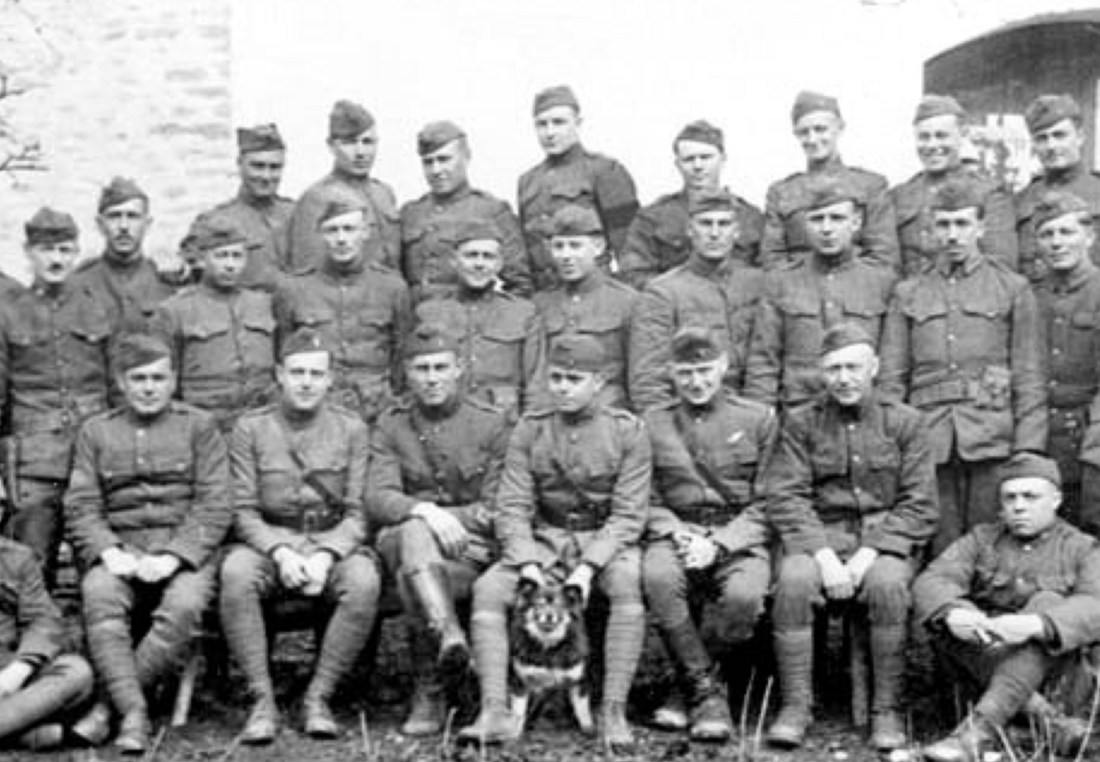
Yes, this German actor, honored and beloved, was discovered by an American soldier who ran across him living in a bombed out shelter in eastern France at the end of World War 1. The soldier took pity on him, noting how weak and thin and malnourished he was. The American GI brought him to the US and eventually to Hollywood, and the rest is history. Yes, even though he was discovered while living in France, he was really German—a German Shepherd, in fact.

You know him as Rin Tin Tin.

On a Visit with Charlie

It’s difficult for a person in today’s world to understand how immensely popular Charlie Chaplin was during his heyday as a silent film star and director. Chaplin was mobbed everywhere he went. People could not get enough of stories about Charlie. Photos of his most famous character, the Little Tramp, filled magazines and newspapers.

Sometimes Charlie found it difficult to make his movies, even when he would be filming or directing on a studio lot. People, famous or not, would often stop by and demand that Charlie take a moment to speak to them and maybe have a photograph or two taken with him. As you can imagine, this became very annoying and disruptive to Charlie as an artist. Yet, when someone showed up on set, Charlie rarely turned him or her away. Such was the case in 1919, when a young woman showed up to meet him on the set of his movie, Sunnyside.

Usually, Charlie would tell the cast and crew to take a short break while he made small talk and posed for the obligatory photographs. But, on this day, something was different. Rather than taking just a few moments and then getting right back to work, Charlie seemed  immediately and absolutely captivated with the young woman. It seemed odd. She was certainly no beauty.

You probably know that Charlie had a deserved reputation as being a man who had an eye for beautiful women, and one could almost understand him taking a little extra time if the woman were especially attractive, but this was so obviously not the case. This woman was awkward. Her movements were stilted. Yet, Charlie ended up spending several hours talking to her. And, again oddly, during their whole time together, the woman said absolutely nothing to Charlie—not one word.

That actually suited Charlie quite well. It was said about him that he was someone, “who tries to avoid people who talk too much, which gets on his nerves.” Perhaps that’s why Charlie became friends with a artist in California named Granville Redmond. Redmond was a deaf mute, but he and Charlie got along famously. Charlie said that he learned from Redmond that subtle movements and actions carry great weight if they were done properly. Redmond also taught Charlie sign language, and Charlie helped promote Redmond’s art career.  But, at the heart of their friendship, the fact that the two men could communicate without speaking seemed to be important to Charlie.

And that may be why he spent so much time with the woman that day. For, like Redman, this woman was also a deaf-mute. In fact, she was also blind.

The great silent comedian did all the talking that day because he had spent the hours with a young woman named Helen Keller.

On a Vaudevillian


Vaudeville is largely unknown by most people in the world today. 120 years ago, vaudeville was the major form of entertainment in most small towns. Films were in their infancy, and they had yet to make an impact in the American psyche.

Vaudeville acts would tour the country, and, if you lived in a certain town, you might see a different act every week at your local theater. The act would contain everything from musical numbers to small dramatic works, magic acts or even trained animals.

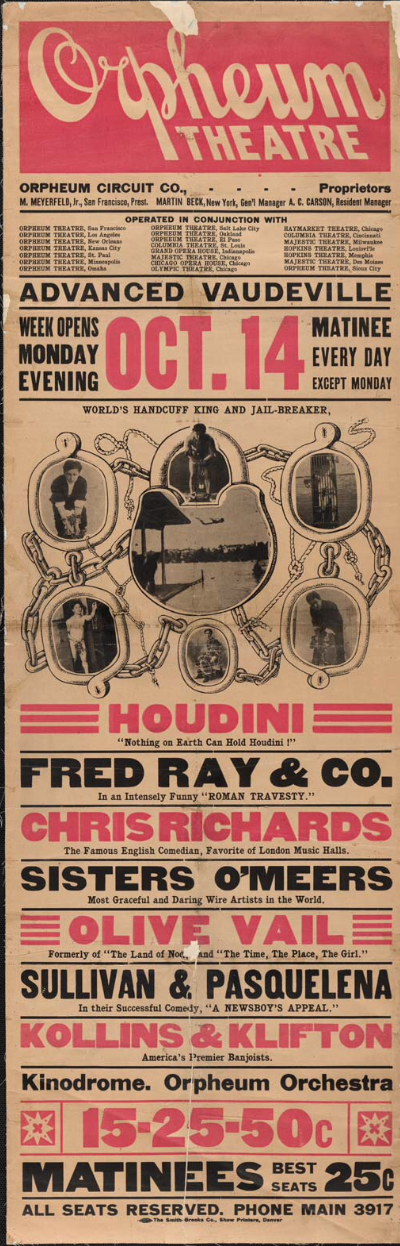
A baby named Joseph was born to a vaudeville family in 1996 in a small town in Kansas. Joe was born there simply because that’s where the family happened to be performing that night. So, it is entirely fair to say that Joe was born to the stage. His dad partnered with a magician who would later go on to great fame, a guy named Harry Houdini. Joe’s dad would perform with his wife and, after Houdini did his magic act, Dad would also sell elixirs and patent medicines to make a few extra bucks.

Joe got in on the act within a few months of being born. As his mom would play the saxophone on the side of the stage, Joe’s dad would toss his young son around the stage, and the baby would giggle. This delighted audiences after they recovered from their initial shock of seeing a child being thrown around so casually. But Joe learned early how to land like a cat; he later said that the secret was to go limp and then catch yourself with an arm or a foot. “Most people don’t last long in this business because they don’t know how to do that,” he explained.

Early on, Joe realized that the laughs from the audience would be greater if he did not giggle so much when his dad tossed him around so cavalierly. So Joe learned to show no emotion during the act. His deadpan face caused the audience to roar even louder. That meant more money for the family.

Years passed , and Houdini left the act to go on to bigger and better things. Joe’s dad began drinking heavily. The family tried to improve their fortunes by going to the UK on tour, but that venture failed miserably and put the family in debt. Joe’s mom eventually took her son and came back to the US. More years passed, and Joe served in France in the army during World War 1.

In New York City, Joe met a guy who worked in the burgeoning new film industry. On a tour of a New York studio, Joe expressed his fascination with the medium, and he asked if he could take one of the cameras home with him. There, he took the contraption apart and looked at it carefully. The next day, he came back and asked for a job and was hired as a bit player and “gag man.“

By 1920, Joe earned his first starring role in a full-length motion picture. Soon, he was one of the biggest stars in the genre, writing, starring in, and even directing his own films.

In an interview, he talked about his early days in vaudeville and how he got the nickname by which he became known around the world. “As a baby, I fell down some stairs and landed at the bottom without being hurt. Harry Houdini laughed at that and said, ‘That boy’s a real buster!’”

Thats why you know him as Buster Keaton.