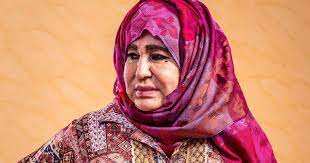
On a Syrian Bride

Hamida was only 14 when she married the businessman. Her family ran successful fruit and citrus farms on the coast of Syria in the middle of the last century. She was the fourth child of her parents, having two brothers and a sister. The family was considered to be religious but not overly observant Muslims. In many respects, Hamida had a mindset that did not fit her cultural background despite becoming the 10th wife of her Saudi husband.

The marriage lasted only a year; she produced a son for the Saudi man, which seems to be the only reason he wished for her to be his wife in the first place. Unlike Hamida’s family, the Saudi man was extremely religious. Like her family, he was also wealthy. So, her connubial responsibilities concluded, she accepted her divorce agreement and moved away from her ex-husband and in with one of her older brothers.

When her boy was about 5, she re-married. This time, the man was also a Saudi national, but he was much more open in his mindset. He also had money because he was an administrator in a sizeable Saudi building contracting company. While the first marriage seems to have been for traditional reasons, the second seems to have been more for love and compatibility.

Hamida was happy for some time; she and the second husband had three sons and a daughter together. This second husband raised the boy from the first marriage as his own. But Hamida says that she had a special bond with that oldest child. These days, she speaks of him as being shy and good at his schoolwork.

Today, she is in her 80s, and she dresses well, wears considerable makeup, and is largely seen as the matriarch of the family. Her second husband is also alive, but Hamida seems to be the one who makes most of the decisions that affect the family. They are happy for the most part, and they live in comfort in their mansion in the Saudi city of Jeddah. She has all she wants, she wears designer clothes, and she dotes on her family.

On the other hand, Hamida says that she does miss the better weather of her native Syria. The coast, she says, always had a nice breeze blowing. Also, she says with a smile, the food was better back home than it is in Saudi Arabia. So, somewhat content with her lot in life, the matriarch enjoys the company of her remaining children and her grandchildren.

I say “remaining children” because one of her sons is dead. You know him. He was the oldest, the child of that first, loveless marriage, the one that she was closest to.

Osama bin Laden.

On a Treasure Hunter

Max Steineke died in 1952. You’ve never heard of Max, probably, but you know his discovery. You see, Max was a treasure hunter of sorts, and the most important treasure he found still enriches the world today. Nations mourned him when he passed. One official statement from a prominent government official stated, “It is indeed a sorrowful calamity and a great loss.” Max died in his mid-50s four years after suffering an accident while in the field on a treasure hunt; the accident led to the infection that took his life.

Max would be the first to admit that his ultimately successful hunting was as part of a team, even if he made it clear that he was the head of that team. But he did credit his successful finding of the treasure to a group effort. Even though the group suffered initial failures in looking for this particular prize, he admitted that the discovery was, “as a result of all the false starts, the many discussions, and the theories that were advanced at such discussions, by the process of elimination (that) we finally began to sense the true solution to the…puzzle.”

The discovery by Max and his team remains the world’s greatest treasure ever discovered.

He was born into a family of German immigrants, one of nine siblings, in rural Oregon. He left home and went to California at age 12—on his own—and found work at a lumber mill. The man he rented a room from encouraged him to get an education, so Max completed his basic schooling and entered Stanford University. From such an inauspicious beginning, Max found that he excelled at school. He discovered that he liked rocks and hidden things, so he competed an undergraduate degree in geology at Palo Alto. After he finished his diploma, Max decided he wanted to look for buried treasure.

So, he did. In Alaska, in Canada, in New Zealand and even Columbia. While he had a modicum of success in those areas, it was not until he went to the Middle East that Max had his greatest success in hunting for treasure. It was here that he assembled his team of fellow explorers and treasure seekers. Max’s group began searching for this particular treasure using the most modern methods and theories. They were willing to do things no other group of treasure hunters had done before.

And these sometimes-unorthodox methods paid off; his discovery completely changed the nation forever. You see, the treasure Max and his team discovered turned a poverty-stricken, relatively newly formed nation that had relied on tourism previously for its primary source of income into one of the wealthiest places on earth.

That’s because it was Max Steineke who first discovered oil under the sands of Saudi Arabia.