On a Tough Job Market

Sandy completed her university education and was ready to begin her career. A bright and ambitious young woman, she had entered Stanford University at the tender age of 16 in 1946, one of the few women at that time to be in higher education. Most girls her age were looking for a serviceman who had recently returned from the recently ended World War 2 and wanting to get the house in the suburbs and the 2.5 kids and start living the American Dream. Sandy’s dreams were therefore different than those of her peers, and that trait would be a touchstone for her for all of her life.

Born on a farm in Texas, she was raised with her siblings on a large cattle ranch and farm her father had purchased not too far from Duncan, Arizona. While the land provided a comfortable income, young Sandy didn’t grow up a spoiled girl; instead, she learned hard work on the farm, and was able to take care of herself while out on horseback, shooting small game, and even learning how to do some basic automobile maintenance–all things that girls her age didn’t know at that time. And, when her undergraduate studies were finished, Sandy decided to go to law school, also at Stanford.

It was right before she graduated that she met the love of her life, a man named John. And, even though John was a year behind her in law school, the pair got married half a year after Sandy graduated with her law degree. It was then that Sandy came face-to-face with the cruel reality of the post-war American business world–no one wanted to hire a female lawyer. The competition was fierce because the mandated priorities for hiring lawyers at that time was to give those jobs to returning GIs who were attorneys. It was a man’s world, law was.

And what Sandy quickly discovered was that law offices were incredibly eager to hire a woman with a law degree–as a legal secretary only. That was pretty much the story that she encountered as she made her way from one interview to another. “We can offer you a secretarial position,” was something that Sandy heard so much that she would sometimes say it out loud with the person who was interviewing her simply to amuse herself.

Finally, Sandy realized that the only way she would be able to break into the law profession would be to offer her services pro bono. Then, once she had a position, she knew that her intelligence and ability would make the employers see that she could do the job and then offer her a paid place in the firm or organization. And, that’s basically what happened. In San Mateo, California, this capable and proud young woman proposed that she work for the county attorney’s office for free for a few months. At the end of the time, if her work was acceptable, she said that the office would then decide to keep her and pay her or, if it wasn’t up to their standards, then they would let her go. The county attorney agreed. What did he have to lose? The worst thing for him was that he would have a few months of free legal work, and if there were errors, the office would catch them. At best, he would find a capable attorney. So, Sandy was given a desk–out with the secretaries, of course–and she got to work.

I don’t have to tell you that at the end of the trial period, Sandy was hired. And that first step in that tough job market was the last roadblock to a stellar career. The county attorney found that what everyone would soon know about Sandy, that her work was exemplary. She would go on to do legal work for the US Army, some political campaigns, was assistant Attorney General for the State of Arizona, and she also served in the Arizona State Senate beginning in 1967. She then served on the Arizona Supreme Court. No longer would she be stymied by being a woman in a man’s profession. In between her rise in the legal profession, she and John raised three sons as well.

And then, in 1981, President Ronald Reagan appointed Sandra Day O’Connor as the first woman to serve on the Supreme Court of the United States.
On an Odd Propensity

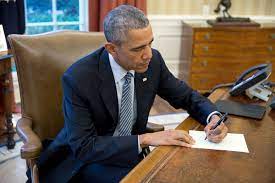
There have been 14 Presidents of the United States of America since World War 2. Of those 14, six of them share a common characteristic that is also shared by around only 10% of the population of the world. What could that be, and why have so many presidents in recent decades shared this propensity?

Psychologists have argued that one reason for the high incidence among presidents is that having this characteristic causes one to have a wider scope of thinking, making them if not more effective as presidents, at least it could help explain why they are at least attractive as candidates. People who are like this tend to face challenges better and share an “outside the box” thinking ability. They tend to be able to generate ideas given a certain set of parameters better than the rest of us. I say “us” because I don’t fall into this category.

On the other hand, some researchers say it’s all down to chance and that this particular propensity has nothing to do with electability.

I’ll even provide the list for you so you can maybe see or decide what these six men have in common: Harry Truman, Gerald Ford, Ronald Reagan, George H. W. Bush, Bill Clinton, and Barak Obama. If you’re wondering, that three Republicans and three Democrats, so it’s not party affiliation. It’s something else these six men share.

Well, obviously we’re talking about a physical characteristic to a degree. And that’s what researchers find so interesting, because scientists simply don’t know what causes it. Some studies say that this trait is connected to the development of speech and language, but nothing has been conclusive. Statistically, the 10% and the 90% differ in intelligence tests scores by a whopping 1 point. Left to their own devices, they tend to take tests faster than the 90% as well.

Interestingly, it has shown up to a higher degree in people who are really good at math (another reason I’m not in this group). Low birth weights seem to contribute to the likelihood as well as problems during childbirth. Higher cancer and depression rates occur, but they have lower rates of ulcers, arthritis, and even bone brittleness. And, we have to hand it to them; many people who are in symphony orchestras have a higher chance to be this way as do many pro athletes (tennis and baseball players, mostly).

Give up? Some clues were dropped in this essay, so you should’ve guessed it by now. What do six of the last 14 presidents have in common?

They were left handed.

On a Good Barber

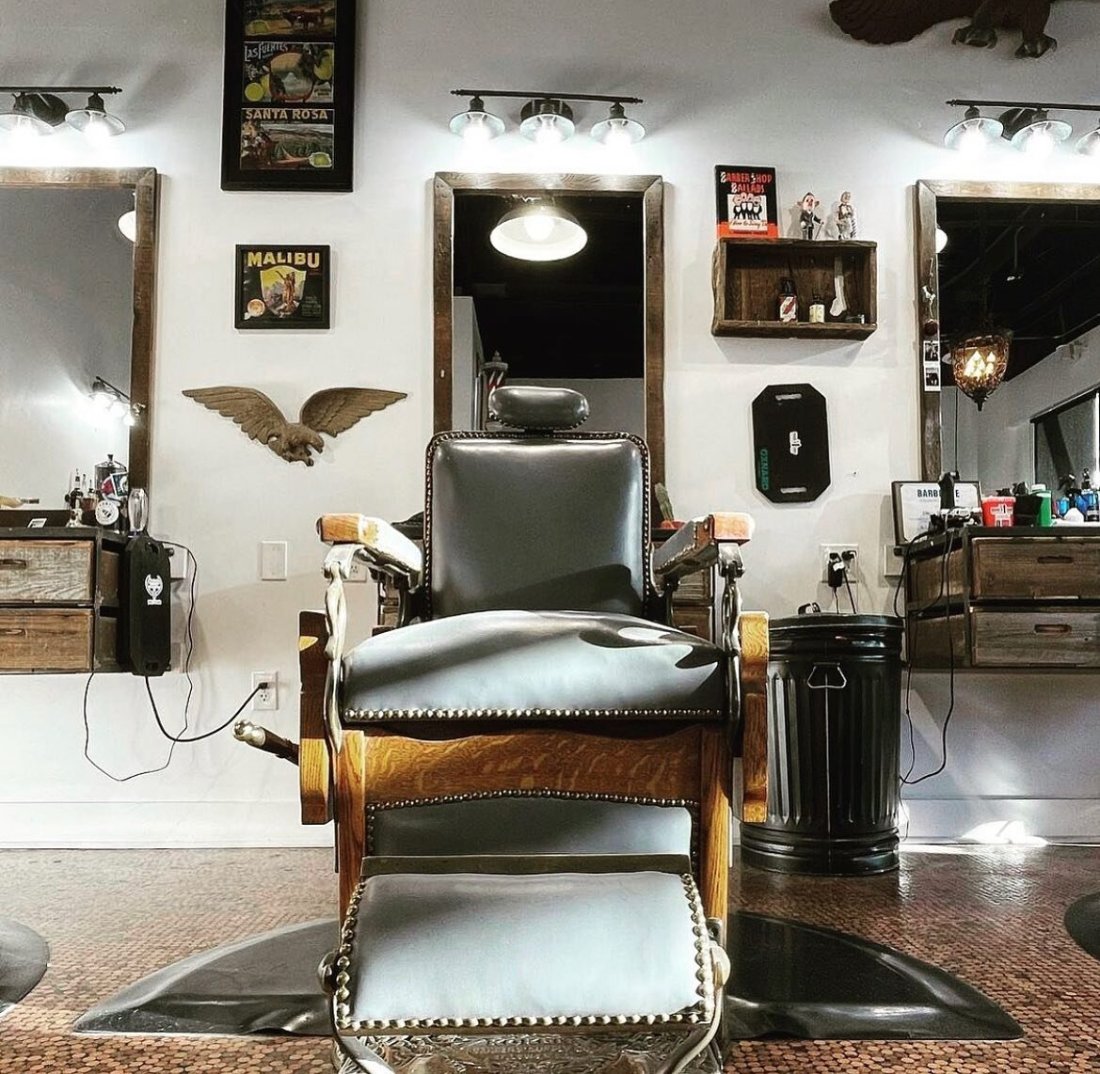
Milton Pitts was a really good barber. In a haircutting career spanning six decades, Milton cut the hair of the famous and the completely unknown. Most of this time, he worked in a one-chair shop, yet he managed to not only make a living at the profession but also to become somewhat well known in the process.

One of the main reasons for Milton’s popularity and success was his conversational abilities. In the way a doctor has “bedside manner,” Milton had a way about him when a client was in his chair. And it wasn’t that he was a yes-man; if the tie you were wearing was unflattering, he’d tell you so. If you complained about your looks, Milton would tell you to do something about it. He also had a broad knowledge of many subjects. He could speak at length about sports (not that unusual), politics (a little more rare), and even economics (very rare indeed) with authority.

One regular client of his, a fellow named Jerry, kept coming in to the shop and insisting that Milton help him with his combover. “You’re bald,” he told Jerry. “You’re not kidding anyone, and you’re looking a little ridiculous.” He asked Jerry to trust him, and he cut off the combover and brought the sides straight back. “There,” he said, showing Jerry the results. “That’s an honest look.” And Milton was right.

Before he died in his 80s, Milton was interviewed by a newspaper, and he looked back on an amazing career in a profession many people overlook or take for granted. He commented that you could tell a lot about a person by the way they wore their hair. And he recalled his last interaction with a powerful man who came in one day immediately before a major life event. The great man was dour because the task before him was distasteful. Milton tried to reassure him, and he told the man that no matter what happened, he would make sure that the man looked his best. The haircut continued in usual silence, both men aware of the importance of the next few hours in the powerful man’s life.

Milton finished, showed the results in the hand mirror, removed the barber’s cape with his usual flourish, and brushed a few, stray, dark curly strands from the man’s shoulders. He silently helped him into his suit coat, and then shook his hand. The man thanked him.

“You’ve always been a straight shooter with me,” Richard Nixon told Milton, and Nixon went upstairs and out of the White House barber shop and resigned the presidency.