
This past week, I told you how much I love spy stories. This one involves a spy who worked for the American cause during the American Revolution in the 1780s. That period was a good time (relatively speaking–it was fraught with danger, of course) for spying because loyalties were fluid and people changed sides in the war depending often on who was standing nearby. But James was decidedly on the side of the American rebels.
It’s pretty generally accepted that the American public in the 13 British colonies were split into thirds during the conflict. About a third was against the rebellion and wished for the British Empire to stay as the ruler of the colonies. Another third didn’t care either way–the war didn’t affect them one way or another. Finally, approximately the last third of the population was whole-heartedly on the side of independence and actively worked towards that end. And James worked for independence more than most.
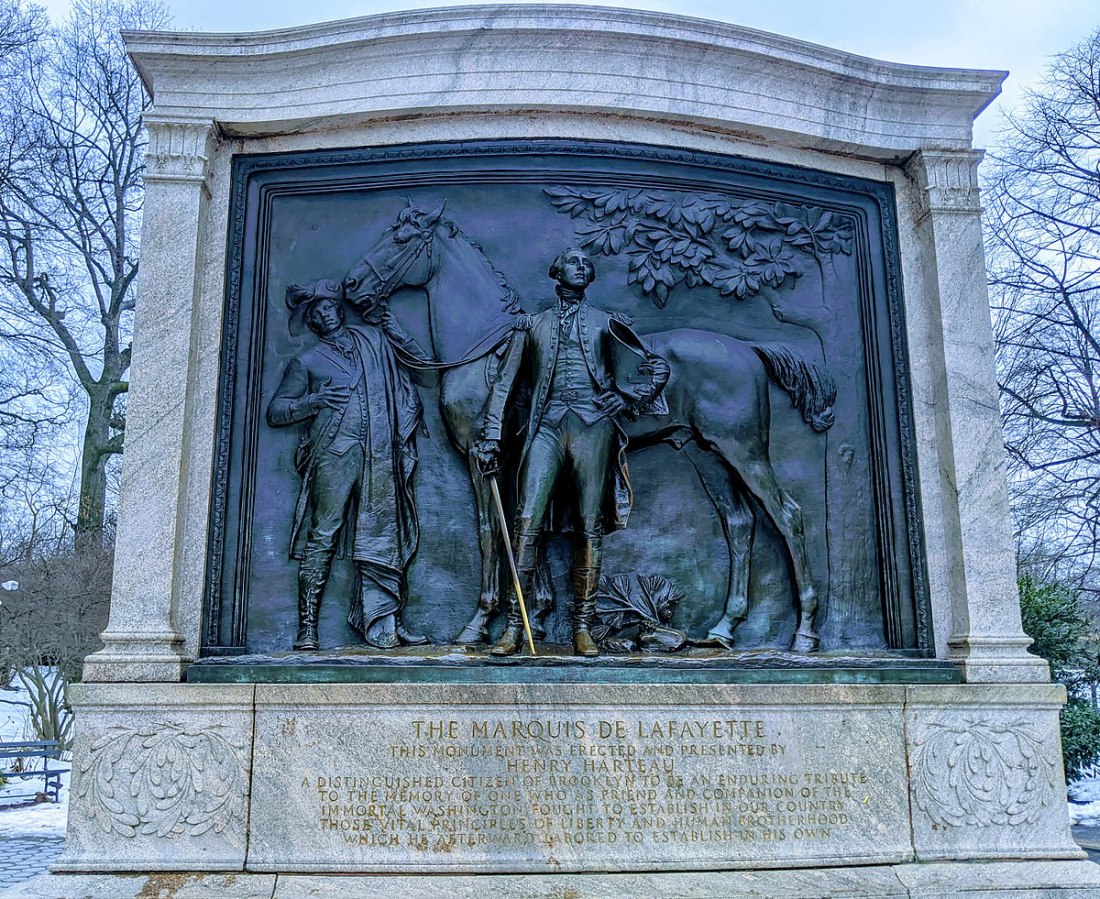
He offered his services as a spy to the rebels, and his offer was accepted. His commander was the French general, the famous Marquis de Lafayette, the man who admired the Americans’ desire for liberty so much that he came to the colonies to help George Washington in the war effort. Lafayette suggested that James secure a position as a “loyalist” in the camp of the American traitor, General Benedict Arnold. Arnold had changed sides in 1780 and then fought for the British. So, Lafayette, with Washington’s approval, sent James to spy on Arnold shortly after the transition from American patriot to British traitor. James gained the trust of the former American leader by pretending to be a spy for the British. The information that James gave Arnold was always solid but was largely useless. However, the intelligence he secretly sent back to the Americans was invaluable regarding British troop size and movements.
Then, as the war began its final stages, Lafayette ordered James to offer his services to General Cornwallis, the British commander in Virginia. There, James secured work as a courier for the British, taking orders and correspondence between British camps. In other words, the British were giving their battle plans directly into the hands of the Americans by entrusting it to James to carry between their lines. The information James gathered enabled the Americans to easily counter Cornwallis’s movements, and it led directly to the American victory over Cornwallis at Yorktown. It was the victory that effectively ended the American Revolution.
After the war, James purchased several acres of land in Virginia and became a fairly prosperous farmer. Despite some issues on whether or not he was in uniform during the war (he was not, obviously), James eventually received a small pension for his service in the war. But, for James, the real satisfaction was knowing that he had fought for the cause of liberty in his own way.
Then, in 1824, the Marquis de Lafayette made a return trip to the United States in honor of the nation’s upcoming 50th birthday. He traveled around all 24 states including Virginia. While in Richmond, Virginia, Lafayette was riding in his carriage through a large group of well-wishers when he saw James’s face in the crowd. The Marquis ordered his driver to stop, and he got out. He rushed into the crowd to excitedly hug James. The two old men were so happy to see each other after so many years and after they both had endured so much for the cause of liberty. However, many in the group surrounding the Marquis’s carriage were less than pleased, however.
You see, James had chosen the last name Lafayette after the man he so admired during the war. And the reason he chose that name was that he had no last name when he had met the Marquis. And the crowd was upset at the embrace because, at that time in Virginia, White men simply did not embrace former slaves like James Lafayette.

 The Rest of the Story