On the Gift of a Car

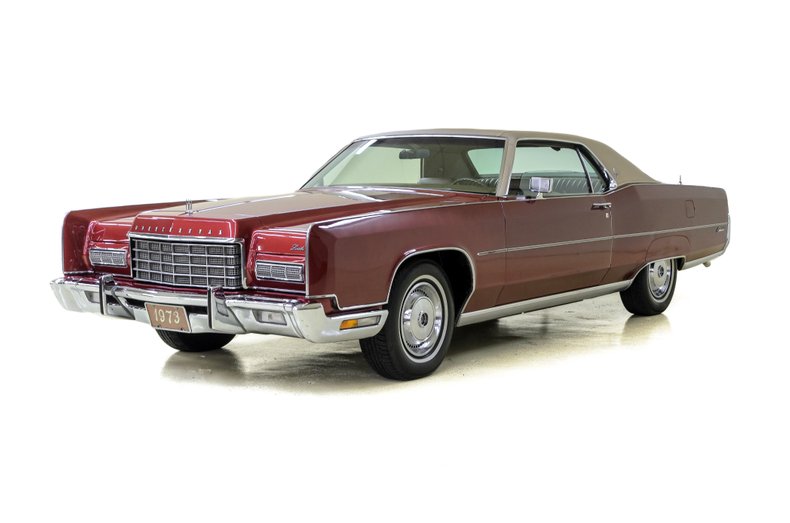
The brand new Lincoln Continental sat in the circular driveway of the large house. The year was 1973 and the man who lived in the house was entertaining an important and well to do visitor. The visitor remarked to his host how beautiful the car parked in the drive was. He had always admired the Lincoln’s styling.

What the visitor didn’t know was that the new Lincoln was a gift to him from the man who lived there. When the visitor found out that the Lincoln was for him, he clapped his hands in glee like a school kid at Christmas.

Now, as I said, the visitor was a man of means also. In fact, he had a large collection of automobiles of his own, a collection made up of models both foreign and domestic. But he didn’t have a Lincoln. “This will complete my collection,” he said, still giddy over the gift. A

And, being a man of means, he had someone drive him everywhere as a lot of wealthy people do. That did not mean that he did not like to drive himself. In fact, he was quite fond of driving, and he would often drive one of the cars in his collection from his large house to his office every day. The problem was that he usually ignored the laws regarding traffic, safety, and speed limits. In other words, This was a wealthy man who was an incredibly unsafe driver.

When he said that, he wished to take the Lincoln for a spin around the neighborhood, the host was aghast. Such a thing would be impossible, his host said. To allow him to take the large and powerful automobile out for a drive would be, to say the least, unwise. Yet, he persisted. He would be safe, he promised. He would obey the traffic laws, he promised. He wouldn’t go far, he promised.

Yet, the man who lived in the large house was not to be daunted. As politely, but as firmly as possible, he told the visitor that the only condition he had on giving the Lincoln to the visitor was that the man would not be allowed to drive it. Ever. The visitor bit his lip in thought and disappointment. You could tell he was seriously considering the proposal. Finally, he nodded his head in agreement. “Fine,“ he assented, “I will never drive the car. I give you my word. Thank you for the kind gift, my friend.“ With this assurance, the host smilingly handed the keys to the new Lincoln Continental to the visitor. The two men shook hands.

And, as far as we know, Soviet premier, Leonid Brezhnev, kept his word, and never personally drove the Lincoln Continental given to him by Richard Nixon.

On an Old Hippie

The fact that the word “hippie” is in the title of this story instantly marks me as being old. No one uses that word anymore, and anyone who knows it was from the period 50+ years ago when it was part of the cultural and social landscape. The word came from the idea of someone who was “hip” or “hep,” as in someone who was “in the know” and “wise” as opposed to someone who had no idea about what was cool or popular or “in.” In the 1960s and ’70s, a hippie was someone who was on the side of the anti-war, pro-drug legalization, anti-establishment youth movement. The opposite of a hippie would be a “square,” someone who supported the traditional values and power structure in the western world. You could tell which side someone was on based on how they dressed, what hairstyle they wore, and the language they used as well as how they voted and what issues they supported. And, while the overwhelming majority of hippies were young, this story is about one such hippie who was older.

In many ways, this old hippie was against type for many reasons besides his age. He was from the American south, from a traditional background, and had, as a younger man, indeed supported the establishment. But, as he aged, his politics changed. There’s an old saying that someone is more liberal in politics as a youth and more conservative as they age. So, this older man went against this trope. He had seen the effects of the American policy of the Vietnam War, for example, and he became horrified by how morally wrong it was. He became an anti-war supporter. Also, he began to wear his hair longer, much longer than what traditional society would say was acceptable for a man in his 60s. Remember, during that time, men who supported the establishment would not consider having long hair. Yet, this man wore his almost shoulder length. He would decry traditionalist men as “short hairs” because they cut their hair so short like the establishment was used to.

And the music he liked went against type as well. His favorite group was Simon and Garfunkel, and the song by this duo that was his favorite was Bridge over Troubled Water. He would listen to that record over and over for hours at a time. At that time Simon and Garfunkel’s reputation was more anti-establishment and anti-war, and this man embraced those sentiments as well. Finally, his dress also mirrored that of the younger, hippie group. He wore pants that slightly flared at the bottoms, a style known at the time as “bell bottoms.” Instead of wearing a tie and dress shirt as he did when he was in his working years, he wore a loose-fitting shirt and kept it unbuttoned low on his chest. At times, he would run around his property dressed only in shorts with no shoes or shirt, his long hair flowing behind him.

That property was a farm he’d purchased a few years before. In his retirement, he worked to make it more self-sufficient, less dependent on things like chemicals and pesticides. That emphasis on environmentalism was also a mark of the hippie, and this old man saw the wisdom of embracing those concepts in an effort to get closer to the land. Ideas like this meant more to him as he grew older, because his health wasn’t good. He had a bad heart, you see, and he knew that he didn’t have much time to live. The men in his family died young, he said, and he had wasted so much time going for money and position and power instead of working to seek happiness in himself rather in the things he owned or the position he held. That, too, was a mark of a hippie–the rejection of what the establishment considered to be the important things in life. Friends from his old life would stop by to say hello, and they often left complaining about that old hippie who wasn’t the man they knew years before. “I wanted to talk business,” one old acquaintance said after leaving the farm, “and all he was interested in was how many eggs his hens were laying.”

He died of a massive heart attack at age 64, at his farm. He said that he wanted to live to see the Vietnam War end. And that’s what happened. He received a call a few days before his death telling him that the war was over. On the other end of the call, the voice of Richard Nixon said, “We’ve negotiated a peace with North Vietnam. The war’s over. I wanted you to know.”

Lyndon Johnson, the old hippie, could rest, now.

On Visiting An Old Home

Take it from someone who has rented far more than he has owned: Moving often from place to place stinks. And temporary homes can be difficult places to create family memories. Before us we have the case of a small family of four who lived in a house for three years before having to move out. The husband, wife, and two small kids moved into a place south of Baltimore in the early 1960s because of the husband’s work. While there, the wife had lost an infant son, so there was that trauma the family went through while living there. On the other hand, the family also experienced some joy there, as families do, on holidays and birthdays and the like.

Then, in the third year there, the husband passed away suddenly. The young widow had to move, and she decided that she and the two children under the age of 6 should move in with family up north. The owners of the property were sympathetic to the tragic circumstances; they allowed the woman and her kids to take all the time they needed to pack up. However, knowing that she really couldn’t stay there (and another family waited for them to vacate), the woman managed to organize a move from the house within two weeks after her husband’s funeral.

Years passed.

As the children grew, the woman often thought of that house that had held such mixed memories for her. On the other hand, she also recognized that the place was the only house in which her kids shared any memories of their dad. So, she made arrangements to take her children, by then aged 13 and 10, back to the old house for a visit. She wrote to the then-occupants of the residence and asked if she and and the children could drop by sometime for a quick visit.

She received a warm letter in return welcoming the family back. And so it was, in 1971, that the widow–who had since remarried–and her two children went back to the house where they had lived almost 8 years earlier. Those occupants of the house welcomed them warmly because they understood that, even if the house was a temporary home, it was still home because of the memories made there, memories both good and bad.

The two children were taken in hand by the current occupant’s two older daughters. The four kids played with the family’s dogs while the adults visited. The widow quietly but sincerely thanked the occupants for being so accommodating in allowing them to intrude. The short visit concluded with good wishes, and when the family returned home, both children wrote letters of thanks back to the host family, telling them how wonderful it was to be in the only place where they remembered their dad.

The woman also penned a heart-felt thank you note.

“You can’t imagine the wonderful gift the your family gave me, and my children,” Jacqueline Kennedy Onassis wrote to Pat Nixon.

On a Good Barber

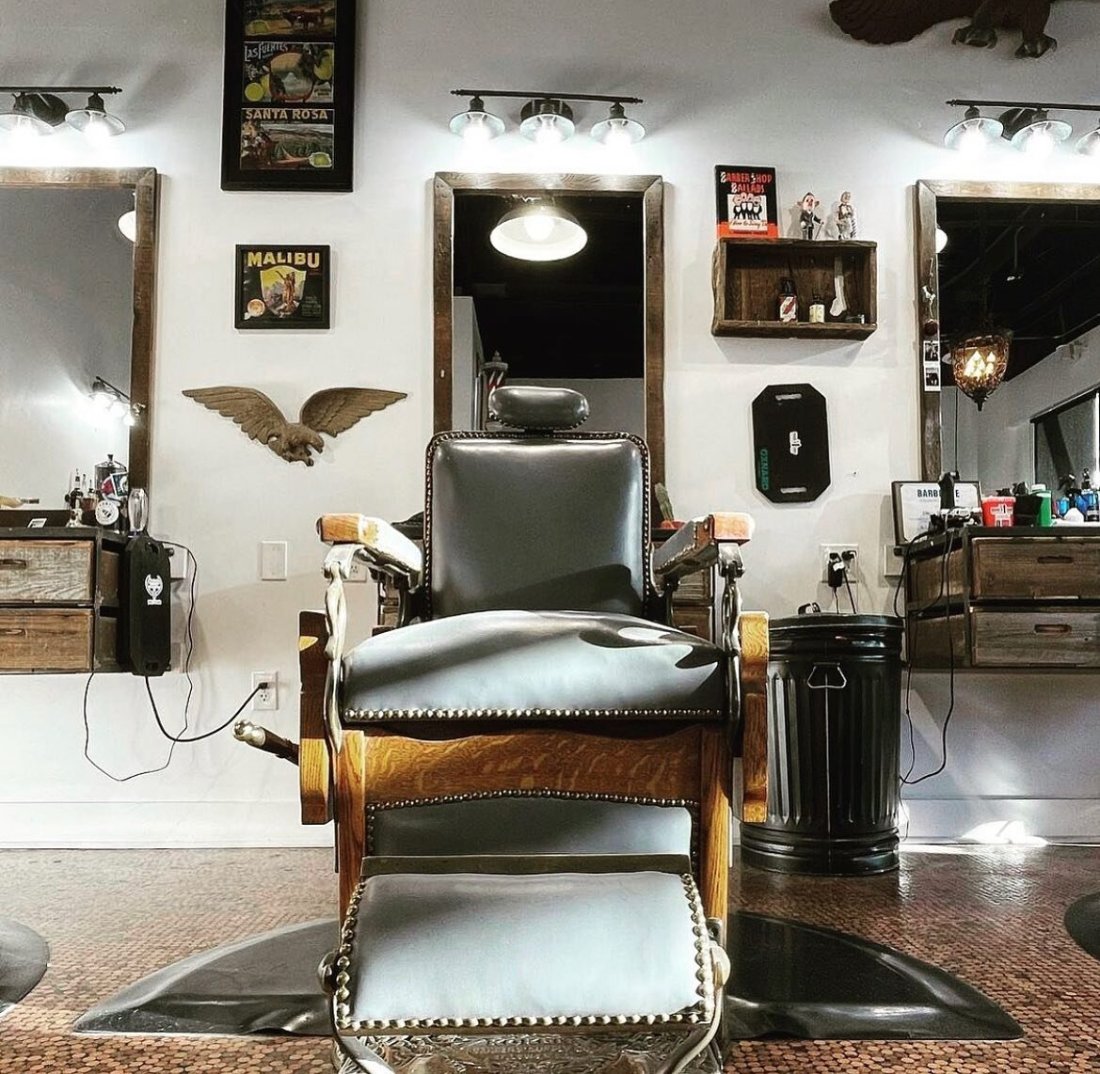
Milton Pitts was a really good barber. In a haircutting career spanning six decades, Milton cut the hair of the famous and the completely unknown. Most of this time, he worked in a one-chair shop, yet he managed to not only make a living at the profession but also to become somewhat well known in the process.

One of the main reasons for Milton’s popularity and success was his conversational abilities. In the way a doctor has “bedside manner,” Milton had a way about him when a client was in his chair. And it wasn’t that he was a yes-man; if the tie you were wearing was unflattering, he’d tell you so. If you complained about your looks, Milton would tell you to do something about it. He also had a broad knowledge of many subjects. He could speak at length about sports (not that unusual), politics (a little more rare), and even economics (very rare indeed) with authority.

One regular client of his, a fellow named Jerry, kept coming in to the shop and insisting that Milton help him with his combover. “You’re bald,” he told Jerry. “You’re not kidding anyone, and you’re looking a little ridiculous.” He asked Jerry to trust him, and he cut off the combover and brought the sides straight back. “There,” he said, showing Jerry the results. “That’s an honest look.” And Milton was right.

Before he died in his 80s, Milton was interviewed by a newspaper, and he looked back on an amazing career in a profession many people overlook or take for granted. He commented that you could tell a lot about a person by the way they wore their hair. And he recalled his last interaction with a powerful man who came in one day immediately before a major life event. The great man was dour because the task before him was distasteful. Milton tried to reassure him, and he told the man that no matter what happened, he would make sure that the man looked his best. The haircut continued in usual silence, both men aware of the importance of the next few hours in the powerful man’s life.

Milton finished, showed the results in the hand mirror, removed the barber’s cape with his usual flourish, and brushed a few, stray, dark curly strands from the man’s shoulders. He silently helped him into his suit coat, and then shook his hand. The man thanked him.

“You’ve always been a straight shooter with me,” Richard Nixon told Milton, and Nixon went upstairs and out of the White House barber shop and resigned the presidency.

On a Spaniel Puppy

Pat’s two daughters desperately wanted a dog. The problem was that kids under the age of 10 usually don’t understand the responsibility to come with pet ownership. All the girls knew was that puppies were cute, and they did not have one. Pat asked her husband about getting a dog for the girls, but he, as usual, didn’t really seem too interested in that issue. The household, after all, was his wife’s domain.

So, Pat mentioned to some people that if an appropriate animal could be found, she would like to get a dog, preferably a pup, for her daughters. The family lived in the metropolitan Baltimore, Maryland area, and, like a lot of young families in the early 1950s, they were living the American Dream. Pat’s husband was a veteran of World War II, like many of their friends, and he had gotten a government job in the Baltimore area after the war. The family moved there from California.

One day, Pat received word that a package had arrived for them down at the Baltimore train station, and the family drove down there in their station wagon to see what it was. Lo and behold, it was a crate, inside of which was a black-and-white spaniel puppy. The girls were ecstatic. Pat’s husband shrugged sheepishly and said he guessed that they could keep it if he didn’t have to do anything with it. The look on the girls’ faces told Pat that the family had a new addition.

Pat’s husband, by the way, was in some trouble at work at that time. Some of his acquaintances had accused him of mishandling government funds and even of taking bribes. To defend himself, her husband made an official statement saying very clearly that the family lived a very middle-class existence and that no fiscal malfeasance had taken place. He added, however, that the family did receive one gift: The spaniel puppy. He was also adamant that, because the girls loved the dog so much, that they would not be returning the dog.

The statement by the man was so sincere, and the sweet references to the girls and the puppy seemed so sweet and down-to-earth, that it served to erase all doubts that Pat’s husband was anything but an honest government employee.

Indeed, some people say that this speech by Richard Nixon saved his career.

On a Visit to Lincoln

Like most Americans, the older man saw on TV the violence, the killings by the national guard, that occurred that in April 1970 at Kent State University in Ohio. Four students had been shot. The man couldn’t sleep that evening. What was happening to his beloved United States? He was a veteran of World War II, and he was deeply disturbed by the images that had flashed across his screen that day.

After a night of pacing and thinking, the man, who lived in the Washington, D.C. area, decided to take a walk in the pre-dawn hours. Like many of his generation, he looked to Abraham Lincoln as the embodiment of American values and strength in times of trouble. So, he made the trek to the Lincoln Memorial to try to get some peace and some understanding of what the nation was going through.

Along the way to the memorial, the man encountered swaths of young protesters who had come to express their anger at their government. These young people had come to protest not only the killings at Kent State but also to speak about against the Nixon Administration’s policies about the Vietnam War, Civil Rights, and what they felt were Nixon’s movements against free speech and personal freedoms. The man felt odd, out of place, among the long-haired young men and the girls who wore peace signs around their necks and on their clothes. The young people noticed him, too, but in the early morning, they said nothing to him.

When he reached the Lincoln Memorial, the man realized that he was definitely the oldest person on the scene. The protesters had been sleeping in and around the monument, seeking, perhaps, as the older man was, some comfort in the spiritual presence of the great president memorialized there. Some of the young people sleepily woke up as the man made his way up the memorial steps. “What are you doing here?” one of the youngsters asked.

“I came for the same reason you did,” he answered. “I also want to see the war ended. I want the killing to stop.”

Other kids woke up as they heard the conversation, and they gathered around the older man. “Where do you go to school?” he asked one of the young men. “Syracuse,” the student answered. “Good football team,” the man answered, looking for some connection, some link between him and these young people who seemed so different, so strange to his version of America. Another kid told him he went to Stanford. “Ah, California,” the man responded. “Do you surf?” “Yeah,” the boy answered.

“I understand that you hate the war,” he said, changing the subject. “I do, too. But don’t let your hatred of the president and the war make you hate the country,” he advised. “The country is good. I know you probably think I’m a son-of-a-bitch, but I do understand how you feel,” he admitted.

The young people looked at the man skeptically. They later said that he seemed to be trying to connect with them, but that was impossible.

So, as the sun began to rise over Washington on that early May morning, Richard Nixon left the Lincoln Memorial and headed back to the White House.