On Building a Mosque

The prejudice against the Islamic religion and the often hate-filled, violent history of most of the public against the Muslims in the United Kingdom are long documented. It’s hard to pin down the reason so many from the UK seem to dislike Islam and its adherents so much. There are similar sentiments in the United Stares towards the religious group and towards Islam in general. And much of that hatred comes bubbling to the public surface when it’s announced that an Islamic church building will be built in one town or another. A town nearby where I lived in Tennessee found that out when it was announced that a mosque would be built there. Protests–some of them violent–finally derailed the planned building of the structure there.

Take the case of a mosque that was proposed in the British city of Liverpool. A small group in the downtown area of the city wanted an Islamic presence there. After using two adjoining apartments in the city center for a Koranic study center, the group of teachers and students realized that a place of worship could be made there as well. You can imagine the outrage that ensued. Even through the group was made up of predominately British-born adherents, the group was harassed and threatened. Local residents pelted the worshippers and students with eggs and rocks as they came and went from the apartments. A police presence became required every time the school was in session. Since the apartments were rented, the landlord made the popular but not necessarily moral choice to kick out the Muslim tenants.

With no where else to go, the group turned to one of their members, a man of some means named Abdullah Quilliam. He arranged to purchase a house in the same general area as the apartments for use as both a school and a mosque (once he built an addition on the back of the house). And, so, despite the continued protests and vitriol of neighbors and other locals, the Islamic community of Liverpool had a mosque and school of their own for use in the city center area. Quilliam also paid for the establishment of an orphanage and the printing of a Muslim newspaper in Liverpool.

And this Abdullah Quilliam was an interesting person in his own right. Born in Liverpool, he was raised by a wealthy family who taught him not Islam but, rather, Methodism. He studied law and became a well-respected solicitor in the UK. He visited Morocco as an adult and there studied and became entranced by Islam. He converted and changed his name. You see, Abdullah was the name he chose once he converted. His birth name was William Henry Quilliam, and his family never understood why he chose to become a Muslim.

And that house that he bought and turned into the school and mosque in Liverpool, the one that brought about such vehement anger from the local community?

Well, it was the first ever mosque not only in Liverpool but also in all of the United Kingdom opened in 1889.

On a False Accusation

Mingo Sanders, First Sergeant, Company B, 25th Infantry Regiment, found himself in Cuba as part of the contingent of American soldiers in the Spanish-American War. He and his fellow soldiers had been assigned to the western US before the war started, and they were some of the first regular army troops to go to Cuba. The 25th Regiment was a Black outfit that had all-white officers, and Sergeant Sanders was one of the Black non-coms who formed the backbone of the troops. They were a proud group of men who were not new at their jobs, unlike many of the young and eager and inexperienced soldiers who had volunteered when the war fever broke out in April of 1898. Interestingly, Black soldiers made up around 25% of all US troops in Cuba during the conflict.

Sergeant Sanders was with his outfit one day in Cuba when another regiment arrived nearby. This was one of those all-volunteer units, and the way they set up their camp, well, a veteran could tell immediately that they didn’t have the expertise that Sanders and his fellow regular army comrades did. That evening, the commander of those troops, a colonel of the volunteer group, came to Sanders with a request. It seemed that his supply wagons had been delayed; could Sanders and his men please share some of their supply of hardtack with his white volunteers? Now, for those who don’t know, hardtack is like a large cracker that is, well, hard. You would usually soak it in coffee or water to soften it before eating, but the hardness allowed for it to be stored for a long time without decaying or breaking down. It wasn’t great food, but it was filling. And, of course, Sergeant Sanders was happy to give the young colonel and his volunteers some of their provisions. The young officer was grateful and said so. I tell you this to show you the type of man Mingo Sanders was.

Sanders and his regiment distinguished themselves in the war. Later, they were posted on the other side of the world, in the Philippines, to fight in that insurrection against the Americans. It was there that Sanders saved the lives of several men in an action and earned himself a medal for bravery under fire. At the end of that conflict, he and his men were stationed in Brownsville, Texas, right on the Mexican border. And it was there that everything went wrong for Sanders and the soldiers of the 25th Regiment.

It seems that the town wasn’t that thrilled to have Black soldiers stationed there. This was in the depths of the Jim Crow era in Texas, and racism practically hung in the air. The troops were given strict orders about avoiding any kind of confrontation with locals, and passes into town from the base were limited. That said, on August 13, 1906, two white citizens of Brownsville were shot; one of them was killed. The locals immediately blamed soldiers from the 25th. An inquiry was immediately launched, but the white officers of the 25th insisted that all their men were on the base the evening the violence occurred. Sanders and the other non-commissioned officers also vouched for the presence of all men in the barracks at the time of the shootings.

These assurances that the 25th wasn’t involved didn’t seem to matter to most folks. When local authorities could find no member of the regiment who could be definitively connected with the shooting, President Theodore Roosevelt sent a special investigation to Brownsville to sus out the truth of the matter. Each soldier of the 25th was interviewed, including the officers. Still, all insisted that the regiment, to a man, had not left base that night. They knew better, they all said. When the investigation reported to Roosevelt that no one in the regiment confessed or even pointed to any of the soldiers’ involvement, he did something odd.

Bowing to pressure from the white community of Brownsville, Roosevelt ordered that all members of the 25th Infantry Regiment be given dishonorable discharges. There would be no chance for appeal or any trial before a military court.

For Mingo Sanders, he was stunned. His 26 year army career was over without any due process or any official court martial. He lost his pension and his position and his pride took a major blow. And, in what may have been the most unkind cut of all was the fact that he lost it all due to this particular Commander in Chief’s order.

You see, Theodore Roosevelt was the same young colonel Sergeant Mingo Sanders helped by giving those green volunteers some of his regiment’s hardtack a few years earlier.

On The New Mayor

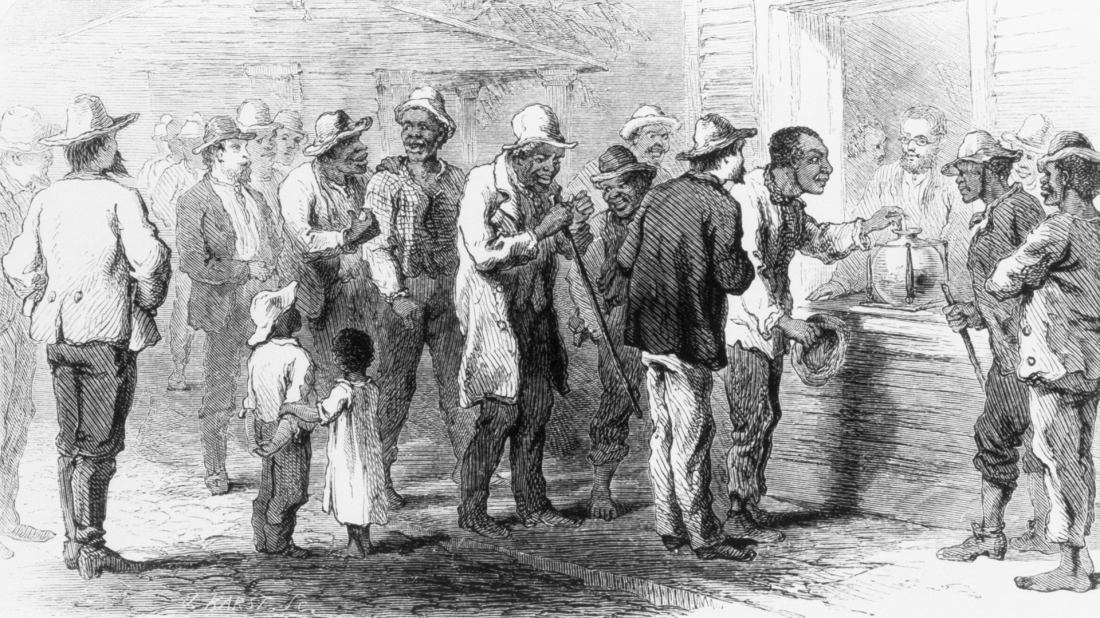
We all know that the period after the Civil War in the American South is called Reconstruction. The idea for that time was to try to change the racist system of keeping minority Americans from equal justice under the law. Laws in the former Confederate states that had kept former slaves from voting, for instance, were struck down by the federal government, for example. And the result was the election of many African-American candidates to such positions as senator and representative on both the state and federal levels.

And, as we are aware, when the occupying federal troops left the south in 1877, the majority white citizenry of the various states brazenly took away the rights the minority citizens had through such methods as new discriminatory laws (so-called Jim Crow laws) and intimidation (such organizations as the KKK). And, slowly, the elected African-American office=holders were replaced.

I said all of that to speak about the Alabama town of Newbern. In a story that reflects that racist mentality of the Jim Crow era, it seems that Newbern, a majority African-American town of fewer than 300 souls, had elected its first African-American mayor ever. Up until that time, the little burg had been managed and run by the minority white population despite the fact that the town is over 80% African-American. But, it seemed that for the first time, a non-white mayor had been elected despite white attempts to stifle and intimidate the non-white voters.

One of the ways that the white folks in Newbern kept power was to simply not publicize elections. Over the years, the mayor and town council would hold private meetings where they and they alone would decide who would hold the different positions in town. But then, an African-American citizen named Patrick Braxton filed paperwork to run for the office of mayor in Newbern. Since the white power structure never submitted paperwork and never officially entered the race for mayor in the election, Braxton won the race by default as the only candidate to qualify.

It had never dawned on those in power that anyone would dare to run for mayor in an election. They were shocked when, they woke up one morning, and this man who was not “one of them” was now the duly and legally elected mayor of the town. And, in his role and using his power as the new mayor, Braxton appointed a new town council (made up, interestingly, of people from both races). By the way, there had only been one non-white member of the town council before then.

Well, that’s when the old mayor and town council took action. They simply changed the locks on the mayor’s office and on the council chamber room, effectively keeping Braxton and his new council from their work. They told the newspaper that there was a mix-up, that they had simply forgotten to file paperwork for the election, and that they had held a “private” election where (surprise!) they re-elected themselves and the mayor to new terms in office.

Of course, Braxton sued. But guess who controlled the courts in that part of Alabama–and across much of the old Confederacy? As can imagine, Braxton’s efforts produced no change in Newbern…yet.

You see, this didn’t happen over 100 years ago or even 50 years ago. No, Patrick Braxton, the rightful mayor of Newbern, Alabama, was elected in 2020.

On a Really Bad Nurse

Several nurses are in my family and among my close friends, both male and female. I know them to be loving and caring people, people who would help anyone regardless of any background the person may have. The nurse in the book/film, One Flew Over the Cuckoo’s Nest, Nurse Ratched, has come to stand for the epitome of the opposite type, an evil nurse, someone who is not really in the healing, caregiving business. No, Ratched was a manipulative person who reveled in using her position to control those in her care. She felt her patients were beneath her. This story is of one such nurse, but she is not a fictional character.

This particular nurse suffered from the delusion that she saw visions and received special instructions from another, non-physical plane of existence. And that voice or those voices told her that she was right and everyone–everyone–was wrong. That alone should have disqualified her in most hospitals. But add to this that she felt that the voices told her that white folks were superior to any other race. As such, she gave preference to that segment of society over other groups.

But it gets worse. Rather than simply be willing to nurse anyone who was sick, this woman decided that the old dictum that, “Cleanliness is next to Godliness” should be actively pursued. However, this nurse took it to a metaphorical extreme; she felt that if someone was unclean by reason of skin color or religion–not necessarily unsanitary, you see–that the person didn’t deserve her help. This is a racism that is absolutely deplorable in any profession, but is rings especially harsh in nursing.

Take her work at face value. When working with the government of New Zealand, this nurse purposely and with malice advised the health organization to provide a lower level of heath care to Māori patients than those of European descent. Read that again–a nurse in the not too distant past advised a government to show preferential health care to one ethnicity over another. Understandably, the New Zealand Nurses Organization (NZNO) soundly condemned her stance. Racism and exclusion, they correctly pointed out, have no place not only in nursing but also not in society at large.

And, surprisingly, she did not care for women doctors. No, this nurse was Old School. She said that women should be nurses and men should be doctors. The women she knew who were doctors were, in her words, “no better than third-rate men.” Not sure whom she was insulting there, but you get the point. Women’s place, she felt, was not being in charge of care but merely assisting in the care of the patient. Women, she insisted, were much too flighty to be trusted with doctor-y things. And, while some might say that she was merely a product of her time, that shouldn’t be used as an excuse to perpetuate the racism and misogyny she practiced throughout her long life. Simply because she believed these horrid things as did many of her time still does not make them right.

Yet, much of the western world at least seems bent on making Florence Nightingale the epitome of what a nurse should be.

On a Powerful Racist

Jim’s legacy remains that of one of America’s most infamous racists. From what historians can piece together from various stories, Jim came from St. Louis, Missouri, and was first received public notice on stages across the country performing blackface “minstrel shows” to the delight of white audiences in the years before the American Civil War.

After the war is when Jim turned to politics and really began his pernicious campaign of hate against Black Americans. Jim, feeding on the hatred most southerners felt towards the newly-freed slaves of the region and playing on whites’ fears and prejudices, worked to pass laws that gradually wore away the precious rights that had been bought with blood on battlefields across the country during the war. Even the passage of Constitutional amendments that were supposed to guarantee rights of equality and justice before the law, voting rights, and other freedoms were worn away by the enormous amount of racist-based work Jim did across almost all states in the old Confederacy.

For example, the voting rights that Black men had won after the war were taken away by Jim’s efforts. He worked to pass laws that created such things as poll taxes (which most Black voters couldn’t pay) and literacy tests (again, which most Black voters couldn’t pass but weren’t given to White voters), thus effectively depriving Blacks of their rights as citizens. These types of laws stayed on the books in some states until the 1960s and have seen a revival in legislation requiring specific types of voter identification that Black citizens often find difficult to procure. That’s how pervasive Jim’s lasting legacy has been.

Courts, stocked with Jim’s allies, consistently applied justice unfairly to Black lawbreakers compared to White defendants. Laws were passed in many states at Jim’s direction that eroded or severely limited the ability of Black citizens to own land, to own businesses, or to travel freely. It was as if Jim’s purpose was to return Black citizens to, if not a state of legal and physical enslavement, at least a social and economic one.

And Jim’s plan worked. Jim’s efforts are why people like Dr. Martin Luther King, Jr. had to, in his words, “fight for something that should have been mine since birth” through the 1960s and even today. So, it’s easy to see why Jim remains today the premier racist and bigot produced by this nation. However, Jim isn’t one person, or even a person, actually.

You know him as Jim Crow.

On a Racist

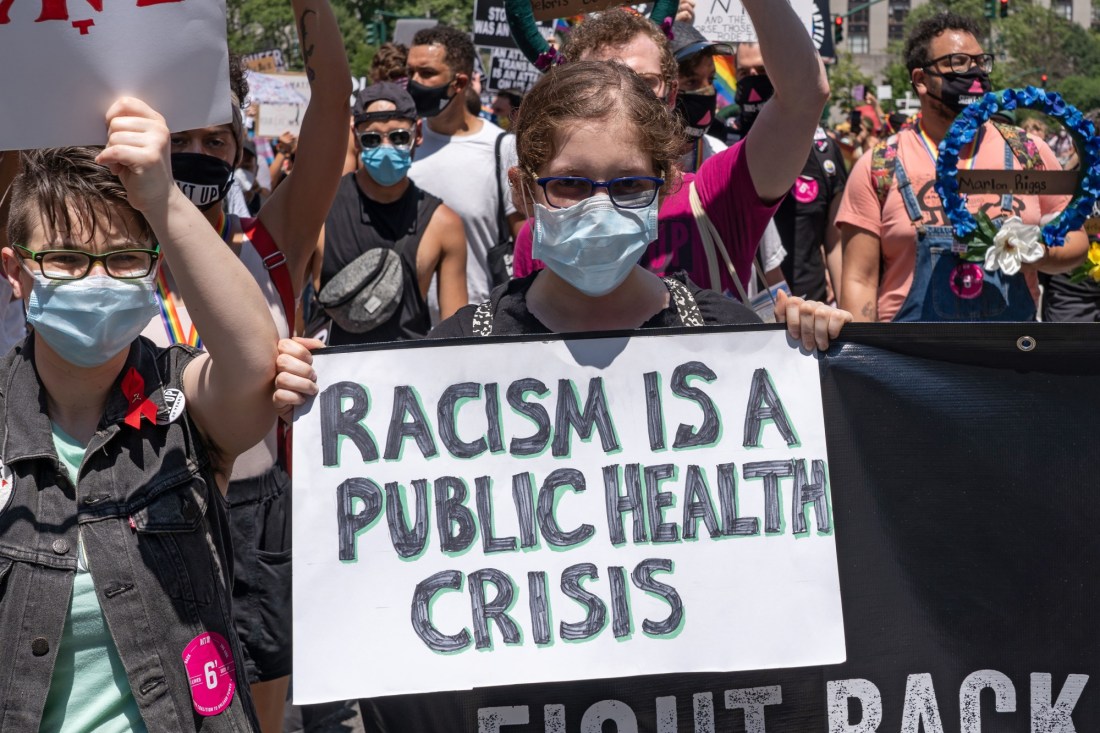
Racism is dumb.

Let’s get that out there from the start. Why would anyone hate or dislike someone simply because the skin on that person has or doesn’t have a certain amount of melanin? And why would we say that everyone who shares that skin type behaves or acts or thinks or feels a certain way because of the melanin in the skin?

Racism is stupid.

This story is about one such stupid person. He was born in Alabama in the early 1960s. His family, while not rich, employed a Black woman as a maid and helper around the house since the mother had mobility issues. The man’s dad, a building contractor, had a Black man to run errands for the mother and drive her to places during the day that she or the children might need to go. So, he was born into a culture where people of darker skin were the servants, the ones who did the work for the people of lighter skin. Now, you might argue that this isn’t enough to make someone think themselves better or superior to someone else, but it certainly creates a feeling that there is an order to things, a certain hierarchy in the way things work.

Racism is part of America’s culture.

The culture around this man echoed this pecking order. He says he remembers vividly a time in the mid-1960s, when he must have been 4 or 5 years old, and he accidently entered the “wrong” restroom in a train station. At the time, there were usually three public facilities in train and bus stations–labeled Women, Men, and Colored. He tells the story that an older Black man gently led him out of the Colored restroom, saying, “You’re in the wrong place, little man.” Things like that tend to stick with one and form the attitudes we have towards other people. If society decides to segregate, then who am I to question, the man later reasoned.

Racism tells lies.

Now, this man would defend his racist mentality by arguing that he wasn’t racist; he was merely prejudiced. Racist people sometimes do this to salve their consciences. “No,” they will say, “I don’t hate anyone, but I can’t help but feel that they all…” and then a list of racist stereotypes usually follow that broadly apply to whoever “they” are. This is racism, no matter how we try to convince ourselves that it is not.

Racism can be insidious.

This man and his friends will insist, when asked, that minority groups in the United States are racist. This “what aboutism” is also another attempt to soothe the racist psyche. This argument deflects from them having to confront their own hatred and, at the same time, makes them feel more justified in keeping that hatred in their hearts. Most of their so-called evidence for this racism is anecdotal at best: “My buddy got fired because they had to hire a minority.” Ok, if that’s true, why do you think they had to do that? Do you think the company/boss simply pointed to your buddy and told him to take a hike because he was white? The same laws that protect minorities from discrimination also protect people in the majority from it as well. But that doesn’t feed into the racist narrative, does it?

Racism is a bully.

Another thing this racist man wonders is, “Why is there a Black History Month? Why isn’t there a White History Month?” Really? Do we have to explain that the contributions to our society and nation by minorities, especially Black Americans, have been marginalized, appropriated, and minimized for the past 400 years? And how is your life affected by simply recognizing the fact that minorities have been instrumental in creating the life that you enjoy? How is that recognition detrimental to your well-being and life situation?

Racism is alive and well, sadly.

The comedian Louis C.K. (who has his issues on other topics, for sure) reminds us quite correctly that racism is part of our past and therefore part of our present as well. It cannot be, should not be, must not be ignored. We must insure that are not voting for someone who is an obvious or even possible racist because to do so is to invest our power in the hands of someone who hates another person. We must speak about racism and work against racism and, if needed, march and petition and vote and fight like hell to recognize, call out, and, one blessed day, end racism.

And, what about our racist man in this story?

Well, the racism that is within me is dying–but not as quickly as I’d like it to.

On a Nice Woman

Louise was nice. Everyone said so. In 1957, facing increasing difficulty finding work in Alabama, Louise accepted an invitation from her brother’s family to move to Detroit, Michigan, and find work there. Jobs were plentiful, her brother said, and someone of her disposition and abilities (she had decent schooling) would have no trouble finding work. So, that’s what Louise did.

Now, you should know that Louise was African-American. Detroit, she thought, would also offer a less divided, less segregated society than the Alabama of the 1950s was. Sadly, Louise found out that Detroit was almost equally as racist and segregated as Alabama had been. For example, Louise experienced discrimination when it came to searching for adequate housing in metropolitan Detroit. On the other hand, her brother had been correct; Louise found work as a secretary and receptionist in the Detroit office of United States Congressman John Conyers, one of the first black officeholders from Michigan. It would be a position Louise held until she retired in 1988.

Even during her initial interaction with her boss, Conyers noticed one thing right off the bat about Louise, and it’s something we have already pointed out. She was simply so nice. “You treated her with respect,” the congressman said once, “because she was so calm, so serene, so special.” Louise was often the first point of contact for people reaching out to their congressional delegate, and she took every issue, every question, every appeal personally and seriously. You know that if Louise had her attention on your issue, that she would see to it that it would reach a conclusion that satisfied you.

It was her quiet way, her nicety, that made people open up to her and, well, want to help her any way they could. You knew your issue would be resolved when you brought it to Louise. In her role as Conyers’s spokesperson in the community, Louise visited schools, hospitals, nursing homes, low-income housing communities, jails, and churches, working in her own quiet way to affect change in the way people in that congressional district (and beyond) were treated.

All the while she worked long hours on other people’s behalf, Louise managed to nurse a husband with cancer and a mother with cancer and dementia until both passed away. She herself suffered health issues that she kept quiet and private, working through pain because, as she insisted, people were counting on her voice in carrying issues and situations before Congressman Conyers. She was also attacked by a robber in her own home in retirement, but in court she advocated for leniency for the robber. Who does that?

Someone who was nice.

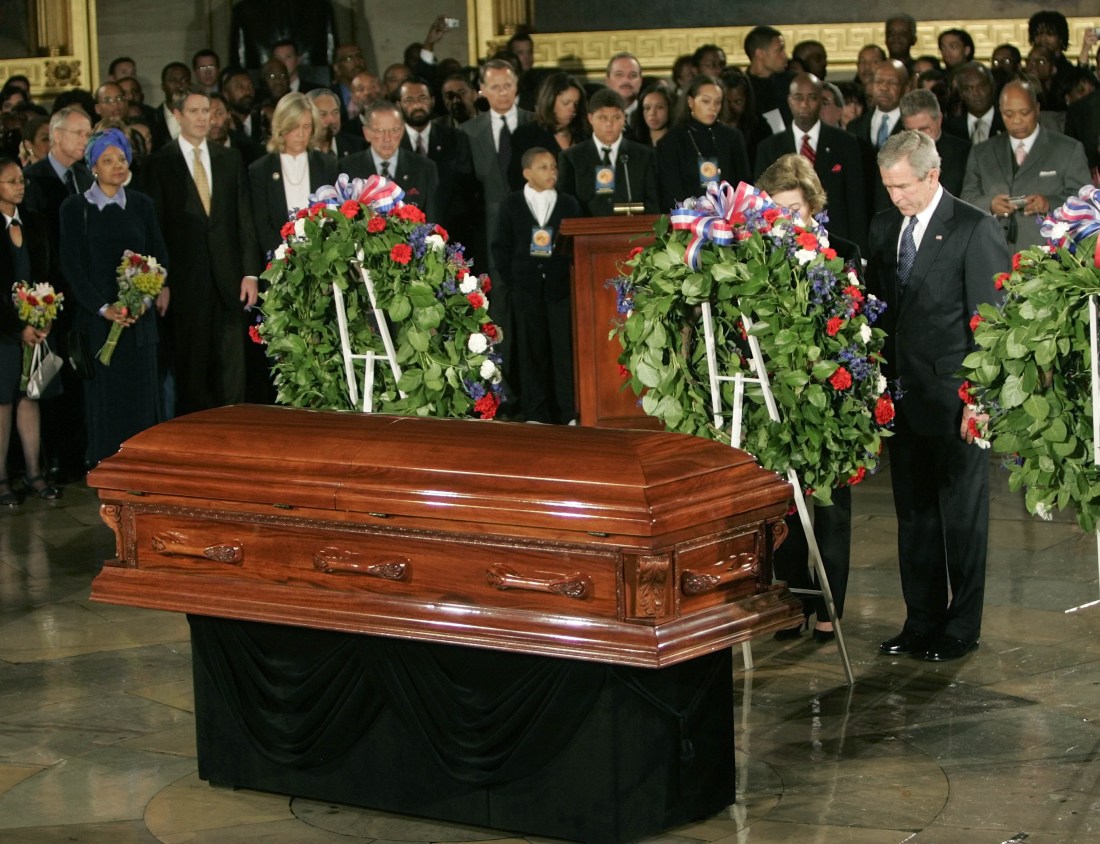
When Louise passed away in 2005, her funeral was well attended despite the fact that it wasn’t held in Detroit nor even in her old home of Alabama. Louise’s funeral was held in Washington, D.C., and she remains only non-officeholder to have her body lie in state in the United States Capitol Rotunda. But this unique honor wasn’t because Louise was nice.

It’s because you know her better by her first name, Rosa.

Rosa Parks.