On a Trade Good

Of the thousands of lost and forgotten wars over the centuries of humankind, only a few of them have had an impact on the modern world as much as he one that took place between Britain and China in the 1840s. While we don’t think about China as being a powerful nation until the past 70 years or so, the fact is that the Chinese Empire was a powerful regional presence in Asia. Then, economic and social upheaval caused the country to become weak at the beginning of the 20th century. Also, in part, the spread of European colonialism carved up the nation’s sphere of influence.

European trade money had flowed into China for centuries, giving that government the ability to raise large armies, navies, and control a large area of land in Asia. Japan was really their only rival, and that was mostly later in the 19th century. But back to the war I mentioned at the start. In exchange for the Europeans’ silver, China sent tea, porcelain, silk, and other desirable trade goods to Britain. But the largest British import from China became the subject of an export ban by the Chinese government.

This trade ban outraged Britain so. The anger against China banning this particular product became so great that voices in Britain’s Parliament and across the country called for a declaration of war to force China to once again sell them the trade good. For China’s part, they felt the product was detrimental to their society. They begged Britain to reconsider. China had even sent a letter to the newly-enthroned Queen Victoria, asking her to please allow them to no longer sell this trade good. Young Victoria didn’t even bother to read the letter.

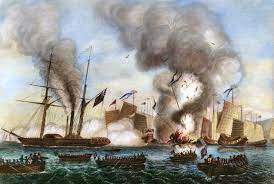
British desire for the product was so great that British sailors began violent confrontations with Chinese merchants in Chinese ports when they realized that the item was no longer for sale. And, so, Britain decided to go to war to force another country to sell them a product that the producing country did not wish to sell. And, of course, despite the money that China had, the technological advantages of the British Carronades (short-nosed naval guns) on their war ships made short work of the Chinese fleet.

China was forced to sign a treaty in 1842 conceding that they would once again allow Britain to purchase the trade good. In addition, Britain was granted control over five harbors on the Chinese coast, including Shanghai. The jewel of the treaty that ended the war was, of course, Hong Kong. Britain was granted absolute control over the city. For China to relinquish sovereignty over their own port cities–that’s how overwhelming the British victory was and how strong Britain’s desire for this trade good was..

And so, Britain followed the Golden Rule: They who have the gold make the rules. The British corollary of that is they who rule the waves, wave the rules. And Britain did both. Of course, you know what the product was, the trade good that Britain was so desperate to get their hands on that they were willing to go to war over it, the product that allowed them to control important coastal cities in China up until the past few years, right?

Opium.

On a War

Zanzibar. You have no idea where it is, right? Would you believe me if I said it was in northeast Asia, off the coast of Korea? See? You don’t even know if that’s true. The truth is that Zanzibar is off the coast of southeast Africa, just off shore from Tanzania, and it is a semi-autonomous province of that nation. For real. The purpose of this little joke is that Zanzibar isn’t on anyone’s radar, so why would Britain go to war with Zanzibar in 1896? Well, it seems that wars during the Victorian Era was what Britain did. To be somewhat fair, the archipelago was on one of Britain’s shipping lanes from Suez down the east coast of Africa to Britain’s colonies in the southern part of the continent.

While Britain didn’t officially colonize or take over Zanzibar, it did determine who ruled the small nation. And, when the hand-picked ruler of Zanzibar died in 1896, a ruler emerged in the country that wasn’t as friendly to British interests as the one they themselves had chosen. According to a deal of “protection” between Zanzibar and Britain, any potential Sultan of Zanzibar was required to receive British approval. The new Sultan, the nephew of the previous ruler, didn’t do that. And, so, the British representative in Zanzibar issued an ultimatum: Relinquish power or the British would force him out. Well, the new Sultan called Britain’s bluff. He sent a message saying, in effect, you guys wouldn’t dare remove me.

Apparently, this man hadn’t learned the rule that he who rules the waves waves the rules. And, in the late 1890s, Britain’s navy was the world’s most powerful. It was British policy that their navy would be the size of the next two navies in the world combined in an effort to protect Britain’s vast empire and insure the flow of trade goods to and from Britain. And, when the new Sultan of Zanzibar rebuffed Britain’s demands to step down from power, the Royal Navy sent ships to deal with the situation. Britain, the world’s largest empire at the time, declared war on tiny Zanzibar.

The war started with the naval vessels bombarding the Sultan’s palace. Several members of the Sultan’s household were killed, and the mostly wooden structure caught fire. The fire spread quickly, and the palace was largely destroyed. The fire reached a cache of cannonballs and gunpowder, and the ammo dump exploded, thereby almost completely eliminating the Zanzibarian supply of ordinance. Meanwhile, the only ship in Zanzibar’s navy, a retired British ship gifted to the previous Sultan, tried to fire on the British ships, but it was quickly sunk by a British salvo in the shallow harbor, its top masts still sticking out of the water for several months afterward. The incredibly accurate and experienced British ships used their naval superiority to quickly disable the stationary guns Zanzibar had aimed at the harbor where the British ships lay.

Needless to say, the British won what is now called the Anglo-Zanzibar War. The Sultan was whisked away from the scene by the German consulate to the coast of what was then the German colony of Tanzania. Britain quickly installed a Sultan that they approved and one who would continue the mutually beneficial relationship (well, more beneficial to Britain, but still). The British rebuilt the royal residence into a better and more stable building. Order was restored.

And the Anglo-Zanzibar War, lasting all of 38 minutes, is known as the shortest war in history.

On a Child Rearing Method

How does one raise a child? That’s a question that has developed into a wide spectrum of philosophical and psychological study over the centuries. Today, most child psychologists divide parenting styles and methods into four groups: The Authoritarian, the Authoritative, the Permissive, and the Neglectful. These parenting styles are the product of researchers including some from Stanford University and are now universally accepted.

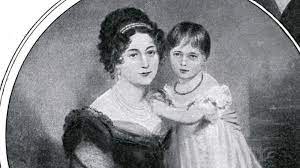
That wasn’t always the case. Take the situation in 1820, when the Duchess of Kent, one Maria Louise, found herself widowed and facing the rearing of an infant daughter alone. The child was improbably named Alexandrina, and the prospect of bringing this child up by herself absolutely terrified the Duchess. You see, the Duchess knew that her substantial inheritance from her recently deceased husband and her standing in the aristocracy in Great Britain meant that this child would have to be taught the responsibilities that came with such wealth and such position.

The widow turned to a trusted family advisor named Sir John Conroy. Conroy had been in the Napoleonic Wars and approached this problem of how to raise Alexandrina from a military perspective. He devised a system of child rearing for the infant that is now called the Kensington System. It centered around making the girl completely dependent on her mother and on Conroy for, well, everything. The thinking was that such responsibility would need the influence of the Duchess and of Sir John (who possibly had the additional motive of being able to wield influence over the substantial inheritance). Thus, the child would grow up to rely only on her mother and her mother’s trusted advisor.

The system revolved around isolating the child from not only other children but also from other relatives. She would not be allowed to be alone without either her mother or the governess. Detailed records of the child’s daily activities would be kept, monitoring her intake (and output), and detailing things like hours of sleep and what toys she played with, etc. Such behavior was designed to make her not wish to turn to anyone else for advice or help. She did have two playmates in her life but only two. One was a half-sister from one of her father’s dalliances and the other was Sir John’s daughter. But even these interactions were extremely limited. The child was rarely allowed even outside the gates of the family’s large residence. And, incredibly, the girl was required to sleep in the same room as her mother (despite their house having many large bedrooms) until she turned 18.

When Alexandrina was of age, her private tutoring began. The schedule was strictly adhered to, starting promptly at 9:30am daily and ending at 5:00pm. The girl was trained in languages, literature, poise, and even religion. And, daily, the Duchess would drill her child on what she learned. If Alexandrina failed to recall properly, there would be punishment. Remembering was expected and therefore not rewarded.

Well, it doesn’t take a child psychologist to realize that the Kensington System was a complete failure. The girl grew up to intensely hate her mother and greatly distrust Sir John. When she turned 18, Alexandrina fell heir to the fortune, and she made two requests. The first was to insist on having at least two hours during the day to herself (which had never happened in her life), and the second was that her bed be moved to her own bedroom.

And, when Alexandrina Victoria became Queen Victoria and married Prince Albert in 1840, she banned her mother from the palace for the remainder of her life.

On a Fat Man

Tum-Tum was one of the wealthiest, happiest, and dumbest people in all of Britain in the late 1800s. Of course, Tum-Tum wasn’t his name, but it’s what all his friends called him because, as you can imagine, this man had a rather corpulent bent to his frame. And his given, Christian name didn’t seem to fit him because, well, he was so jolly and fat. In fact, he was so fat that he couldn’t button the front of his suit vests.

And it should be no surprise that Tum-Tum’s money was from the aristocracy. He had large houses in and around London in which he threw amazing parties across several decades. He and his fellow revelers became known as the Smart Set because all their party exploits were splashed across the tabloids daily. All what this group of upper-crust snobs did was gobbled up by a public eager for news of what the rich were up to. If the wealthy people did it, then the common man wanted to do it, too. The Smart Set often set the pace in fashion, habits, and even things like what alcoholic drinks were to become popular. For example, because Tum-Tum couldn’t button his vests, the popular thing around the nation for a time was for gentlemen to also not button their vests.

And none of this accounts for the inordinate amount of adultery that went on at Tum-Tum’s parties. And the fact that he was married and had several kids didn’t slow him down. For such a fat man, Tum-Tum got around. He preferred his women newly married, it was rumored, because they were usually more “careful” about any possible “accidents” that might result from a rendezvous with him. There are photographs (this being the late 1800s after all) documenting Tum-Tum sitting at parties with his mistress du jour by his side. Looking at these women, they indeed look young but are always dressed properly and conservatively as a married woman should. Once, he had to testify in court at a divorce proceeding but, because of his wealth, his lies about his involvement with the woman in question were believed. The husband’s suit for divorce was dismissed.

Tum-Tum’s idea of a joke was to pour champagne on the head of someone else. He found this immensely humorous, and it caused him to hold his tum-tum and belly laugh uncontrollably. Again, he wasn’t the brightest bulb in the pack. Even his parents despaired of him. Mummy realized her son was a wastrel. His father said, of Tum-Tum’s intellect, that it was like “being robbed on a trip but finding that your weapon is buried somewhere at the bottom of a trunk.”

Ouch.

Eventually, Tum-Tum’s extravagant lifestyle finally caught up with him. A Jeroboam of champagne, twelve of the finest cigars and five meals a day will do that. He died in 1910. His last words were, fittingly, about a successful bet he had placed on a horserace. He was mourned, certainly, but some people didn’t really seem to miss him despite the fact that he was so popular for most of his life. A fitting epitaph was supposedly said by one of his friends that, “It was happy to have known him, but it is happier still that he is gone.”

At his funeral, it was remarked that while he was of the nobility, he was, “too human.” Of course, we’re speaking of King Edward VII of the United Kingdom, Emperor of India, and son of Queen Victoria.

On the Feast of Stephen

Good King Wenceslas looked out, on the Feast of Stephen, when the snow lay round about, deep, and crisp, and even. Brightly shone the moon that night, though the frost was cruel, when a poor man came in sight, gathering winter fuel.

St. Stephen’s Day is the feast or festival day when the Christian religion celebrates the life and martyrdom by stoning of Stephen, the so-called first martyr of Christianity (the Bible book of Acts Chapter 7 records the event). For Victorian Christmas traditions, St. Stephen’s day was a sort of “poor man’s Christmas” where the needs of lower-class people would receive gifts and food from their richer, higher born countrymen.

That’s sort of what’s going on in the carol Good King Wenceslas quoted above. The king is out and about and finds a poor man who needs firewood. He and his faithful pageboy give alms to the man in the spirit of generosity and charity. At the end of the song, the king reminds his page and us that those who give to others are blessed by the giving. The story–and the song–are based on a real medieval king from Central Europe who, apparently, was kind and generous.

As we have looked at in other stories, the Victorians did much to help create modern Christmas traditions, and that’s also the case here. The story and song became popular after an Englishman named John Neale penned them in 1853. But the St. Stephen’s theme runs a bit deeper still here.

You see, servants–the poor–had to work during most holidays. Christmastime for maids, butlers, charwomen, and cooks meant taking care of their employers and/or landowners first. That also meant, of course, that Christmas Day meant little to these working women and men (and children, too, often). The wealthy folks’ holiday was only another day at the proverbial office for them.

Some say it was Queen Victoria who, mindful of the devotion her armies of servants showed by foregoing their personal holiday celebrations to insure that hers and her family’s was wonderful, first decided to put together packets of small presents and left over food from the royal celebrations and some small bit of money and gift the servants with these things.

Now, there are several examples of this happening much before Victoria, but she seems to have popularized the practice on the day after Christmas. On the Feast of Stephen, the giving of boxed goods to the poorer people. And while the modern observance seems to have more to do with shopping and after-Christmas sales at the chain stores, that wasn’t the origin of the sentiment. No, it was meant to be much in the line of what Good King Wenceslas intended.

The Brits call it Boxing Day.

On a Christmas Tradition

One of the favorite theses I read about in studying for my history degree centered around the idea that the modern world was, by and large, created from the period 1820-1850. Those thirty years saw the creation of steam travel (trains), instant communication (telegraph), and the application of machines to industry (engines in factories). Arguably, most “inventions” since then have only been improvements on those original concepts.

The same can be true about many of our modern traditions and practices in society. A stock reply to almost any question regarding the origins of traditions today is, “Oh, the Victorians came up with that,” and this is mostly true. We have already looked at the idea of the Christmas tree (from Queen Victoria herself, actually), and we can add such things to the Victorians’ credit as stockings being hung and carols being sung.

Henry Cole is one such Victorian who had an impact on what we do as a holiday tradition today. Cole’s career was largely as an upper level British government functionary; he worked in records, worked on post office reform (some people give him credit for the first postage stamp, for example), and, because of his interest in arts, worked with various exhibitions and art displays over the years. He was a major planner and proponent of The Great Exhibition held in London in 1851. Cole even managed to write a well-received book on design and even invented/designed a teapot that was mass produced by an English pottery firm.

All in all, Henry Cole was a prototypical Victorian. His interest in combining art and industry and public admin demonstrates the Victorian adage that the modern person should not pigeon-hole, that interests–even as disparate as art and science–should complement and not compete with each other. His ability to administer projects and marshal disparate factions into one focus made him a favorite of the Queen’s Consort, Prince Albert. “If you want steam,” Albert reportedly said once, making a joke on the man’s name while recognizing his ability, “then you need to get Cole.”

We remember Cole these days mostly for his collaboration with an artist named John Callcott Horsley (With a name like that–you must be a Victorian artist, right?). In 1843, Cole commissioned Horsley to draw/paint a festive holiday scene and include a greeting. The image Horsley produced caused some controversy (say that word like a Brit would with the accent on the second syllable) because it depicted a young child drinking wine (see the image above). No matter! It’s the thought that counts, isn’t it? Cole had the image reproduced on card stock and sent it to various friends and family members that December. And while others claim that some people sent holiday greetings earlier than this, it was Cole’s sending these by post that year that began a yearly holiday tradition.

It was the first Christmas card.

On a Christmas Tree

Al and Vicky loved Christmas. The kids, the presents, the traditions. Back in the 1840s, when the couple’s family was starting, they embraced the German tradition of putting up a tree as part of the celebration of the holiday time. That seems innocuous enough, but the pair lived in Britain, and German traditions weren’t looked on kindly at that time. People around them started to talk. Some even began to question their loyalty to the country.

Why did the Germans have this tradition? History is murky on this point. You’ll hear many stories on as to why. One obvious reason is that the evergreen tree represented eternal life–a green tree in winter when all other trees had no green. Another theory points to German’s pre-Christian past and the erection of a tree to honor the pagan gods of early Germanic tribes. There are several other hypotheses. In the end, we have the tradition from Germany–and that includes the song, “Oh, Christmas Tree,” which, as you know is “O, Tannenbaum” in German.

Putting up a tree in Britain actually began under the reign of King George III. George and his wife were both German. They first put up a tree in the late 1790s for their family. As you can imagine, when a monarch adopts a tradition from a rival nation, the public would understandably react negatively. George was already under suspicion for being pro-German. One of the nicknames detractors called him was, after all, German George.

So, over 50 years later, this British couple decided to do the same thing King George had done before. They set up a tree on a table, and they put gifts on and under it. Candles lit the tree. The children loved the tree, and that was enough for Al and Vicky to feel good about their choice to put up the tree despite what people around them were saying.

What they didn’t know was that so many people, rather than seeing their embrace of the German practice as being anti-British and anti-patriotic, saw it instead as being charming and something that celebrated family and love. It was the Romantic Period in Britain, after all, and such middle-class sentiments had developed in the period between that time and the years of the Georgian Era.

In fact, what Al and Vicky did sparked a nation-wide embrace of putting up Christmas trees. Within a few years, almost every family was putting up a tree at Christmas. Eventually, the economy allowed evergreens from Scandinavian nations to be imported to Britain for mass consumption by an eager public.

It didn’t matter that Al himself was German. It didn’t matter that the couple were held to a much higher standard than most British couples were. It didn’t matter that the tradition had not been practiced widely in Britian.

All we remember about this situation is that Al and Vicky–Prince Albert and Queen Victoria–caused us all to have a tree this Christmas.

On a Servant

Given the relative size of the United Kingdom today, it’s easy to forget that Great Britain was a superpower 150 years ago. The saying that the sun did not set on the British Empire was certainly true during the Victorian age. Anything and everything the British public desired and that the world had to offer England imported to its shores during the late 1800s. India became a large and important jewel in Britain’s imperial crown.

One commodity that became fashionable among certain moneyed families of the period was foreign domestic help. Britain’s India colony held a great fascination at the time, and the subcontinent’s wealth of spices, jewels, and fabrics became all the rage in London. Thus, importing Indian labor became rather the thing to do as well.

This story is about one particular upper class British family who followed the trend and brought Indian servants to England. The family was not only well to do, but it was also well respected. The patriarch of the clan had died some years before, but it was the grandmother, the widow, who actually ruled the roost. And she became particularly taken with one of the Indian servants the family procured.

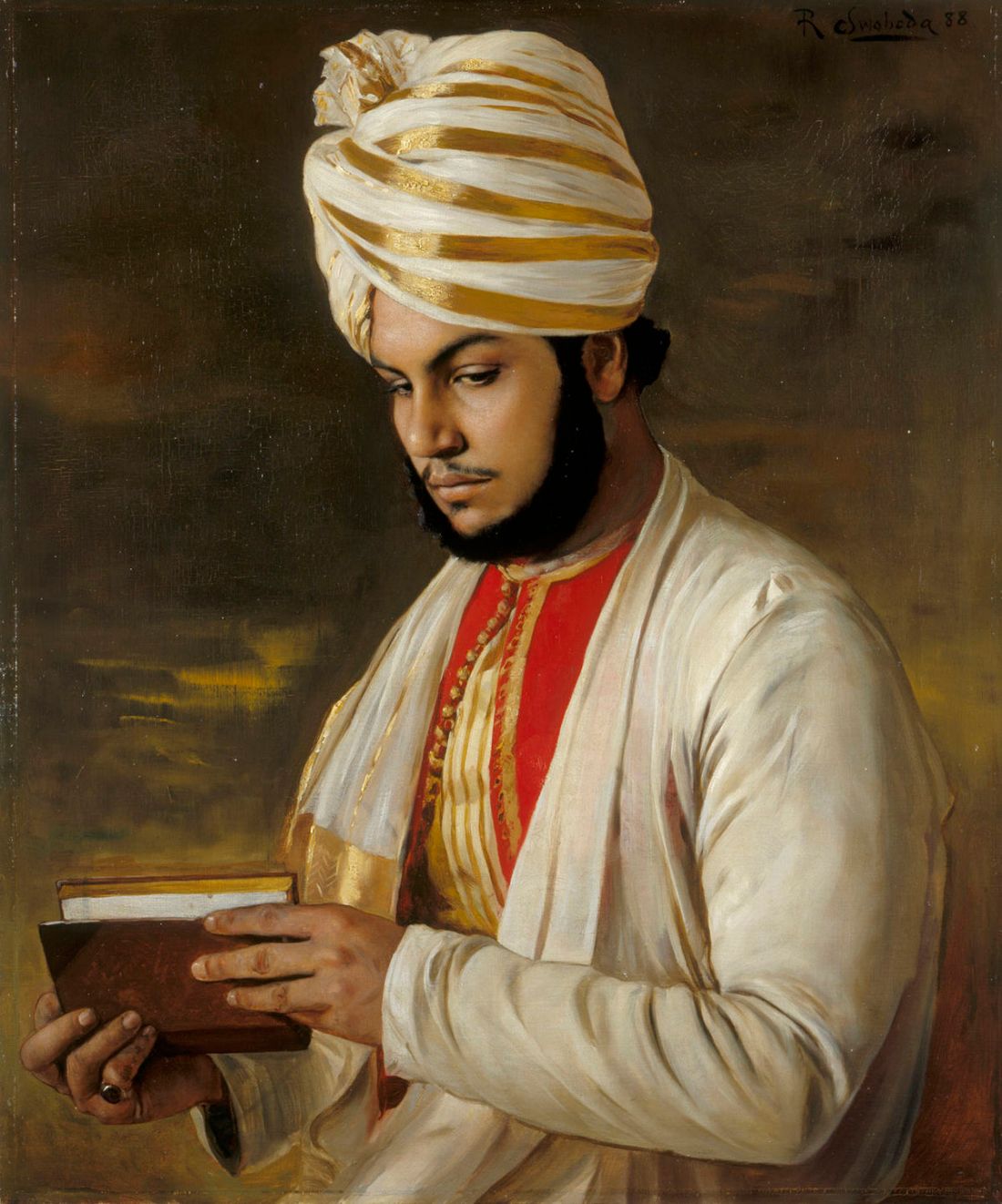
Her adult children at first were mildly amused at the attention the older woman showed the much younger—and differently colored—man. Soon, their amusement turned to concern and then to almost outrage as the relationship between the old woman and the young man seemed to be turning into one that resembled the relationship between a mother and son. The old woman would write letters to the servant, giving him gentle instruction and matronly advice in a kind, adoring tone. She asked the young man to teach her some of his native language, also. She affectionately gave him the title of “my teacher,” and she elevated him to somewhat of a personal private secretary. Such a thing was unheard of in polite society of the day.

The family became apoplectic. “This simply must not stand!” they would say to each other out of her earshot. “What will everyone say?” they wondered. “It’s an outrage!” her oldest son remarked on more than one occasion (and with some bitterness, too, it was noted). Such was the level of racism at that time that the family feared their good name would be besmirched if the young man would be seen by friends and relatives to have an exalted position in the family. And so, the old woman’s family began plotting how they could arrange to have the servant dismissed without incurring the wrath of the matriarch who had come to dote on the young man so.

But such was the special bond between the pair that the young man lived to see his benefactress die in the early 1900s. Even at the old woman’s death, the special bond between the pair was on display for all to witness. And, again, the family was outraged.

For, you see, it was neither her family—her 9 children—nor her 42 grandchildren—who saw her mortal remains as the lid to her coffin closed. No, that particular honor fell to one Abdul Karim, a Muslim Indian man.

It was he who last laid eyes on the body of Victoria, Queen of the United Kingdom of Great Britain and Ireland.