
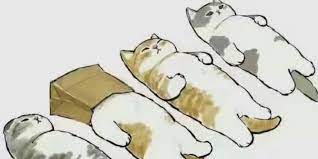
“There is no value whatsoever in this poisonous chicken soup.”
That is the official Chinese government response to a current but quiet and subtle protest in their nation. The protest is quite popular among the young adult population of China today. To try to understand it is to take a quick look at Chinese culture today and what brought it to this point of protest by the young people.
Hard work has always been valued by Chinese culture. The work ethic there makes the western Protestant work ethic look like bone idleness. Let’s also say here that competition for the best jobs in China is so fierce, so cut-throat, that any possible edge a worker can get will be used and exploited to first get and then keep a job. Towards that end, then, combined with the cultural demands to work hard, young people in China are expected to work incredibly long hours.
How long? Well, the government slogan for the Chinese labor force is a simple one: 996. That means that the minimum, the baseline for workers, is 9am to 9pm six days a week.
Yep. You heard me. And that then means that if a young worker wanted to show the boss that they were serious about the job, then they would work more than 996. How much more? No one knows the answer to that question definitively. It’s also known as the Wolf Culture, the idea of an employment version of kill or be killed. It’s an attitude shared by many other Asian countries. It’s why Squid Game resonates with them so much–they’re sort of living that on a day-to-day basis in their jobs.
And it’s killing young Chinese workers, both physically and emotionally. There’s been a shocking rise in reported suicides, depression, addictions, sleep deprivation, and other issues. It is now recognized as a national health crisis. The question is quickly becoming, as the young people see it, how do they respond to these increasingly unrealistic expectations on their work lives?
And the answer of many young people, their collective response, is what the Chinese government has officially called “poisonous chicken soup.”
These young people have decided to, in Chinese, tang ping.
What does that mean?
Well, you can’t imagine the shockwaves this simple act is sending throughout all phases of Chinese society. Employers are paralyzed with fear that they may have to either cut back production or work because they don’t have the manpower or, worse, they will have to allow workers to work fewer hours. The older generation can’t wrap their heads around the concept that younger workers simply don’t care about having a better life than they do. That mentality goes against all Chinese cultural norms, and such rebellion against the culture is seen as treason by the Chinese government.
Yet, the movement grows, ironically, more and more as a larger number of Chinese young people actually do less and less.
And what is tang ping?
Tang ping means to simply lie flat–as in staying home in bed and not working at all.
 The Rest of the Story