On a Smuggler

Ludwika (Louise) Jędrzejewicz was a most unlikely smuggler.

The daughter of a proper Polish family, Ludwika was born in 1808 in Warsaw. Her father was a Frenchman who had emigrated to Russian-controlled Poland some years earlier as a businessman and tutor in French. She and her siblings grew up being multi-lingual, and Ludwika had a relatively privileged upbringing compared to most young girls her age. Czarist Russia had control over Poland at that time, and the Polish people desperately wanted independence from their Russian overlords. At the same time, Russia worked hard to keep efforts at Polish independence and patriotic expressions among the Polish people to a minimum.

Ludwika became a musician and composer, something that was unusual for a woman in that time and place. Her music was unique and well-received; the Poles pointed to it as an example of the quality of Polish culture and creativity. She and one of her siblings, a sister, wrote anonymous pro-Polish propaganda against the Russians, too. She supported organizations that advocated Polish nationalism. In 1832, Ludwika married a lawyer, a man named Józef Jędrzejewicz. Even though the marriage produced a child, it was an unhappy pairing.

Then, in the summer of 1849, Ludwika received a letter from her younger brother, Frederic. He had moved to France to work on his own music career, and he was in poor health. He asked if his older sis could come help him, nurse him back to heath, and, maybe, help him return to Poland and the family. Ludwika agreed, much to her husband’s chagrin. Józef accused her of putting her birth family before her own child and marriage, but she ignored his complaints and went to Frederic. She nursed her brother and cared for him as best as she could, but the man had tuberculosis. He had always been thin and frail, and his body was not able to fight off the illness. He died that autumn in Paris, his loyal and loving sister at his side. However, before he died, Frederic asked his sister for a favor. He wanted her to smuggle something into Poland for him. “Take it to the church,” he said to her in one of his last sentences before his death. “Promise me,” he said. Through her tears, his devoted sister promised. Frederic was buried in Paris, and Ludwika began making her plans to return home to Poland.

By this time, Józef had left her, fed up with her loyalty to her brother. So, with literally nowhere else to go, she decided to return home to her mother’s house near Warsaw. But she still wanted to honor the departed Frederic’s wish to return “home” the item he made her promise to give to the church. And to do so, Ludwika had to smuggle the item past not only the Russian border and customs authorities, but she also had to smuggle it past the guards at the Austro-Hungarian border as well. So, she did what any decent, self-respecting woman would do. She hid the item under her dress. Surely, no customs official would search a lady’s person, even someone as rude as a Russian border guard.

And she was proved right. Her voluminous skirts proved a perfect hideout for smuggling the item back into Poland. After sitting on her mother’s fireplace mantel for a time, Frederic’s item was given to the Warsaw’s Holy Cross Church. Ludwika would mirror her brother and die young from a disease in 1855. But she felt that she had shown honor to Frederic by keeping her promise. The item she gave to the church in Warsaw is still there today, and it occupies a prominent place in the building, where it has been a national treasure ever since. It has survived revolutions, two world wars, and several occupations. And it stands as a monument not only to Frederic and his sister, but it also represents the patriotic spirit of the Polish nation. You see, Ludwika’s maiden name was Chopin. Her brother, Frederic Chopin is today one of history’s greatest composers and a Polish national hero.

And the item he had his sister smuggle into Poland, the item that is the pride of the Holy Cross Church is Frederic Chopin’s heart.

On A Polish-American Hero

Only eight people have been granted honorary citizenship in the United States. Churchill, Mother Teresa, and The Marquis de Lafayette are among them. And then there’s another Revolutionary War hero, a man named Casimir Pulaski. You may have heard of him because of several towns and counties in the US bear his name. Like Lafayette, Pulaski joined the battle against what he felt was the oppression of the British government against the freedom-loving Americans. He did this in part because he had waged a similar but unsuccessful fight as a cavalry officer in his native Poland some time before and had been exiled by the powers that were in the country at the time. That’s when he came across Ben Franklin and Lafayette in Paris who convinced him to continue his fight for freedom and against tyranny by journeying to the newly-formed United States and joining the fight there.

And, so, he and several of his fellow Polish cavalry officers did. Pulaski had come from the nobility in Poland (he bore the title, “Count Pulaski”) and, thus, had some money of his own. He used some of his fortune to finance the first true cavalry unit in the United States Army, becoming known as the Father of the American Cavalry to this day. And he fought in the war effort from north to south along the eastern seaboard; he went as far north as New York and as far south as Georgia. When he stepped off the boat in Massachusetts, touching American soil for the first time, it is reported that he said, “I came here to defend freedom, to serve it, to live or die for it.” And, with this spirit and his skills as a cavalry officer and ability to train troops in the saddle, Pulaski became a national hero to those Americans who supported the war against Great Britain. He is even credited with saving the life of General George Washington in battle.

It was in the south, near Savannah, Georgia, that Pulaski was knocked unconscious and mortally wounded by cannon fire during a charge. He was taken aboard a ship in Savannah harbor and died from his wounds two days later having never regained consciousness. The nation mourned. This brave man’s story was their story in many ways. Many Americans at the time were still immigrants from Europe; they had left the oppression of European tyrants to come to the freedom of the American lands, and, even though he was of the nobility, they saw Pulaski as one of them. He died a hero.

Well, for various reasons, what happened to Pulaski’s body after his death got clouded and confused. Some said he was buried at sea after a funeral in Savannah. Others said that he was buried on some high ground on a plantation not too far outside of Savannah. For decades, no one knew for sure. Then, in 1853, a body was found on the grounds of the plantation and tentatively identified as Pulaski’s. That body was re-interred in a memorial to the cavalryman in Savannah. But, then, in 1996, the bones were dug up and underwent a forensic study to determine if they were, in fact, the bones of the Polish hero.

The analysis took eight years.

In the end, the bones were consistent with someone who was Pulaski’s age and military background. There was an injury to the skull consistent with an injury he’d sustained as a younger man fighting in Poland. One cheekbone had a defect, and that matches with Pulaski having had a bone tumor there. And, after comparison to the DNA of a known living great-grand niece, the study said that there was strong probability that the bones were, in fact, those of Count Casimir Pulaski. But, the years-long analysis also showed something no one suspected, either when Pulaski lived or since.

That the Polish hero might have been a woman.

On a Cheating Spouse

Emily’s husband was a cad.

That’s the nicest way to put it. When the man had immigrated to Argentina in the late 1940s, he had brought not only Emily, his wife of 21 years, with him, but he also brought his mistress as well as several servants and other hangers on. Now, you might be saying to yourself that any self-respecting person wouldn’t put up with this type of behavior, that any spouse would demand that the husband or wife get rid of the third person in the relationship or face divorce.

But Emily wasn’t like that. First of all, she loved her charming and dashing husband, and she knew that, like the other dalliances, this one, too, wouldn’t last. In fact, she had made a pact with herself, knowing that he was a brilliant–flawed, certainly–and generous man. She told herself that as long as he came back to her, that she would be there, waiting. And so, she was, for most of her life.

The move to Argentina proved to be yet the latest in a series of get rich schemes that Emily’s husband pursued in his professional life. He had made money–lots of it–over the years, but, sadly, he lost it all or gave it away. His theory was that there was no trick to making money, so it didn’t matter how he spent it. He had expensive tastes in clothes, food, furniture, and, as Emily could testify, women.

The Argentina experiment failed, miserably. The man was no farmer, and the people he’s hired to help him turned out to be equally inept at raising nutrias for their fur. By 1958, the small enterprise was bankrupt, and Emily’s husband left Argentina with a promise that he would go back to Europe and make money and then send for her.

So, Emily waited.

For decades.

And her husband never returned. She never received a good explanation why. Well, she knew that he had died in Germany of liver failure in 1974 at age 66. To fill her time, Emily began adopting cats in the neighborhood, becoming, by the time she passed away in her 90s, the proverbial crazy cat lady. People who asked her about her husband were told the truth by Emily; he was a drunk, a womanizer, a spendthrift, and a man she would’ve taken back in a moment if he had ever walked back through her doorway. Others spoke of Emily’s husband in kinder, almost sacred tones, and she would often wave a dismissive hand at them.

But until the day she died, Emily insisted that Oskar Schindler was the love of her life.

On an Educational Agreement

Hearing the news in late 2022 that the conservative government of Afghanistan has banned women from pursuing university degrees reminded me of a story I’d read a few years ago. We in the west take it for granted that anyone can go to college if they wish–or not. Choice is one of the major benefits of our western political-economic systems. We often forget that, even in the western world, women attending a university was an extremely rare thing even one hundred years ago.

This story is about a pair of sisters in central Europe in the late 1800s who desired to study in a university. Their family wasn’t wealthy, but they were from solidly middle class stock. Despite having some funds, they still lacked the money for university tuition. Add to this impediment was the fact that women were often denied any post-high school education for many of the same reasons the Taliban is now using in the modern era. So, these sisters, Mania, the younger one, and Brania, the older one, entered a secret university in their country called The Flying University. This institute of higher learning provided affordable co-educational opportunities in an era where such a thing in that part of Europe was practically unheard of.

However, the Flying University provided only a limited opportunity for the area of study the sisters desired: Science, specifically medicine and physics. So, they devised an agreement. Mania agreed to work as many jobs as she could in order to pay for Brania’s education in France, a nation that allowed women to attend classes and receive scientific degrees. Then, when Brania’s education was finished, it would be her turn to work and support Mania as the younger sibling worked on completing her degree.

Mania worked as a tutor for younger students and, eventually, she moved in with a family of nearby relatives and worked for them as a governess. The agreement seemed to be working as Brania’s medical studies progressed. But, one thing intervened that the sisters didn’t foresee. The older sister fell in love. She met and married a fellow student in Paris, and her plans to work while Mania was in school were put on hold. The best she could offer was to have Mania come live with the newlyweds in Paris in order to save money. Now, you might think that this was incredibly unfair, and that Mania would have every right to be angry after working for two years and Brania not living up to her side of the bargain. However, Mania was absolutely thrilled for her beloved sister, and she took Brania up on the offer of a place to stay for a time in Paris while she sorted her school situation.

As much as Mania had worked while Brania was in school, she doubled her efforts to work and pursue her own degrees. She moved into a one room apartment nearer the school, continued tutoring, and often went without eating in order to save money for tuition. Her hard work paid off. She not only completed one degree, but she also achieved a post-graduate degree and received a scholarship to assist her with funding. The university in Paris recognized her exceptional ability and rewarded her work and effort.

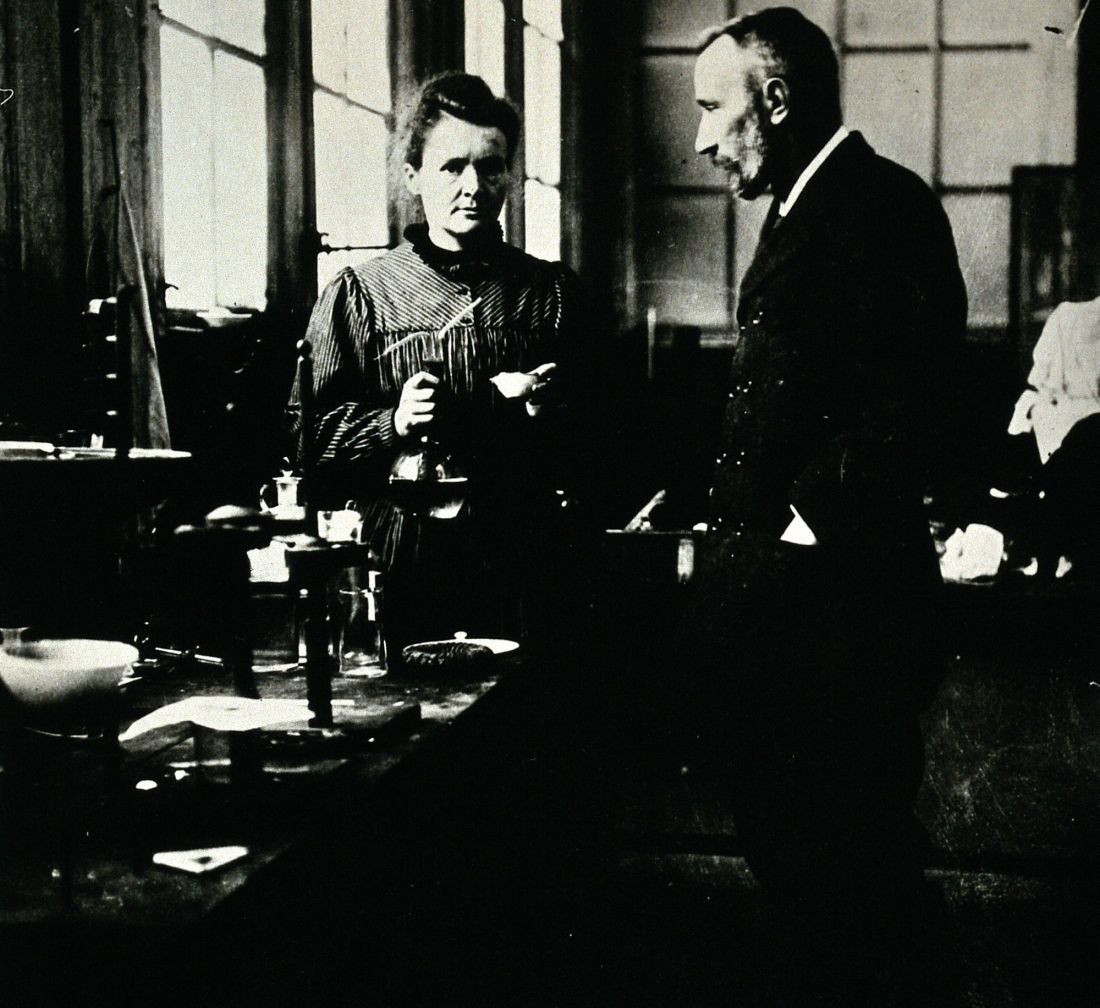
It was after her degrees were completed that Mania went looking for space in Paris where she could continue her research. A fellow scientific researcher named Pierre offered a small space where Mania could begin her work. On meeting each other, they each later reported that a strong attraction was felt. Pierre eventually offered marriage, and, after weighing how much a marriage would have an impact on her research, Mania agreed. The pair was married in 1895. So, Paris brought Mania the education she sought and a life-partner (and research partner) she never knew she wanted or needed.

Of course, Mania was the nickname her family called her. You know her by her married name in France.

Marie Curie.

On a Polish Theater Student

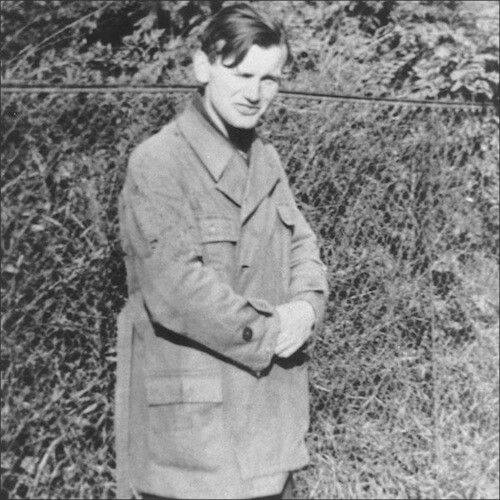
Karol loved theater. As a high school student in the 1930s, he wrote, directed, and starred in several plays. The reviews of his writing and performances from his contemporaries said that he had great promise and a bright future in the theater. He was able to enter university in the fall of 1938. We all know what happened the beginning of Karol’s sophomore year at college–Hitler and Germany invaded Karol’s homeland of Poland on September 1, 1939.

Karol and his father fled the advancing Germans on foot to the east. They managed to travel about 150 miles into central Poland when they received the news that the Soviets had invaded Poland from the east. With nowhere to run, the father and son pair returned to their town of Krakow. There, they found that the Nazis had ordered every able bodied man must show proof of employment or be subject to removal to a work camp. Karol managed to find “work” as a delivery person/messenger for a restaurant. A friend helped him arrange this paperwork, and the “job” helped to keep the German authorities off his back. He returned to his studies.

Karol felt that theater would be a way to passively resist the Germans. He saw the stage as an almost spiritual or religious place where cultural and political statements could subtly be made without the authorities being any the wiser. “He who has ears,” Karol said, paraphrasing a Bible verse, “let him hear.” For a little over a year, the young thespian managed to continue his coursework and maintain his employment situation. Eventually, he found paying work in a quarry, and this was a real job with good salary that he and his family needed.

Then, in 1941, Karol’s beloved father died. That event caused him to re-think what was important in life. He found solace in religion, and he added theology to his theater coursework. His theology connections at the university led him to helping several Jews hide from the Germans during this time. Again, Karol managed to walk the razor’s edge between the authorities and what he felt strongly God wanted him to do that was right and just.

In February, 1944, a German army vehicle struck him while he walked on the street in Krakow on his way home from the quarry. He suffered broken bones and a concussion. Surprisingly to the young Pole, it was some German officers who initially helped him after the accident. He began to see that there was good in almost everyone he met if one only looked for it.

Near the end of the war, as the Germans reeled before the swift advance of the Soviet Army, Karol came across a Jewish girl who had managed to escape from a concentration camp. She was on a train platform and had collapsed from hunger and cold. Karol helped her with some hot tea and gave her some food. He helped her–literally carried her–on a train that was going to her hometown, and even traveled with her to assist her with whatever she needed.

Years later, in 1998, the Jewish girl, who had been 13 when she encountered the nice young theater student who helped her, the man whom she credited with saving her life, met Karol again. She had tracked him down and wrote to him. He answered her letter, saying that, yes, of course; he absolutely remembered her. He invited her to meet with him, and she gladly accepted. This time, however, the meeting didn’t take place on a train platform.

No, this time, their meeting took place in the Vatican, because Karol had become Pope John Paul II.