
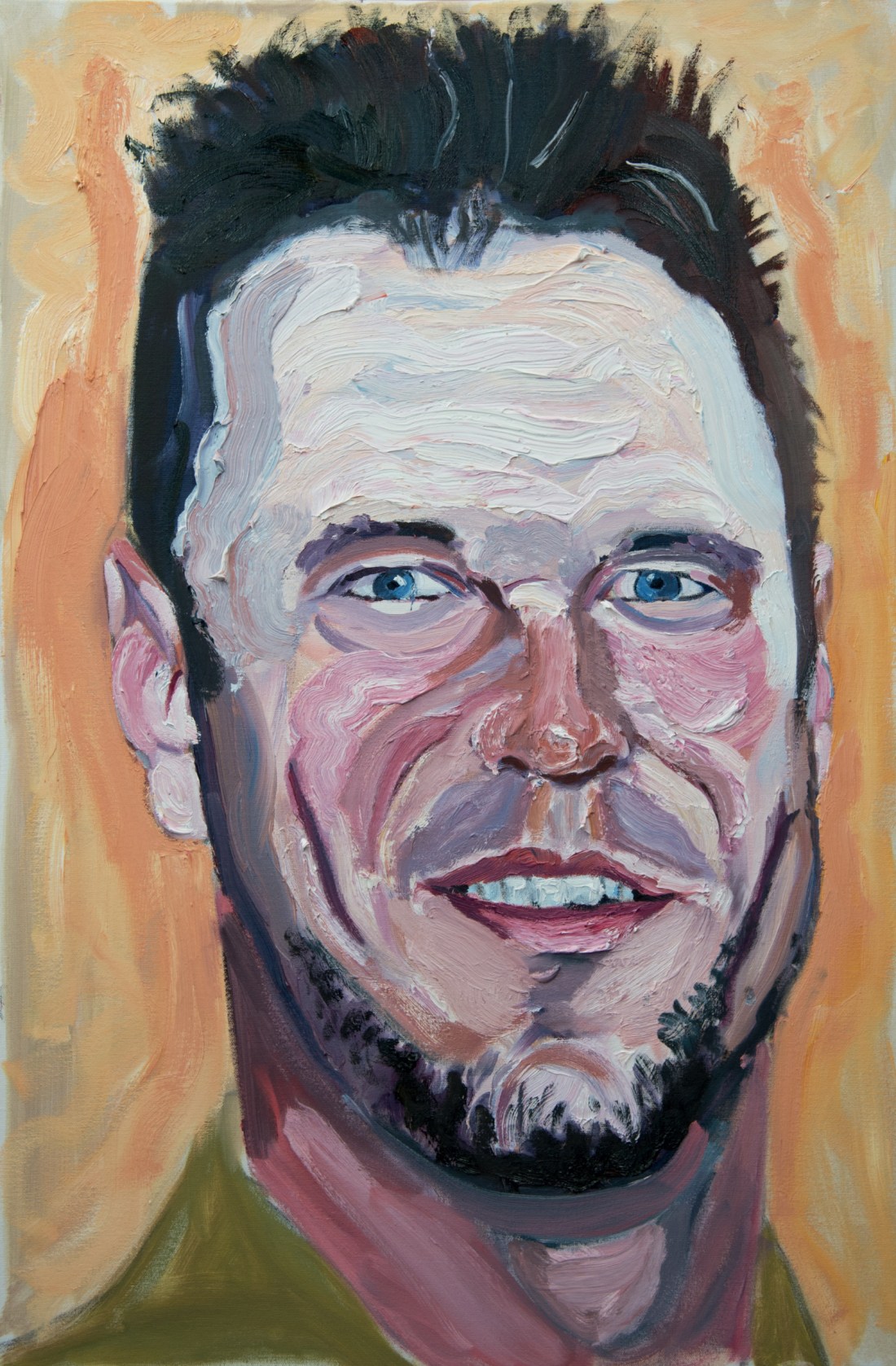
Winston Churchill found himself between government jobs in the period between the world wars. World War I had not been kind to Churchill, and, finding himself temporarily out of politics, he took up a hobby. As many of you probably know, that hobby was painting. Churchill was never a great artist, of course, but that really wasn’t the point, now was it? Painting was a way to occupy his time, a hobby, something creative at a time when he felt his political and even personal creativity had been drained from him, and before he became the great statesman that World War II would make him. Churchill wrote about his artistic endeavors in a well-received book; he was, after all, a much better author than he was a painter. “We cannot aspire to masterpieces,” he wrote, “we may content ourselves with a joy-ride in a paint box.”
That “joy-ride” that Churchill referred to inspired another recent retiree to take up the hobby for himself. He, too, found himself at a low point, bored, and no longer occupied with life away from home. His wife, seeing that her husband was atrophying mentally, suggested a hobby. Having recently read Churchill’s book on painting, this retiree decided to give that hobby a try. The problem was, well, he’d never touched a paintbrush, even to paint something as simple as a wall. He knew who Bob Ross was, but he wasn’t so interested in landscapes and what he felt was a fast and easy way to learn how to paint. No, he wanted to “do it right,” so, he hired a professional artist to come to his house and give him lessons.
The person this retiree hired is named Bonnie Flood. She was an artist and had owned several art galleries over the years. She supported herself by selling her art and by giving private painting lessons. And she came highly recommended. The issue here was that Flood is from Cumming, Georgia, and the retired man lived in Florida (Florida–God’s waiting room). Now, this particular retiree was a man of means, so when Flood protested that she didn’t live near him, the man offered to provide a place for her to stay while she gave him lessons for a month. And he seemed to charming and friendly on the phone. So, Flood agreed to go down to Florida and teach the retiree what she knew about painting.
At their first meeting, the man was so eager to begin that he could hardly contain himself. “There’s a Rembrandt trapped in this body,” he gushed, “and it’s your job to find it.” This made Flood smile. But she looked at him and decided that he wasn’t kidding completely. He really wanted to learn to paint well. And so, the older retire and the younger artist began an unlikely collaboration. Flood thought she would work with him for an hour or two a day and then have the rest of the time to see things in Florida. She was wrong. The man asked for six hours of instruction per day for the entire month. She wasn’t complaining. The pay was great, and she was doing something she loved.
The man worked quickly and learned just as quickly. He was impatient to learn and to become better at the hobby. He began by trying to paint animals like pets and horses, but he really wanted to paint portraits. Flood tried to temper his expectations by saying that painting took time. He would smile and nod and continue to work tirelessly, day after day, hour after hour. When the month had passed, Flood could honestly say she was impressed. For someone who had never painted, never done anything artistic, the man had a primitive but forceful style that was, ultimately, not too bad for an amateur. She was impressed with his enthusiasm and his focus. They’d spent so many hours together that Flood was sad their time was over. She felt proud that he’d come so far so fast.
Since 2013 when Flood taught him, this man has continued to paint and was able to publish a book with several of his portrait paintings in it. It became a best-seller. And in it, George W. Bush credits Bonnie Flood for bringing out his inner Rembrandt.
 The Rest of the Story