On Meeting an Enemy

Staff Sergeant Erwin Meier of the German Luftwaffe was a highly decorated pilot during World War 2. Unlike most air forces of today, the Germans allowed non-commissioned officer to be pilots, and Meier was one of the best the Germans had. Flying his Messerschmitt Bf-109 machine, Meier had recorded double digit kills on the difficult Eastern Front of the war by 1942. For his service and skill, the pilot was awarded medals and other air awards. And that’s why, when he was shot down by a Russian pilot, he was somewhat surprised.

The time was September, 1942, and the decisive Battle of Stalingrad had finally begun to turn to the Soviets’ way. However, the end of the struggle was still undecided, and establishing air superiority was still important to both sides. While the Germans had their faster and more maneuverable Messerschmitts, the Russians were able to counter with their own fast and nimble Yaks. However, unlike the German crates, the speed of the Yaks was because they were made of wood and that made them much more vulnerable to enemy fire.

It was a clear day when a squad of four Yaks spotted some German bombers and their fighter escorts headed for the Russian lines around Stalingrad, and the Russians closed in for an attack. Meier saw the Russians at distance, and he peeled away from his group and looped back around to come in on the Russians from behind. Now, the pursuer became the pursued. Meier’s tactic was so bold and smart that he managed to gain an advantageous position on the rear of the Russian squad leader, a man named Major Danilov. As he was squeezing off some machine gun rounds into the now-splintering tail of the Russian’s plane, Meier felt a violent jolt. Somehow, a Russian pilot had managed to come in on his tail, and his Messerschmitt was being pelted with rounds. Several Russian rounds found his engine, and the German ace realized that his plane was doomed. He veered off from his attack on the Russian major and tried to keep his craft steady while he unlatched and then pushed back the glass covering over his head. He checked his horizon and then bailed out of the doomed aircraft, deploying his parachute after he was sure he had cleared the plane.

As he gently fell to earth under the canopy of white silk, Meier cursed himself for being so careless. How could he not have seen the pilot that snuck up on him from behind? That guy must be a good pilot, Meier thought. And, when he reached the safety of the ground, a squad of Russian soldiers were there to quickly take him captive. Meier thought he knew the names of the best Russian pilots he was facing daily in the skies above Stalingrad; he had studied their tactics and their tendencies, and, in his mind as he was being questioned and moved to a POW camp, Meier ran through the list of who he thought might have been the one who shot him down using such a good maneuver.

“Would it be possible to meet the pilot who shot me down?” he asked his questioners through the interpreter. Sure, came the answer back. The Russians were happy to oblige him because they realized that a meeting between their own pilot and the German hero would make for good publicity and would boost morale in the Soviet press, good news for a people hungry for any victory in the war, no matter what the size of it. So, Meier was taken to the makeshift airfield where Major Danilov’s squadron was based. And he was introduced to Lieutenant Litvyak, a 21 year old blond Russian who looked like someone you’d meet in a school yard rather than in a deadly air duel. But Meier thought the Russians were kidding him, trying to embarrass him. Surely, this kid couldn’t’ve been the expert pilot who got the drop on him and shot him down so expertly. Still incredulous, Meier asked Litvyak to describe how the short battle unfolded. The Russian described the encounter to a tee. Meier became convinced that this, this, this child had bested him in combat. The Russians, of course, were gleeful. For his part, Major Danilov acknowledged that Lt. Litvyak had saved his life, that he was probably doomed if Meier had been able to finish him off. What made it worse in Meier’s mind was that the young Russian pilot had only been on the front for less than a week and already been credited with three “kills” including Meier. The brave and skilled Lt. Litvyak would soon be promoted to command a squadron of Russian planes and be credited with dozens of sorties and several more kills before being shot down and killed in August of the next year.

But that was long after the Soviet propaganda machine made a big deal out of the fact that the German ace Erwin Meier had been bested in combat by a girl.
On a Fresh Start

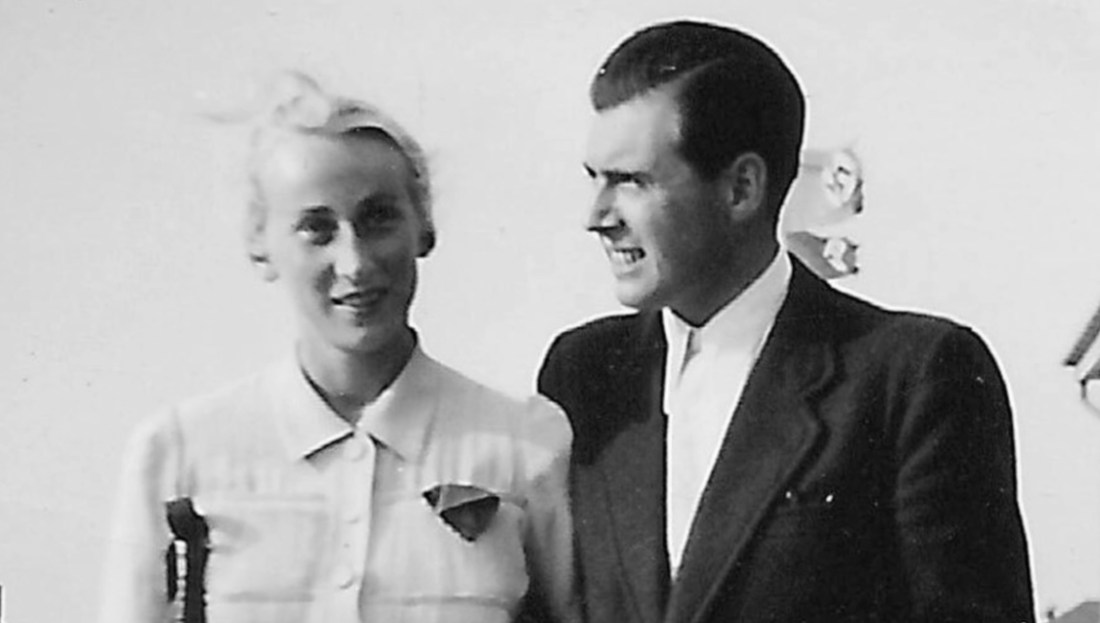
On February 7, 1979, an older man’s body was fished out of the sea near the Brazilian coastal town of Bertioga. On first look, it appeared that he had been swimming and suffered a heart attack or a stroke. An investigation along the beach found the man’s clothes and belongings. The identification card found in his things said that his name was Wolfgang Gerhard, a German national. The story of how Gerhard had come from Germany and ended up dead off the coast of Brazil is interesting and tangled.

It seems that, after service in the German Army in World War 2, the man worked a bit in agriculture in the Bavarian Alps. It was there that he decided that life in a rebuilding, post-war Germany didn’t suit him at all. He had been a True Believer, thinking that the Nazi ideal was the best future for the Fatherland. To live in a democratic Germany was simply too much to bear. He wanted a fresh start. So, like thousands of other Germans, he made his way to South America.

He sailed first to Argentina in 1949, leaving behind a wife and son. And he found work as a carpenter and lodging in a boarding house in Buenos Aries owned by another German ex-pat. Eventually, he was able to move to a better neighborhood and through some other Germans who had made their escape from Europe, he got employment as a salesman. This salary allowed him to purchase his own apartment and to travel to other South American countries. His German wife granted him a divorce, and he married a woman named Martha in 1958. During these years, he made a couple of trips back to Germany where he was able to visit with his son, Rolf, for a short time.

In 1959, the couple moved to Paraguay, and they obtained citizenship there. The man invested in several farming enterprises that made some money here and there, and he seems to have been working also with pro-German groups who were helping to hide senior-level Nazis, war criminals who had fled after the war ended and came to South America. Martha eventually left him, moving to Italy to live her life there. Rolf, the man’s son, visited him in some later years and found a man who still was an “unrepentant Nazi” sympathizer.

By 1972, his health began to decline sharply even though he was only 61. He suffered a stroke in 1976. And that brings us back to the start, where he suffered another stroke that killed him while he was swimming in the Atlantic off Bertioga that February morning. The coroner said that he didn’t seem to suffer, that the stroke killed him so quickly that there wasn’t even any water in his lungs. And, in a way, that’s too bad that he didn’t suffer. I say that it’s sad he didn’t suffer because, you see, during the war, this man who went by the name Wolfgang Gerhard had made plenty of people suffer in the most cruel and casual ways imaginable during the Holocaust.

That’s because his real name was Dr. Josef Mengele.

On an Airplane Jump

Nicholas Alkemade was a British man who fought in World War 2. His job during the war was not an enviable one–he was the tail gunner in a British bomber. That position was one that had a short life-span. Many of the men who were tail gunners never lived to tell the tales of what they experienced as the bombers flew miles above Germany during the war. You see, the tail gunner had a great responsibility. The German attack planes that were sent up to stop the bombers would usually attack the Allied bombers from below and from behind. Men like Nicholas had the difficult task of trying to fend off the attackers so that the bombers could carry out their tasks. But that also meant that they and their small, cramped nest at the rear of the plane were incredibly vulnerable. They were the first ones to see and sometimes even feel the bullets the Nazi airplanes spewed into the bombers. And, too often, the bombers retuned to England after the bombing raids with no tail gunner at all.

On March 24, 1944, Nicholas, who was 21 years old, and his bomber group were tasked with making a raid on Berlin, the German capital city. And the attack was scheduled, as many were, at night, when it would be more difficult for the enemy to see the bombers. Three hundred planes were sent on the mission. Now, once the bombers crossed the English Channel, they were over enemy territory and thus susceptible to anti-aircraft fire as well as the harassing German fighters, fighters that were much faster than the lumbering big bomber.

Nicholas’s plane, a British Lancaster bomber, had a crew of 7 men. They had dropped their bombs, and they turned for home. That’s when a small squadron of German Stukas, a heavily armed fighter/bomber, attacked. Nicholas and the other gunners tried to fend off the Stukas, but their plane was shot up badly. It caught fire. It began to spiral down towards the earth. There was nothing Nicholas could do but abandon the burning plane.

When he landed, Nicholas was quickly captured. He’d sprained his leg when he landed, so he had to be assisted by the German soldiers who captured him. The Lancaster had crashed nearby, and four of his fellow crewmates never made it out of the burning plane. Nicholas was taken to the local Gestapo (the Nazi secret police) headquarters for interrogation. That part was routine; the Nazis wanted to know the location of Nicholas’s airbase, what the number of planes were in his squadron, and other such information that might help them in the war. Of course, Nicholas didn’t reveal anything other than his name, rank, and serial number. Oh, and he told them about jumping out of the burning plane, of course.

And that’s when the Nazis began to doubt Nicholas’s story. How did he manage to jump out and survive when four of his fellow crewmembers didn’t, the Nazis wanted to know. His tale seemed too incredible to believe. The plane was at 18,000 feet (5,500 meters) above the German nation when Nicholas bailed out. Something didn’t add up about his story, the Nazis said. Yet, Nicholas insisted that his version of what happened was the truth.

The Nazis called him a liar. They made the injured man return with them to the crashed Lancaster. They forced him to show them where he was when he jumped. And then he pointed to his parachute. That’s when the Nazis shook their head in disbelief, but they had to admit that Nicholas was telling them the truth. You see, the charred parachute that Nicholas pointed to, the one that he was to use in case of the bomber being shot down, was still in the plane, still lying in the burned out wreckage of his tail gunner’s position.

And Nicholas Alkemade had somehow survived when he jumped 18,000 feet to earth without it.

On Some Logistics Help

Sometimes, you simply need a helping hand and have to call in a friend. That’s what Marie and Doreen did in 1938 when they had some difficulty with the transportation logistics involved in moving a shipment from Czechoslovakia to the UK. The women were in over their heads with the project despite the fact that Doreen was an development economist. Germany was gearing up for World War 2, and the nations of Europe were tightening their restrictions on the movement of goods and people. Marie and Doreen, needing to make a move with the project, found themselves stymied by the reams of paperwork and red tape associated with what they were trying to do. So, they called in a chum for his help.

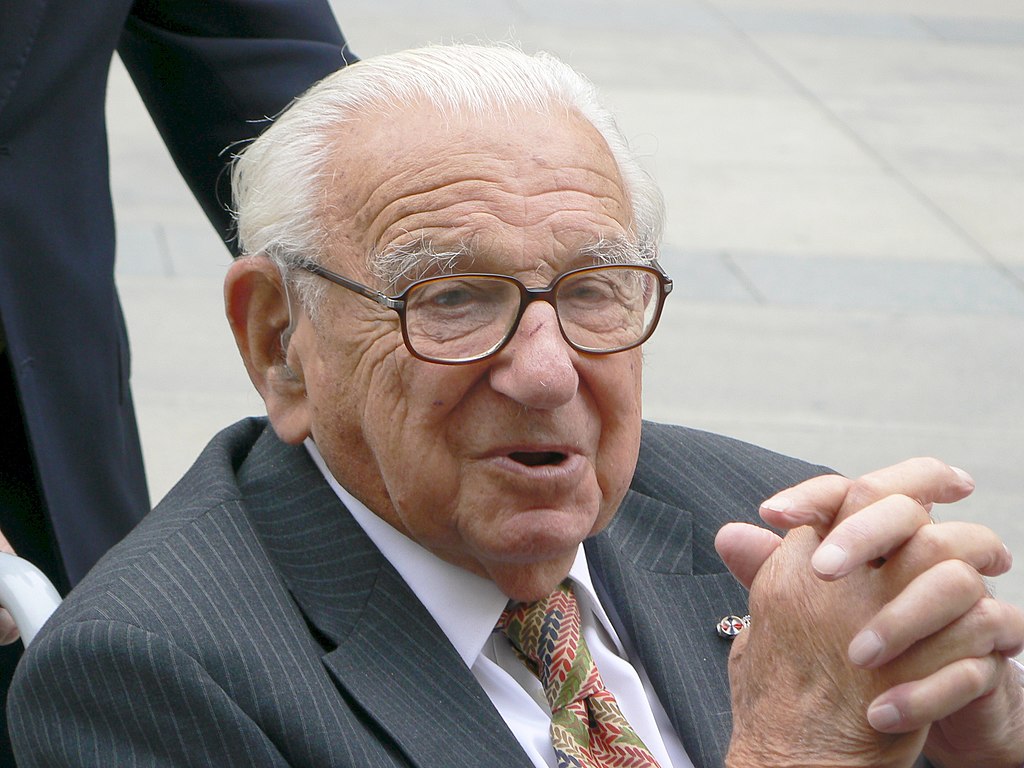
The friend they called was a man named Nicholas Winton, a UK banker and financier. Nicholas was successful for someone only 29 years old, and he had experience in the type of paperwork involved in moving across several borders. True, the system of travel was now a bit more complicated, but Nicholas knew people who knew people who could grease the wheels of transportation. So, he was a logical choice.

But it was nearing Christmastime, and Nicholas had his eyes set on a skiing holiday in the Alps. It was quite the conundrum. Nicholas had really looked forward to the vacation, but, on the other hand, here was a chance to help his friends and to see Prague. So, Nicholas altered his plans and headed to the Czech capital city.

One of his main strengths was organization. Today, if you wish to send mail to another nation or even personally travel across borders, you need paperwork including customs forms, declarations, official stamps, and other documents that will allow the movement to occur. Among the first things Nicholas did was set up a command center to handle the paperwork. He did most of his work from a large dining table in his hotel’s restaurant. There, he filled out forms, made calls, sent messages, and contacted shippers, railroad offices, and customs officials to insure that what Marie and Doreen wanted to happen would, in fact, go off without a hitch.

Of course, even the best laid plans can often hit bureaucratic snags. The Netherlands balked at the first shipment sent. They wanted some guarantee that the UK would be willing to accept the load. For its part, the British customs people sent word that a financial guarantee was needed before they would sign off on the acceptance. But Nicholas proved up to the task. He secured all the needed fiscal and customs requirements, and the project began rolling. After that first hiccup, all ran smoothly thanks to Nicholas and his excellent organizational and logistical skills.

But the shipping was only part of the issue. Nicholas also had to organize distribution and acceptance of the shipment to various places across the UK. Yet, he managed to accomplish this as well. Oh, he had help, certainly, but much of the heavy lifting here was done by him.

In 1988, when he was 79 years old, a television program in the UK brought him to its studio and recognized the work Nicholas did fifty years before.

And it reunited him with some of the 669 Jewish children he helped move out of the way of the Holocaust and find safe haven in the UK.

On an Administrative Conference

The United States is a nation of laws. In other posts, we have talked about how the courthouse is at the center of the county administration in the various towns and cities in the US. This is different from some of Europe where the church is often the center of town. Not that laws are not important to Europe, because they are. The point is that Americans believe strongly in the rule of law, and that concept lies at the center of American democracy. All American law springs from the US Constitution. So it is imperative that if some administrative action is to be enacted in the United States that it be codified into a law.

That concept is not unique to the United States, of course. I am thinking on this day of the codification of certain concepts in Germany 81 years ago. On January 20, 1942, a collection of administrators, including several licensed attorneys, eight of them holding doctorates, met in a villa in a suburb of Berlin to discuss the changing of citizenship laws in the country and how to deal with the movement of displaced persons in areas under their control.

From a purely superficial, administrative perspective, this meeting was necessary. The organizers argued that the war had created increasingly large areas of Europe to administer and had produced a large number of refugees going in all directions. By 1942, the military gains by Germany required a reshuffling of German citizenship law. And, being mostly attorneys and administrators, they all recognized the need to have these changes codified.

These reclassification proposals targeted 11 million people in Europe.  Again, you can begin to see that the administrative tasks were overwhelming in the minds of these administrators. You had to deal with transportation issues, food, clothing, healthcare, as well as housing. Not to mention the fact you were dealing with several different languages all across German occupied Europe. And the people were from several other nations and ethnicities.

And, again, these same types of questions are facing the United States today. Should we in the US grant these people any kind of civil rights that are normally reserved for citizens only? What obligations do we have for their welfare if they are not, to put it not politically correctly, of our kind? Maybe we don’t grant these refugees any rights at all, some people argue. Sadly, there are politicians in the United States who are treating the refugees as less than human.

And it may not surprise you that every one of those administrators at this conference in the outskirts of Berlin in 1942 felt exactly the same in dealing with the influx of what they considered “others.”

In fact, the codification of laws that the Nazis discussed at this meeting held in Wannsee on January 20, 1942, ultimately decided that the best and most efficient way to deal with the Jews was simply to kill them all.

On a Religious Patient

Dr. Bloch knew the woman would receive the bad news with fortitude. He knew her deeply religious belief would not even allow her to question what she felt was God’s will for her life. Sure enough, when Block told Klara about her bad prognosis, that the breast cancer was going to kill her sooner than later, Klara took the news with complete resignation and acceptance.

Six children and her husband had been Klara’s life. However, tragedy had already struck the family deeply. The husband had died some years earlier, and only two of the six children would live to see adulthood. Yet, through it all, Klara’s faith remained strong. She saw her suffering–the losing of the spouse, the loss of her other children to disease and then, finally, the cruel blow of the terminal cancer–as making her suffer like her beloved Jesus had suffered. During all her sickness, when she could, she never forsook attending the Catholic church in Linz, Austria, where she and the children had moved after her husband’s death.

They had moved to a small apartment where they could manage to survive on the small government pension the husband’s death had provided. Dr. Bloch assured the family that the cost for the cancer treatment would not be more than they could bear. This was a great relief to Klara and the family. Surgery was scheduled for a double mastectomy. Sadly, the surgeon found that the cancer had metastasized far beyond what his scalpel could reach. Klara’s oldest surviving son, only a teenager, begged the doctor to try something, anything, to save his beloved mother. So, Dr. Bloch suggested a new type of treatment as a last resort. This treatment, an early form of chemotherapy, called for direct contact of the chemicals with the infected tissue.

The pain caused by the therapy was almost unbearable. Yet, through it all, Klara’s unfailing faith kept her from grief. God’s will, she told her son, was the most important thing. This attitude of Klara’s would have an impact on him to the point that he eventually gave up on any faith at all. What kind of God would allow such a wonderful, loving mother to suffer as she did? Bloch noted the close, almost psychic bond the mother and son shared, and he watched as the son grieved so deeply as anyone he had ever witnessed when his mother finally succumbed to the cancer.

Dr. Eduard Bloch had a long career in Austria. Years later, and being Jewish, he watched with understandable concern as Adolf Hitler annexed Austria in 1938. He knew the Nazi pre-occupation with what Hitler called “the Jewish Problem” in the greater German Reich. And, so, he made plans to try to emigrate to the United States to escape the oncoming Holocaust. He sent a request to Berlin to be allowed to join his daughter who had gone to New York City some years earlier. Surprisingly, not only did Hitler allow Bloch to go, but he also ordered his private secretary, Martin Bormann, to take personal charge of the paperwork. Bloch went to New York and lived for the remainder of his life there. But he never forgot the deeply religious woman who faced her cancer fight so bravely. And he never forgot the son who grieved so deeply for his mother.

It was the same Adolf Hitler.

On a Cheating Spouse

Emily’s husband was a cad.

That’s the nicest way to put it. When the man had immigrated to Argentina in the late 1940s, he had brought not only Emily, his wife of 21 years, with him, but he also brought his mistress as well as several servants and other hangers on. Now, you might be saying to yourself that any self-respecting person wouldn’t put up with this type of behavior, that any spouse would demand that the husband or wife get rid of the third person in the relationship or face divorce.

But Emily wasn’t like that. First of all, she loved her charming and dashing husband, and she knew that, like the other dalliances, this one, too, wouldn’t last. In fact, she had made a pact with herself, knowing that he was a brilliant–flawed, certainly–and generous man. She told herself that as long as he came back to her, that she would be there, waiting. And so, she was, for most of her life.

The move to Argentina proved to be yet the latest in a series of get rich schemes that Emily’s husband pursued in his professional life. He had made money–lots of it–over the years, but, sadly, he lost it all or gave it away. His theory was that there was no trick to making money, so it didn’t matter how he spent it. He had expensive tastes in clothes, food, furniture, and, as Emily could testify, women.

The Argentina experiment failed, miserably. The man was no farmer, and the people he’s hired to help him turned out to be equally inept at raising nutrias for their fur. By 1958, the small enterprise was bankrupt, and Emily’s husband left Argentina with a promise that he would go back to Europe and make money and then send for her.

So, Emily waited.

For decades.

And her husband never returned. She never received a good explanation why. Well, she knew that he had died in Germany of liver failure in 1974 at age 66. To fill her time, Emily began adopting cats in the neighborhood, becoming, by the time she passed away in her 90s, the proverbial crazy cat lady. People who asked her about her husband were told the truth by Emily; he was a drunk, a womanizer, a spendthrift, and a man she would’ve taken back in a moment if he had ever walked back through her doorway. Others spoke of Emily’s husband in kinder, almost sacred tones, and she would often wave a dismissive hand at them.

But until the day she died, Emily insisted that Oskar Schindler was the love of her life.

On a Summer Camp

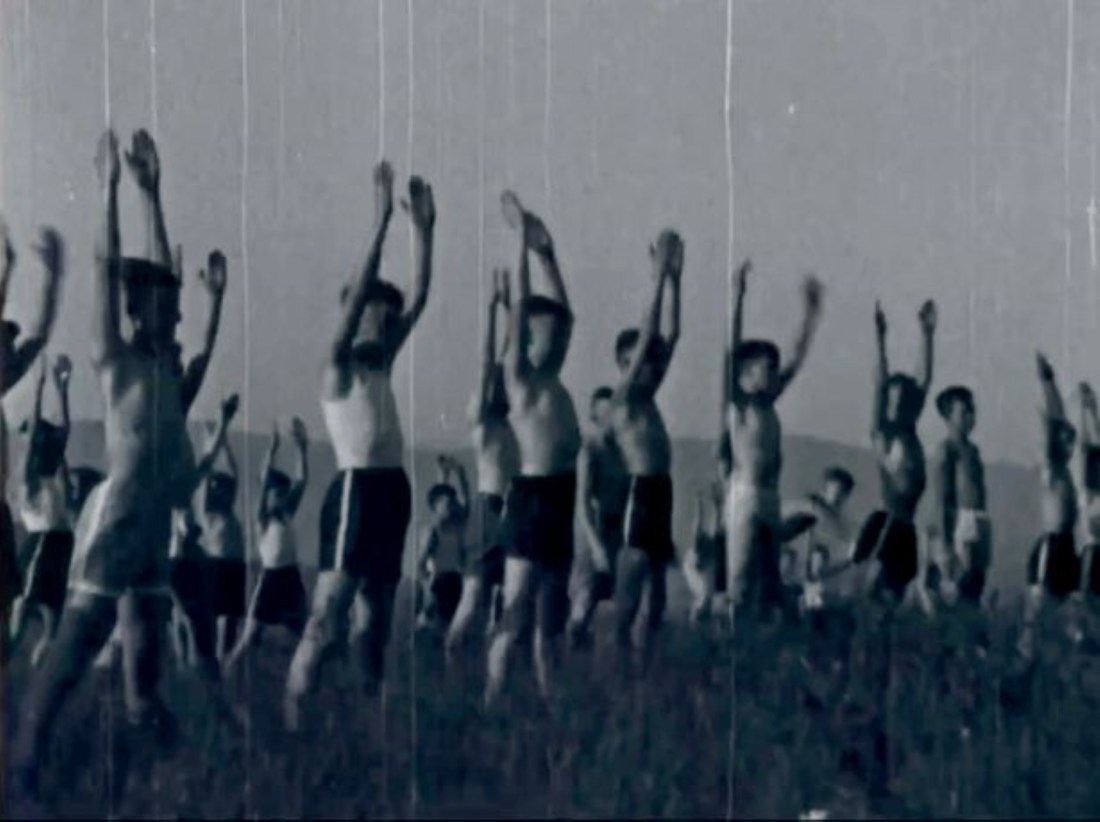
The cold of January causes many to turn their thoughts to the warmth of summer–and how we can ditch the kids for a week or even several at a summer camp. So, we bring out the camp brochures (or, at least, we used to) or look online (more likely now) and try to find one that would fit Billy’s likes or Susie’s interests. There are camps that feature learning how to animate, for horse riders, sports camps of all stripes, and even the good ol’ fashioned simply-get-out-in-nature-and-rough-it camps.

I was a camper most summers. In my college student years, I even made some summer cash being a camp counselor. Camps can be fun and places of learning and enrichment. That latter word was behind the establishment of several camps in the late 1930s in the United States. Remember that the US was still trying to come out of the clutches of the Great Depression, and, while war clouds loomed over Europe and some of Asia, in the US, we were more concerned about issues at home. And these camps were designed to get kids out in the glory of nature and teach them a thing or two.

The camps followed the Boy Scout model where boys and later, girls, would go out into the wilderness and pitch their tents, learn to cook over a fire, maybe learn firearm safety, and practice survival skills. Most of these camps also mirrored European models of getting youth away from cities and into healthy environments. Besides, having the kids away for a time could also help the family financially because they didn’t have to feed them for that time period, and we all know how much teenagers can eat.

The camps were also set up with cultural ties to Europe as well. Strengthening ties to Europe, it was said, would foster the concept of international cooperation and promote the ideas of peace and understanding between nations. Again, this was seen as being important given that Germany, especially, was rearming and making threats of military expansion against its neighbors. If American kids could understand the risks involved in getting involved in a war in Europe that seemed to be inevitable, well, so much the better. They shouldn’t interfere in any European war that might come, they were told, shouldn’t interfere like America did in World War 1, an act that, arguably, won the war for the Allies and brought German defeat.

So, in addition to the healthy running, and hiking, and playing, and survival training, counselors and camp directors instructed kids at these camps on international geopolitics. They explained what Hitler was doing and why he was doing it. They taught the history of the previous world war and how those events led the world to the brink of another war only a generation later.

In a dozen locations across the US, from California to New York, hundreds of American kids aged 8-18 were sent away to these summer camps in the late 1930s where they received the strengthening of their bodies and their minds. Please note that minorities were not allowed in these camps, however. That included Americans who practiced Judaism. Especially those.

It’s important to remember that, in the 1930s, a full 25% of Americans had German ancestry, and that percentage was significantly higher in such places as Wisconsin and Minnesota, for example. The camps targeted these populations for the camps because, well, they often still had some familial ties to Germany and would be more sympathetic towards what Germany was doing. It was important to influence these young people to grow up and promote America’s ambivalence towards German aggression in Europe or even outright support it.

It’s why the American Nazi Party set up the camps in the first place.