On a Heroine

Louise Julien died at a much-too-early 38 years old of tuberculosis on the British island of Jersey. She went there in 1853 for her health after leaving France by way of Belgium, but by the time she reached Jersey, the illness was too far gone in her weakened body. Louise had been born in Paris, the illegitimate child of a seamstress and a minor Portuguese nobleman. Louise came into the world at a time of great upheaval in the history of France. Napoleon had only recently been removed and exiled, his attempts at European domination finally thwarted. France had to get used to a new government, and the changes brought about by the French Revolution and Bonaparte’s reign were still being processed by the culture and society.

From a young age, Louise was different than other girls. Strong-willed and almost foolishly brave, she eventually married a tailor but chose to go by the last name Julien rather than her husband’s name. She made money singing in workingmen’s clubs, becoming rather popular in those circles. And that experience helped her develop a sense that workers were, by and large, still at a disadvantage in French society despite the changes the revolution had brought. In addition, she made a reputation as a poet.

In 1848, France experienced another revolution, as workers rose up and demanded more rights and accommodation in the public weal. It began in Paris, and Louise was at the forefront of the movement. The Second French Republic was proclaimed as a result, and some major changes were made in society. But then, Napoleon III, the nephew of the former emperor, staged a coup and declared himself the new French Emperor. Again, Louise took to the streets in protest, urging her comrades to march against the illegal takeover by public demonstrations. The will of the people must be heard, Louise said, and the only way those in power would hear the people’s voice would be through mass demonstrations. In a skirmish with government troops, Louise was injured and then arrested by the new government for being a dangerous revolutionary. It was in prison that she contracted the tuberculosis that eventually took her life on Jersey.

At her funeral in Jersey, the famous author, Victor Hugo, and the poet of the Second Revolution, Joseph Déjacque, gave eulogies over her coffin. Hugo’s speech in particular was so moving that Parisian newspapers reprinted it, and the story of Louise’s heroic efforts on behalf of the revolution and French workers was retold for generations afterward. But that’s not why most people remember her today.

No, we remember her for Hugo’s memorialization of her, at least indirectly. You see, when it came time some years later for Victor Hugo to put pen to paper and write the great novel of the French Revolution of 1848, he used Louise as the inspiration for one of literature’s most enduring characters. He was looking for a character who, like Louise Julien, lifted herself from humble beginnings and attempted to make her world a better place. Thus, you know Louise Julien best as the character Cosette, the girl adopted by Jean Valjean, in Hugo’s landmark story, Les Misérables.
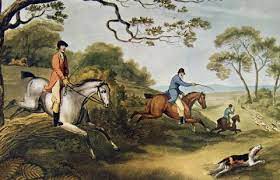
On a Hunt Gone Wrong

The history of organized hunting in Europe has generally been the story of wealthy people hunting for a sport rather than for food. Contrast that with the common folk of the UK or Europe, poor people who hunted mostly for necessity rather than the enjoyment. Practices such as fox hunting, pheasant or other wildfowl hunting, hunting weekends on estates specifically dedicated to that purpose and all the associated ephemera that goes with all of that, including people who handled the dogs, responsibility for the supply and care of the game, the upkeep of the guns, the sporting clothes that had to be prepared and created, etc. all served to make hunting on that level a large part of social life for the wealthier classes.

There was one particular hunting expedition in the French countryside that went terribly awry in the early 1800s. In this particular case, the hunted game was going to be rabbits. A certain French nobleman by the name of Louis Berthier organized the hunt for a group of fellow aristocrats. Berthier wanted to ensure that his guests would have a good time and a successful hunt. He ordered his servants and gamekeepers to provide hundreds of rabbits for the hunt. Now, most of us would say this was not very sporting; it’s tantamount to almost having the game tied down and then shot. Nevertheless, things were different during that time, and no one thought anything bad about having the prey within an easy shooting distance of the hunters.

On the morning of the hunt, the rabbits were released on the edge of a field, and the hunters moved towards the rabbits. Men moved behind the rabbits, making noises to scare the rabbits towards the advancing hunters. When the rabbits got within sight of the lead hunter of the group, something very strange happened. The rabbits seemed to attack the man who was at the point of the group of hunters. By attack, I mean that they begin jumping on him, running up his legs, and leaping up on his shoulders. The man tried to use his gun to fight the aggressive rabbits off him. He was not successful. Soon, dozens of the animals were covering the man, running up and down his body. Reports at the time said he had a full-blown panic attack. Other hunters rushed to his aid, but there were hundreds of bunnies, remember. Soon, these other hunters also found themselves covered with the rabbits. Somehow, the hunters managed to free themselves from the rabbits, and they beat a hasty retreat back towards the edge of the field from which they had come.

I say, good for the rabbits! And the man who was attacked first was given several stiff brandies before his nerves would be calmed. Interestingly, this man had a reputation for being cool and calm under fire, so it surprised people to see him so upset and discombobulated over several dozen rabbits jumping on him.

Turns out that Berthier’s animal wranglers had used domesticated rabbits and not wild ones for the hunt. All the rabbits were doing was thinking that they were about to be fed by the approaching hunters–a normal thing for domesticated rabbits. The man who was at the point just so happened to be the unfortunate guy that the rabbits attached themselves to first.

And so, on that warm July day in 1807, the great French general, Napoleon Bonaparte was defeated not by an enemy on the field but rather by some bunnies on his shoulders.