On a Bloodletting

To say that the field of medicine has exponentially advanced in the past decade is an understatement of epic proportions. Our knowledge of how our bodies work (and how and when they don’t) doubles every 80 days or so according to one source. That’s why it’s almost impossible to comprehend that, within the past 200 years, doctors often treated some sicknesses by bloodletting.

Bloodletting, in case you didn’t know, is the practice of removing not a small amount of blood from a sick person based on the idea that sicknesses were carried in the blood or that the removal of “bad blood” would aid a person’s recovery from an illness. Pints of blood were often removed from patients, almost always resulting in the afflicted person become more sick instead of getting better. Doctors of the day would usually employ a scalpel on a vein and then allow the blood to flow into a pan, large dish, or bowl. Sometimes, the doctors would use leeches placed all over the body of a patient, but this method was eventually discarded as being too slow to remove the “sick” blood from the affected person.

Part of the reason for the belief in bloodletting was that the human body contained four “humors:” Black bile, yellow bile, phlegm, and blood. If one of these four got to be out of balance compared to the others, the belief was that this imbalance would result in sickness. Since there was more blood than these other “humors,” then it was thought that the offending humor was most often blood. Oh, and don’t look now, but the practice is still occurring in some cultures.

But we wish to look at the case of one elderly American man who came down with a sickness right before Christmas one year. He had been outdoors, on horseback, for several hours in snow, sleet, and freezing rain. When he returned home, he had a chill and took to his bed. When he awoke early the next day, he was feverish and shivering and complained of shortness of breath. His wife called a doctor to come to the elderly man’s bedside. Eventually, three different physicians were summoned, and they all agreed that the patient required a bloodletting.

Over the next several hours, the medical team took almost half a gallon of blood from the patient. They also gave him an enema and induced vomiting. All of this only weakened the sick old man even more. Believing that they had simply not taken enough blood from him, the doctors opened another vein and siphoned even more blood. By the morning of the second day of after coming back from the exposure, the old man succumbed to his illness…or, perhaps, he had succumbed to the extreme loss of blood because of his doctors’ treatment. It was 10 o’clock, December 14, 1799. He was buried four days later.

Of course, today, we know that the man probably would have survived the illness if his doctors had not practiced the bloodletting. This is a case of a patient probably being better off having never seen a doctor, let alone one that practiced this barbaric therapy.

But, while we may never know for sure, most modern doctors and scholars believe that it was the bloodletting that killed George Washington.
On a Financial Advisor

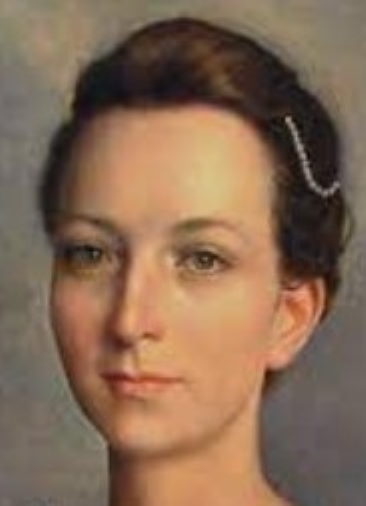
Patsy was set for life when her hubby died. Daniel passed suddenly in his early 30s, and the young widow found herself one of the wealthiest women in the country. To begin with, her real estate was in the tens of thousands of acres of productive farmland. She now possessed rental houses. She owned property totaling sums that most people only imagine. And it was all hers because Daniel had died without a will; everything passed to her as executrix.

But it was not all rosy for Pasty. She and Daniel had bore four children. You see, Patsy had come from a large family and wanted a large family, and Daniel agreed with his wife. So, she was worried about raising her children alone and managing what was now a large financial portfolio. That’s when she decided to call in someone who could help her make the best decisions for herself, the children, and the legacy that Daniel had left her.

Now, before we look at that, let’s remark that this was an incredibly attractive woman under the age of 30–even discounting the fact that she was enormously wealthy at this point. Surely a prospective life-partner would find that appealing. But Patsy didn’t want any man. She was smart enough to manage on her own, but she preferred that her attention be on the children and leave the financial matters to someone else. That’s why Patsy was really asking not really for advice on how to manage the vast wealth, but, rather, she really wanted someone to take it all on for her and do the managing so she could concentrate on raising the kids.

Now, please know that a certain man who lived not too far away from Daniel and Patsy made his, shall we say, services available to the young widow fairly quickly after Daniel was buried. He was a military man who had some decent land himself (but nothing like Patsy) that he had improved over the years. He was a few years younger than she, but his skills at managing his financial affairs impressed the young woman. So, she invited him for a meeting to see what his plans were for her holdings.

The pair instantly found a connection. There was a physical attraction between them on top of the fact that Patsy recognized the young man’s fiscal acumen. Here was someone who could manage things for her while she raised the kids, and he would be someone she felt sure that Daniel would approve of. About a year after she wore a widow’s veil, Patsy’s wedding was planned–more like a wedding with some overtones of a financial merger, perhaps.

Now, you might wonder if Patsy should have made a pre-nuptial agreement. That’s something that is common when one party is substantially wealthier than the other. But she did not. She trusted the man. His reputation for fairness and honesty preceded him. She allowed him to have the full control over all her finances–the land, the rental property, and all possessions. In return, all he had to do was insure that her and Daniel’s four kids would be looked after in perpetuity, and that she herself wouldn’t have to worry about the inheritance she’d received.

But, why should she worry? After all, it’s not every day that someone like Martha “Patsy” Custis would be so lucky as to put her life and her entire fortune in the hands of someone as honest as George Washington.

On a Freedom Fighter

The name Washington is synonymous with the American Revolution and the founding of a nation, as Abraham Lincoln said over 80 years after the fact, “dedicated to the proposition that all men are created equal.” Let’s take a moment and talk about this Washington man who fought for freedom.

His story is familiar to many, I’m sure. In 1776, he joined the fight for his freedom and donned a uniform, a man willing to die if needs be. His nation called to him, and he did not shirk from his duty. Certainly there was a price on his head for taking up arms to fight. However, he was not to be daunted.

Remember that America at that time was British territory. Even during the war itself, about 1/3 of the population still remained loyal to Britain. Historians estimate that another 1/3 was indifferent as to which government ruled them (the colony/state verses the Parliament in London), and that left 1/3 to actively prosecute the revolution like the master of Mt. Vernon did.

The range of fighting that Washington saw went from New York to South Carolina over the years of the war. He endured the same privations as the other soldiers, the same extremes of cold and hot, and the same hardships as any other man in the field. Going through all of that was better, he believed, than living under the yoke of oppression for the rest of his life.

As we all know, the British were finally defeated at Yorktown, and the resulting Treaty of Paris in 1783 cemented the freedom of the American colonies from British rule. But that’s not the end of Washington’s story. What happened next was rather unusual; when the war ended, he didn’t return to Mt. Vernon. No, instead, he boarded a ship in New York bound for Nova Scotia. I bet you didn’t know that, did you? It’s true. And over 3,000 people in his same situation escaped from American territory in the same manner.

You see, Harry Washington, an escaped slave from Mt. Vernon, ran away from Mt. Vernon in 1776, ran away from his owner, George Washington, and took his former master’s last name. He then fought in the Revolutionary War on the side of the British–and for his freedom.