On Playing Dress-Up

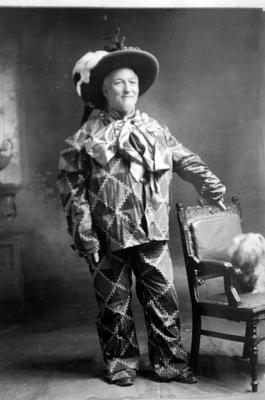
Most of us stop playing pretend games where we dress up in a costume by the time we hit puberty (except for the odd Halloween party here and there). Not James Edgar. No, James was famous for playing dress-up well into his 60s. He often donned costumes that made him into George Washington, a sea captain, a member of the first nations tribe, and other historical or interesting characters. James lived in Brockton, Massachusetts, but he was born in Edinburgh, Scotland, in 1843. When he made his way to the United States in the 1870s, James opened a dry good store in that Massachusetts town.

And James made the store a great success. His natural talent for showmanship and publicity drew crowds to the business. And you never knew who would greet you there. One day, James might be dressed as Lincoln; another day, he would be holding the door open for customers garbed as Columbus. The popularity of James and his theatrics also carried over into other businesses on the main thoroughfare of Brockton. People who flocked to James’s store would then go down the block to the diner or up the street to the butcher’s shop. The other shop owners thus embraced the wacky Scotsman and his antics.

James didn’t hoard all his wealth, either. He gained a reputation for being one of the most generous men in town. If a family needed its rent paid, James would do it. If a child had to have an operation, but the parents couldn’t afford it, James would arrange for payment with the doctor. When a young person needed a job, James would find work for that teen in his warehouse or sweeping up the store after hours. And, unusually for that time, James instituted a lay-away plan for people who couldn’t afford to pay for purchases all at once. No one was refused. And he didn’t charge interest, either. These and many other acts of kindness and charity across the years caused the grateful community to name a city park after him shortly after his death in 1909.

However, there was one character James dressed up as that is remembered most of all. That character made indelible impressions on those who encountered James dressed this way. In the 1970s, during an interview about James Edgar, one 90-year old citizen of Brockton recalled that he, “couldn’t believe my eyes. You can’t imagine what it was like. It was a dream come true. I rounded the corner of an aisle of the store, and there he was! And he talked to me!” Such was the impact that this particular outfit had on people. Families came from as far away as Providence, Rhode Island, and New Hampshire, and even the big city of Boston to see James. They lined around the block outside his store. And James, as far as we know, was the first person to dress up like this in public. Oh, of course, today, you see this character everywhere, almost on every street corner during the holiday season. But James was the first.

You see, no one before James Edgar had ever dressed up as Santa Claus.
On an Immigrant Group

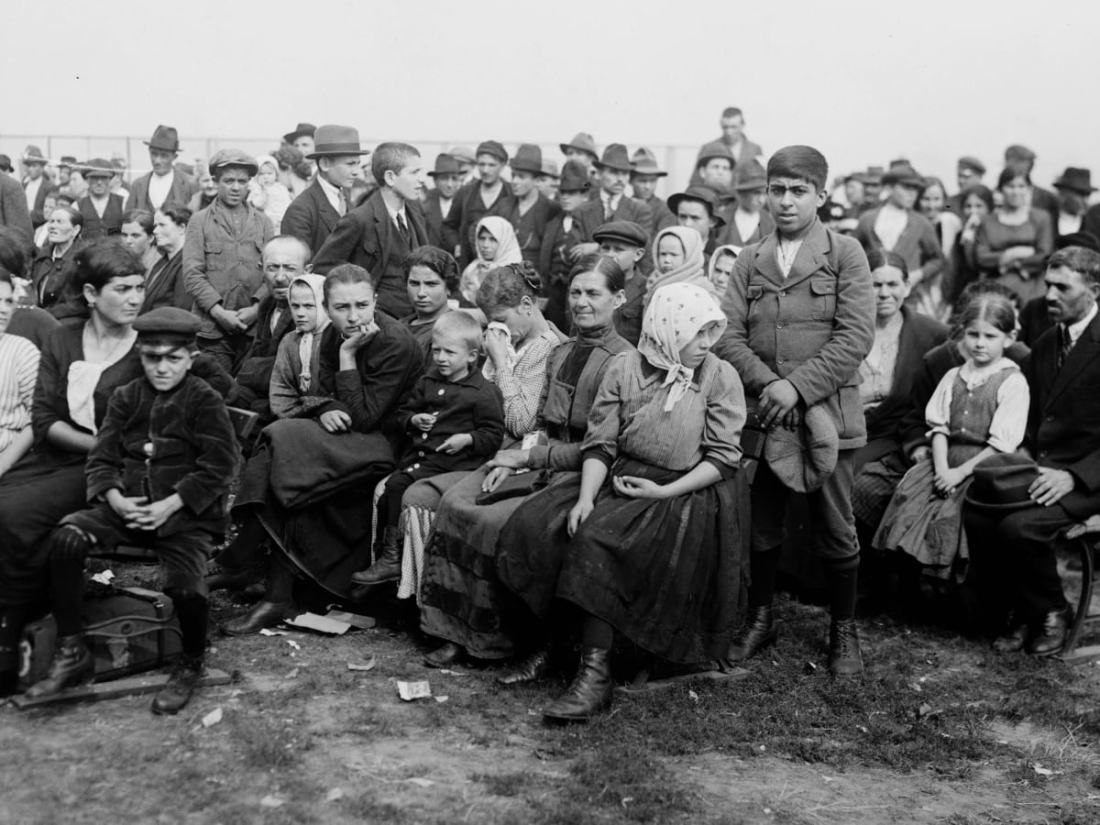
Moving to another nation can one of the most traumatic events in life even if one is leaving a bad situation and seeking a better life. A group of religious dissidents made the choice to leave their families and the way of life they knew and seek another place. These people, who had been persecuted for their beliefs in their home country, came to Holland to seek the freedom to live and work and worship the way their consciences dictated. In their home country, they had been marginalized and their livelihoods had been taken away, and they were so grateful for the opportunity to start life over again in Holland.

The small group settled in Leiden, near the university, and many of them quickly found work in the textile industry of that city. Others took up the trades and jobs they had previously had in their home country. The university made a strong effort to incorporate the new immigrants into the community; they offered free classes and training, they gave the group a place to meet to hold their religious services, and they provided language training as well to help the newcomers better fit into Dutch society.

For roughly a decade, the group flourished. But, then, they began to worry about the influence the open Dutch society was starting to have on their families. Their kids were growing up not knowing their native language. They were adopting Dutch mentalities and attitudes towards, well, everything, including inclusivity–the very inclusivity that had welcomed the immigrants in the first place. So, because of their own prejudices and intransigence, the religious refugees decided to move again as difficult as the move would be on their families and the group as a whole.

The United States would do well to emulate the Dutch with regards to how we treat those seeking the freedom to live the way they wish to live, whether they are from the US or immigrants seeking a better life. As we look at those things we are thankful for, we might do well to re-examine the basic freedoms of mankind upon which the nation was founded–the freedoms of life, liberty, and to pursue those things that make one happy.

Oh, that religious group? They looked for a place where they could raise their families free of any so-called negative influences, to create a society of their own choosing without any real oversight or control. And a place where their kids wouldn’t grow up wearing wooden shoes.

They chose Massachusetts.

You know them as the Pilgrims.

Happy Thanksgiving.

On Attacking Orleans

The town of Orleans was named, of course, for the French family of royalty.  The Valois-Orléans family provided several kings for France. But this post is about attacks on the town during two different world wars.

The first “world war” was, arguably, the Napoleonic wars of the early 1800s. Orleans was attacked by the British from the sea during this war, causing its inhabitants to develop a strong dislike for all things English. These British attacks destroyed property, livelihoods, and caused enough damage that it took several years for the area around Orleans to recover economically.  In fact, in a war some 25 years earlier, the British had even captured the town—twice. So, hostility towards the British spanned several generations in and around Orleans. 

Ironically, in one of the next world wars, the Great War, also known as World War I, these residents of Orleans found that the British were their allies in facing the Germans on the Western front of France. The Germans , like the English attackers before them, attacked Orleans by sea. The intent of the attack, apparently, was to destroy some supplies that have been stored in the town.

However, the shelling by the German guns didn’t do the damage the British had done almost 130 years before.  The attack occurred on July 21, 1918. A German submarine shot its deck guns at the town and also destroyed a tow boat and some barges. Luckily, no fatalities were incurred.

Now, it’s possible that some of you may have spotted something curious in the paragraphs above that describe the attacks on Orleans. “Wait,” you might be saying. “Orleans France isn’t a coastal town. How could the British and then the Germans attack Orleans by sea?”

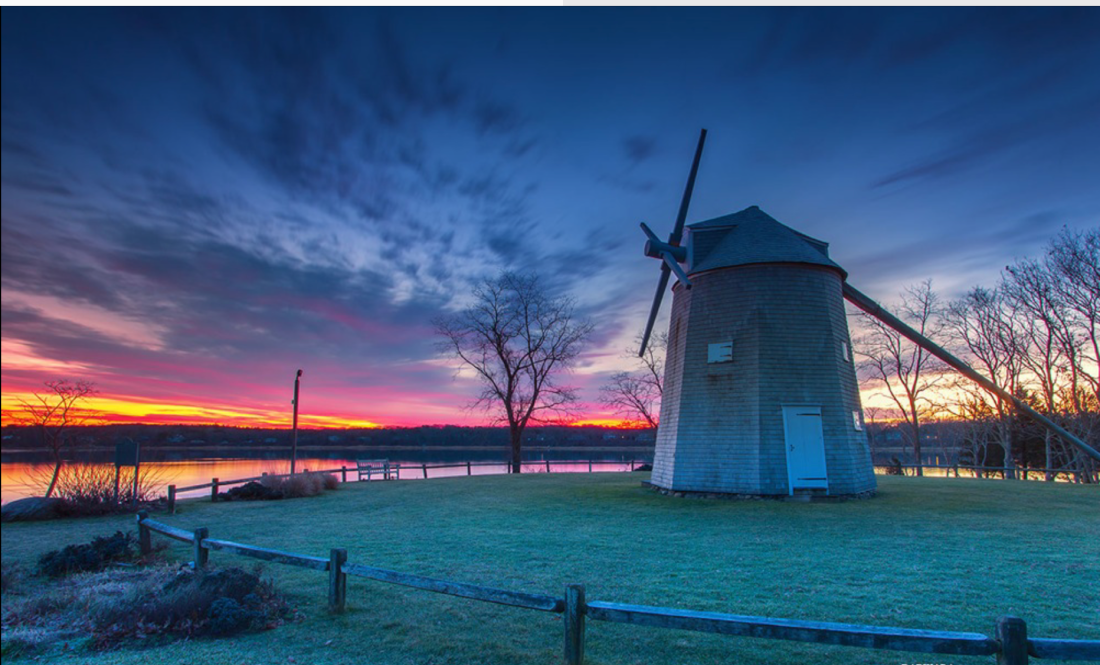
The answer is, of course, this post is not about the city of Orleans in France. And it’s not about New Orleans in Louisiana, either. No, it is about the Orleans (population +/- 6000) that is located on Cape Cod in Massachusetts.

Yes, the British captured the town twice during the American Revolution and caused damage during the War of 1812.  These attacks are why the citizens chose the name Orleans; they wanted no English-sounding name associated with their town.

However, it was the attack by the German U-boat in 1918 that really put Orleans on the map. You see, it is this attack that is remembered in history as the only time Germany attacked the land of the United States during WW1. 

True, it’s likely that the U-boat captain was only trying to damage the barges and tow boats in the harbor, causing some of his shells to miss their mark and land in and around the town. But, at no other time during World War I did Germany attack the soil of the United States—except at Orleans.