
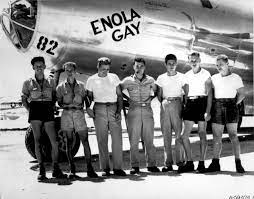
Colonel Paul Tibbets was one of the men in charge of choosing the pilots and crew who would be a part of the Manhattan Project, the development and eventual use of the atomic bomb during World War 2. A highly secretive operation, understandably, but Tibbets would help decide which pilots and crew members would form the task force that would change warfare forever as well as the world as we know it with the dropping of that weapon. The eventual crews and support staff would eventually number in the hundreds. But it all was to remain a secret.
Tibbets thus had reams of personnel files to trudge through, people who either applied for a secret project or who were recommended by superiors. This was 1943, and the war still had a couple of years to go, but yet there was no shortage of American pilots who had combat experience. But as Tibbets went through folder after folder, he was looking for something besides experience over enemy territory. Tibbets wanted pilots specifically who had experience leading people, keeping them focused and under control. So, he thought outside the box a bit.
One such pilot who seemed to have those intangibles was one named G.E. Clements. Clements had flown zero hostile missions but seemed to fit the profile for the type Tibbets was looking for. With a background as a high school teacher–who better to know how to keep people focused and calm–Clements seemed an obvious choice. After all, many of the crew members such as the gunners and radio operators on planes like the Superfortress that Tibbets’s squadron would use for the atomic bomb missions were pretty much high school age or a little older. Besides, the academic record for the pilot was exemplary–top of the class in both high school and university. The military intelligence background check on the applicant came back clean. So, G.E. Clements and the others who made this exclusive club all received invitations to join the secret operation
Once the selection of pilots and crew members went out, they all assembled in Utah, at Wendover Air Base which, at the time, was also a top-secret airfield far away from any major population center. But as Tibbets was greeting all the new pilots and crew, he was shocked to see that one of the pilots obviously didn’t qualify for the project. Immediately, he made a bee-line for the soldier who was talking and laughing in a group of some of the other pilots who had assembled. When the group saw Tibbets approach, they straightened up and saluted. Tibbets called out the pilot who was obviously the wrong choice.
“Identify yourself!” Tibbets ordered.
“Clements, sir,” came the reply.
“G.E….Clements?” Tibbets said, shocked by what he was witnessing.
“Yes, sir.”
“At ease, Clements,” Tibbets said, and the pilot stood easy. Tibbets bit his lip in thought.
“Is there something wrong, sir?” Clements asked.
“Well,” Colonel Tibbets began, “I’m awfully sorry. There’s been a mix-up. You see, this project doesn’t allow women pilots.”

 The Rest of the Story