On a Political Grudge

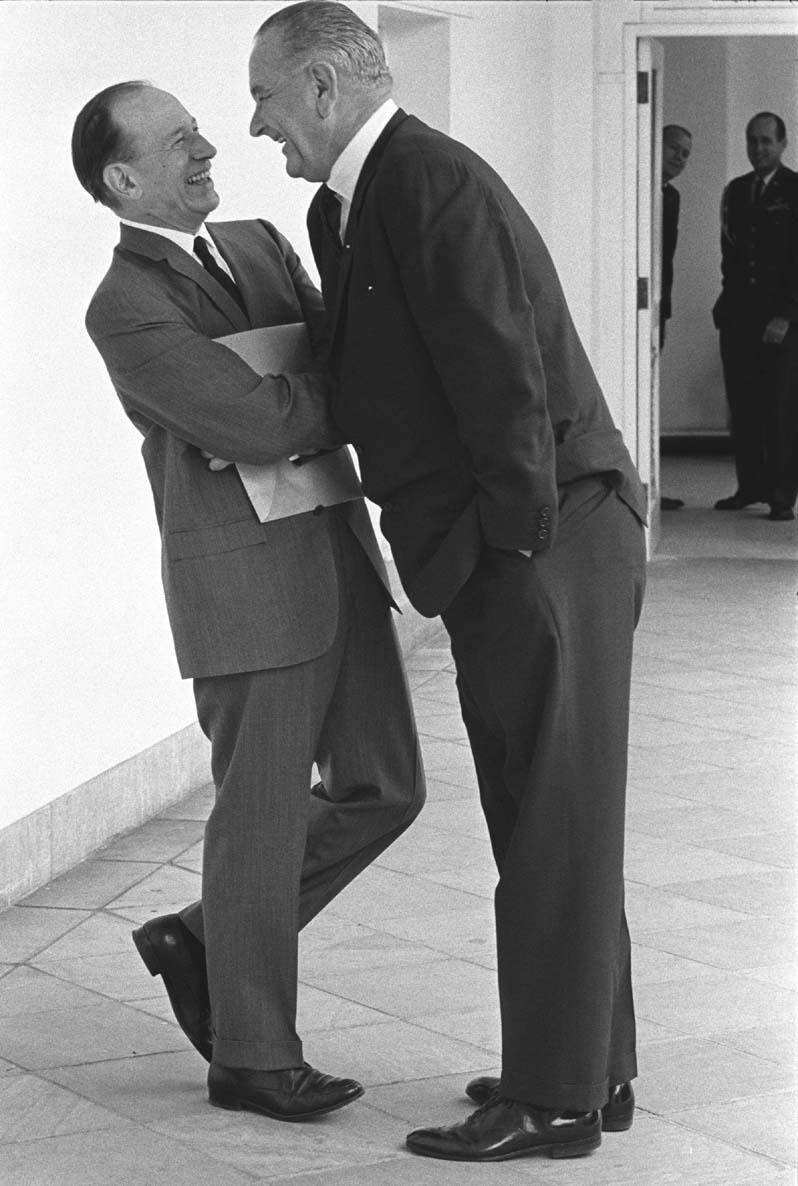
Lyndon B. Johnson was the consummate politician. As a congressman, senator, and, eventually, president, LBJ would lie, cheat, steal, bully, and threaten to get his way when it came to passing legislation. And it was not only that he could force people to do things for his agenda, but part of his power lay in his charm and charisma. Johnson towered over most people, being well over 6’4″ (1.9m) and was the consummate storyteller and mimic; he would often imitate colleagues, friends, and enemies, skewering them with dead-on impressions. And, as part of that larger-than-life persona, Johnson would often overstate his role in affairs to make himself seem more important to events that he actually was.

Take the instance of a story Johnson would often tell of how close of an advisor he had been to President Franklin D. Roosevelt in the years leading up to World War 2. Now, while Johnson was a young congressman from Texas and he did have opportunity to meet with FDR in the White House from time to time, in no way did Roosevelt consider the tall, thin Texan to be a trusted confidant. But that’s not the way LBJ would tell it in later years.

It was in January 1953, in the dining room of the US Senate in the Capitol Building when Johnson, at the time the second-most powerful man in the senate, came into the room. As was his custom, he would make his way around the room, shaking hands and trading bon mots with the other senators and their staffs. When he came to the table of the powerful senator from Wisconsin, Senator Joseph McCarthy, the senator and the staff at the table rose to shake Johnson’s hand out of respect. That is, except for one lower-level staffer from McCarthy’s office. This young man stayed seated and glowered at the powerful Johnson.

As Johnson made his way around the table, he reached the seat of the young man with the scowl on his face. Johnson knew that the staffer was purposefully being rude. You see, LBJ made it his job to know everything about, well, everybody. He knew why the young man refused to stand and shake his hand. So, in a show of power and to put the young staffer in his place, Johnson hovered over the seated man and stuck out his hand. Onlookers later said that the staffer swallowed hard, looked around the table at the other, standing staffers, and slowly stood up and offered a limp hand that Johnson took and shook vigorously. His point made, Johnson then made his way to the next table. The young staffer slank back into his chair and finished his lunch.

Later, an aide to Johnson asked him about the incident. Johnson let out a loud guffaw. He then reminded the aide of the following story, and it was a story that he LBJ had told often before. He said that McCarthy’s staffer was the son of a government appointee back during Roosevelt’s second term. During one of their meetings in the White House, Johnson said that FDR had complained about this staffer’s father. And Johnson bragged that he had advised Roosevelt to fire the man because he was a Nazi sympathizer and was antisemitic. To hear LBJ tell the story almost two decades later, it was Johnson’s advice that convinced President Roosevelt to ask for the appointee’s resignation. The young staffer’s rudeness and dislike of Johnson therefore stemmed from LBJ’s part in getting his father fired.

Of course, Johnson grossly overstated the importance of his advice to Roosevelt. The fact was that President Roosevelt had already made up his mind about removing the appointee from his post long before Johnson said anything–if in fact he had said anything at all to the president. So, while it probably wasn’t Johnson’s hand in getting his father removed from the post as much as it was that he had heard about the story Johnson told about the incident, the story about making himself out to be more important and influential than he was. You see, the young man, that scowling McCarthy staffer, he was the opposite of Lyndon Johnson. He was almost an anti-politician. He was more of a crusader, a fighter for justice and truth. To him, men like Lyndon Johnson were part of what was wrong with Washington. And the young staffer was working to bring honesty and accountability to congress. And to know that LBJ was telling untrue stories about his dad and laughing about his dad’s removal from his government appointment, well, it was all too much.

By the way, the post that the staffer’s father had held was the ambassadorship to the United Kingdom in the days before World War 2. He knew that his father wasn’t fired from the job and he also knew that Lyndon Johnson had nothing to do with his father’s resignation from the post.

And that’s why, in January 1953, young Bobby Kennedy refused to stand and shake Lyndon Johnson’s hand.

On an Old Hippie

The fact that the word “hippie” is in the title of this story instantly marks me as being old. No one uses that word anymore, and anyone who knows it was from the period 50+ years ago when it was part of the cultural and social landscape. The word came from the idea of someone who was “hip” or “hep,” as in someone who was “in the know” and “wise” as opposed to someone who had no idea about what was cool or popular or “in.” In the 1960s and ’70s, a hippie was someone who was on the side of the anti-war, pro-drug legalization, anti-establishment youth movement. The opposite of a hippie would be a “square,” someone who supported the traditional values and power structure in the western world. You could tell which side someone was on based on how they dressed, what hairstyle they wore, and the language they used as well as how they voted and what issues they supported. And, while the overwhelming majority of hippies were young, this story is about one such hippie who was older.

In many ways, this old hippie was against type for many reasons besides his age. He was from the American south, from a traditional background, and had, as a younger man, indeed supported the establishment. But, as he aged, his politics changed. There’s an old saying that someone is more liberal in politics as a youth and more conservative as they age. So, this older man went against this trope. He had seen the effects of the American policy of the Vietnam War, for example, and he became horrified by how morally wrong it was. He became an anti-war supporter. Also, he began to wear his hair longer, much longer than what traditional society would say was acceptable for a man in his 60s. Remember, during that time, men who supported the establishment would not consider having long hair. Yet, this man wore his almost shoulder length. He would decry traditionalist men as “short hairs” because they cut their hair so short like the establishment was used to.

And the music he liked went against type as well. His favorite group was Simon and Garfunkel, and the song by this duo that was his favorite was Bridge over Troubled Water. He would listen to that record over and over for hours at a time. At that time Simon and Garfunkel’s reputation was more anti-establishment and anti-war, and this man embraced those sentiments as well. Finally, his dress also mirrored that of the younger, hippie group. He wore pants that slightly flared at the bottoms, a style known at the time as “bell bottoms.” Instead of wearing a tie and dress shirt as he did when he was in his working years, he wore a loose-fitting shirt and kept it unbuttoned low on his chest. At times, he would run around his property dressed only in shorts with no shoes or shirt, his long hair flowing behind him.

That property was a farm he’d purchased a few years before. In his retirement, he worked to make it more self-sufficient, less dependent on things like chemicals and pesticides. That emphasis on environmentalism was also a mark of the hippie, and this old man saw the wisdom of embracing those concepts in an effort to get closer to the land. Ideas like this meant more to him as he grew older, because his health wasn’t good. He had a bad heart, you see, and he knew that he didn’t have much time to live. The men in his family died young, he said, and he had wasted so much time going for money and position and power instead of working to seek happiness in himself rather in the things he owned or the position he held. That, too, was a mark of a hippie–the rejection of what the establishment considered to be the important things in life. Friends from his old life would stop by to say hello, and they often left complaining about that old hippie who wasn’t the man they knew years before. “I wanted to talk business,” one old acquaintance said after leaving the farm, “and all he was interested in was how many eggs his hens were laying.”

He died of a massive heart attack at age 64, at his farm. He said that he wanted to live to see the Vietnam War end. And that’s what happened. He received a call a few days before his death telling him that the war was over. On the other end of the call, the voice of Richard Nixon said, “We’ve negotiated a peace with North Vietnam. The war’s over. I wanted you to know.”

Lyndon Johnson, the old hippie, could rest, now.

On a Shy Business Person

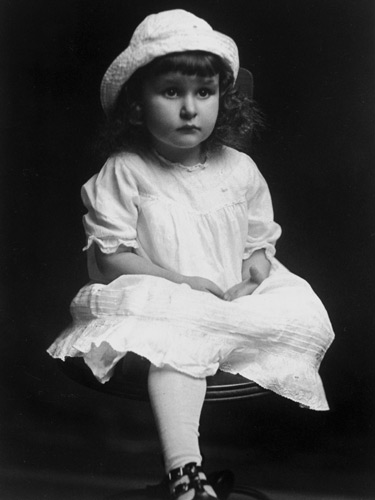
Claudia Taylor was born in Karnack, Texas, in 1912. Her father, the son of a sharecropper, had come into success as a storekeeper and eventual landowner. He was so successful that, by the time Claudia was born, the family lived in a large brick house on the outskirts of town. And the father realized that his daughter was a sharp one from an early age. The situation with her was, however, that she was painfully shy.

Oh, even someone calling out to her on the street of her hometown made Claudia blush and run into a store to avoid having to speak. She felt awkward and ugly (even though she was neither, in reality). And, her father, in his wisdom, decided that his daughter should get an education because of her intellect and, well, because it would give Claudia confidence. So, since there was no high school in town, Mr. Taylor sent Claudia to a nearby town 15 miles away for her high school education. Now, that was rare in the 1920s that rural women in Texas would get an education, but, again, Claudia herself was rare.

But the shyness stayed with her. She realized that high school was no challenge intellectually early on, and soon had the best grades in the school. When she realized that graduating at the top of her class would mean that she would have to make a speech as the valedictorian, Claudia purposefully did poorly her last semester so that her grades would sink and therefore force anther student to have to speak.

Then, it was time for college. At first, she went out of state, but she grew homesick and returned to Texas. Back home, she found a private girls college where she received her A.A. degree, then she transferred to the University of Texas in Austin. And that’s where Claudia began to bloom. She earned two degrees there, one in education and one in journalism. You see, Claudia wanted to be a reporter. She was great with words on paper even if not speaking, and she felt free to express herself on the page. And her confidence grew.

But it was also in Austin that she met a man who would become her husband. He was the opposite of her–brash, loud, and never met a stranger. And he swept Claudia off her feet. She later said that he was the flame and she was the moth. And then, as he first began work, went off to war in World War 2, and then returned to continue his career, Claudia continue to blossom. She inherited money from her father, and, despite her husband’s misgivings, she began to make shrewd investments with the funds she received. Calling back to her journalism degree, Claudia began buying radio stations during World War 2, a time when people were needing money. She knew that the war would end, and that radio stations would return. After the war, Claudia was also on the cutting edge of journalism by purchasing some of the first TV stations in Texas.

This shy woman’s investments proved so successful and ahead of their time that she parlayed the initial $41,000 she received from her father into over $1,500,000. She became a millionaire with no financial help from her husband. Oh, and, by the way, Claudia had taken $10,000 of that initial inheritance money and financed her husband as he began his career…as a politician.

You see, Claudia Taylor was known by another name for most of her life.

And like most people, her husband, Lyndon Baines Johnson, called her Lady Bird.