

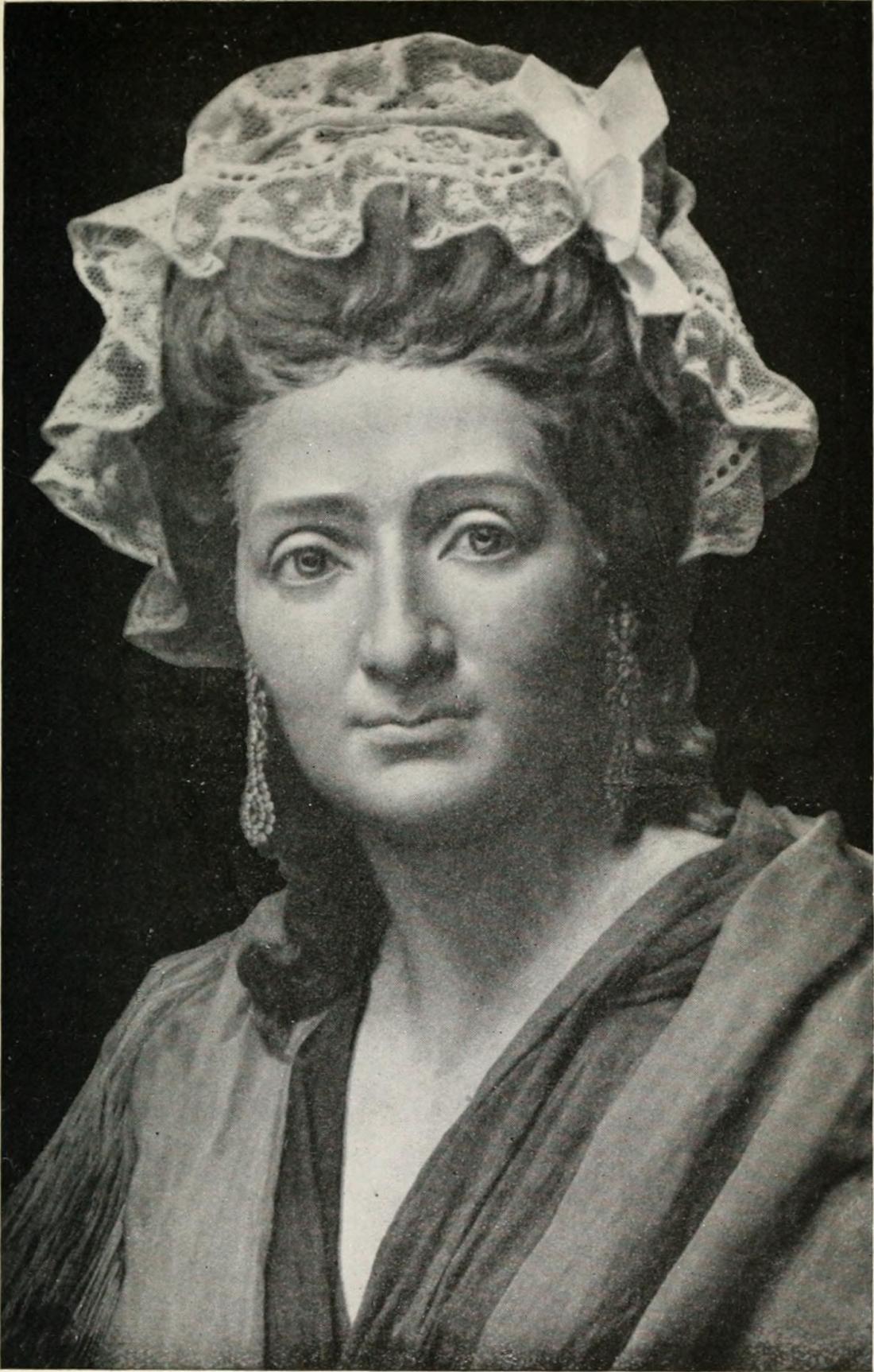
We forget that the concept of European royalty having almost absolute political and economic power over their subjects was a thing as recently as about 200 years ago. The revolutions of the 1840s put an end to most of the period of powerful reigns of the kings and queens in Europe. One of the most powerful courts was that of the Hapsburgs, and they last ruled in what was then the Austro-Hungarian Empire. You probably know more about them than you realize, including the fact that one of the most famous products of that powerful royal family was Marie Antionette, the Queen of France, who, along with her husband Louis, was beheaded on the guillotine during the French Revolution.
Marie grew up in Vienna, at the royal palaces including the large one at Schonbrunn and the palace at Hofburg. She was the 15th child of her parents, the Emperor Ferdinand and his wife, Maria Theresa. Marie, of course, would grow up to be the poster person for upper class snobbery and disaffectedness. The quote attributed to her, “let them eat cake,” supposedly said about starving French citizens who had no bread, was less about her lack of care and more about how she was raised. It never occurred to her that people would run out of bread, of course, and, if they did, well, surely they could then eat cake–because she had never done without. That gives you the idea of how isolated from how the average, common person lived that Marie’s upbringing was. And that’s why it’s surprising to find that the royal family entertained two commoners at the palace when Marie was a young girl.
This young boy was about Marie’s age, actually. He and his father had an audience at the palace at the order of Marie’s mother, Empress Maria Theresa. The man and the boy, only aged 7, came to entertain the Empress and some of her children. It was noticed immediately that the boy and Princess Marie were of similar age and size. The story goes that, during his time in the palace, the boy slipped and fell on the highly polished floor. Marie, being polite, bent down and helped the boy up. In his gratitude, the common boy is said to have said to the princess, “Will you marry me? Yes or no?” Marie was stunned and also amused. She asked him why he would ask her that. He replied, “Because you were so nice to me.” Marie is said to have giggled, and the adults thought that the scene between the two seven year olds was sweet.
While we don’t know if that event actually happened (it was told about Marie in later years), we do have written evidence that the young man did take some liberties to some degree, especially for someone who was not a member of the royal family. It seems that he climbed up into the lap of Empress Maria Theresa. His father was mortified. This was embarrassing and unseemly and an affront to the majesty of the wife of the emperor of that part of the world. But, the empress was kind and loving to the boy. She not only hugged the brash youngster, she allowed this common boy to give her a kiss on her cheek.
Later, after the father and son left the palace, Maria Theresa sent a gift to this 7 year old boy as a token of her kindness towards the family. She had some of the slightly used but incredibly expensive silk clothes of one of her sons sent to the boy. Also, the gift was in appreciation for the musical entertainment that the boy and his father provided for the court, Maria Theresa, and her young children. Of course, the real star of the recital was the 7 year old; the father, his teacher, was there to assist his musically gifted son.
And that’s how, possibly, that Marie Antoinette came to receive a proposal of marriage from a young Wolfgang Amadeus Mozart.
 The Rest of the Story