On a Wise Business Decision

Mike Smith was an Artists and Repertoire (A&R) man for Decca Records in London in the early 1960s. Decca was looking to add a recording artist to its cavalcade of popular music stars, the likes of which already included acts like Billy Fury and actress Haley Mills. Mike had the orders from his superiors to audition some acts and choose one, the one he thought would, obviously, bring Decca more fans and money.

So, Mike put out some feelers around the various connections he had in the UK. After sorting through some real stinkers and some pretty good acts, Mike decided he’d call in two of those acts who had applied and then make his decision on their live auditions in Decca’s London studios in West Hampstead. One of the groups was a local quintet and the other a quartet from the northwest of England.

Mike was a native of the London suburbs. He’d dabbled in music as a young man, learning a bit of trombone, but he found steady work as a recording engineer for the BBC’s foreign service. Many of his co-workers left that job to work for the up-and-coming company, Decca, and in the late 1950s, Mike joined them there. He soon found himself engineering for the likes of Montavani and Vera Lynn and other stars of the Decca firmament. He parlayed that role into his A&R gig under his mentor Dick Rowe, the head of the department.

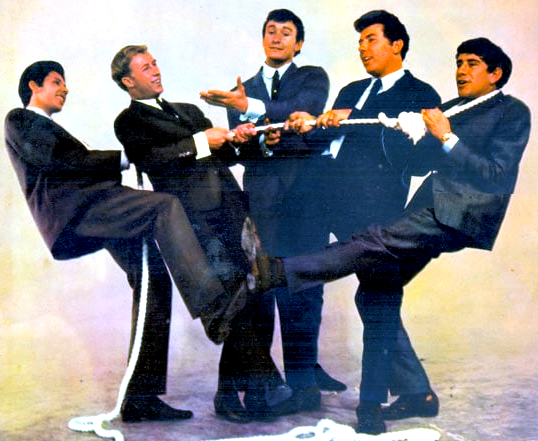
In fact, it was Rowe who told Mike that he could only sign one act of the two who were auditioning that day. The first group, the northernerns, came into the studio after their long trip south to the capital city, and Mike could tell that they were unpolished. But, when they started to play, Mike could hear the talent behind that rough exterior. He was impressed. Then, the second group came in, the local London group, and they played for him. Here, Mike thought, was a really professional group. They looked as well as sounded the part. That group was called Brian Poole and the Tremeloes. Thinking of Rowe’s edict, he offered the contract to the London group. It made sense, he would say later, because not only were they the better group on the day, but also they wouldn’t have to travel so far (at Decca’s expense) to record as the notherners would have had to do.

All in all, it was a wise business decision.

Brian Poole and the Tremeloes would go on, under Mike’s guidance, to record several top-ten hits for Decca. Later on in the 1960s, Poole would leave the group, and, as the Tremeloes, they would find fame with mostly cover versions of hits singles. Mike would follow the Tremeloes to CBS records when his request for a raise was rejected by Decca upper management, and he produced several hit records over a long and distingushed career.

However, what Mike Smith is probably most famous for is not hiring that other band, the rough quartet from the north of England.

You know them as The Beatles.
On an Unwelcomed House Guest

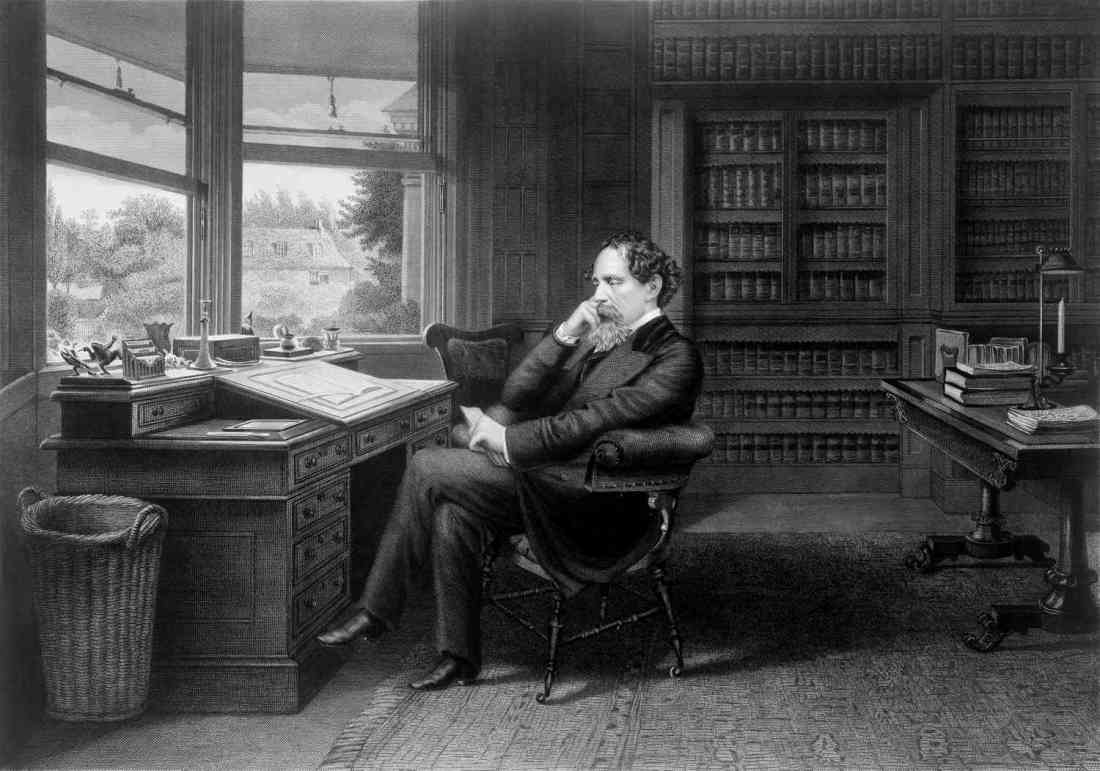
In 1847, a young would-be writer from Denmark visited London. On this trip, he had the fortune to meet the famous British author, Charles Dickens. At the time the two men met, Dickens was already a celebrated author, known for his stories such as Oliver Twist, Nicholas Nickelby, and A Christmas Carol.

Dickens thought the angular young Dane to be eccentric but interesting. After their brief meeting, the young man wrote in his diary, “I was so happy to see and speak to England’s now greatest living writer, whom I love the most.” And, when he returned to his native Denmark at the end of his trip, he wrote a letter to his new acquaintance. “Dear Mr. Dickens,” the letter began, “the next time I am in London, I would wish to come spend some time with you if you would agree.“ Dickens wrote a short note back, acknowledging receipt of the letter and said that yes, sometime in the future, a visit from the young man would be welcome. It seems that Dickens answered more out of a formality and courtesy rather than truly extending an invitation.

Much to Dickens’ surprise, the young man showed up, unannounced, at his house…in 1857. And he brought with him enough luggage to stay for an extended visit. Unfortunately, the guest’s arrival could not have come at a worse time for Dickens. The celebrated author was in the middle of working on a play in London, and his marriage was going through a difficult phase. Nevertheless, Dickens and his family did the best they could to make the odd, thin Dane feel welcome in their home.

Immediately that were problems. It turned out that he did not have a good grasp of English. Dickens noted that his French was even worse. But the language difficulty was the least of the issues. He had a habit of sleeping until almost noon every day. When he finally woke up and came downstairs, he seemed flummoxed that breakfast, which had been cleared away hours before, was not made available to him. He would take long walks in the woods and fields surrounding the Dickens house. When he was with the family, he would get a pair of scissors and made elaborate and oddly strange cut outs from any paper he could find. These amused Dickens’s children at first, but soon they grew tired of the game.

The most bizarre part of the stay was when he requested that Dickens’s oldest son, for whom the young man seems to have grown inordinately fond, be made to shave him every morning. This was something that Dickens would absolutely not allow. Thus, the young man was visibly upset that he was now forced to go into town to be shaved by a barber. Soon, he would spend most of his time in town, shopping or walking the streets. The entire household was soon in an uproar. Everyone in the family and even the servants devised elaborate plans to avoid having to interact with him.

How do you tell an unwelcome houseguest that he has overstayed his welcome? Dickens found a way, and, after five long weeks, the visitor from Denmark left the Dickens household. After he arrived back in Denmark, the man wrote to Dickens and offered an apology and asked Dickens’s forgiveness for any breach of etiquette. Even though he never completely understood why he’d been asked to leave, he must have realized the tumult he brought to the household, and he tried to repair the damage done to the relationship. Dickens didn’t reply. The two never saw or spoke to each other again. And, shortly after the Dane had vacated the household, Charles Dickens pinned a note to the door of bedroom the unwelcomed houseguest had used.

The note said, “Hans Christian Andersen slept in this room for five weeks, but, to the household, it seemed like an eternity.

On a Therapist’s Notes

The psychologist watched through the window of his office as the patient left the building. He turned to his desk, picked up a large microphone, and reached beneath the desk where a recording device stood ready.

A metallic click was heard as he began the recording. He picked up his notebook of the details of the meeting and began speaking.

Meeting Notes for Patient 1548, David W., 9 October, ’31.

Patient spoke at length today about his childhood and his formative years. He began with some of his earliest memories of being raised by a nanny more than his mother and father. Patient reported that the nanny would pinch him and cause him to cry when handing him to his mother or father so that the parents would immediately hand him back to her. He only realized this as a young man, but, at the time, he saw this as a rejection by his parents.

He then spoke about his father, who he reports was a stern disciplinarian. Such was the harshness of the father’s discipline that patient’s brother developed a stutter in response to it. Patient says he was able to emotionally disconnect from the relationship early on. On the other hand, patient spoke fondly of his grandfather and grandmother, with whom he would spend many holidays. His father, wishing the young boy to learn discipline, sent him in to the navy at age 15.

The father then decided to send patient to university, but he says that he was not intellectually or emotionally ready for academia. He dropped out without completing a degree. Patient says that his failure at university greatly disappointed the father. When the war began, the father then insisted that the patient enlist in a front-line unit, but he says he saw only limited action despite being sent to the front lines. Patient seemed a bit embarrassed by his lack of heroism in the war. I reminded him that he performed well enough to earn the Military Cross in 1916, but he waved that off. His father, he said, was not impressed despite positive reports of his bravery by his senior officers.

Patient exhibited strong emotion when speaking of the death of his youngest brother, Johnny. The boy apparently died from seizures at age 11 when patient was 23. Patient said he wrote a strongly worded letter to his mother and father, accusing them of keeping Johnny caged in his room like an animal, and that his body was discovered much later after the seizure. Although he claims he “barely knew” his little brother, he felt it incumbent upon himself to chastise his parents for their neglect. When asked why he felt it was his responsibility to speak on behalf of a brother he had no close relationship with, patient tearfully admitted that he was writing his parents to take out his own lack of relationship and responsibility for his younger sibling and project it on her.

Patient agreed to return next week, and said he wished to speak of his new relationship with an American divorced woman.

Transcribe and put into patient’s file.

The psychologist turned off the recording device and sat back in his chair. He looked out the window at the London street that bustled with traffic. He let out a small sigh.

No one said that being a therapist to Edward, Prince of Wales, and next in line to the throne of the British Empire, would be easy.

On an Uncivil Servant

Manninagh KateDhu was born on the Isle of Man in 1963. From a young age, she was doing her part to help her community. Her first job in government came through an appointment to Board of Agriculture and Fisheries on the Isle of Man. Apparently, she was competent enough in that position that the Lieutenant Governor of the Isle of Man recommended her to a post in the Prime Minister’s offices at No. 10 Downing Street in London. Manninagh flew to London and was received formally by the Home Secretary at the time and began working at the offices.

However, from the start, there was trouble. No one in London could pronounce her name (much less spell it), so they all called her Peta because the previous holder of her office was named Peter. That didn’t seem to sit to well with her. And despite receiving pay for the work, “Peta” seemed to actually do little. Her disposition wasn’t the best, you see, and her personality rubbed many people at No. 10 the wrong way. Job performance reviews from the time said that she was lazy, she was loud, and uncouth as well as lacking in proper hygiene. You would think that such a review would warrant a dismissal from such an important office in the British Government, but, well, that never happened.

Word of this uncivil servant in the cabinet offices soon spread. Newspapers spoke of the ill-tempered worker from the Isle of Man, and the public became interested in the story. Interestingly, people began writing letters to Peta. They told her things such as keep up the good work of being someone who was more like them–just a commoner in the halls of power. The public somehow related to someone who didn’t like her job and did the bare minimum to keep from being fired. In many ways, Peta became a sort of folk hero, a typical Britisher in and among the elite and mostly upper and upper middle class government of the United Kingdom.

Meanwhile, Peta gained a reputation for spending inordinate amounts of time in the area of Trafalgar Square pubs and restaurants where, trading on her new-found fame, she ate her fill several times over. She never seemed to date or have companionship on these outings. And people at the office began to notice that she was becoming, well, morbid obese. And, with the weight gain, Peta also became testier if anything. A spat with a member of the Prime Minister’s household didn’t help matters. There were reports of her starting fights with other staff members. And a movement began to have her sent back to the Isle of Man.

However, that was almost impossible to do. You see, the Isle of Man enjoys special status in the United Kingdom.

To send an appointee back to the island would be considered a slap in the face of that semi-self-governing island. There was also the potential public backlash if this “commoner’s heroine” was let go. So, the Prime Minister’s office found that they were forced to make do with this most uncivil servant.

Peta managed to work for three Prime Ministers of the United Kingdom over her career. The way the office got rid of her finally was that she retired and moved in with another civil servant in her dotage. Never married, she passed away in 1980 at the ripe old age of 17.

Not a bad life for a Manx cat that was a really bad mouser, eh?

On a Famous Epicure

It’s no secret–I love food. Now, you’d think that someone who loves food has a finely developed sense of taste as to quality and class, but, in my case, you’d be wrong. My tastes are decidedly “of the people” and not refined in any way. An epicure, on the other hand, has refined taste. This type of person knows what wine goes with what course, what cheeses and fruits pair well, and how to appreciate a good meal. Think of someone who really knows fine art and apply that principle to food and you have a decent definition of an epicure.

The epicure in question here is one Edward Dando. He lived in London in the early part of the 1800s. The man was known for frequenting the finest restaurants in the city and leaving his appreciation for his food with the proprietors and chefs. Dando’s life was cut short, sadly, when he caught Cholera during an outbreak and died at the early age of about 30. However, Dando crammed as much living as he could in those 30 years. But part of that life of great food and incredible sensations of his refined palate included a taste for good clothes as well. In fact, Dando was heard to say that his reception at the good restaurants was much better because he dressed as well as he could. The food was somehow better, he argued, because the restaurants thought he was richer because of his clothing.

But that’s the thing. Edward Dando wasn’t wealthy. And that’s the interesting thing about him. And don’t assume that Dando only ate at the poshest places; no, he allowed his taste buds to lead him to even the most common establishments because they, too, can prepare good food even if the upper crust turns their noses up at the locale. So, Dando often ate his way across the spectrum from low brow to high brow establishments.

And he had a special gustatorial affection for oysters. Oysters were consumed by people in England by the millions. It was the one food that all social classes ate with gusto. And Dando ate them by the dozen…dozens. He washed them down with ginger beer and bread with copious helpings of butter. And despite eating more than two or three men at one sitting, Dando remained a thin man all of his short life.

But his reputation as a gourmand grew so large that songs were written about him. Newspapers followed his exploits. He became somewhat of a folk hero in his time. Famous writers like Thackery and even Charles Dickens penned stories and letters describing his eating exploits. Dickens even compared the man to Alexander the Great; he joked that, one day, Dando will cry because he will have eaten the last oyster in the world, and, like the Macedonian when he came to the end of the known world, he will weep because there will be no more oysters to conquer.

As I said, Dando died at age 30. You may wonder how he paid for such extravagant dinners, how he could afford to eat at the best (and sometimes the worst) restaurants in London. Well, wonder no more. The answer is simply that Edward Dando simply didn’t pay for his food. And it wasn’t that the restaurants allowed him to eat his fill for free. No. In fact, the opposite. It seems that Dando was able to go from one restaurant to another, eat more than would kill a normal man, and then simply refuse to pay the bill.

On a London Café

You can’t spit in Edinburgh these days for a coffee shop. London’s almost the same. Here’s a story about such a place that opened in London a while back. And it’s a typical story of a mix of cultures coming together in the British capital city as is often the case. The man who started this particular café was a Greek immigrant named Pasqua Rosee. He came to England to work for a man he’d met in Turkey a few years before. Now, to be fair, Pasqua was planning to work clandestinely. But he still had the drive to open a coffee place in London and make it like the coffee he had growing up–a confluence of Turkish and Greek tastes that he felt would appeal to the sophisticated palates of Londoners.

You see, Pasqua had worked as sort of a butler or servant for a London resident named Dan Edwards when Dan lived and worked overseas. One of the jobs Pasqua had was making coffee every day for Dan. And Dan raved about it. He praised the Greek man, telling him that there wasn’t anything like Pasqua’s coffee in London. So, believing his employer, Pasqua took the chance and bought a ticket to England. He had saved some money, but he knew that his illegal status would preclude him from actually owning the business and, besides, he simply didn’t have the contacts. But Dan had his back. Dan provided the “face” for the legal stuff and let Pasqua’s coffee-roasting and brewing skills do the actual work.

The called the coffee shop, simply, Rosee, after Pasqua’s family.

Dan also helped Pasqua get some baristas to help in the business. One man, Kitt Bowman, was a family friend of Dan’s who decided to invest in the business as well as work there. And the location–which we can all agree can make or break a business–was superb. It was right in the financial district, not too far from the Royal Exchange, and the clientele and market was upscale people who had disposable income. The business was a success soon after opening. The place was packed. People raved over the taste of Pasqua’s coffee. People kept asking him to sell his secret of how he achieved the great tastes of his roast, but he wouldn’t budge. Kitt and Dan were supremely happy. Word of mouth soon made it the most popular coffee place in London.

But, then, the coffee shop’s luck ran out and disaster struck. A fire in a nearby location swept through the adjoining buildings and destroyed the establishment. However, Pasqua wasn’t in the country at the time. It seems that his lack of legality in England had somehow caught up with him, and he was forced to leave the country. Kitt carried on for a time until he grew sick, and then, the fire finally killed Rosee. But the way Pasqua made coffee didn’t die with Rosee. Within a few years, over 500 coffee places had sprung up in London and the surrounding villages using his roasting and brewing methods.

Oh, and that fire that destroyed Rosee? It was the Great Fire of London.

You see, Pasqua Rosee opened London’s very first coffee shop–back in 1652.

On An Old Man’s Conversations

George really was a man who enjoyed simple things, but he was no simpleton, he. Some of his friends called him “Farmer George” because he liked to dabble in agriculture (even though he lived in the city, mostly) and because of his liking for things like food, family, and laughter. All in all, a good man who married a good woman and had a bunch of kids.

15 to be exact–9 of them sons. The last two boys were born to George when he was an older man. It was these last two sons that George talked to more than the other children that he and his wife had. You see, George had some health issues as he aged as many of us do. He became bedridden, and the younger children around him were all he saw as the older ones were grown and gone by that time. So, George amused himself by talking to the two younger boys, Freddie, the 9th son, and Eight–yes, George named his 8th son Eight–for hours on end.

The boys never complained about their father’s long talks with them. Oh, he would ask them questions often, and he would listen intently to their answers, but most of the time in his bed-ridden state, George would simply talk…and talk…and talk. And while young boys being that patient with an elderly father seems unusual, you’ll see why the never grew bored with or tired of their father’s attention.

And it’s not that George ignored the rest of his family. Unusually for his day, George doted on almost all his children. The oldest and namesake, well, he was different than his dad. George, Jr., wasn’t fond of the simple things like his dad was. Those two men never really “bonded” as is the phrase today, but what inheritance the older George left when he died went almost all to George, Jr. No, the older George would carry his younger children around on his shoulders, he’d toss them in the air, he’d play games and always–always–remember their birthdays and special events in their lives.

So, for the years preceding his death in 1820, Old Farmer George talked to his two youngest sons about life, death, God, toys, travel, the stars, and even shared secrets with them that no one else knew.

Sadly, the boys never heard what their father said to them.

That’s because both of them had died several years before. Eight–whose name was actually Octavius–died in 1783 at age 4. And Freddie–Alfred–had died at age 2 in 1782.

You see, in his madness, King George III of Great Britain and Ireland, talked long hours to the precious sons he had loved and lost.

On an Air Raid

Everyone knows about the German bombing of London during the war. We see something similar on the news in 2022 with the Russian air attacks on the Ukrainian capital, Kyiv. However destructive and terrorizing the Kyiv attacks are–and they are–the bombings of London were a shock for a world not used to attacks on the civilian population during the war.

You see, it was the German mentality that war was not only waged by the military, but that it was also fought and supported materially by the civilian population. The chances of German success on the battlefield, the theory went, would be greatly increased if the population that supplied the opposing army would be itself harmed and its ability to supply that army stopped.

Thus, on September 8th, in the war’s second year, the British capital city was first attacked by the air. Massive damage resulted. Twenty-two civilians were killed, and six of them were children. The Germans were promptly labeled “baby killers” by the British public. Besides the blackout orders and bomb shelters that were put in place, anti-aircraft batteries were moved from other places to London to provide improved protection against future attacks by the German air force. Searchlights crisscrossed the night skies above the dome of St. Paul’s Cathedral and Buckingham Palace.

The Royal Flying Corps (RFC) also fought bravely to combat the attackers. As the bombings of London increased, the pilots of the RFC took to the air to defend the population. Lt. William Robinson became an instant minor celebrity in Britain for being the first RFC pilot to shoot down a German aircraft during the raids. It seems he was the first to discover the tactic of flying much higher than the German raiders and then attacking them from above. The Germans, much more interested in the placement and release of their deadly cargoes as well as the deadly anti-aircraft fire from below, didn’t expect attacks from above. The tactic changed the course of the air war above London.

By the war’s end, almost 3,000 Londoners had either been killed or seriously wounded by the bombings. What the Germans didn’t kill was the fighting spirit of the British people. In fact, the bombings may have galvanized English public opinion to fight the war to a successful conclusion at any cost. Some of the citizenry felt a sense of pride that they, too, had been under fire during the war. But London would suffer much worse two decades later. In fact, almost ten times worse.

Yes, the German bombings of London in World War I–first by zeppelin, then by large bombers–as terrible as they were, paled in comparison to the London Blitz that would take the lives of 20,000 Londoners in World War II.

On a Working Woman

You probably know that the title of this tale is a somewhat sexist euphemism for a prostitute. The person in this story was indeed someone who sold sex for money. Her name was Mary Ann Nichols, but she went by the name Polly. Polly Walker was born in Victorian London as the second of three kids to a working class family, and her prospects for life were not good from the start as you can imagine.

At age 18, Polly managed to find a husband, a man named William Nichols. She would eventually have five children with William. He made enough money to support the family (but only barely) as a printer’s machinist and repairman. However, Polly drank. Her drinking brought even more hardship to the family since money that should have gone to the rent and food went instead to her addiction.

Finally, William was done; he had enough. He took the children and left Polly. That’s when Polly first started to sell her body for money to buy liquor. She stayed for a time with her father, but her drinking and their arguments led him to kick her out of his house. Then, for a time, Polly found work in a household of teetotalers, religious folk, and she saw that job as a way to straighten her life out. She wrote a letter to her dad and told him that she had turned over a new leaf in life. Her future looked better.

Unfortunately, the lure of alcohol proved too much for poor Polly to fight. She stole money and clothes from the family and left them. For a time, she slept on benches and public squares in her area of London. Finally, she found lodging with a woman in a single room, sharing the woman’s bed for 4 pence a night.

The evening of August 30, 1888, Polly had spent in a pub called The Frying Pan. She left shortly after midnight and staggered back to her lodging. The woman demanded payment for the night, but Polly had spent it already back at the pub. She walked out about 1:30am and said she’d have no trouble getting the money; she’d be right back.

A friend of hers saw her a few minutes later, and Polly related the story to her. “I’ve made my money several times today,” she supposedly said to the friend, “and there’s no reason why I can’t make it again.” She staggered down the street, looking for someone to pay her enough to go back to her bed.

Sadly, Polly never made it home.

Very early the next morning, two men found Polly lying on a sidewalk, drunk and passed out, they supposed at first. The two men had a discussion about whether or not to prop her up against the wall of a nearby building, but they decided to leave her be. A policeman on patrol came up and, in the early pre-dawn gloaming, held his lantern close to Polly’s face to see her condition. It was then that he policeman discovered that Polly Nichols was not drunk, but she was lying dead in a pool of her own blood.

You see, it later came to be understood that the man Polly Nichols met later that late August morning was none other than Jack the Ripper.

On an Uncouth Tourist

Americans have a reputation of being some of the most uncouth and self-centered travelers anywhere in the world but particularly in Europe. Perhaps it’s the American educational system that fails to properly prepare people by not providing them a broader view of the world. Maybe it’s that Americans are so self-centered that, if it doesn’t concern us, we simply tend to not care about it. For whatever reason, the reputation of many Americans who travel overseas is not a good one. In fact, you may sometimes hear the phrase “Ugly American” to describe someone from the United States who is unaware or unconcerned with another culture, language, or customs while traveling.

Case in point, a man in his 70s from the United States who visited France. What made this particular tourist noteworthy was that he had some money. He also had some education, so that excuse for his uncouth behavior in Europe doesn’t hold up. What is beyond dispute is that his actions shocked the people he encountered on his trip. For example, in a nation like France that is known for its haute couture, this American eschewed all sartorial convention and chose clothes of a much poorer person. This mystified the French he encountered.

And the wanton behavior! His wealth and business position in the States had caused a rift between him and his wife, and, while they never divorced, they lived separate lives for some time. She had recently died before he left for his France trip, and the man felt that he had the license to enjoy the company of some high-class French prostitutes. So, he did. In fact, he moved one of them into the apartment he rented in a Paris suburb. What made this behavior unseemly, even for the normally licentious French, was that the woman was more than 40 years his junior. And she was by no means not the only one he shared his bed with.

While these antics may seem eccentric in the case of the clothing or harmless in the case of the sexual exploits, it’s what we know of the man’s behavior in London that may be the most shocking of all his European escapades.

We might not have known about this most disturbing side of the man, but, luckily, the house the wealthy older American rented in London was renovated in the 1990s. It was then that the bones were discovered. A worker in the house’s basement unearthed a human thigh bone, and he called the police. Soon, hundreds of human bones were unearthed from the basement. And they could all be traced to the time when the American rented the house.

Was the American a murderer? Why would there be bones buried in the basement?

To this day, we don’t know for sure exactly what Benjamin Franklin had to do with it.