On an Urban Legend

Today marks the 60th year since Lee Harvey Oswald shot and killed President John F. Kennedy in Dallas. The history of the world, arguably, changed in those few moments when three shots were fired in Dealey Plaza on that November morning. In the intervening years, our culture has parsed and picked and delved into every nook and cranny of the event in an effort to make sense of something so absolutely senseless.

The purpose of this post isn’t to argue any of the theories about who actually pulled the trigger (There are certainly several red flags about the whole affair and about Oswald himself). Rather let’s compare the shooting of Kennedy in 1963 with the shooting of Abraham Lincoln 98 years prior, because the similarities between the two events have become the stuff of an urban legend.

Let’s start with the men themselves. Kennedy was elected in 1960, while Lincoln first was elected in 1860. But when they first ran for congress, both men were elected in ’46–one hundred years apart. They both were military veterans. Both men were heavily invested in civil rights. Each one was in his 30s when he married a woman in her 20s. Both lost a son while serving as president. Same number of letters in their last names. Both were shot on a Friday. Each was seated next to his wife. The presidential couples were with another couple at the time of the shooting (The Kennedys with Gov. and Mrs. John Connelly, the Lincolns with Major John Rathbone and his fiancĂ©). The other man of the two couples was also injured in both attacks.

The vice-presidents who assumed the office after the shootings also have some things in common according to the legend. Both men were named Johnson. Both were from southern states starting with a “T”–Texas for Lyndon Johnson and Tennessee for Andrew Johnson. Both Johnsons were born 100 years apart, 1808 for Andrew and 1908 for Lyndon. Both men have the same number of letters in their names. They served in the House of Representatives and in the Senate as well before becoming vice-presidents.

The circumstances of each assassination also reveal some urban-legendary coincidences. They were both shot in public view, from behind, and both died from shots to the head. Lincoln was shot in Ford’s Theater, while Kennedy was shot in a car made by the Ford Motor Company, in a model called a Lincoln. Both shooters carried out their dastardly deeds from places where they worked (John Wilkes Booth worked as an actor often at Ford’s Theater). Oswald shot Kennedy from a warehouse and was later apprehended in a theater; Booth shot Lincoln in a theater and was apprehended in a storehouse barn.

Finally, the assassins themselves have some shared characteristics or events. For example, each one has the same number of letters in their full names (15 letters each). They were both shot and killed before they could stand trial for the murders they committed. They were both southerners. Each was living in a boarding house when they shot the president.

Of course, like most urban legends, coincidences are just that–coincidence. One historian, to prove this point, made connections between Kennedy’s tragic death and the assassination of Mexican President Alvaro Obregon in 1928, for example. And some can argue that the trivialization of presidential murder dishonors the men who died and the lives which were forever altered by the heinous acts of violence.

But, 60 years on, perhaps the deep angst that still hangs around the death of John F. Kennedy might lead us to look for something less tragic, less disastrous, and, well, less sad to divert our gaze from that moment. And you have to admit that this particular urban legend has plenty to distract.

And, sometimes, especially on days like these, we desperately need distraction.
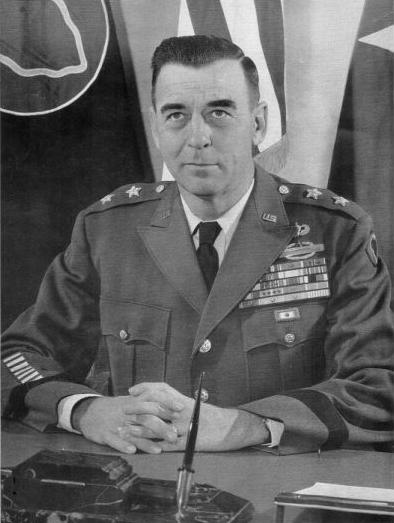
On an Assassination Attempt

General Edwin Walker was a decorated soldier who was a career soldier up until the time he, well, wasn’t. Walker graduated from West Point. He commanded troops in World War 2. He fought in Korea. Then, after Korea, something either happened to Walker or he felt less need to stay quiet. What happened was that Walker became political and vocally so. Now, there’s nothing wrong with military people having an opinion. The issue arises when they let those opinions determine if and when they obey orders or they use their opinions to coerce people under them to make choices based on those opinions. And that’s what Walker started doing in the 1950s.

You see, General Walker fell into bed with extreme right-wing politics. He was an extreme anti-communist (ok, nothing wrong with anti-communism), but he bought into the idea that much of the US government and military were agents of the Soviet Union. This was the period of the Cold War, and America saw the USSR as its mortal (and moral) enemy. Walker joined forces with people like extreme racists, John Birch Society folks, and other radical right-wing groups.

In the mid-1950s, President Eisenhower gave Walker command of the troops detailed to insure that the segregation of Little Rock Arkansas schools went off without interference from violent racist groups. To say that Walker found the duty distasteful is an understatement. He carried out his orders, but he didn’t like it and said so. He threatened to resign (not retire), which would have meant he was giving up his military pension. But Ike offered to re-assign him, and Walker accepted. But the changing political and social landscape proved too much for him to keep his opinions quiet. When the University of Mississippi was integrated in the early 1960s, Walker decided it was time to resign.

The now former general decided to enter politics as a pro-segregation, anti-communist, pro-Bible/Christian, and anti-, well, anti pretty much everything candidate. And he decided to run for governor of Texas. He gave a speech in which he said that he had been “on the wrong side” during his work in Little Rock, but that now he was “standing for the right,” and he probably didn’t see the irony of his words. And he drew adoring crowds in a state in the south that was still largely living separate existences between the black and white population. Fortunately, his brand of extremism was defeated by the more centrist appeal of John Connelly in the election.

But his anti-communist views were some of the most troubling. He was firmly convinced that Franklin Roosevelt, Harry Truman, and even Dwight Eisenhower were all Russian/communist plants in our government, hell bent on the destruction of the nation he’d sworn to protect and defend. And this anti-communist stance drew the attention of a man who wished Walker dead. One evening, as Walker sat at his desk in his house in a Dallas suburb, a shot rang out. Walker grabbed at his forearm, as splinters from the shot entered his body there.

He leapt up and ran to the window. There, he saw where a bullet had shattered the window sill. It was the splinters of metal from the bullet that had fragmented when it hit the sill that had pierced the former general’s arm. He was lucky to be alive. A few inches to the right and a bit higher, and the shot would’ve pierced his anti-communist brain. And that’s interesting that the shooter was fairly close, on the same level even, as Walker, but still missed the headshot.

Eight months later, Lee Harvey Oswald, who’d failed to kill Edwin Walker, got his headshot with a much more difficult shot into the brain of John Kennedy.

On a Mysterious Phone Call

John Hurt sat in his living room and watched the remarkable television coverage. It seemed that President John F. Kennedy had been killed by an assassin in Dallas, Texas, earlier that day. As the evening wore on, his local Raleigh, North Carolina television station did not have its usual evening broadcast; they pre-empted all programming to show the latest news on the shooting.

It seemed that a former US Marine, a man named Oswald, had shot the president and then killed a police officer as well. This Oswald fellow was in custody, and the body of the president was being taken back to Washington, D.C. The news kept saying that Oswald was the only shooter, that early reports said he had tried to go the Soviet Union and live there and that he had communist sympathies. John, along with the nation, watched all the incredible pictures and updates. John had been in the military himself during World War II, and news such as this did not upset him as much as it did most people who were not used to war. On the other hand, John would later describe himself as “a great Kennedyphile” and someone who appreciated the policies of the administration. Besides, Kennedy was a fellow war vet.

So, he sat in his living room, poured himself a short glass of Scotch, continued to watch the updates on the assassination, and smoked. As an employee of the state of North Carolina in the insurance investigation department, John had the reputation of being tough but fair. That went back, some said, to his time in the service during the war. However, almost paralyzing arthritis had rendered John disabled, and he was on the dole. John had earned a law degree from the University of Virginia, but he never took the bar and never practiced law.

He and his wife, Billie, lived simply but comfortably in Raleigh. John was a short man (he stood 5’4″ tall) and was a chain smoker. He watched the news that evening, he ran through cigarette after cigarette, and Billie came in and out of the living room, telling John to come to bed, that they would catch up with all the news in the morning. There was nothing they could do, Billie said. It was a tragedy, Billie said. Come to bed, Billie said. John had a history of not sleeping. In fact, he had a history of erratic behavior, something that had caused some trouble in his life since the war. He had requested psychiatric treatment at Duke University’s mental health hospital, but that request was denied.

After two days of wall-to-wall coverage of the shooting, John was watching the news live when he and the rest of the nation saw Jack Ruby shoot Oswald in the parking garage of the Dallas jail. He moved excitedly to the edge of his chair. Billie came in wiping her hands on her apron. “I can’t believe it!” John kept saying. Even a war veteran like John was stunned by witnessing a shooting live on TV.

Of course, John’s war service wasn’t really at the front lines, so he didn’t really see that much of the war. No, John served his country in military intelligence. He worked as a valuable asset in both Europe and Asia. Records are sketchy, so we aren’t quite sure exactly the depths of John’s activities in the intelligence community during the war.

What we do know is that the night after John F. Kennedy was shot, Lee Harvey Oswald made two phone calls from the Dallas jail.

One was to his lawyer.

One was to John Hurt.

On the Collection of a Debt

Vernon knew the type. As a funeral director, he was used to people in the south saying something like, “Mama may not have had two nickels to rub together, but we gotta send her out in style,” and then ordering the most expensive funeral the O’Neal Funeral Home could put on. And Vernon usually didn’t care, as long as the family, friends, a church–anybody–paid for it. Not that he was callous or greedy, mind you.

And that was the problem Vernon faced. Out of the kindness of his heart (some would later call him a sucker), Vernon had received a widow’s request for the finest casket the funeral home had. Well, he told the family, the finest box he had on display was the Handley Britannia model manufactured by the Elgin Casket Compnay. It was a mammoth thing, Vernon warned them, weighing over 400 pounds empty. Sounds fine, the family said. They asked that it be delivered to another location, and they promised payment…eventually.

Now, here it was, several months later, and Vernon still had no payment.

He made phone calls to the last number he had been given, but the widow had moved in the weeks following her husband’s death and left no forwarding address or phone number. He thought about hiring an attorney to pursue litigation to recover the expenses of the casket, but his innate kindness in the face of the bereaving family made him feel uneasy to pursue that option.

So, Vernon waited. Waiting, he had found, usually solved most issues one way or another. Either he would eventually get his money (unlikely) or he would begin to not care if he received it or not. However, that was no way to run a business, and the funeral home was not a charity.

Now, I have a thing about funeral homes. I’m not a fan, usually. Next to new car dealerships, funeral homes, at least in my experience, do everything they can to upsell families at their most vulnerable moments. There are exceptions, of course. Vernon O’Neal was one of those exceptions. He didn’t try to talk families into doing anything they wanted to do. For Vernon, what he did was less business and more ministry. Perhaps that why he wasn’t too worried about the expensive casket that he was likely to never see payment for.

On the other hand… well, the box retailed for $3,995…in 1963. Finally, after several letters and calls to this number and that one, Vernon O’Neal finally received payment. Almost a year later. And it did not come from the widow.

No, the eventual payment for the casket for President John F. Kennedy came from the United States government.