On Some Cordial Telegrams

Historians are lucky to have access to letters and telegrams that were sent between people on both sides of the conflict we know as World War I. This year marks the 115th anniversary of the end of that horrendous conflict. Let’s look at some of the language used by two men who exchanged telegrams at the start of the war, one on the Russian side and one on the German side. Please know as you read these messages that the men are first cousins, and they know each other well and remember the other one with great affection. Also, know that the telegrams were sent in English because their family had its origins in the United Kingdom.

Austria-Hungary had declared war on Serbia on July 28, 1914, and the world stood by and watched as the great powers like England, France, German, and Russia decided whether or not to join the conflict and to honor treaties made with the involved parties. The decades leading up to the war had seen these countries (and others) become involved in massive arms production. War seemed inevitable. And that’s the context of these affectionate messages between the cousins.

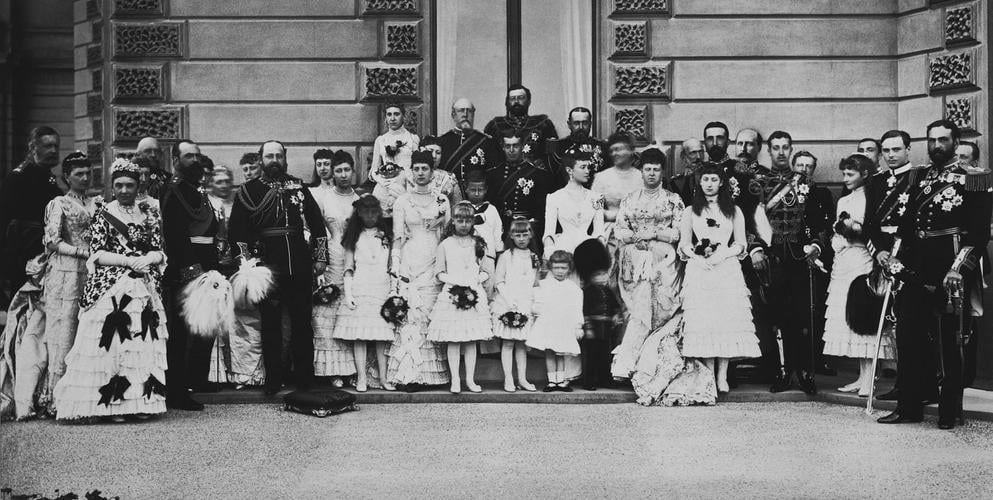
The first telegram, sent by the German cousin on July 29th, pointed out that they, the two of them, had no quarrel between them. He spoke of “the hearty and tender friendship which binds us both from long ago with firm ties.” To these cousins, it seems, the idea of war appeared remote and almost unthinkable. There had been family gatherings over the years where the entire group had come together in happier times such as weddings, and sadder occasions like funerals–the typical times when families celebrate the future and remember the past. So, the pair of correspondents had a long past together despite living in different countries. They even bore a familial resemblance to the other.

The Russian cousin replied and expressed his “thanks for your telegram conciliatory and friendly.” The telegram exchange continued, the cousins in the rival nations almost incredulous that the war machines of each country would contemplate war against the other. The German’s next message included a reference to one of their common ancestors: “My friendship for you, transmitted to me by my grandfather on his deathbed, has always been sacred to me.”

Yet, as we know, the machines of war marched towards what would become an absolute slaughter. Both Germany and Russia would see major revolutions result from the war, with the removal of both the Kaiser in Germany and the Czar in Russia. And the cousins seemed to sense that any impending war would bring about such disasters upon their respective nations. The Russian said, “It may all end peacefully,” but he expressed doubts at the same time, saying while “peace [is] dear to our hearts…mobilization (of Russia’s vast army) seems inevitable.” The German expressed the same sentiments. He stated that only “immediate and clear and unmistakable” actions from both governments were needed, but he expressed doubts that those actions would be forthcoming.

And the cousins were right. Germany declared war on Russia on August 1, 1914. The resulting war cost over 20,000,000 lives lost and about the same number wounded. The Austrian, German, Russian, and Ottoman empires were broken up. And today, we remember those who fought in this Great War on all sides, a war that, as the cousins expressed, didn’t need to happen if only the leaders of both sides had been better at talking to one another. If only they had the feelings of love and affection that these two cousins felt.

The problem was, these telegrams between the cousins–Kaiser Wilhelm of Germany and Czar Nicholas II of Russia–still didn’t prevent war from happening.
On a British Spy

I love a good British spy story. Tinker, Tailor, Soldier, Spy is one of my favorite films for this reason. There’s something about the spycraft of it all, the casual business-like calm, the, well, Britishness of spying that makes those types of stories interesting to me. Take the story of one such spy recruited by Britain during World War I.

Many people don’t know that the British Government spy agency, commonly known as MI-5 (short for Military Intelligence, Section 5) got its start before World War 1, in 1909. Britain could read the tea leaves, so to speak, and knew that war with the aggressive regime of Kaiser Wilhelm II in Germany was going to happen sometime in the near future. Therefore, the British planned ahead. MI-5 was set up to identify and monitor possible German spy activity in Britain in the buildup to the war. The head of the agency, a General Vernon Kell (known only in the agency as “K,” of course), also knew that, when war came, it would be vital to have British agents in the nations that could help Britain win the war. So, he planned to plant British spies in nations like Romania (whose king was a relative of Britain’s George V, as were most European monarchs), Denmark, and Italy.

Italy was especially important to Britain because of their large navy in the Mediterranean Sea and the fact that they bordered Austria-Hungary on their eastern side, a nation that most assuredly would side with Germany during the war. And General Kell sought out Italians who weren’t in the miliary to be his spies; he felt that people with “normal” jobs would draw less attention in their intelligence gathering than would people who would be obvious candidates for spying. On the other hand, the occupation of these people should give them access to people, places, and events that would prove to be valuable sources of information if and when the need arose. Teachers made good spies. Transportation administrators did as well. Art dealers, book publishers, and reporters were also on the list.

Thus, one of the spies MI-5 supported during World War I in Italy was a journalist. In his capacity as a British agent, this guy could not only have access to important people but he would also be able to help sway public opinion in favor of the Allied cause. Of the several dozen spies in Italy during the war, this one was a particularly good investment. Records show the man was paid well by the British every week to provide information and also help mold the opinions of the Italian people into supporting the Allies. In fact, payments made to this journalist at the time equaled about $8,000 per week in today’s money.

As Italy’s government began fighting for the Allies, the work this spy performed made a difference in keeping Italian morale up and providing actionable information for his minders. As the war ended in November, 1918, the need for such spies also ended. Kell saw MI-5’s budget cut drastically after the war, going from hundreds of staff members to only a handful. However, the onrush of World War II brought the agency it back to life as the original Axis of Evil (Germany, Japan, and Italy) threatened the world.

Of course, Italy’s threat to Britain in the 1930s might not have been so great had it not been for the rise of the Black Shirts of the Fascist Party in the 1920s. And you know the man who led that political movement, right?

The same journalist the British paid so well to be a spy during the previous war: Benito Mussolini.

On the Kaiser’s Generosity

Ulya and his friends wanted to travel from Switzerland to Russia, desperately. World War 1 was raging, and they deeply desired to go home and work to make their nation better, to solve the issues of the war, and fight–and die, if necessary–for their fellow Russians. And, so, the group of friends boarded a train in Zurich in April of 1917 and headed east.

Now, Ulya is short for Ulyanov, the man’s last name, and it’s what his pals called him. Some friends called him Nicky, but that was a nickname that had nothing to do with his real name and more to do with his larger-than-life personality that came across as a leader like Machiavelli wrote about or like an emperor, a czar–like Russia’s Nicholas II was. Born to an upper middle class family in a large city a few hundred miles east of Moscow, Ulya gave the impression that he felt he was somewhat better than others. His classmates in school agreed with this assessment, as had received the normal private education for a boy from a well-to-do family.

Before the war started, however, Ulya had been studying and writing in London and Munich and other places around Europe. He was, in fact, in Eastern Europe when the war broke out, and circumstances prohibited him from making his way back to Russia to offer his help in the war. He ended up finding a safe haven in neutral Switzerland; it was a place from which he could study and work in relative comfort and also plan to make his way back to Russia.

That was the trick, right? How could he cross the territories of Russia’s enemies, Germany and Austria Hungary, and reach Mother Russia? Even trying to reach water to attempt to reach his homeland by sea would require Ulya to attempt to traverse enemy-controlled land. So, for the first almost three years of the war, Ulya was unable to find a way to Russia.

Then, a miracle happened.

In what seemed like an incredible act of generosity and largesse, the Kaiser of Germany, Wilhelm II, a man who was a cousin of Czar Nicholas, offered to provide a train that would take all Russians who wished to go home back to Russia. That meant that Ulya and several of his fellow Russian citizens and friends could safely cross the enemy territory and return to Russia. A naturally suspicious man, Ulya and some of his buddies talked about the offer. Was this a trap? Could they trust the Kaiser to keep his word?

The desire to reach home finally proved stronger than any possible fear of being captured or imprisoned. And the Kaiser proved to be true to his word. The train was sent to Zurich, and Ulya and his fellow Russians boarded; they couldn’t believe their good fortune and the Kaiser’s miraculous provision. The route proved to be long and arduous, having to travel north into Scandinavia and come into Russia by the north, but it was worth it, Ulya believed. And, before you think that the Kaiser did this out the kindness of his heart, well, think again.

You see, the Kaiser had an ulterior motive. Within a few weeks, Ulya–Vladimir Ulyanov, known to the world as Lenin–and his fellow communists helped to overthrow the Czar and take Russia out of World War 1.

On a Family Wedding

Weddings are usually joyful occasions for families. Large families especially mark weddings and funerals as major events in family lore. Those major life events are times of reconnecting with cousins and distant relations that you don’t normally get to see. That was definitely the case of a large family wedding that took place in 1913 in Berlin.

The bride, Vicky, was marrying a guy she’s gotten acquainted with the year before at, of all places, a family funeral. He was even a distant cousin, and his name was Ernie. Vicky’s dad, from the wealthy class, wanted everyone to come to the nuptials of his only daughter (and favorite child), so he sent word to all the family to make their way to Berlin in May 1913 for the wedding of the decade. He also wanted to use the event to bring the family closer. It’s difficult to keep so many people in touch, especially when there are as spread out as Vicky’s family was. So, the extended family began making their way to the city to witness what surely would be a grand time.

Since this family was from the land-owning class, many of the men in this large group were attached to the military, so the wedding party was resplendent with fancy dress uniforms and gleaming medals and swords. The women wore their best expensive gowns to not only the ceremony but also to the various balls and dinners held to celebrate the happy couple’s wedding. Tens of thousands of German marks were spent on the catering, the bands, the alcohol, the gifts, the decorations, and the cake (the height of which reached almost one story, according to one report).

And, so, it proved to be exactly what Vicky and Vicky’s dad wanted. It was indeed an affair that brought this large, wealthy family together in celebration. Yes, it proved to be an amazing time that was reported in all the papers, an event that people were destined to talk about for the rest of the decade.

Except they didn’t talk about it.

The wedding was forgotten in a little over a year, lost in the disaster that was to follow over the next five years.

You see, Vicky, the bride, was named after her great-grandmother, a woman named Queen Victoria of Britain. Her dad was Kaiser Wilhelm of Germany, and the cousins that came to the wedding–the crown heads of Europe, including King George of Britain and Czar Nicholas II of Russia, and all those other men who wore their uniforms to the event–they went back to their homes and their armies and navies.

And, within 16 months, they would start World War I against each other, in August of 1914 to be exact.

And Vicky’s wedding would be the last time all those royal cousins saw each other alive.