
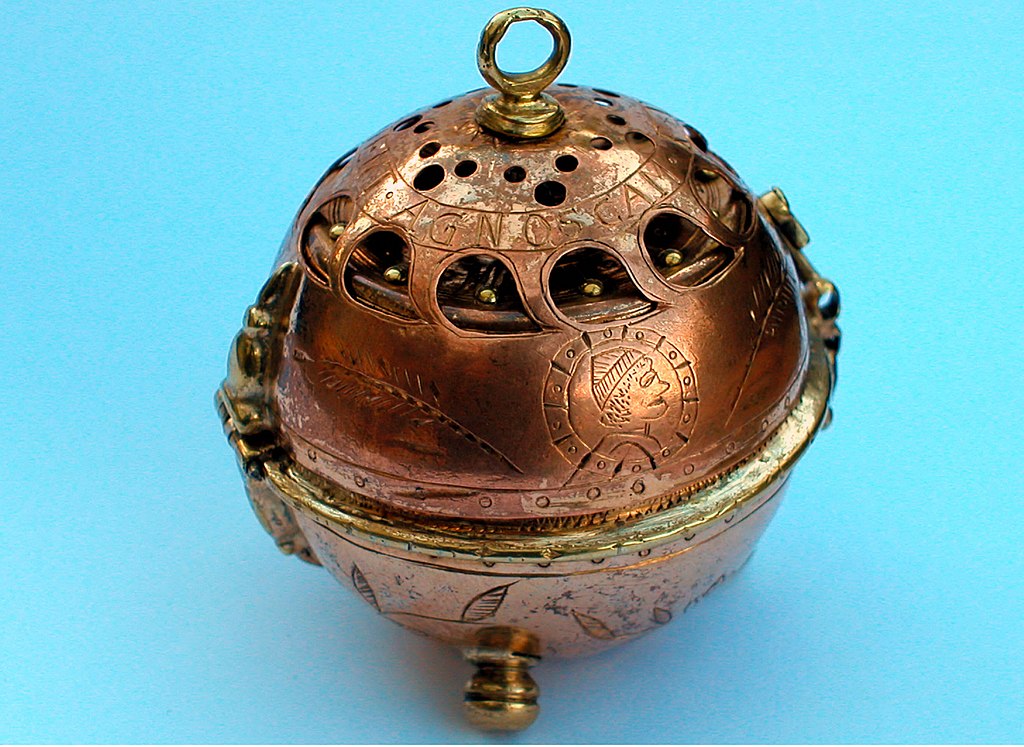
Peter Henlein is one of those people in history whom you don’t know, but you certainly know what he made. Peter made “eggs.” Let me explain.
He was born in 1485 and lived most of his life in Nuremburg, in what is now Germany. His father, Peter senior, was a brass smith, and the younger Peter was sent to become an apprentice to a locksmith. As you probably know, a young person would work some years (usually seven) as an apprentice in a certain trade, something akin to a long internship today. After a certain time and by proving knowledge in the trade, an apprentice could then “graduate” to become a journeyman–someone who could work in the trade and make a living. Finally, one could go on to become a master craftsman, someone who could own a business and be recognized as a true professional in that certain guild.
But, when he was only 19, young Peter was involved in a scuffle with another apprentice locksmith. The other youth was killed. At that time in history, a person who was responsible for a death but not accused as a murderer (more like involuntary manslaughter) could appeal to a monastery and be taken in there for sanctuary for a period. It was better than prison, for sure. And that’s what happened; a local Nuremburg monastery granted Peter a safe place for a few years. It was in the monastery that the young locksmith became familiar with astronomy as some of the monks were experimenting with celestial observations, using early measuring devices to track the movement of objects in the night sky. Peter was fascinated. He became interested in the passage of time, the movement of the planets and of the sun. He started tinkering with clocks–a sort of side gig that locksmiths did because they had the fine tools needed to work on the small parts contained in clocks.
With nothing else to do in the monastery than work, Peter rapidly became an expert on clocks. Instead of needing decades to become a master, the intense amount of work he was able to perform while sequestered in the monastery made him a master clockmaker by 1509 at the tender age of 24, something almost unheard of. When his time at the monastery was ended, he emerged from the confinement as a recognized expert in his field. And that’s when he turned to making “eggs.”
Peter’s eggs were designed to be work around the neck on a chain. Wealthy people paid good money for one of Peter’s eggs. They quickly became a status symbol that can be seen in paintings of Peter’s upper class clientele. Peter started his eggs by taking something called a pomander, which was a small, round, egg-shaped pendant that had holes in the top where fragrances could fill the air, fragrances that came from perfumes and spices that were placed inside the small ball. His “Nuremberg Eggs” were the first to use these balls for another purpose, however. A writer of that time remarked how the craftsmen of Nuremburg made amazing contraptions that pushed the boundaries of both science and craftsmanship. He noted that Peter, still a young man, made objects that no one thought possible on that small scale.
Remember how while Peter was at the monastery that he had become interested in time and in clockmaking? Well, we can attribute that time of sanctuary to something that you may own today. You see, Peter filled those pomanders with clocks–but on a much smaller scale than anyone had ever done before, making them wearable and personalized.
That why we recognize Peter’s eggs as the first pocket watches.
 The Rest of the Story