On an Urban Legend

Today marks the 60th year since Lee Harvey Oswald shot and killed President John F. Kennedy in Dallas. The history of the world, arguably, changed in those few moments when three shots were fired in Dealey Plaza on that November morning. In the intervening years, our culture has parsed and picked and delved into every nook and cranny of the event in an effort to make sense of something so absolutely senseless.

The purpose of this post isn’t to argue any of the theories about who actually pulled the trigger (There are certainly several red flags about the whole affair and about Oswald himself). Rather let’s compare the shooting of Kennedy in 1963 with the shooting of Abraham Lincoln 98 years prior, because the similarities between the two events have become the stuff of an urban legend.

Let’s start with the men themselves. Kennedy was elected in 1960, while Lincoln first was elected in 1860. But when they first ran for congress, both men were elected in ’46–one hundred years apart. They both were military veterans. Both men were heavily invested in civil rights. Each one was in his 30s when he married a woman in her 20s. Both lost a son while serving as president. Same number of letters in their last names. Both were shot on a Friday. Each was seated next to his wife. The presidential couples were with another couple at the time of the shooting (The Kennedys with Gov. and Mrs. John Connelly, the Lincolns with Major John Rathbone and his fiancĂ©). The other man of the two couples was also injured in both attacks.

The vice-presidents who assumed the office after the shootings also have some things in common according to the legend. Both men were named Johnson. Both were from southern states starting with a “T”–Texas for Lyndon Johnson and Tennessee for Andrew Johnson. Both Johnsons were born 100 years apart, 1808 for Andrew and 1908 for Lyndon. Both men have the same number of letters in their names. They served in the House of Representatives and in the Senate as well before becoming vice-presidents.

The circumstances of each assassination also reveal some urban-legendary coincidences. They were both shot in public view, from behind, and both died from shots to the head. Lincoln was shot in Ford’s Theater, while Kennedy was shot in a car made by the Ford Motor Company, in a model called a Lincoln. Both shooters carried out their dastardly deeds from places where they worked (John Wilkes Booth worked as an actor often at Ford’s Theater). Oswald shot Kennedy from a warehouse and was later apprehended in a theater; Booth shot Lincoln in a theater and was apprehended in a storehouse barn.

Finally, the assassins themselves have some shared characteristics or events. For example, each one has the same number of letters in their full names (15 letters each). They were both shot and killed before they could stand trial for the murders they committed. They were both southerners. Each was living in a boarding house when they shot the president.

Of course, like most urban legends, coincidences are just that–coincidence. One historian, to prove this point, made connections between Kennedy’s tragic death and the assassination of Mexican President Alvaro Obregon in 1928, for example. And some can argue that the trivialization of presidential murder dishonors the men who died and the lives which were forever altered by the heinous acts of violence.

But, 60 years on, perhaps the deep angst that still hangs around the death of John F. Kennedy might lead us to look for something less tragic, less disastrous, and, well, less sad to divert our gaze from that moment. And you have to admit that this particular urban legend has plenty to distract.

And, sometimes, especially on days like these, we desperately need distraction.
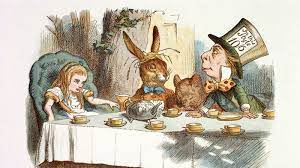
On a Hat Maker

Thomas Corbett was born in England in the 1830s and, with his family, emigrated to the United States when he was 8 years old. The family moved to Troy, New York, and young Thomas apprenticed to a hat maker in the village. It would be a job he’d hold off and on throughout his life. When he became of age, Thomas found a woman he fancied, and the pair got married. But his wife and her baby died in childbirth, and that sent Thomas over the edge.

Thomas cursed God and decided to spend the next few years as a homeless drunk for the most part. One night, he found himself in Boston, Massachusetts, and got rip-roaring drunk as usual. It was during his intoxication that he crossed paths with a minister who was standing outside of a local bar and preaching to all those who came out of the establishment, drunk to the gills. Something the minister said resonated with the young grieving widower, and he gave up drinking on the spot. As fervent as he was as a drunk, Thomas became equally as resolute as a Christian. In fact, he even changed his name to represent the “new birth” he felt he’d received upon his baptism; he became Boston Corbett.

Now, we should note at this point that this young man was somewhat unstable mentally. He had exhibited odd behavior even before he experienced his remarkable conversion, but he became increasingly odd afterward. He would stop people on the street and pray for them–people who were complete strangers. He would verbally berate anyone whom he heard using what he considered to be swear words. And he had a habit of stopping traffic in the street and preaching to all within earshot. All of these behaviors caused those around him to question his sanity.

When the Civil War broke out, Corbett enlisted in the Union Army. There, he soon got into trouble for refusing to follow orders he felt were against God’s law (such as marching or fighting on the Sabbath). He faced disciplinary action on many occasions, including one court martial. After one battle in Virginia, Corbett was captured by the Confederates. He was sent to the infamous Andersonville Prison Camp in Georgia, staying there until released in a prisoner swap. When he eventually rejoined his unit, he found himself near Washington D.C. as the war ended.

Like all of the other soldiers in the army, Corbett was incensed that the man he saw as God’s avenging instrument, Abraham Lincoln, was gunned down by the Confederate sympathizer, John Wilkes Booth, a few days after the war ended. Corbett and his company were part of the group who pursued the fugitive Booth. When Booth was found hiding in a barn a few days later, it was Boston Corbett who shot Booth as he hid–shooting the man who was supposed to have been captured alive. You see, Corbett didn’t listen to the orders of men, no; he had a Higher calling.

And the event made him a hero.

After his service, Boston Corbett returned to hat making. He suffered increasing bouts of strange behavior for the remainder of his life. It is supposed that he died in fire in Minnesota a few years later after being a lay preacher for many years in addition to making hats.

What we know now is that Thomas “Boston” Corbett was crazy, but there was a reason for his being that way. You see, at that time, the fur used in making hats such as the tall, beaver pelt hats of the day, was treated with a compound that included mercury. Years of inhaling that poison affected Corbett’s brain and caused his madness.

And it’s why we say that someone is “as mad as a hatter,” because, for Boston Corbett, the avenger of Abraham Lincoln, that was his job.

On a Double Date

Clara accepted her friend Mary’s invitation to double date on behalf of her fiancĂ©, Henry. The two couples had shared evenings in the past, and they enjoyed each other’s company despite the fact that Mary and her husband were older than Clara and Henry. In this case, Mary invited the couple to see a show together.

To say that the double date proved memorable is an understatement, but let’s fast forward a couple of years. Clara and Henry married and, within five years, had three kids, two boys and a girl. Sadly, Henry developed mental and emotional issues. He had fought in the war, and today we would recognize at least a large part of his situation as being Post-Traumatic Stress Disorder (PTSD) as a result of all he had witnessed. He had been a front-line officer, you see, and had seen some of the fiercest fighting during the conflict and even rose to the rank of Major.

The couple had grown up with each other–literally. Both were from comfortably upper-middle class families from upstate New York. Henry’s widowed mom had married Clara’s widower dad when he was 11 and she was 13. The two formed a close friendship that blossomed into romantic love when they reached their early 20s. So, in many ways, the pair had been a couple much longer than other engaged young people their age.

A few years later and despite Henry’s continued mental deterioration, he managed to obtain a diplomatic post to Germany where the young family moved in the 80’s. Finally, Henry’s mental instability reached its climax. Wildly and paranoically suspicious of Clara, Henry attempted to kill their three children. Clara stood in the way of his anger and aggression, and Henry shot and killed her. He spent the rest of his life in a German mental institution, and the three children were sent back to the Untied States to be raised by an uncle. A sad ending to the couple’s realtionship.

Of course, some would point back to the double date the couple went on years before as being one of the main reasons for Henry’s issues and eventual mental breakdown. You see, the married couple Henry and Clara had been invited to go to the show with weren’t some ordinary husband and wife.

No, Clara and Henry had accepted an invitation to attend a showing of My American Cousin at Ford’s Theater that night with Abraham and Mary Todd Lincoln.