
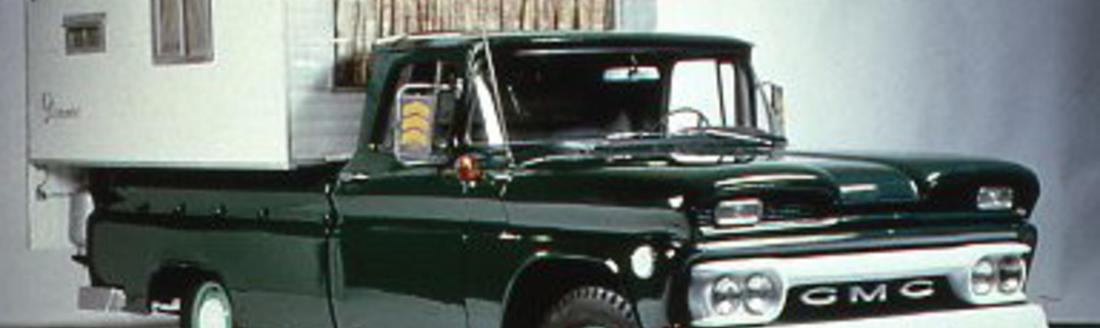
The old man in his truck with the camper on the back slowed down when he saw the hitchhiker on the side of the road. In instances like this, both driver and hitchhiker must make a split-second decision on whether or not to stop and whether or not to accept the ride. Most of that choice is made from, to use a colloquialism that is not easily defined, the gut. In the U.S., we call this feeling a “gut instinct,” which is, oddly, usually right.
The driver and his dog had been traveling around the United States simply because they could. It’s a big country, the old man reasoned, and he had seen some of it but was curious as to the parts he didn’t know. So, this being the early 1960s, he did what many Americans of the post-World War 2 era did–he decided to take a road trip. Much of what he and his dog had seen in the weeks they’d been on the road both pleased and surprised him. He never realized, for instance, how vastly different the rest of the nation felt about many political issues outside of his native California, for instance. Besides speaking to patrons and workers at roadside diners, the old man decided to pick up hitchhikers in order to get a taste of what they felt about societal issues.
Now, you must remember that hitchhiking was much more prevalent 60 years ago. Even in the 1980s, for example, I hitchhiked across several states, but such a thing would be almost impossible today. But, back then, it was an acceptable way to get from one place to another. And, in this instance, the old man pulled over when he saw the young man with his thumb out–the American sign for hitching.
The young man wore dirty clothes, and his longish blonde hair was tangled, his face pock-marked with acne scars. As the young man opened the door and climbed in, he thanked the older man in a deep southern drawl. The old man introduced himself and his dog, and the young man reciprocated. They continued down the road, and the conversation began. It started amicably enough as the pair exchanged pleasantries and brief biographies of themselves.
Then, the conversation changed. The older man told the young person about his journey, how he had been startled to find out that much of America (especially the middle and the south) was ultraconservative. He talked about how disappointed he was that America seemed to have learned nothing from the fight against Nazism in World War 2 when it came to race relations. He pointed out the way Native Americans were looked down on in the mid-west and south-west and how badly African-American minorities were treated in the south. This caused the young man to turn in the truck seat to almost face the older driver.
“Them folk outta be happy we let them even live in the south,” the young man began. “They got no right to try to feel like they’se equal in any way to white people.” He went on to say that groups that fought against desegregation, groups like the White Citizens’ Council and others, were modern-day heroes for working hard to maintain the status quo. At this point, the older driver had heard enough. He stopped the young man. “Are you saying that these minority groups do not deserve equal protection under the law?” he asked. “Nossir!” the young man replied. “They sure don’t. Why, have you seen ’em? They ain’t even people, really!” And he began to loudly harangue the older man.
The old man braked sharply and jerked the truck to the side of the road. The dog began barking sharply as the driver ordered the young man out of the vehicle. Even as he quickly pulled the truck away from the racist younger man, the driver could still hear his curses and racist rhetoric being yelled at him.
The encounter proved to be a breaking point for the older man. He felt saddened that even the younger generation of a large swath of the American population perpetuated the racism he had hoped was dying out in the nation. His journey of discovery of his beloved nation was over, and, in his mind, was a failure.
“Charley,” John Steinbeck said wearily to his dog, “let’s go home.”

 The Rest of the Story