On a Political Grudge

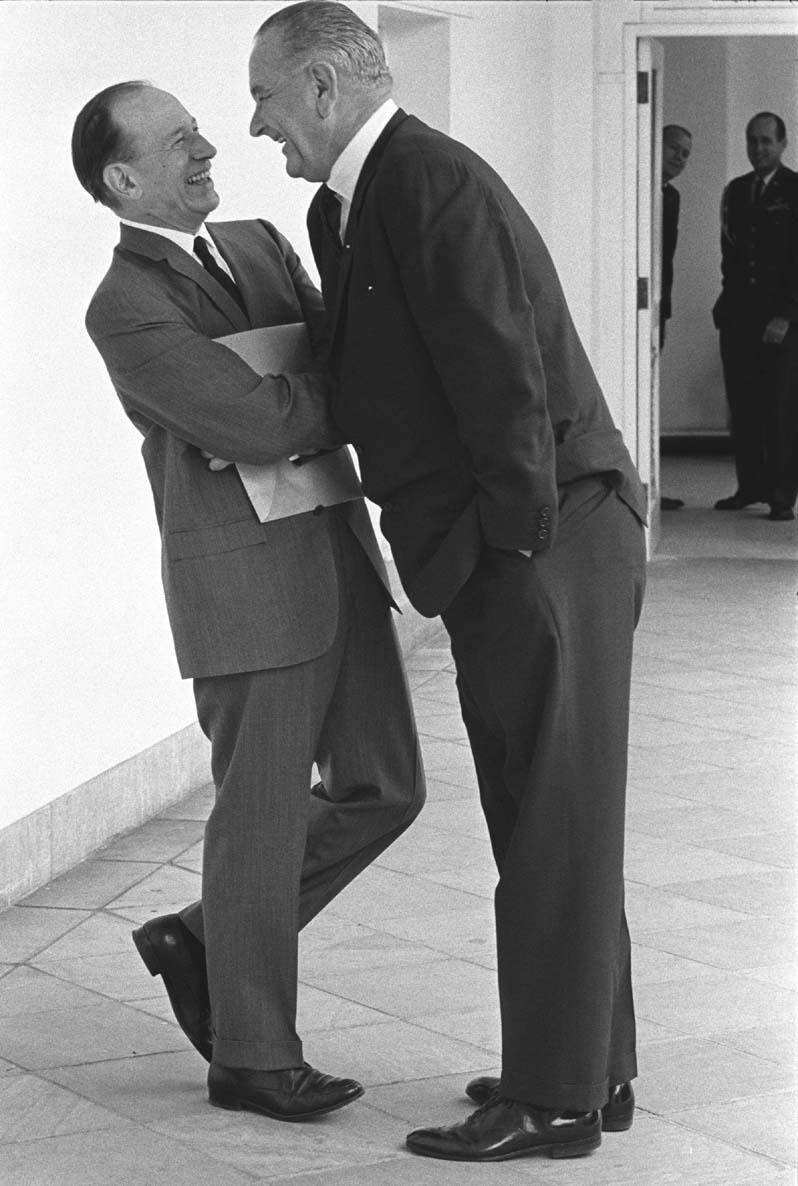
Lyndon B. Johnson was the consummate politician. As a congressman, senator, and, eventually, president, LBJ would lie, cheat, steal, bully, and threaten to get his way when it came to passing legislation. And it was not only that he could force people to do things for his agenda, but part of his power lay in his charm and charisma. Johnson towered over most people, being well over 6’4″ (1.9m) and was the consummate storyteller and mimic; he would often imitate colleagues, friends, and enemies, skewering them with dead-on impressions. And, as part of that larger-than-life persona, Johnson would often overstate his role in affairs to make himself seem more important to events that he actually was.

Take the instance of a story Johnson would often tell of how close of an advisor he had been to President Franklin D. Roosevelt in the years leading up to World War 2. Now, while Johnson was a young congressman from Texas and he did have opportunity to meet with FDR in the White House from time to time, in no way did Roosevelt consider the tall, thin Texan to be a trusted confidant. But that’s not the way LBJ would tell it in later years.

It was in January 1953, in the dining room of the US Senate in the Capitol Building when Johnson, at the time the second-most powerful man in the senate, came into the room. As was his custom, he would make his way around the room, shaking hands and trading bon mots with the other senators and their staffs. When he came to the table of the powerful senator from Wisconsin, Senator Joseph McCarthy, the senator and the staff at the table rose to shake Johnson’s hand out of respect. That is, except for one lower-level staffer from McCarthy’s office. This young man stayed seated and glowered at the powerful Johnson.

As Johnson made his way around the table, he reached the seat of the young man with the scowl on his face. Johnson knew that the staffer was purposefully being rude. You see, LBJ made it his job to know everything about, well, everybody. He knew why the young man refused to stand and shake his hand. So, in a show of power and to put the young staffer in his place, Johnson hovered over the seated man and stuck out his hand. Onlookers later said that the staffer swallowed hard, looked around the table at the other, standing staffers, and slowly stood up and offered a limp hand that Johnson took and shook vigorously. His point made, Johnson then made his way to the next table. The young staffer slank back into his chair and finished his lunch.

Later, an aide to Johnson asked him about the incident. Johnson let out a loud guffaw. He then reminded the aide of the following story, and it was a story that he LBJ had told often before. He said that McCarthy’s staffer was the son of a government appointee back during Roosevelt’s second term. During one of their meetings in the White House, Johnson said that FDR had complained about this staffer’s father. And Johnson bragged that he had advised Roosevelt to fire the man because he was a Nazi sympathizer and was antisemitic. To hear LBJ tell the story almost two decades later, it was Johnson’s advice that convinced President Roosevelt to ask for the appointee’s resignation. The young staffer’s rudeness and dislike of Johnson therefore stemmed from LBJ’s part in getting his father fired.

Of course, Johnson grossly overstated the importance of his advice to Roosevelt. The fact was that President Roosevelt had already made up his mind about removing the appointee from his post long before Johnson said anything–if in fact he had said anything at all to the president. So, while it probably wasn’t Johnson’s hand in getting his father removed from the post as much as it was that he had heard about the story Johnson told about the incident, the story about making himself out to be more important and influential than he was. You see, the young man, that scowling McCarthy staffer, he was the opposite of Lyndon Johnson. He was almost an anti-politician. He was more of a crusader, a fighter for justice and truth. To him, men like Lyndon Johnson were part of what was wrong with Washington. And the young staffer was working to bring honesty and accountability to congress. And to know that LBJ was telling untrue stories about his dad and laughing about his dad’s removal from his government appointment, well, it was all too much.

By the way, the post that the staffer’s father had held was the ambassadorship to the United Kingdom in the days before World War 2. He knew that his father wasn’t fired from the job and he also knew that Lyndon Johnson had nothing to do with his father’s resignation from the post.

And that’s why, in January 1953, young Bobby Kennedy refused to stand and shake Lyndon Johnson’s hand.

On an Urban Legend

Today marks the 60th year since Lee Harvey Oswald shot and killed President John F. Kennedy in Dallas. The history of the world, arguably, changed in those few moments when three shots were fired in Dealey Plaza on that November morning. In the intervening years, our culture has parsed and picked and delved into every nook and cranny of the event in an effort to make sense of something so absolutely senseless.

The purpose of this post isn’t to argue any of the theories about who actually pulled the trigger (There are certainly several red flags about the whole affair and about Oswald himself). Rather let’s compare the shooting of Kennedy in 1963 with the shooting of Abraham Lincoln 98 years prior, because the similarities between the two events have become the stuff of an urban legend.

Let’s start with the men themselves. Kennedy was elected in 1960, while Lincoln first was elected in 1860. But when they first ran for congress, both men were elected in ’46–one hundred years apart. They both were military veterans. Both men were heavily invested in civil rights. Each one was in his 30s when he married a woman in her 20s. Both lost a son while serving as president. Same number of letters in their last names. Both were shot on a Friday. Each was seated next to his wife. The presidential couples were with another couple at the time of the shooting (The Kennedys with Gov. and Mrs. John Connelly, the Lincolns with Major John Rathbone and his fiancĂ©). The other man of the two couples was also injured in both attacks.

The vice-presidents who assumed the office after the shootings also have some things in common according to the legend. Both men were named Johnson. Both were from southern states starting with a “T”–Texas for Lyndon Johnson and Tennessee for Andrew Johnson. Both Johnsons were born 100 years apart, 1808 for Andrew and 1908 for Lyndon. Both men have the same number of letters in their names. They served in the House of Representatives and in the Senate as well before becoming vice-presidents.

The circumstances of each assassination also reveal some urban-legendary coincidences. They were both shot in public view, from behind, and both died from shots to the head. Lincoln was shot in Ford’s Theater, while Kennedy was shot in a car made by the Ford Motor Company, in a model called a Lincoln. Both shooters carried out their dastardly deeds from places where they worked (John Wilkes Booth worked as an actor often at Ford’s Theater). Oswald shot Kennedy from a warehouse and was later apprehended in a theater; Booth shot Lincoln in a theater and was apprehended in a storehouse barn.

Finally, the assassins themselves have some shared characteristics or events. For example, each one has the same number of letters in their full names (15 letters each). They were both shot and killed before they could stand trial for the murders they committed. They were both southerners. Each was living in a boarding house when they shot the president.

Of course, like most urban legends, coincidences are just that–coincidence. One historian, to prove this point, made connections between Kennedy’s tragic death and the assassination of Mexican President Alvaro Obregon in 1928, for example. And some can argue that the trivialization of presidential murder dishonors the men who died and the lives which were forever altered by the heinous acts of violence.

But, 60 years on, perhaps the deep angst that still hangs around the death of John F. Kennedy might lead us to look for something less tragic, less disastrous, and, well, less sad to divert our gaze from that moment. And you have to admit that this particular urban legend has plenty to distract.

And, sometimes, especially on days like these, we desperately need distraction.

On A Loyal Companion

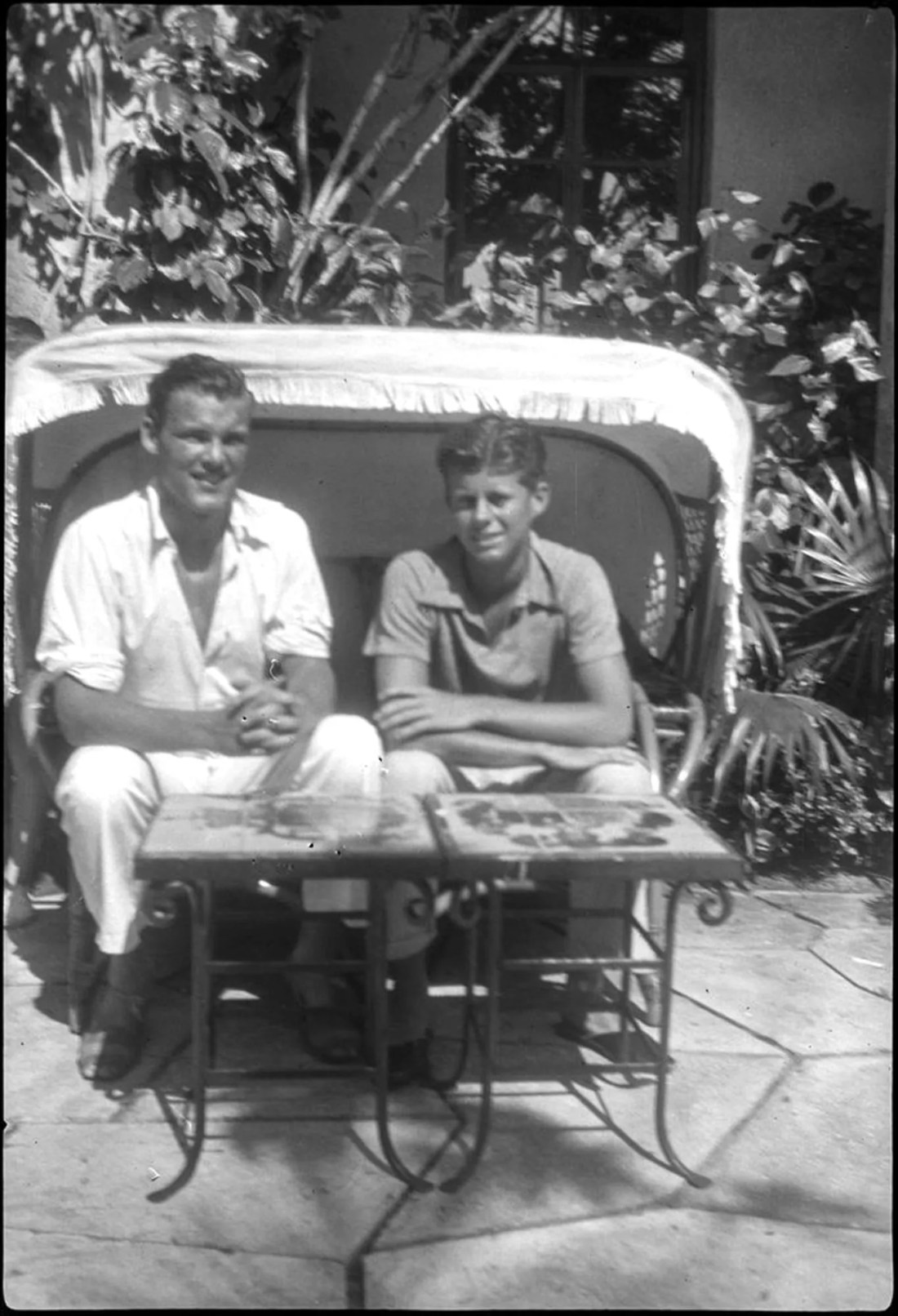
People say you’re fortunate if you have one or two people in your life outside of your family in whom you can completely confide and on whom you can completely count. Lem had such a friend in John. The pair met at a prestigious prep school, Choate, in the 1930s. Both boys were from wealthy families in the Northeast, and both came from families where the father was largely absent and distant. So, in many ways, it was quite natural that the two would become best chums.

They roomed together at the boarding school for several years. In fact, Lem, a year older than John, thought so much of the friendship that he agreed to re-do his senior year so he could graduate with his best friend. And John was forever grateful for Lem’s sacrifice. They formed a secret society, called the Muckers, whose aim was to play pranks on the staff and on the school at large. Each young man needed someone in his corner, someone who would have the other’s back unreservedly. And they were indeed that for each other. Then, in 1937, the pair spent that summer traveling around Europe. The bond between the two grew even tighter.

Now, at this point, we have to say what you might be thinking. Yes, there was a sexual attraction in play here, but it turned out that only Lem had romantic feelings. John didn’t, but that didn’t stop John from loving Lem as his best friend and closest confidant. John knew that Lem was gay. While Lem would have preferred something more that best friends, he was content that John was in his life in that role if nothing else.

And that’s the way the relationship remained. Lem was in John’s wedding. John’s wife would later joke that her marriage to John came with a built-in houseguest because Lem was always staying over. He often spent holidays at John’s family’s house, and, to keep people from gossiping, he even took John’s sisters to social events. But, society being what it was then, Lem had to remain in the closet.

Both young men served in World War 2 with distinction. They remained close after the war. In fact, they roomed together for a while as bachelors as John began his career and Lem put off attending Harvard Business School for a graduate degree. As John’s career took off, Lem became his closest advisor and confidant, a role he’d had since the two were at Choate together. He was at John’s side when John faced the toughest decisions of his life. John offered Lem positions that would let them work together, but Lem turned them down. He felt strongly that working together would somehow change the nature of the relationship, and he didn’t want to run that risk. John appreciated that sense of love and loyalty in his friend for the rest of his life.

So, yes; having a close companion and a loved and trusted best friend is a rare and precious thing. But the fact that he was gay is a major reason you don’t know the important role Lem Billings played in the life of John F. Kennedy.

On an Inspection

The 1950s and early ’60 were a time in white middle class America when gender roles and rules of social decorum were fairly strictly defined and generally observed. Women wore hats and gloves to church and, often, even to the store; men wore suits to dinner and even to the movie theater. The reason some people watch reruns of the old TV show Leave It to Beaver today is to see what was the reality for many families at the time–a nostalgia for a period when the men worked while the woman stayed home and raised the kids, and people lived in nice suburban comfort. All of that changed, of course, in the 1960s beginning with such things as John Kennedy not wearing hats and the emergence of the counter culture that followed in the wake of the Civil Rights and Vietnam War protests. Allow all of that to serve as the societal background to the meeting of two women when one was moving into a new home in 1961.

Now, the two had met before because their husbands were in the same business although there were a generation apart. The occasion was that the younger woman’s husband had recently received a promotion, and an upgrade in the family’s living situation was in order. The older woman, the one who had been living in the home, was not happy that this younger woman and her husband and children were moving in to the place she and her husband had called home for almost a decade. But, social custom demanded that she take the younger woman on a tour of the house, an inspection of sorts. And it was no secret that the older woman disliked this younger woman.

To be fair, the older woman was, to be somewhat impolitic, frumpy. Not that she didn’t follow the social norms, because she did. In fact, she was, in many ways, the quintessential representative of that stolid, solid, middle class that represented much of white America. But the contrast between her and the younger woman was so, well, drastic. This younger woman followed the latest fashion. She had model good looks. And she spoke French! You could hardly find a greater difference between two women despite the fact that they both conformed to the social norms in every other way. And that included the prerequisite inspection of the home.

The younger woman, only two weeks away from a cesarean section and the birth of a boy, was still in a great amount of pain and discomfort. She had asked that the home inspection be postponed because of this, but the older woman insisted. Whether this was out of spite or out of jealousy or even simple lack of empathy is unknown. And when the younger woman came to the house, the older woman waited for her in a hallway. Rather than come towards the woman who was in obvious discomfort, the older woman simply stuck out her hand in unsmiling welcome and forced the younger woman to walk to her to shake it. She then led the hurting younger woman through the entire house, walking quickly, almost intentionally it seemed, so that, by the end of the one hour tour, the younger woman was almost in tears of pain.

As I said, the older woman really didn’t wish to leave the house. It wasn’t her choice, of course. Her husband was retiring, you see, and it was time for them to downsize. And perhaps that was part of the jealousy the older woman felt. Her husband’s useful work life was largely over, while this younger woman’s husband’s period of fruitful work was only then coming into season. We do know, for a fact, that the older one referred to the lovely and elegant younger woman snidely as “That College Girl.”

But we don’t know, for sure, why Mamie Eisenhower disliked Jackie Kennedy so much.

On an Assassination Attempt

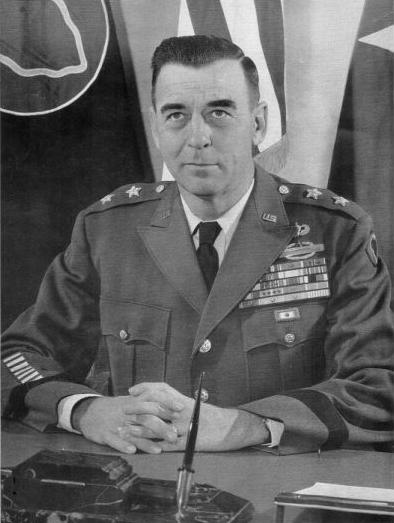
General Edwin Walker was a decorated soldier who was a career soldier up until the time he, well, wasn’t. Walker graduated from West Point. He commanded troops in World War 2. He fought in Korea. Then, after Korea, something either happened to Walker or he felt less need to stay quiet. What happened was that Walker became political and vocally so. Now, there’s nothing wrong with military people having an opinion. The issue arises when they let those opinions determine if and when they obey orders or they use their opinions to coerce people under them to make choices based on those opinions. And that’s what Walker started doing in the 1950s.

You see, General Walker fell into bed with extreme right-wing politics. He was an extreme anti-communist (ok, nothing wrong with anti-communism), but he bought into the idea that much of the US government and military were agents of the Soviet Union. This was the period of the Cold War, and America saw the USSR as its mortal (and moral) enemy. Walker joined forces with people like extreme racists, John Birch Society folks, and other radical right-wing groups.

In the mid-1950s, President Eisenhower gave Walker command of the troops detailed to insure that the segregation of Little Rock Arkansas schools went off without interference from violent racist groups. To say that Walker found the duty distasteful is an understatement. He carried out his orders, but he didn’t like it and said so. He threatened to resign (not retire), which would have meant he was giving up his military pension. But Ike offered to re-assign him, and Walker accepted. But the changing political and social landscape proved too much for him to keep his opinions quiet. When the University of Mississippi was integrated in the early 1960s, Walker decided it was time to resign.

The now former general decided to enter politics as a pro-segregation, anti-communist, pro-Bible/Christian, and anti-, well, anti pretty much everything candidate. And he decided to run for governor of Texas. He gave a speech in which he said that he had been “on the wrong side” during his work in Little Rock, but that now he was “standing for the right,” and he probably didn’t see the irony of his words. And he drew adoring crowds in a state in the south that was still largely living separate existences between the black and white population. Fortunately, his brand of extremism was defeated by the more centrist appeal of John Connelly in the election.

But his anti-communist views were some of the most troubling. He was firmly convinced that Franklin Roosevelt, Harry Truman, and even Dwight Eisenhower were all Russian/communist plants in our government, hell bent on the destruction of the nation he’d sworn to protect and defend. And this anti-communist stance drew the attention of a man who wished Walker dead. One evening, as Walker sat at his desk in his house in a Dallas suburb, a shot rang out. Walker grabbed at his forearm, as splinters from the shot entered his body there.

He leapt up and ran to the window. There, he saw where a bullet had shattered the window sill. It was the splinters of metal from the bullet that had fragmented when it hit the sill that had pierced the former general’s arm. He was lucky to be alive. A few inches to the right and a bit higher, and the shot would’ve pierced his anti-communist brain. And that’s interesting that the shooter was fairly close, on the same level even, as Walker, but still missed the headshot.

Eight months later, Lee Harvey Oswald, who’d failed to kill Edwin Walker, got his headshot with a much more difficult shot into the brain of John Kennedy.

On Visiting An Old Home

Take it from someone who has rented far more than he has owned: Moving often from place to place stinks. And temporary homes can be difficult places to create family memories. Before us we have the case of a small family of four who lived in a house for three years before having to move out. The husband, wife, and two small kids moved into a place south of Baltimore in the early 1960s because of the husband’s work. While there, the wife had lost an infant son, so there was that trauma the family went through while living there. On the other hand, the family also experienced some joy there, as families do, on holidays and birthdays and the like.

Then, in the third year there, the husband passed away suddenly. The young widow had to move, and she decided that she and the two children under the age of 6 should move in with family up north. The owners of the property were sympathetic to the tragic circumstances; they allowed the woman and her kids to take all the time they needed to pack up. However, knowing that she really couldn’t stay there (and another family waited for them to vacate), the woman managed to organize a move from the house within two weeks after her husband’s funeral.

Years passed.

As the children grew, the woman often thought of that house that had held such mixed memories for her. On the other hand, she also recognized that the place was the only house in which her kids shared any memories of their dad. So, she made arrangements to take her children, by then aged 13 and 10, back to the old house for a visit. She wrote to the then-occupants of the residence and asked if she and and the children could drop by sometime for a quick visit.

She received a warm letter in return welcoming the family back. And so it was, in 1971, that the widow–who had since remarried–and her two children went back to the house where they had lived almost 8 years earlier. Those occupants of the house welcomed them warmly because they understood that, even if the house was a temporary home, it was still home because of the memories made there, memories both good and bad.

The two children were taken in hand by the current occupant’s two older daughters. The four kids played with the family’s dogs while the adults visited. The widow quietly but sincerely thanked the occupants for being so accommodating in allowing them to intrude. The short visit concluded with good wishes, and when the family returned home, both children wrote letters of thanks back to the host family, telling them how wonderful it was to be in the only place where they remembered their dad.

The woman also penned a heart-felt thank you note.

“You can’t imagine the wonderful gift the your family gave me, and my children,” Jacqueline Kennedy Onassis wrote to Pat Nixon.

On the Collection of a Debt

Vernon knew the type. As a funeral director, he was used to people in the south saying something like, “Mama may not have had two nickels to rub together, but we gotta send her out in style,” and then ordering the most expensive funeral the O’Neal Funeral Home could put on. And Vernon usually didn’t care, as long as the family, friends, a church–anybody–paid for it. Not that he was callous or greedy, mind you.

And that was the problem Vernon faced. Out of the kindness of his heart (some would later call him a sucker), Vernon had received a widow’s request for the finest casket the funeral home had. Well, he told the family, the finest box he had on display was the Handley Britannia model manufactured by the Elgin Casket Compnay. It was a mammoth thing, Vernon warned them, weighing over 400 pounds empty. Sounds fine, the family said. They asked that it be delivered to another location, and they promised payment…eventually.

Now, here it was, several months later, and Vernon still had no payment.

He made phone calls to the last number he had been given, but the widow had moved in the weeks following her husband’s death and left no forwarding address or phone number. He thought about hiring an attorney to pursue litigation to recover the expenses of the casket, but his innate kindness in the face of the bereaving family made him feel uneasy to pursue that option.

So, Vernon waited. Waiting, he had found, usually solved most issues one way or another. Either he would eventually get his money (unlikely) or he would begin to not care if he received it or not. However, that was no way to run a business, and the funeral home was not a charity.

Now, I have a thing about funeral homes. I’m not a fan, usually. Next to new car dealerships, funeral homes, at least in my experience, do everything they can to upsell families at their most vulnerable moments. There are exceptions, of course. Vernon O’Neal was one of those exceptions. He didn’t try to talk families into doing anything they wanted to do. For Vernon, what he did was less business and more ministry. Perhaps that why he wasn’t too worried about the expensive casket that he was likely to never see payment for.

On the other hand… well, the box retailed for $3,995…in 1963. Finally, after several letters and calls to this number and that one, Vernon O’Neal finally received payment. Almost a year later. And it did not come from the widow.

No, the eventual payment for the casket for President John F. Kennedy came from the United States government.