On a Bellboy’s Tip

Tipping is always a minefield for me. Staying in Europe for a bit, the system of when, where, and how much to tip is vastly different from that in the United States. But when it comes to dealing with hotel staff members, I’m more than happy to show my appreciation for assistance and knowledge. On the other hand, these days, I don’t usually carry cash with me, and, instead, I rely on the touchless pay systems of my mobile phone. Other travelers throughout history have encountered similar potentially awkward situations of not having ready cash to tip staff when a service is rendered.

Take the case of Al.

Al was born in Germany in 1879 and had become a academician and professor. His research and work had gained a reputation, and, because of this, he was traveling in Japan an speaking at some universities on his specialty subject in early November, 1922. He and his wife were staying at the Imperial Hotel in Tokyo while his lectures were going on at the nearby national university. The couple were in the lobby, enjoying a drink, when a bellboy at the establishment came up to him and handed him a telegram. We aren’t sure that Al didn’t have change–some versions of this story say that the bellboy refused a tip in the first place–but for whatever reason, the young man didn’t receive money for his service to Al and his wife.

Looking around, Al saw some Imperial Hotel stationery sitting on a nearby table. Taking a fountain pen from his coat pocket, he grabbed two sheets of the stationery and scribbled two notes and gave them to the bellboy. The first note read, in German, “A calm and modest life brings more happiness than the pursuit of success combined with constant restlessness.” The second note said, “Where there’s a will, there’s a way.” And then Al signed and dated both notes.

The bellboy looked somewhat confused. It’s unclear if the young man knew who Al was at the time, in fact, and that means that we can understand his confusion. It seems that Al sensed the bellboy’s hesitation at receiving the notes, so he tried to explain to him. “You keep those,” Al told him. One day, he said, you can sell those notes and they’ll be worth more money than any tip I could give you as a tip today.

Fast-forward to 2017, a full 95 years after Al gave the bellboy the pair of notes as a tip. At an auction in Jerusalem, the first note was sold to a private European collector for $1,560,000. The second, shorter one, sold for almost $250,000. Turns out that Al was right. The notes were worth more than any tip he could have given the bellboy. Interestingly, the notes had been passed down from the bellboy to his grand nephew, who was by then living in Germany. Who was this man whose autograph and handwriting could bring so much money at auction?

Seems that besides knowing about physics, Albert Einstein knew a little something about the value of autographs as well.
On an Established Firm

The Kongo Gumi Construction Company in Japan is an old established firm, well known throughout the country, although you’ve probably never heard of it. The firm has made its reputation as the foremost company in the construction and repair of the country’s many Buddhist temples and shrines. And one of the major characteristics of the company is that, in an age when many construction companies use modern building techniques and products, Kongo Gumi sticks to the traditional Japanese methods of temple building.

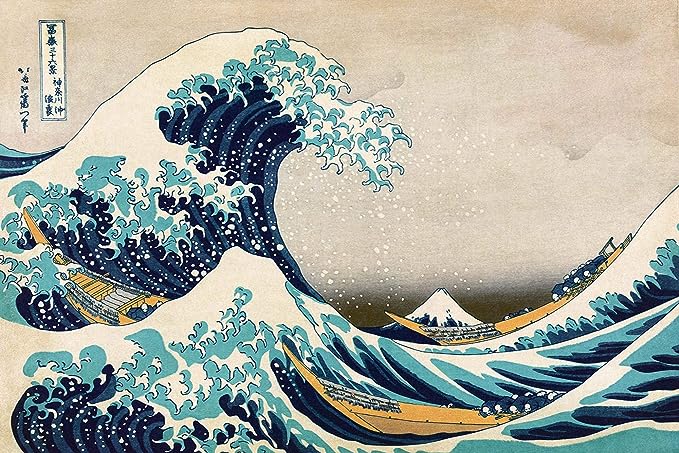
That’s important in a land where tradition is still widely practiced and respected, although it is under attack in many quarters of society. The “old paths” still carry a great deal of weight in Japan, despite the rapid incursion of a more modern sensibility and practice. There’s a famous and beautiful Japanese art print showing a tsunami wave about to rain destruction upon some Japanese boats. In the distance, Mt. Fujiyama is dwarfed by the wave. The print’s subject isn’t actually the wave or the boats but rather the symbol of the modern world crashing down on the traditional Japanese lifestyles and ways.

Thus, a cultural war of sorts has been ongoing in Japan for some decades now between the new ways and the old. And Kongo Gumi was one of the old firms that still clung to the old ways, stubbornly and tenaciously so. Sadly, their share of the construction market is shrinking as clients look for ways to save money in building, even in the building of temples. Concrete and modern methods have increasingly replaced the way Kongo Gumi has practiced their craft for a long time.

There’s an irony here as well. It seems that this old established firm was actually the one who pioneered the use of concrete in the building of temples. However, Kongo Gumi never used the material on such a scale that you’d notice it from the temple exteriors. But other and much newer construction companies have used concrete almost to the exclusion of all other construction materials. And, as the population becomes more and more “modern,” people care less and less about how a temple is constructed. As a result, the market share that Kongo Gumi held dwindled and dwindled over the years. Finally, in 2006, the company went bankrupt. It was purchased by a large conglomerate, and the traditional processes used by the firm were kept by the large company for specialist projects like temple repair or small temple construction for clients seeking that old style of building.

And that’s a sad thing in one sense. True, time marches on. Life is change. But there is something to be said, I think, about embracing the change while still remembering and appreciating the way things were done in the past. The future may depend on finding a balance between the two.

Still, it’s a shame that a company like Kong Gumi is not what it was. Especially considering that it is an old established Japanese firm, especially since it was the world’s oldest firm, established in 578 A.D.

On Finishing the Race

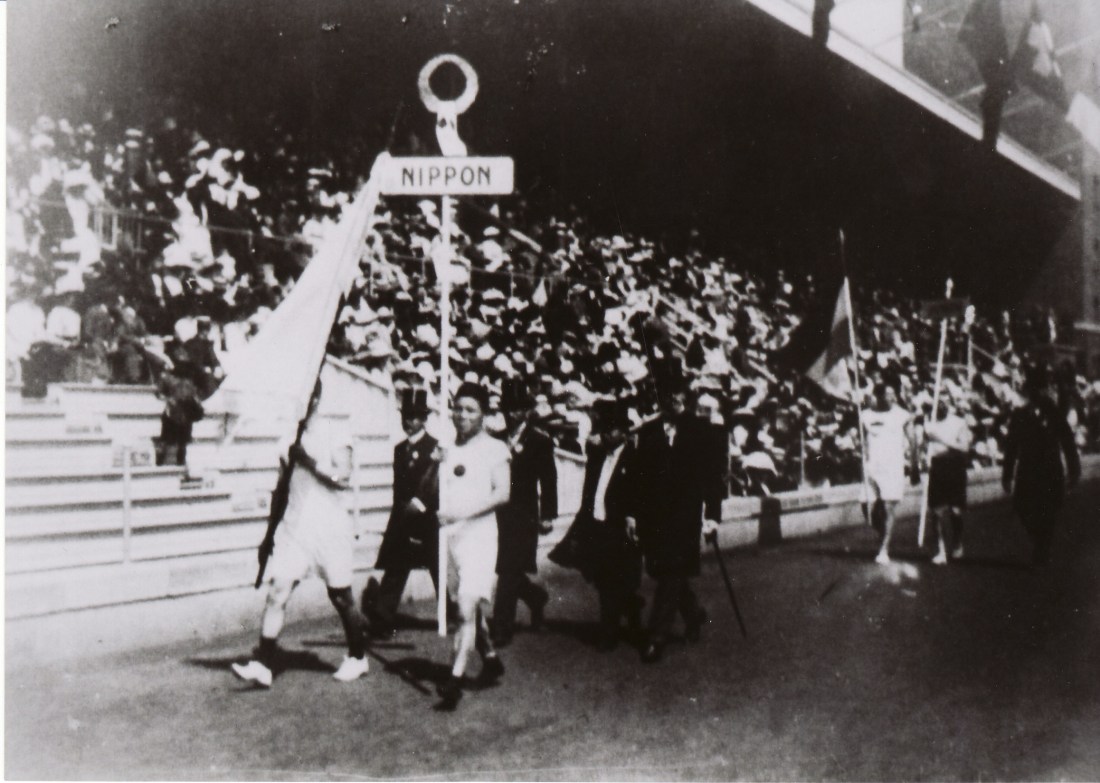
Shizo Kanakuri finished a marathon in Stockholm, Sweden, in 1967. That in itself isn’t terribly remarkable. One thing that was remarkable about it was that Kanakuri was 76 at the time. But the reason the Japanese citizen finished that race is a story in itself. You see, when he was a young man, Kanakuri had been one of Japan’s premier marathoners, a person who set international records in the sport.

In fact, Kanakuri had been in Sweden years before. In 1911, he and one other Japanese runner had received their nation’s blessing to represent the empire in the 1912 Stockholm Olympics. As a college student, he and his fellow runner had little funds to pay their way by boat and train across Asia to compete in the games. A national fundraiser among other college kids collected enough money to sent the pair to the Scandinavian capital city.

The journey took 18 days of really uncomfortable starts and stops aboard the rail system of pre-war Russia across Siberia. The trip was so difficult that it took Kanakuri almost a week to recover when he arrived at the games. Then, upon arrival, he had to deal with the disorienting affect that the ever-present Swedish summer sun had on his psyche. The only food available was completely unusual to him. Add in a freak heat wave that set records for Stockholm. Then, his coach came down with tuberculosis, leaving the young man without any advice or training prep for the race. All of these factors caused Kanakuri to be completely unprepared for what should have been his defining sports moment.

It all proved too much for the young man. Halfway through the marathon, Kanakuri…simply stopped.

He knocked on the door of the house of a family who lived along the race course. They took him in, gave him water, fed him, and let him rest. Too embarrassed to admit that he dropped out of the race, the young man decided to tell no one that he had quit–not his team, race officials, or anyone else. He slinked back to Japan secretly and quietly. For many years, he beat himself up emotionally for having never finished the race and then stole away without telling anyone. Some reports even came out of Sweden that the runner had simply vanished since no word had ever been received about what had happened to him.

Now, fast forward to 1967, some 55 years later. Kanakuri was invited by Stockholm athletic authorities to complete the race he started but never finished. In doing so, he set a record for running a marathon. In fact, to be exact, Shizo Kanakuri finally crossed the finish line of the 1912 Stockholm Olympic Games in a time of 54 years, 8 months, 6 days, 5 hours, 32 minutes, and 20.3 seconds. Along the way, he later said, he got married, had 6 kids and 10 grandchildren.

But he finished the race.

On a Shipwrecked Teenager

John had been forced to go to sea to support his family. His dad had died a few years earlier, and the 14 year old had an older brother, but that brother was sickly. Thus, John became the man of the house and, as was often the case in those days, the one to be the breadwinner. Growing up on the coast, it was natural that John would get a job with a fishing crew, and that’s what happened. The year was 1841, and times were tough. John was hired on by the small boat crew to be the helper and the cook during the days out at sea fishing with large nets held up by buoys.

But, on one of his first times out with the boat and crew, a storm blew up and sent the small vessel far off course. They ended up barely making it to a deserted island off the coast, where they were unable to get their craft seaworthy again. Thus, the five person crew had to endure six months of near starvation on the island, eating what fish they could catch near shore.

Then, miraculously, a whaling ship sailed by and spotted the castaways. The captain of the ship, William Whitfield, was happy to take the 4 men and the teenager aboard, but he told them that they’d have to go with his ship, the John Howland, on the whaling voyage before he could land them anywhere. The men eagerly agreed. Anything was better than dying on that island.

Finally, then the whaling ship reached port, the four adult men were happy to be put ashore, and they tried to make arrangements to somehow find their way back to their homes. But Captain Whitfield had taken a liking to John, and he offered the teen a chance for an education in Whitfield’s hometown of Fairfield, Massachusetts. John jumped at the chance. He was thrilled to go, and it was there that he saw things that amazed him. He rode a train for the first time. He learned navigation. He learned to read and write and a foreign language. He apprenticed as a barrel maker. And then Whitfield got John a place on the crew of another whaling ship.

By September, 1849, John was 22 and had a decent amount of money. He’d frugally saved as much as he could of his pay from the whaler, and he decided to join the thousands who were headed to California for the Gold Rush. There, even though he arrived a bit later than many, John managed to make a decent amount from his prospecting. And it was then that John decided that he wanted to return home, to the mother and small family he’d left almost a decade before.

And so he did. He was warmly received by his family and village on the coast, and he became somewhat of a minor celebrity in the area because of his adventures at so young an age. His family never grew tired of his tales of travel, of the things he’d experienced and seen, and of how educated and “proper” he’d become.

In the 1860s, his country called on John. Because of his travel and language experience, he was asked to serve as a sort of ambassador for some visitors to his country. It seems that no one else spoke the language he had picked up back in school in Massachusetts. The country needed John to interpret for them as they welcomed strangers to their shores.

You see, John wasn’t really his name, it was only the name that Captain Whitfield called him. His birth name was Manjiro, and he was one of the first Japanese men to have ever visited the United States. And, when Japan opened its doors to foreign trade, it was Manjiro who represented the Japanese emperor and who translated Japanese into that strange language he’d picked up in Massachusetts.

English.

On a Taciturn God

What do you do when your God is silent?

What do you do when you appeal to your God and get nothing—nothing—in return?

That’s what the generals in the war were facing. All nations feel that God is on their side in wartime. In this case, the generals of this particular nation appealed to their God and often received only stony silence as an answer. Even when they addressed the God directly, politely and respectfully requesting approval or disapproval of their war plans, the God would sometimes only offer one-word answers with no other details or comments. This frustrated the war leaders. Surely, the God would wish to comment on the plans! Sadly, for them, few words from the God were forthcoming.

The war was going badly. The generals wanted to continue the war, but the enemy was too powerful, had better weapons, and their own resources were dwindling. So, as many nations do, they went before their God and bowed, low, hoping that in their humility, their God would give them some indication as to the right course to take for the country they loved and were fighting for.

Still, nothing.

The people began to suffer. Shortages of food and housing, clean water and medical supplies, basic life necessities could not be ignored any longer. Something had to be done. The people were being lied to by the government; they were being told that the God had great plans for a victory that would save them all and restore the proud nation to glory again.

Part of the problem seemed to be those special few who were taking the generals’ petitions to the God. Tradition dictated that no one except specific individuals could speak to the God on behalf of the people or, often, even on behalf of the generals. On the other hand, one would expect a God to know what was happening without having to be told what was happening, right? Yet, some in the nation blamed the messengers for not accurately depicting the harsh realities of the situation to the nation’s God.

The war situation proved to be untenable.

The war was lost.

The generals, summoning all their courage for the survival of the nation, demanded that the God accept the humiliating defeat that was being handed to them. They asked the God to speak directly to the people. The announcement from the God was to be met with great respect by the people. The nation was ordered to stand for the announcement and to put on their best clothing out of respect for the God.

And so, on August 15, 1945, for the first time in the history of their nation, the people heard the voice of their Emperor and their God, Hirohito, as he announced on the radio the surrender of the Japanese Empire to the Allies.